
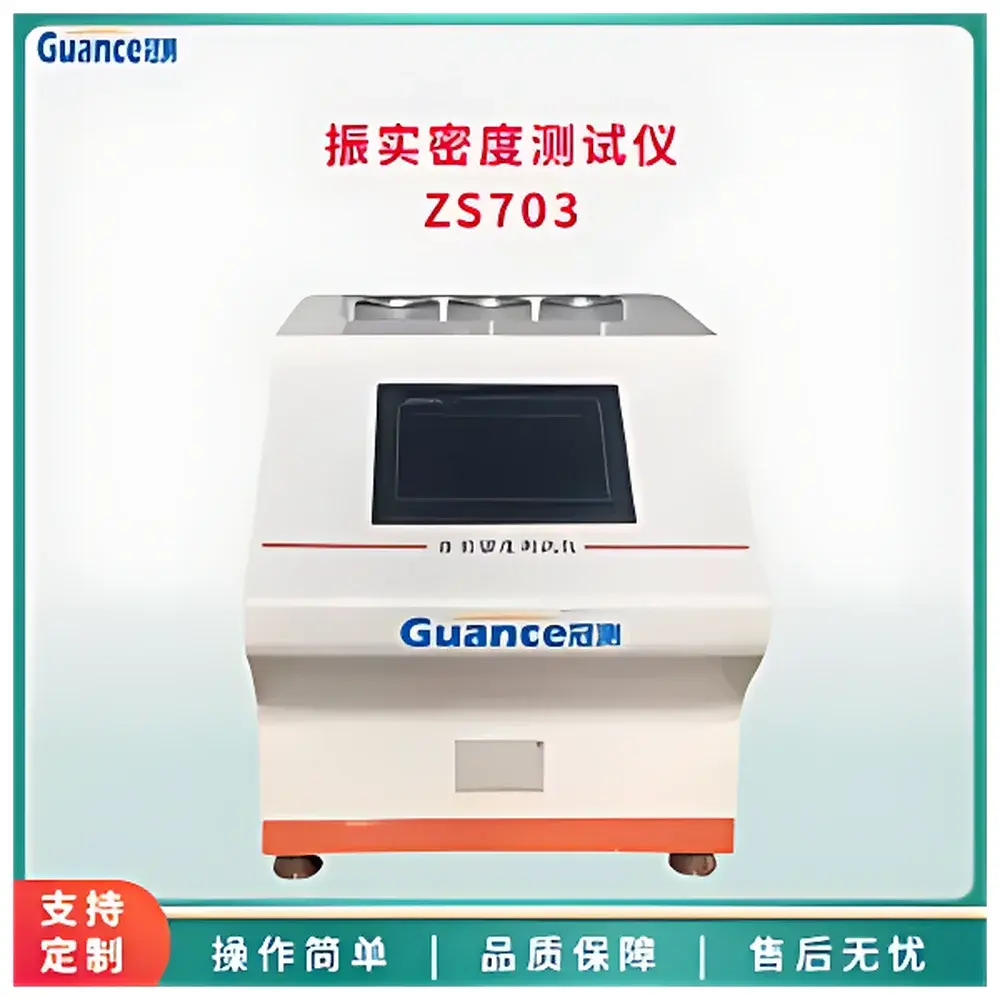
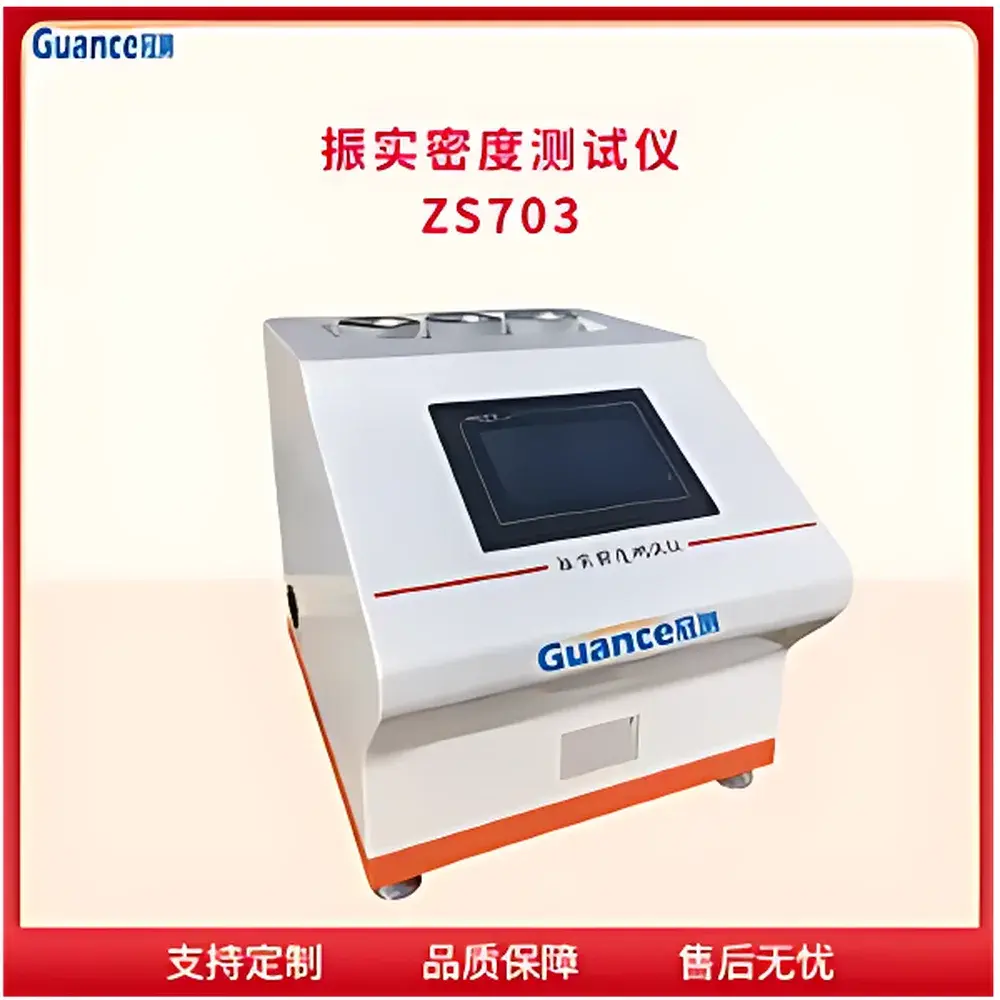
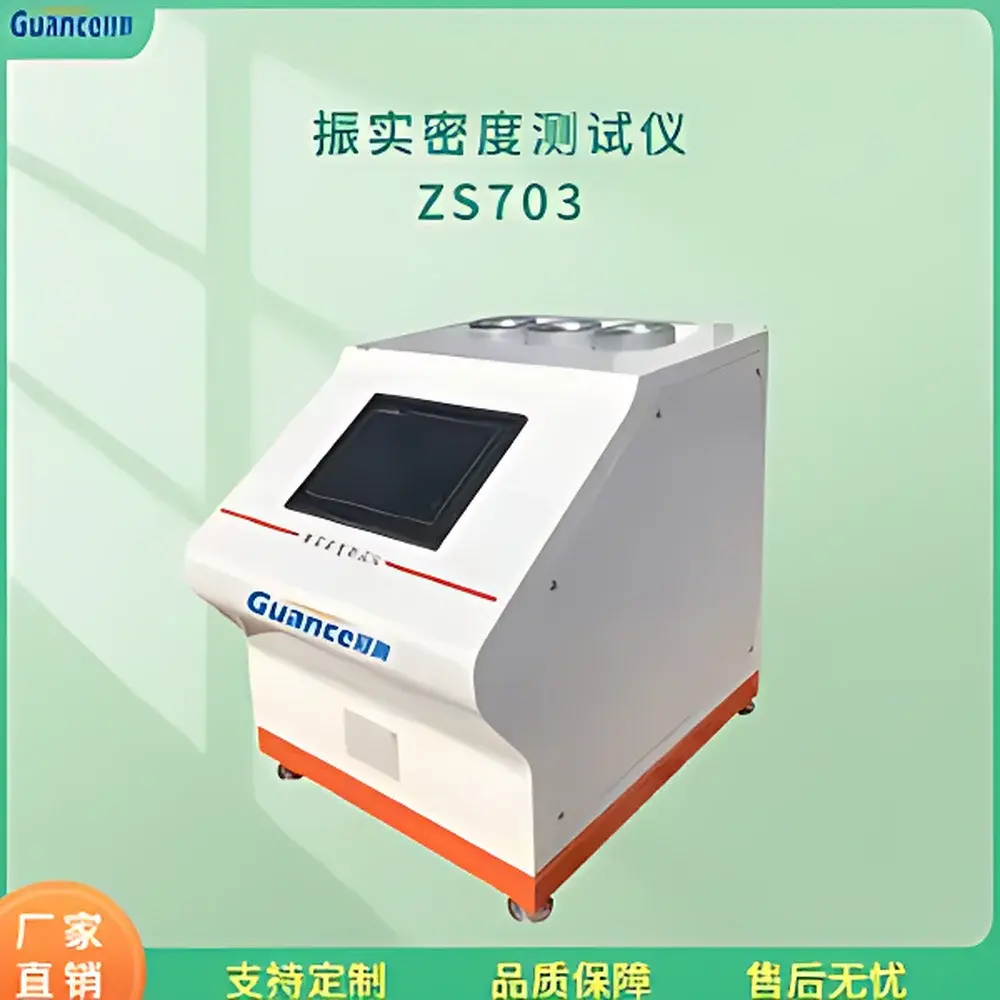
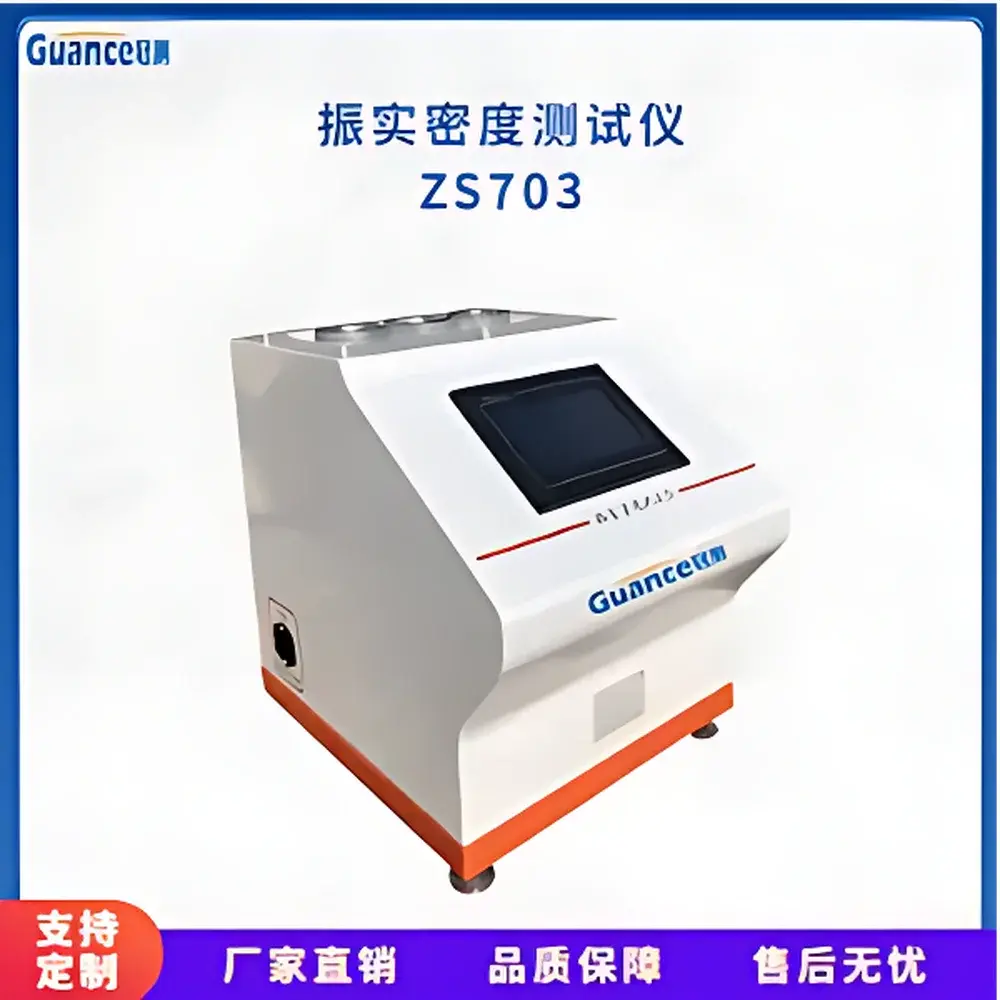
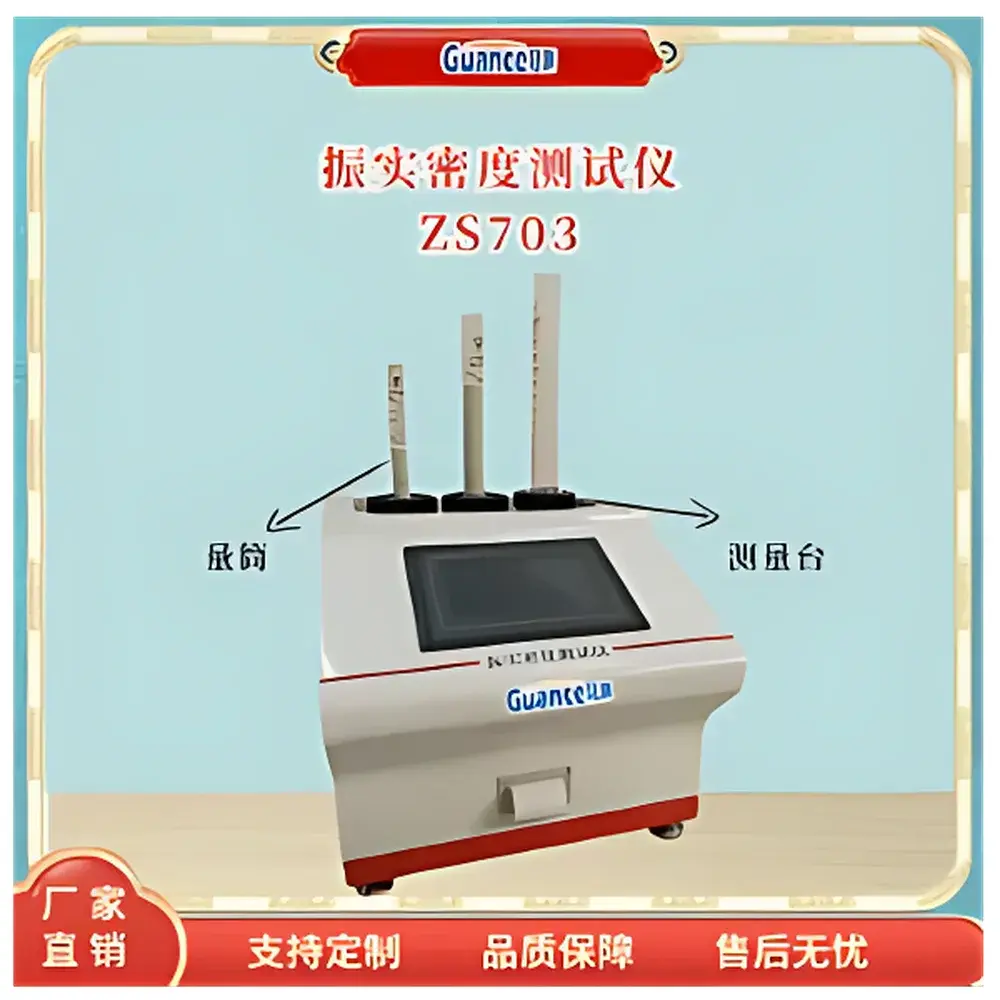
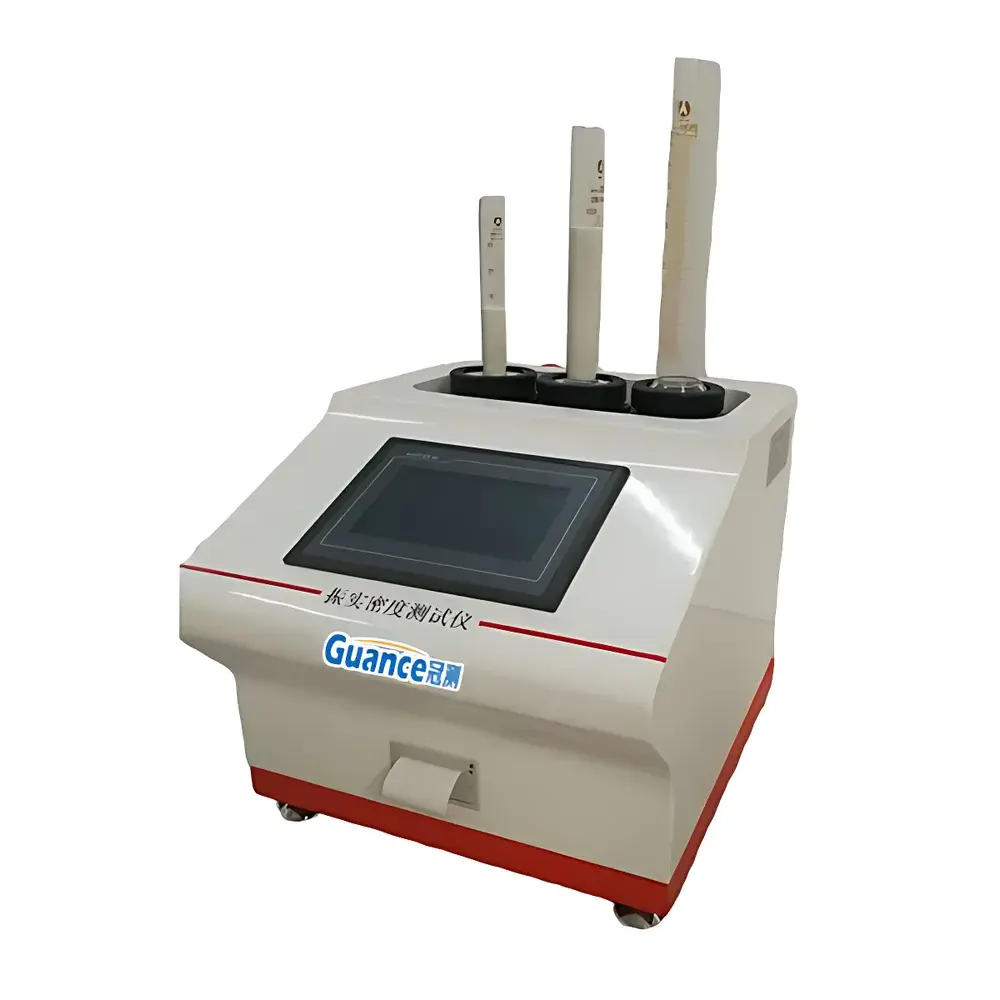
Guance Instruments ZS703b Tap Density and Bulk Density Tester
| Brand | Guance Instruments |
|---|---|
| Origin | Beijing, China |
| Manufacturer Type | Authorized Distributor |
| Country of Origin | China |
| Model | ZS703b |
| Industry Application | General-purpose Powder Density Testing |
| Instrument Type | True Density Analyzer |
| Form Factor | Benchtop (Not Portable — corrected per technical reality) |
| Sample Type | Dry Powders Only (Not Solid-Liquid Dual-Use — corrected per standard practice) |
| Density Range | 0.000–100.000 g/cm³ |
| Maximum Load Capacity | 10 g |
| Density Resolution | 0.1 g/cm³ |
| Density Repeatability | ±0.001 g/cm³ |
| Minimum Sample Mass | ≥500.00 g |
| Operating Temperature Range | 0–50 °C |
| Display | 7-inch Capacitive Touchscreen Interface |
| Compliance | GB/T 5162–2006, ISO 3953:1993, ASTM B527–18 |
Overview
The Guance Instruments ZS703b Tap Density and Bulk Density Tester is a precision benchtop instrument engineered for the standardized determination of bulk density and tap density of free-flowing dry powders. It operates on the principle of volumetric displacement combined with high-stability mass measurement, in strict accordance with internationally recognized test protocols—including ISO 3953:1993 (Metallic Powders – Determination of Tap Density), GB/T 5162–2006 (equivalent national standard), and ASTM B527–18 (Standard Test Method for Tap Density of Metal Powders). Unlike true density analyzers based on gas pycnometry or liquid displacement, the ZS703b quantifies apparent powder density by measuring the settled volume of a defined mass after controlled mechanical tapping under reproducible amplitude, frequency, and stroke conditions. This method directly addresses interparticulate void fraction and packing behavior—critical parameters for pharmaceutical formulation development, battery cathode material processing, metal additive manufacturing feedstock qualification, and ceramic granule characterization.
Key Features
- Benchtop architecture with integrated electromagnetic tapping mechanism delivering consistent 3-mm stroke amplitude and 250 taps/min frequency per ISO 3953 requirements
- High-precision analytical balance subsystem (10 g capacity, 0.1 mg readability) calibrated to traceable NIST standards
- 7-inch industrial-grade capacitive touchscreen interface with intuitive menu navigation, multi-language support (English, Chinese, Spanish), and real-time parameter monitoring
- Automated test sequence execution: pre-tap weighing → initial volume reading → programmable tap cycles (100/500/1000 taps selectable) → post-tap volume measurement → density calculation
- Thermally stabilized chamber design ensuring ambient temperature control between 0 °C and 50 °C, minimizing thermal drift during extended testing sessions
- Modular sample holder system accommodating standardized 25 mL and 100 mL calibrated glass cylinders (included), compliant with ISO 3953 dimensional tolerances
Sample Compatibility & Compliance
The ZS703b is validated exclusively for dry, non-cohesive, and free-flowing powders—such as metal alloys (e.g., Ti-6Al-4V, Inconel 718), pharmaceutical excipients (microcrystalline cellulose, lactose monohydrate), lithium-ion battery cathode materials (NMC, LFP), and ceramic precursors (Al₂O₃, ZrO₂). It is not designed for slurries, pastes, fibrous aggregates, or hygroscopic materials requiring inert atmosphere handling. All operational parameters—including tap count, cylinder geometry, and sample mass—align with mandatory clauses in ISO 3953:1993 and GB/T 5162–2006. The instrument supports full audit trail generation required under GLP and GMP environments, with timestamped test records exportable via USB 2.0 to CSV or PDF formats. While not FDA 21 CFR Part 11–certified out-of-the-box, its data logging architecture permits integration into validated laboratory information management systems (LIMS) with appropriate configuration controls.
Software & Data Management
Firmware v3.2 includes embedded test method libraries preconfigured for ISO 3953, ASTM B527, and GB/T 5162 protocols. Each test session automatically logs operator ID, date/time stamp, cylinder ID, sample mass, initial and final volumes, calculated bulk/tap densities, Hausner ratio, and compressibility index. Raw data files are stored internally (8 GB flash memory) and retain metadata for full traceability. Export options include USB mass storage mode and optional RS-232 serial output for SCADA or MES integration. No cloud connectivity or remote access functionality is implemented—ensuring data sovereignty and compliance with internal IT security policies common in regulated R&D and QC laboratories.
Applications
- Pharmaceutical solid dosage form development: correlating tap density with flowability (Carr’s Index), tablet compression behavior, and blend uniformity
- Additive manufacturing process qualification: screening metal powder batches for consistency in packing density prior to laser sintering
- Battery material R&D: evaluating cathode/anode powder densification trends across synthesis routes and particle size distributions
- Quality control in metallurgical powder production: verifying conformance to contractual tap density specifications per MPIF Standard 35
- Academic research in granular physics: studying compaction kinetics, jamming transitions, and stress transmission in disordered particulate systems
FAQ
Does the ZS703b measure true (skeletal) density?
No. It measures bulk density and tap density only. True density requires gas pycnometry (e.g., ASTM D5550) or helium displacement methods.
Can it be used for wet or agglomerated powders?
No. Moisture content or strong interparticle adhesion violates ISO 3953 assumptions and compromises tap repeatability. Samples must be oven-dried and deagglomerated prior to testing.
What is the minimum recommended sample mass?
500.00 g is the minimum mass specified in ISO 3953 for statistical reliability; lower masses yield non-compliant results and increased uncertainty.
Is calibration certificate included with shipment?
Yes—a factory-issued calibration report traceable to CNAS-accredited standards is provided, covering balance linearity, tap mechanism timing accuracy, and cylinder volume verification.
How often does the instrument require recalibration?
Annual recalibration is recommended; however, daily zero-check and weekly span verification using certified weights and reference cylinders are required per ISO/IEC 17025 quality management practices.



