
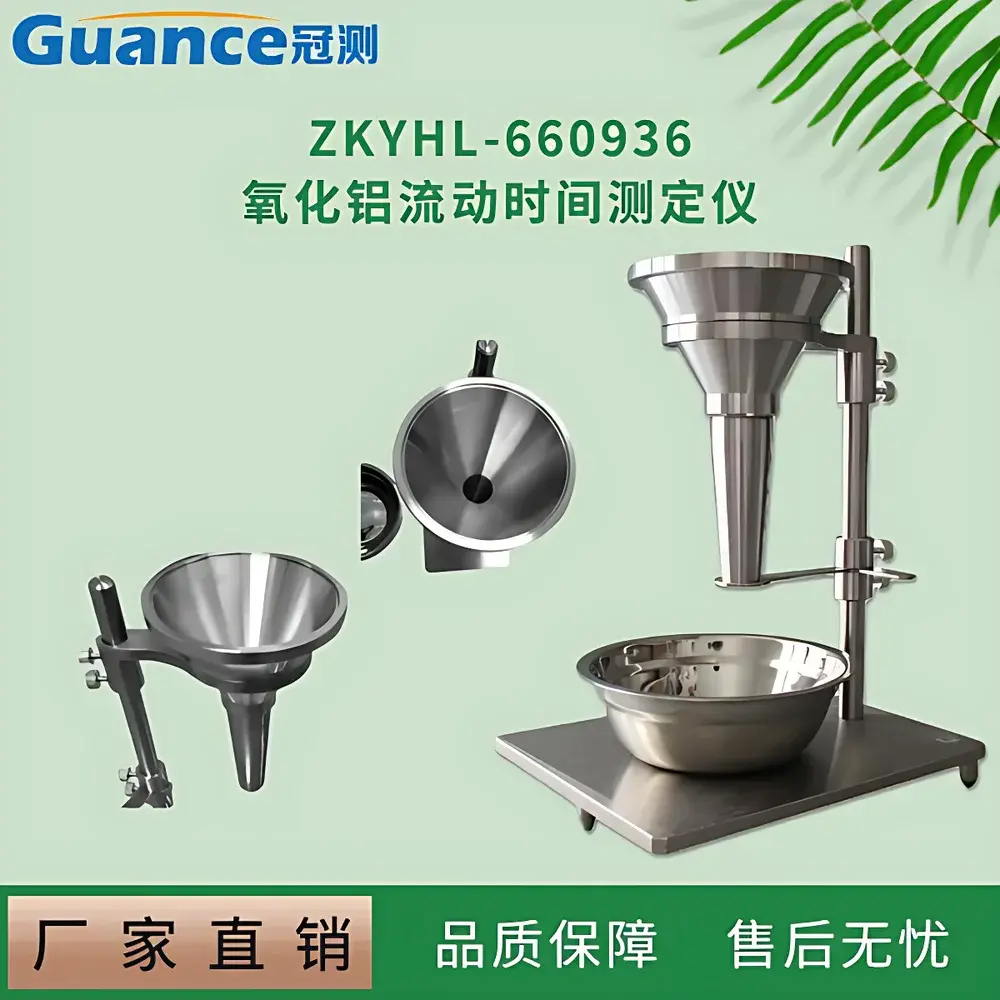
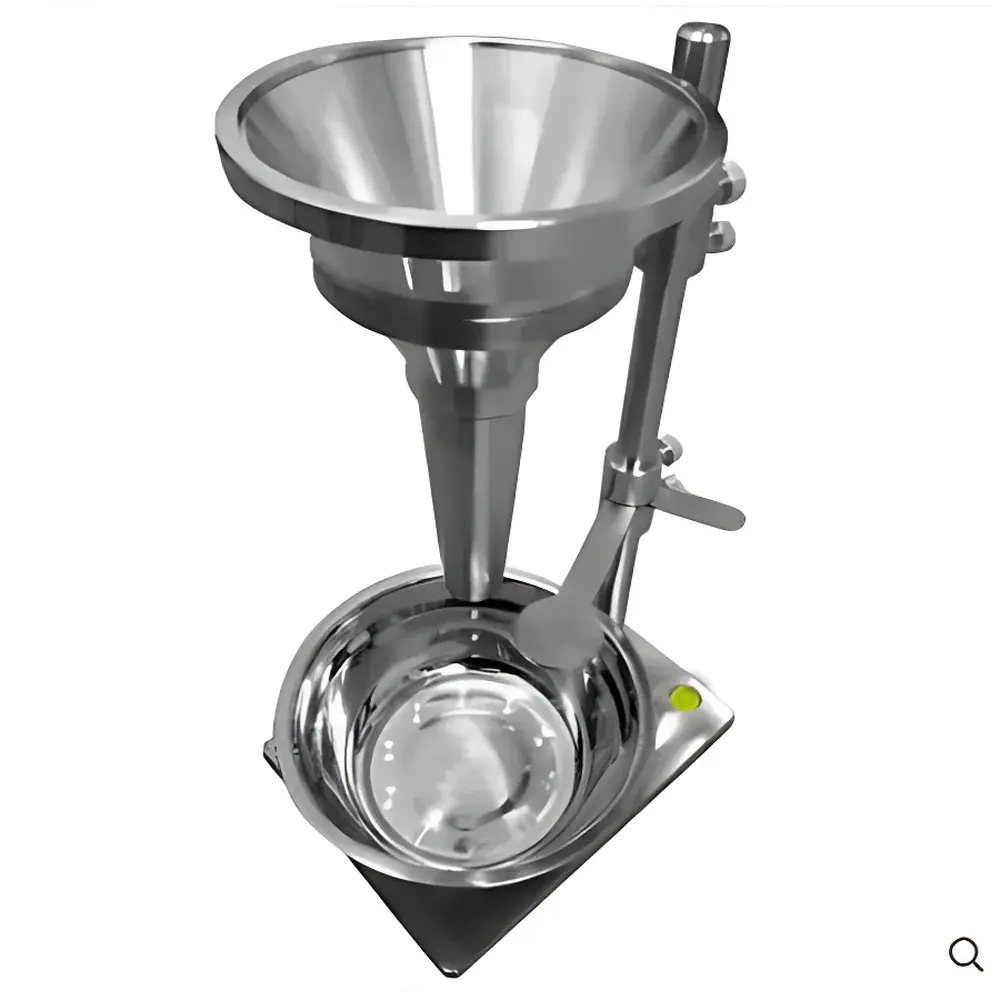
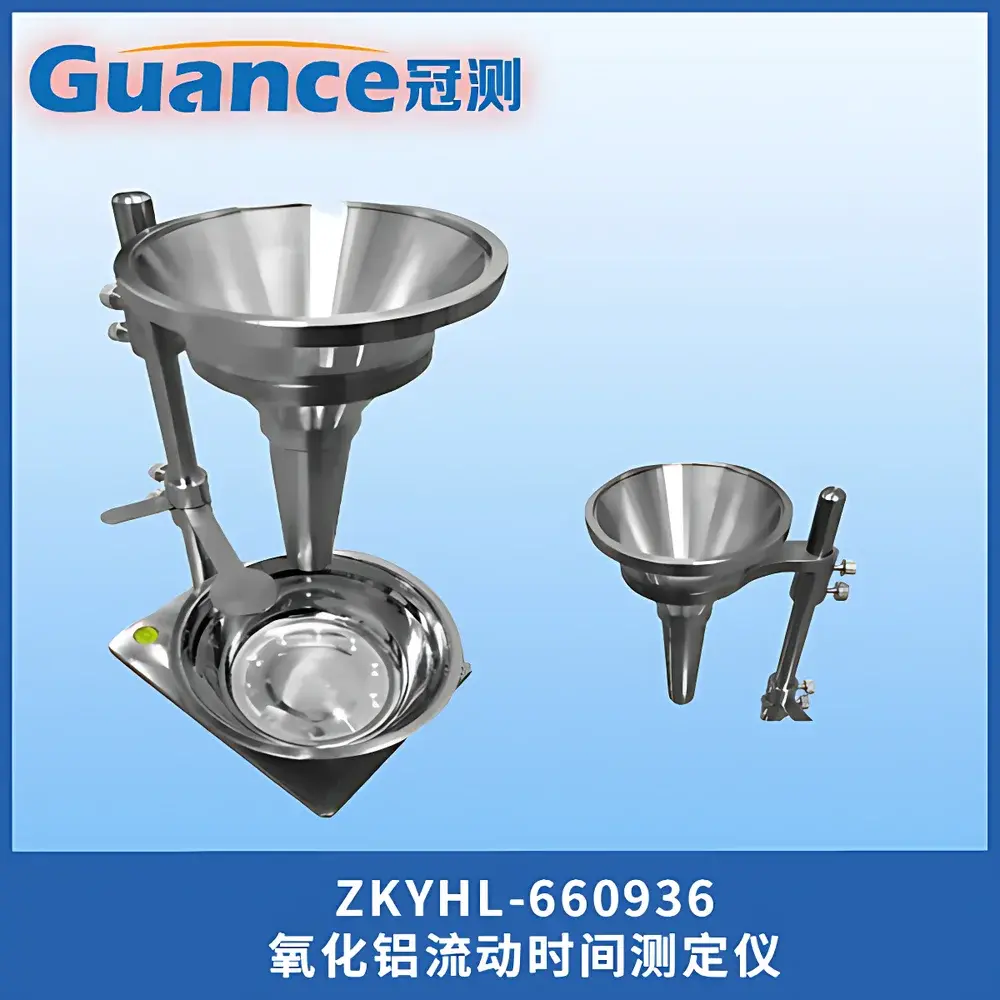
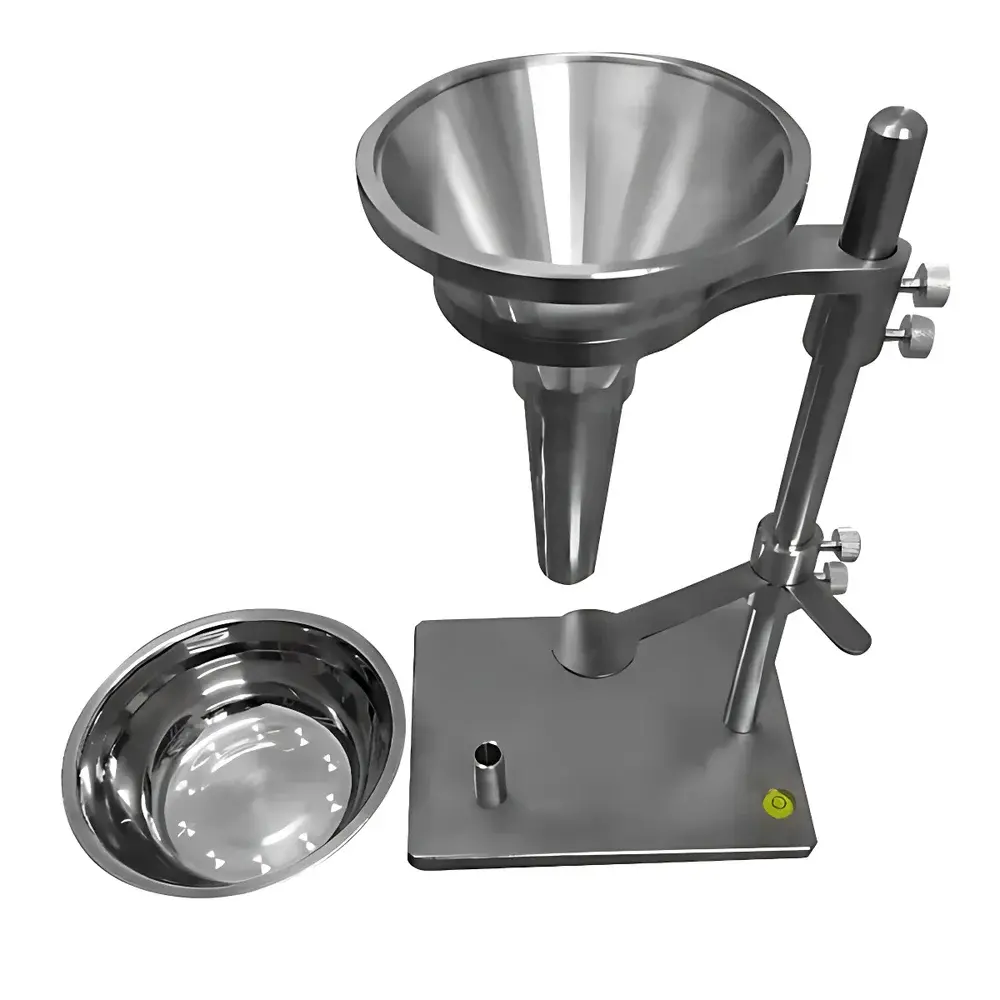
GuanCe Instruments YHL-660936 Aluminum Oxide Powder Flowability Tester
| Brand | GuanCe Instruments |
|---|---|
| Origin | Beijing, China |
| Manufacturer Type | Authorized Distributor |
| Country of Origin | China |
| Model | YHL-660936 |
| Instrument Category | Powder Flowability Tester |
| Measurable Material | Powder |
| Maximum Sample Cup Capacity | 40 mL |
| Minimum Sample Mass | 10 g |
| Funnel Material | Stainless Steel |
| Funnel Top Outer Diameter | 138.5 mm |
| Funnel Top Inner Diameter | 123 mm |
| Orifice Diameter | 3.95–4.0 mm |
| Total Funnel Height | 190.5 mm |
| Upper Cone Angle | 60° |
| Lower Discharge Cone Angle | 15° |
Overview
The GuanCe Instruments YHL-660936 Aluminum Oxide Powder Flowability Tester is a gravity-driven, standardized flow measurement system engineered for reproducible quantification of powder flow behavior under controlled conditions. It operates on the principle of flow-through time measurement, where powdered material—specifically aluminum oxide (Al2O3)—is allowed to discharge freely through a precision-machined stainless steel funnel under gravity. The resulting flow time (in seconds) per fixed mass (e.g., 100.0 ± 0.1 g) serves as an empirical indicator of interparticulate friction, cohesion, and bulk density effects. This method aligns with widely adopted standards including ASTM D1895 (Type A), ISO 4490, and USP <1174> for pharmaceutical powders—though its primary design validation targets technical ceramics, refractory materials, and high-purity oxide powders used in advanced manufacturing processes such as cold isostatic pressing (CIP), thermal spray feedstock qualification, and additive manufacturing (AM) powder bed preparation.
Key Features
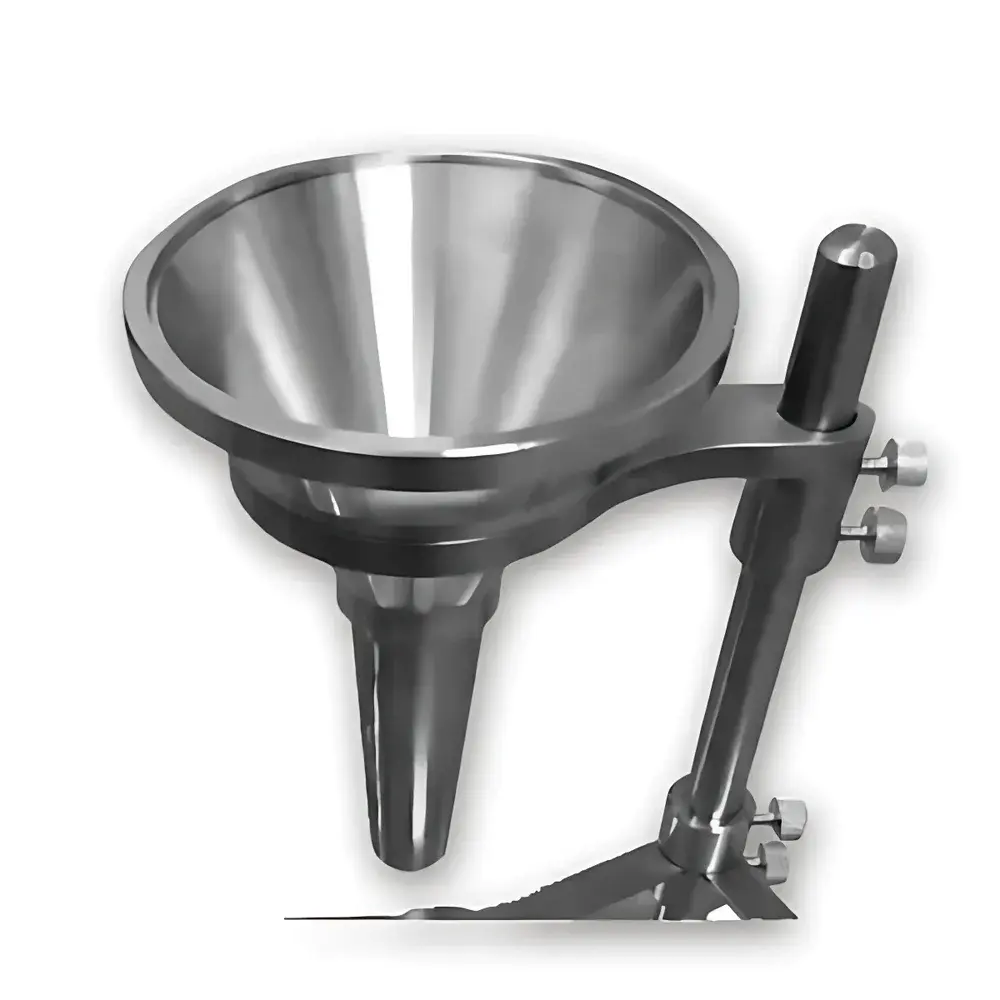
- Precision-engineered stainless steel funnel conforming to geometric tolerances specified in ASTM D1895: top outer diameter 138.5 mm, inner diameter 123 mm, orifice diameter tightly controlled between 3.95–4.0 mm, total height 190.5 mm, upper cone angle 60°, lower discharge angle 15°
- Dedicated calibration protocol for aluminum oxide reference material, ensuring consistent baseline performance across laboratories
- Modular sample cup assembly with defined volumetric capacity (40 mL maximum) and minimum mass requirement (10 g), supporting both small-batch R&D screening and routine QC verification
- Stable, vibration-isolated base platform design—intended for use on level, non-resonant work surfaces to eliminate external kinetic interference during flow initiation and termination
- No electronic sensors or motorized components: purely mechanical operation ensures long-term reliability, minimal maintenance, and immunity to electromagnetic interference in industrial lab environments
Sample Compatibility & Compliance
The YHL-660936 is optimized for free-flowing to marginally cohesive oxide powders, with documented validation for α-alumina (corundum), calcined alumina, and surface-treated variants commonly employed in polishing slurries, catalyst supports, and ceramic matrix composites. While not intended for highly cohesive, hygroscopic, or electrostatically charged powders without preconditioning (e.g., drying, deaeration), it provides traceable, operator-independent results when used in accordance with standardized handling procedures. The instrument supports compliance documentation workflows required under ISO/IEC 17025-accredited testing laboratories and aligns with GLP principles for raw material release testing. Its geometry and operational protocol are referenced in internal quality control specifications of multiple Tier-1 ceramic component manufacturers in Asia and Europe.
Software & Data Management
This is a manual, analog flow tester—no embedded firmware, software interface, or digital data logging capability is included. All measurements are recorded manually using calibrated laboratory timers (±0.1 s resolution recommended) and analytical balances (±0.1 mg resolution for 100 g samples). Users are expected to maintain paper-based or LIMS-integrated test records that include ambient temperature/humidity, sample lot number, pre-test conditioning steps (e.g., tapping, sieving), and replicate count (minimum n = 3 per batch per ASTM D1895). While no native software is supplied, raw flow time datasets integrate seamlessly into statistical process control (SPC) platforms such as Minitab, JMP, or Python-based SciPy workflows for trend analysis, Cp/Cpk calculation, and out-of-specification (OOS) investigation.
Applications
- Quality assurance of alumina feedstocks prior to ceramic green body forming (dry pressing, extrusion, tape casting)
- Batch-to-batch consistency monitoring in refractory powder production
- Pre-screening of surface-modified Al2O3 for improved dispersibility in polymer composites
- Correlation studies between flow time and downstream processing parameters (e.g., die fill uniformity in metal injection molding)
- Educational demonstrations of powder rheology fundamentals in materials science curricula
FAQ
Is this instrument compliant with FDA 21 CFR Part 11?
No—this is a manual, non-computerized device with no electronic record generation or user authentication capabilities. It may be used in FDA-regulated environments only as part of a broader validated testing procedure with independent audit trail documentation.
Can it measure flow properties of non-alumina powders?
Yes, provided the powder exhibits sufficient free-flow characteristics and falls within the defined orifice size and mass constraints. However, method transfer requires re-validation per ASTM D1895 Annex A1 for each new material class.
What environmental conditions are required for valid testing?
Testing must occur in a draft-free environment at stable ambient temperature (20–25 °C) and relative humidity ≤ 40 % to minimize moisture-induced cohesion effects.
Does the system include calibration certificates or reference standards?
No certified reference material (CRM) is supplied by default. Users are advised to establish in-house reference batches of NIST-traceable alumina powder and perform periodic repeatability checks.
Is technical support available for method development?
Yes—GuanCe Instruments offers application consulting services, including SOP drafting, inter-laboratory comparison coordination, and training on ASTM/ISO alignment for powder flow characterization.



