
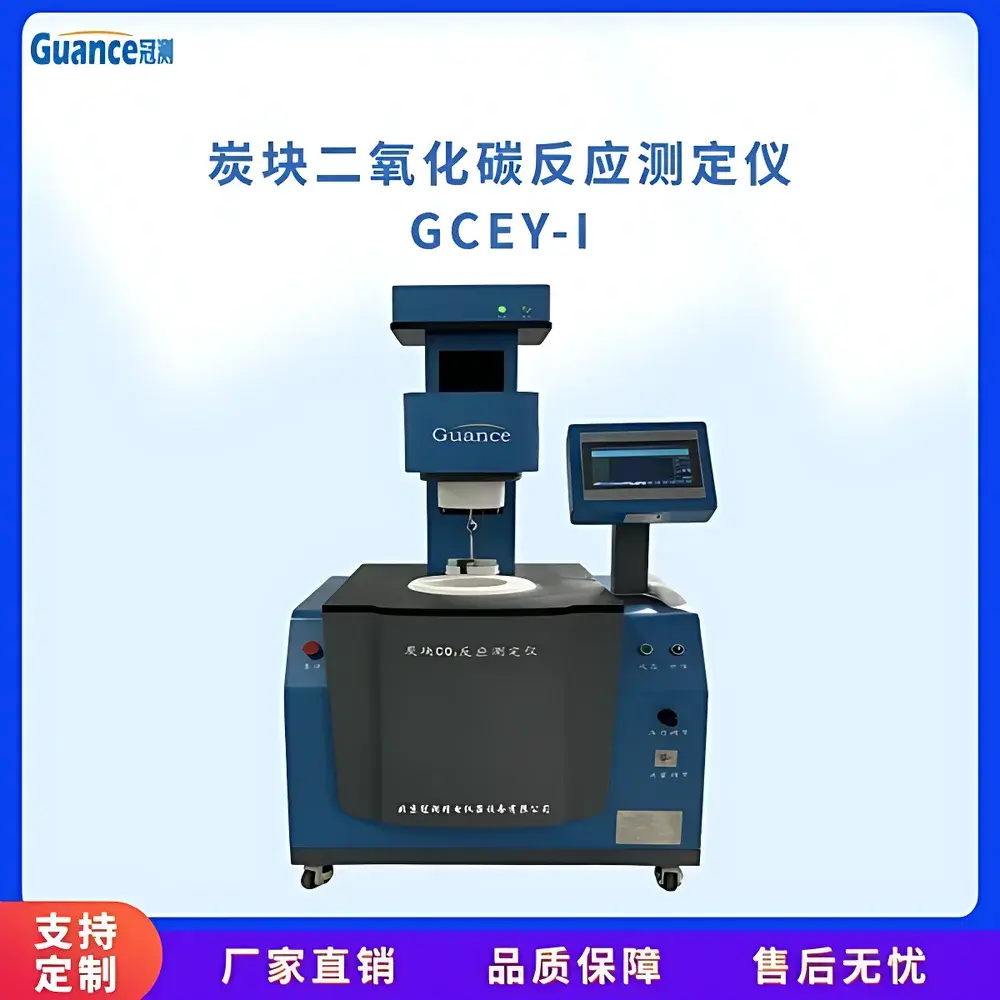
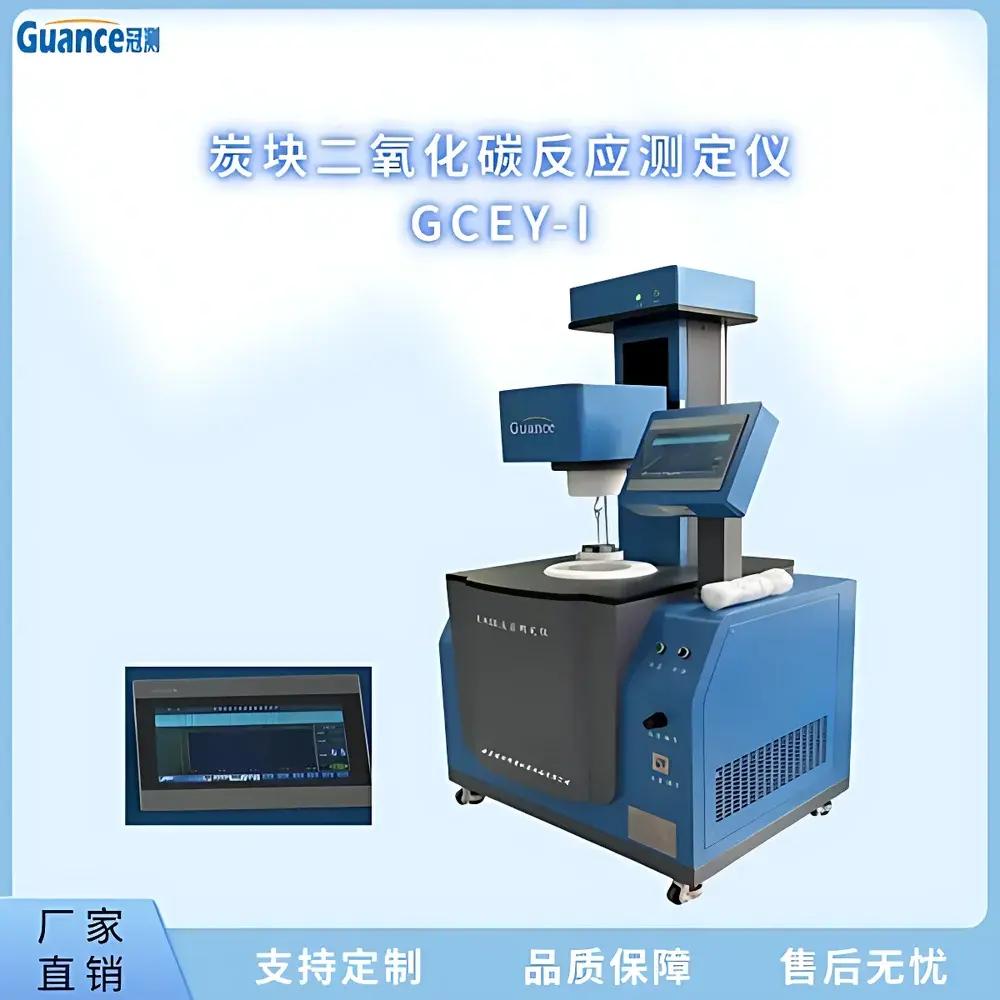
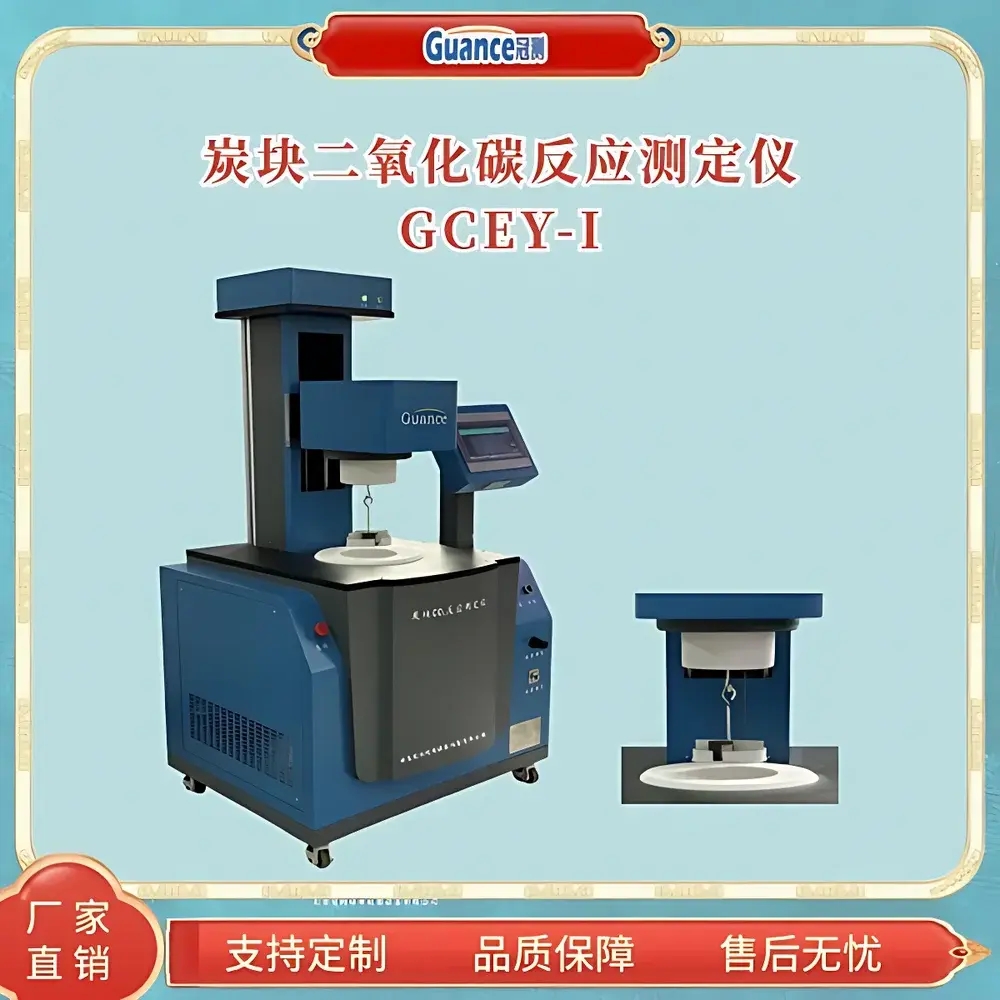
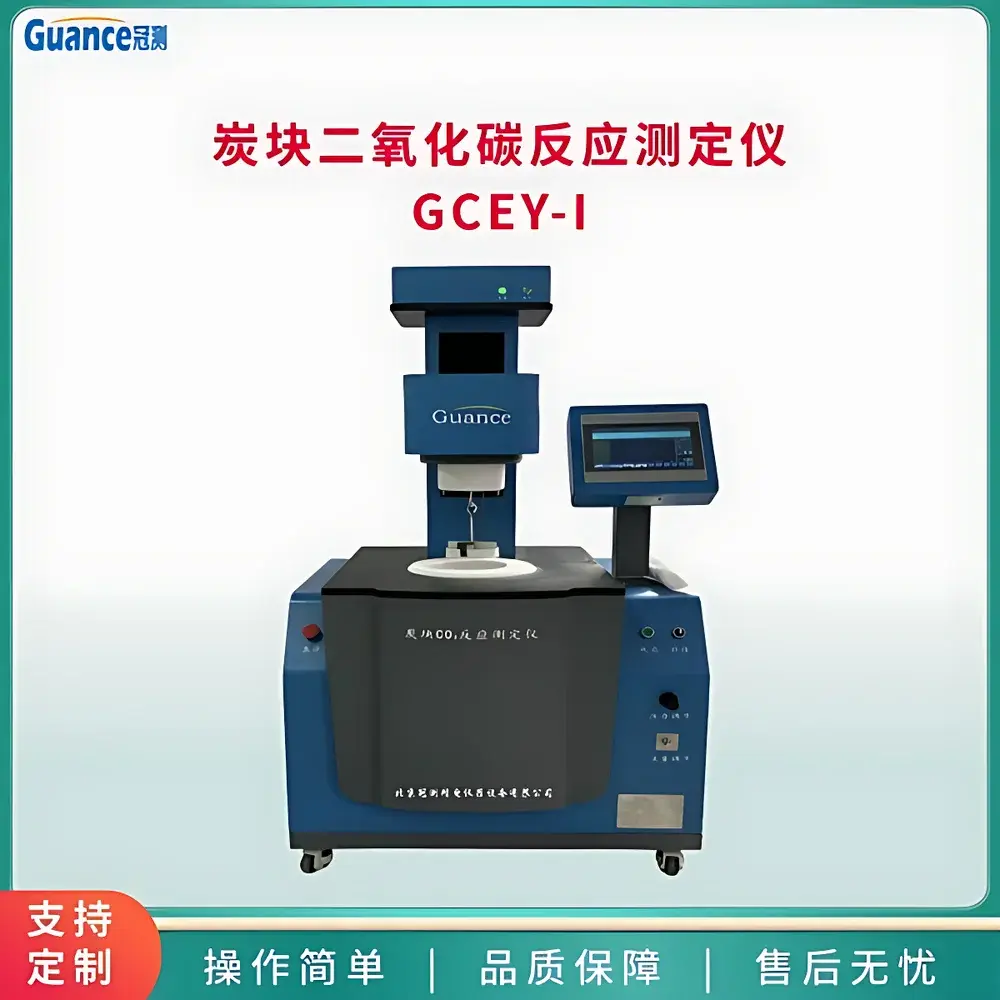
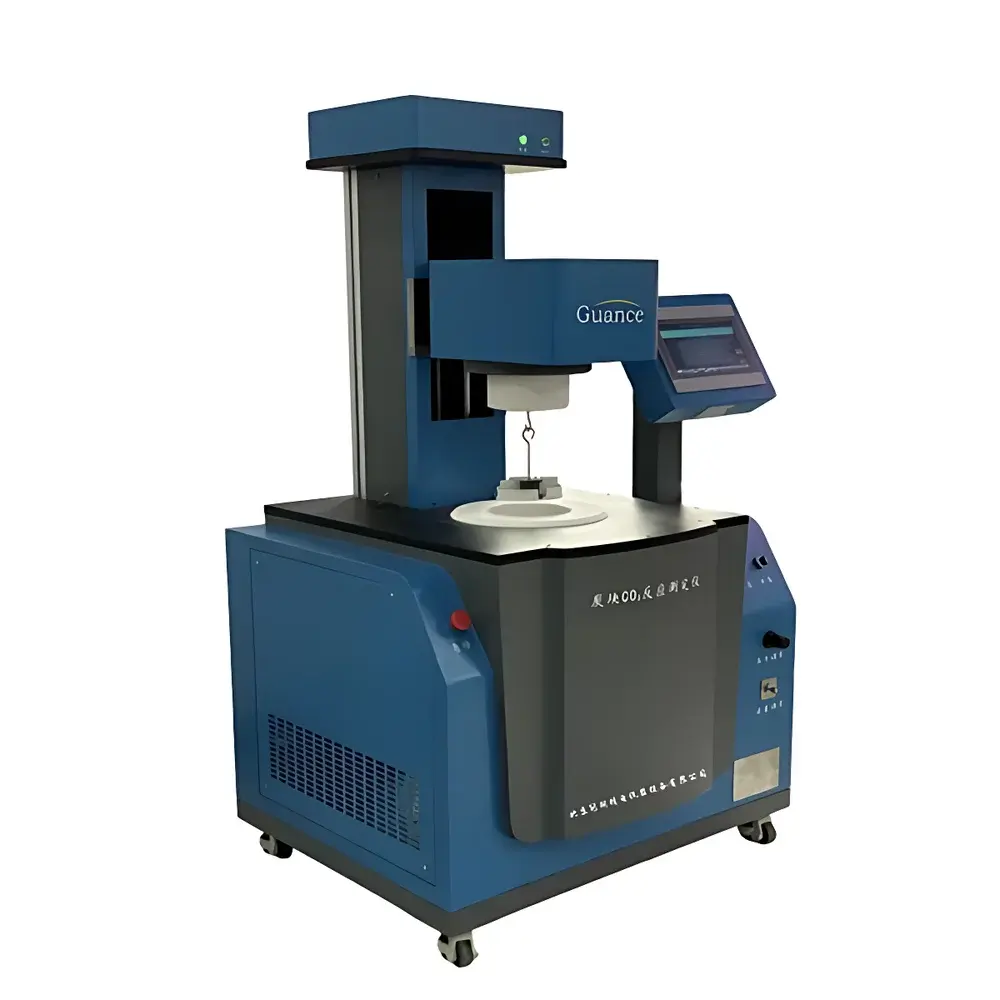
GuanCe Instruments ZKEY-I Carbon Anode CO₂ Reactivity Tester
| Brand | GuanCe Instruments |
|---|---|
| Origin | Beijing, China |
| Manufacturer Type | Authorized Distributor |
| Country of Origin | China |
| Model | ZKEY-I |
| Price | USD 950 (FOB Beijing) |
| Rated Power | 3 kW |
| Rated Voltage | 220 V / 50 Hz |
| Max Temperature | 1000 °C |
| Operating Temperature Range | 0–960 °C |
| Temperature Control Accuracy | ±1 °C |
| Thermocouple Type | K-type (0–1000 °C) |
| Reaction Gas | High-Purity CO₂ (≥99.99%) |
| Gas Flow Sensor Range | 0–250 L/h, Accuracy: ±4% FS |
| Pressure Sensor Range | 0–1 MPa, Accuracy Class: ≥1.5 |
| Sample Dimensions | Ø50 mm ±1 mm × 60 mm ±1 mm |
| Equipment Dimensions | 1200 mm (L) × 820 mm (W) × 1500 mm (H) |
| Net Weight | 100 kg |
Overview
The GuanCe Instruments ZKEY-I Carbon Anode CO₂ Reactivity Tester is a precision thermal reaction measurement system engineered for the quantitative evaluation of carbon dioxide reactivity in baked carbon anodes used in aluminum electrolysis. It operates on the gravimetric mass-loss principle defined in ISO 12988-1:2000 (Modified), YS/T 63.12–2006, and YS/T 62.3–2005—standards widely adopted by primary aluminum producers, anode manufacturers, and independent testing laboratories across Asia, the Middle East, and emerging smelting regions. The instrument subjects standardized cylindrical carbon specimens to controlled CO₂ atmospheres at elevated temperatures (up to 960 °C), continuously monitoring mass loss over time via high-stability analytical weighing integrated into the furnace chamber. This enables direct calculation of CO₂ reactivity index (g CO₂ consumed per gram of carbon), a critical quality parameter correlating strongly with anode consumption rate, energy efficiency, and bath stability in Hall–Héroult cells.
Key Features
- Robust dual-zone furnace architecture with vacuum-formed high-temperature ceramic fiber insulation and embedded resistance heating elements—ensuring uniform temperature distribution and stable isothermal zones (>100 mm axial length) across the full operating range.
- High-fidelity PID temperature control system with K-type thermocouple feedback, delivering sustained thermal stability within ±1 °C during extended isothermal holds (e.g., 950 °C for 2 hours).
- Integrated gas delivery subsystem featuring stainless-steel pressure regulators, particulate/ moisture filters, and a calibrated mass flow sensor (0–250 L/h, ±4% full-scale accuracy) to maintain precise, reproducible CO₂ flow rates under variable backpressure conditions.
- Dual-mode operation interface: intuitive 7-inch industrial touchscreen HMI for local real-time monitoring and manual sequence initiation; plus Ethernet-enabled PC software supporting remote experiment scheduling, live data streaming, and automated report generation (PDF/CSV).
- Compliance-grade hardware design: electrostatically sprayed powder-coated steel enclosure (RoHS-compliant finish), IP54-rated internal electronics, and CE-marked power supply modules meeting IEC 61000-6-3 EMC requirements.
Sample Compatibility & Compliance
The ZKEY-I accepts cylindrical specimens conforming to ISO 12988-1 and YS/T 63.12 specifications: Ø50 mm ±1 mm × 60 mm ±1 mm, machined from homogenized baked anode blocks. Specimen preparation follows YS/T 62.3–2005 guidelines for representative sampling and surface conditioning. The system supports full traceability workflows aligned with GLP principles—including user authentication, electronic audit trails, timestamped raw data logging, and tamper-evident file export. While not pre-certified to FDA 21 CFR Part 11, its software architecture permits configuration for 21 CFR Part 11 compliance (electronic signatures, role-based access, and immutable record retention) when deployed in regulated GMP environments upon site-specific validation.
Software & Data Management
The proprietary ZKEY-Soft v3.2 application provides comprehensive test lifecycle management. It records time-synchronized mass, temperature, CO₂ flow, and chamber pressure at configurable intervals (1–60 s). All measurements are stored in structured SQLite databases with automatic daily backup and SHA-256 hash verification. Reporting modules generate ASTM/ISO-formatted test certificates—including calculated reactivity curves, derivative d(m)/dt plots, final % mass loss, and statistical summaries (n=3, RSD ≤2.5%). Export options include CSV for third-party statistical analysis (JMP, Minitab), XML for LIMS integration, and PDF with embedded digital signatures compliant with EN 10204 Type 3.1 requirements.
Applications
- Quality control of prebaked anodes prior to furnace installation in aluminum smelters.
- R&D screening of novel binder formulations, coke blends, and impregnation treatments affecting oxidation kinetics.
- Inter-laboratory round-robin testing under ISO/IEC 17043 proficiency schemes.
- Technical due diligence during supplier qualification audits (e.g., ASI Performance Standard V3).
- Root-cause analysis of excessive anode consumption or abnormal bath chemistry in potlines.
FAQ
What standards does the ZKEY-I comply with?
It is fully aligned with ISO 12988-1:2000 (MOD), YS/T 63.12–2006, and YS/T 62.3–2005 for sample preparation, test execution, and data reporting.
Can the system operate with gases other than CO₂?
No—the gas train, seals, and thermal design are optimized exclusively for high-purity CO₂ (≥99.99%). Use of alternative gases voids calibration and warranty.
Is furnace calibration traceable to national standards?
Yes—each unit ships with a factory calibration certificate referencing NIM (China National Institute of Metrology) traceable K-type thermocouples and certified weight standards.
What maintenance is required for long-term accuracy?
Annual verification of thermocouple drift, flow sensor linearity, and balance repeatability is recommended; full recalibration every 24 months or after 500 test cycles.
Does the software support multi-user environments with permission levels?
Yes—ZKEY-Soft implements three-tier roles (Operator, Supervisor, Administrator) with configurable permissions for method editing, result approval, and system configuration.



