
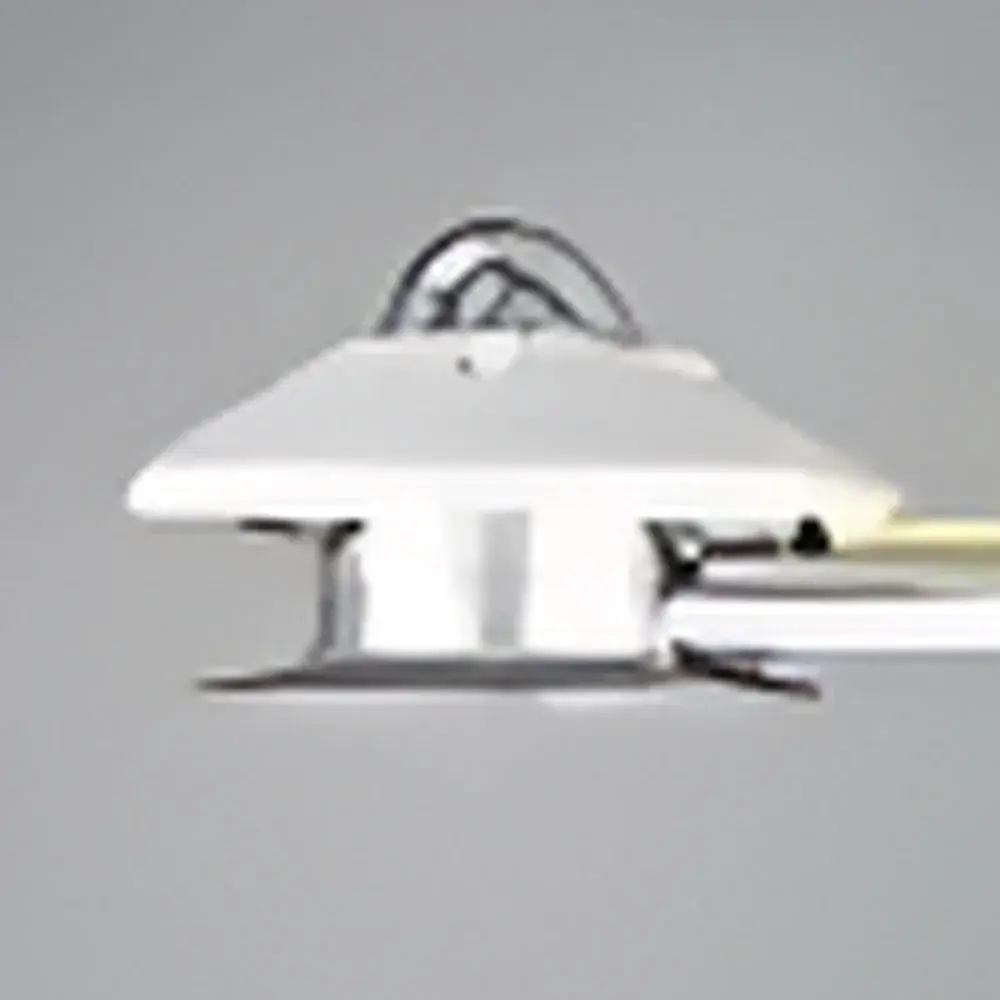
HACH CMP11 Albedometer Kit
| Brand | Kipp & Zonen |
|---|---|
| Origin | Netherlands |
| Model | CMP11 |
| Measurement Principle | Thermopile-based Pyranometer (ISO 9072-1 Secondary Standard) |
| Spectral Range | 305–2800 nm |
| Response Time (95%) | < 5 s |
| Zero Offset (Thermal, 5 K/h) | ±7 W/m² |
| Non-linearity | < ±0.5 % (0–1000 W/m²) |
| Tilt Error | < ±1 % (up to 80°) |
| Operating Temperature | −40 °C to +80 °C |
| Calibration Traceability | NIST-traceable via Kipp & Zonen Calibration Laboratory |
| Compliance | ISO 9060:2018 Class C (formerly Secondary Standard), IEC 61724-1:2021 Annex A |
Overview
The HACH CMP11 Albedometer Kit is a rigorously engineered dual-pyranometer system designed for the precise, continuous measurement of surface albedo—the ratio of reflected solar irradiance to incident global solar irradiance. Albedo quantification is critical in energy balance modeling, photovoltaic performance monitoring, climate research, and land-surface interaction studies. The CMP11 kit integrates two identical Kipp & Zonen CMP11 thermopile pyranometers: one upward-facing to measure global horizontal irradiance (GHI), and one downward-facing to capture reflected irradiance (R). Both sensors adhere to ISO 9060:2018 Class C specifications (formerly classified as Secondary Standard), ensuring high angular response fidelity, thermal stability, and long-term field reliability. Each CMP11 employs a blackened thermopile detector housed under a precision-ground, hemispherical quartz dome with anti-reflective coating—optimized for broadband spectral response from 305 nm to 2800 nm. The integrated design eliminates inter-unit calibration drift, enabling direct differential measurement without post-processing scaling.
Key Features
- Co-located, matched-pair CMP11 pyranometers mounted on a rigid, low-thermal-mass aluminum mounting bar—minimizing mechanical misalignment and thermal gradient-induced offset.
- Integrated shadow band and removable anti-glare hood (supplied standard) to suppress diffuse sky radiation interference during downward-facing measurements—critical for accurate albedo calculation over heterogeneous or highly reflective surfaces (e.g., snow, white roofing, desert sand).
- No internal electronics or active heating; passive thermopile operation ensures intrinsic stability, zero power consumption, and immunity to electromagnetic interference (EMI) in remote or electrically noisy environments.
- IP67-rated housing with stainless steel body and anodized aluminum base—certified for continuous outdoor deployment across extreme climatic zones, from Arctic tundra to arid deserts.
- Factory-calibrated as a matched pair with documented cross-sensitivity coefficients and individual spectral responsivity curves—traceable to the Dutch Metrology Institute (VSL) and NIST via Kipp & Zonen’s accredited calibration laboratory.
Sample Compatibility & Compliance
The CMP11 Albedometer Kit is compatible with any surface exhibiting measurable broadband solar reflectance—including natural terrain (soil, vegetation, snow, ice), anthropogenic materials (asphalt, concrete, PV module arrays, rooftop membranes), and aquatic interfaces (calm water bodies, sea ice). It requires no sample preparation or contact, operating solely via passive radiometric detection. Regulatory and methodological compliance includes full alignment with IEC 61724-1:2021 (Photovoltaic system performance monitoring—Guidelines for measurement, data exchange and analysis), ISO 9060:2018 (Solar energy—Specifications and classification of instruments for measuring hemispherical solar and direct solar radiation), and ASTM E892 (Standard Test Method for Spectral Match of Solar Simulators). Data generated meets GLP audit requirements when recorded using compliant dataloggers supporting time-stamped, tamper-evident storage.
Software & Data Management
Albedo is computed in real time as R/GHI, requiring synchronized acquisition of both sensor outputs at ≥1 Hz sampling frequency. The kit interfaces seamlessly with industry-standard data acquisition systems—including Campbell Scientific CR series, Delta-T Devices DL6, and HACH’s own SC1000 platform—via analog voltage output (0–20 mV per 1000 W/m²). For automated validation and QA/QC, integration with HACH’s AquaSuite™ or third-party platforms such as PVsyst, Meteonorm, or Python-based irradiance processing libraries (e.g., pvlib) enables automated outlier detection, thermal offset correction, and cloud-edge filtering. All raw voltage signals support FDA 21 CFR Part 11-compliant audit trails when logged through validated firmware and secure database backends.
Applications
- Photovoltaic plant performance ratio (PR) analysis—quantifying soiling losses and bifacial gain by correlating albedo with rear-side irradiance yield.
- Meteorological network augmentation—supporting surface energy budget closure in WMO GAW and BSRN stations.
- Cryospheric research—tracking seasonal albedo decay in snowpack and glacier ablation zones to constrain climate feedback models.
- Urban heat island (UHI) mitigation studies—evaluating cool roof and pavement material efficacy under real-world insolation conditions.
- Marine and limnological optics—validating radiative transfer models in shallow coastal waters and lake ice regimes.
FAQ
What is the recommended mounting height for optimal albedo measurement?
For representative areal albedo, the downward-facing sensor should be installed at 1–2 m above the surface—sufficient to average over local heterogeneity while avoiding near-field shadowing effects.
Does the CMP11 require periodic recalibration?
Yes—Kipp & Zonen recommends recalibration every two years under routine field use, or annually in high-UV or abrasive-dust environments, to maintain ISO 9060:2018 Class C conformance.
Can the CMP11 Albedometer Kit operate unattended for extended periods?
Yes—its passive design, IP67 enclosure, and −40 °C to +80 °C operational range enable multi-year deployments without battery or power infrastructure, provided the datalogger is appropriately powered and shielded.
Is spectral correction required when measuring albedo over snow or PV modules?
No—CMP11’s flat spectral response (305–2800 nm) inherently captures the relevant solar spectrum for broadband albedo; however, narrowband corrections may be applied if comparing against spectroradiometer-derived albedo for specific band ratios (e.g., NIR vs. VIS).
How is thermal offset managed during rapid ambient temperature changes?
The CMP11 incorporates a patented double-glass dome and thermal mass balancing to reduce zero-offset drift; residual thermal error (±7 W/m² at 5 K/h) is quantified in calibration reports and can be compensated algorithmically using concurrent temperature logging.







