
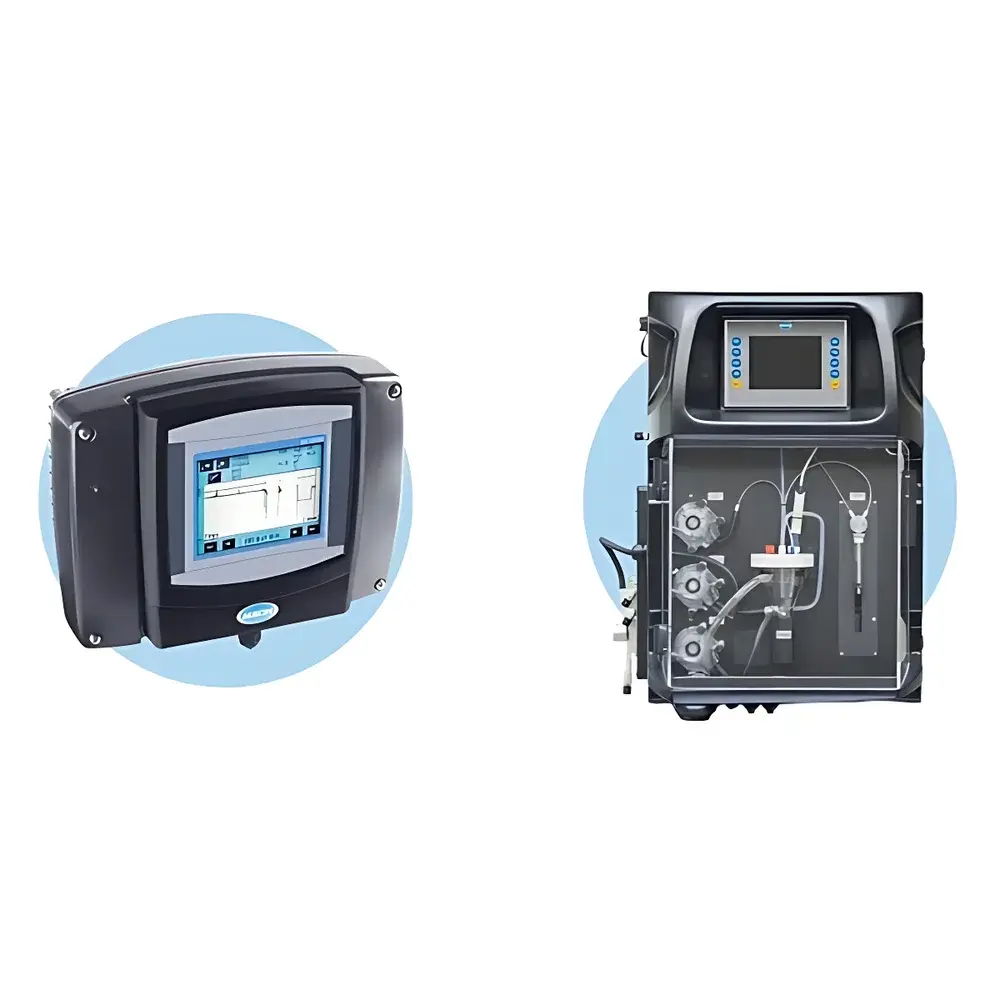
HACH EZ5006 Alkalinity and Hardness Analyzer
| Brand | HACH |
|---|---|
| Origin | Imported |
| Manufacturer Type | Manufacturer |
| Model | EZ5006 |
| Pricing | Upon Request |
Overview
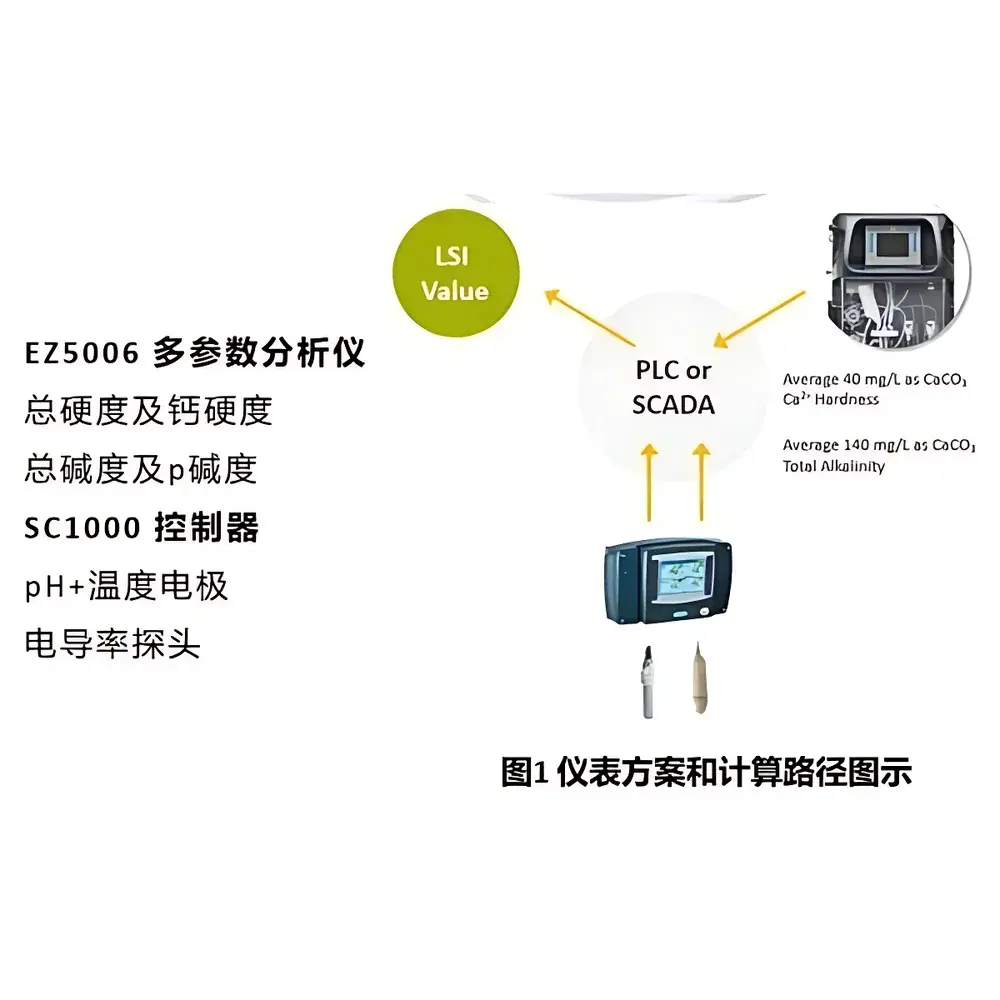
The HACH EZ5006 Alkalinity and Hardness Analyzer is an industrial-grade, online multiparameter analyzer engineered for continuous, real-time monitoring of total alkalinity and calcium hardness in drinking water treatment and distribution systems. It operates on standardized titrimetric principles—specifically, automated potentiometric titration with pH endpoint detection—aligned with ASTM D1067 (Standard Test Methods for Acidity or Alkalinity of Water) and ISO 9963-1 (Water quality — Determination of alkalinity — Part 1: Determination of total and carbonate alkalinity). The instrument is purpose-built to support Langelier Saturation Index (LSI) calculation—a critical corrosion control parameter widely adopted by utilities under U.S. EPA guidance and AWWA standards. By delivering stable, reproducible measurements of key LSI input variables (total alkalinity and calcium hardness), the EZ5006 enables automated, plant-wide LSI computation when integrated with PLC or SCADA infrastructure. Its robust architecture supports unattended operation in municipal water environments with fluctuating raw water quality, seasonal source variability, and stringent regulatory reporting requirements.
Key Features
- Automated dual-parameter analysis: Simultaneous determination of total alkalinity (as CaCO₃, mg/L) and calcium hardness (as CaCO₃, mg/L) via sequential acid–base titration with high-precision dosing pumps and glass pH electrode detection.
- Integrated LSI computation engine: Onboard algorithm calculates LSI in real time using measured alkalinity, calcium hardness, pH, temperature, and total dissolved solids (TDS)—all configurable per AWWA M11 guidelines.
- Modular, field-serviceable design: Self-contained analyzer cabinet with replaceable reagent cartridges, maintenance-free peristaltic tubing, and automatic air bubble detection to prevent titration errors.
- Industrial communications suite: Native Modbus TCP/RTU, 4–20 mA analog outputs (isolated), and optional OPC UA support for seamless integration into existing DCS, PLC, or SCADA platforms.
- GLP-compliant data handling: Timestamped measurement logs with audit trail, user access levels (operator/engineer/admin), and event-driven data export via USB or Ethernet.
Sample Compatibility & Compliance
The EZ5006 is validated for use with clarified, filtered, or finished drinking water samples exhibiting turbidity ≤ 5 NTU and suspended solids < 10 mg/L. It complies with U.S. EPA-approved methods for alkalinity and hardness determination and meets the performance criteria outlined in NSF/ANSI Standard 61 for materials in contact with drinking water. All firmware and calibration protocols are designed to satisfy GLP and GMP documentation requirements, including full traceability of calibration standards (NIST-traceable certified reference materials), reagent lot tracking, and electronic signature support for FDA 21 CFR Part 11 readiness. The analyzer has been deployed in compliance with AWWA’s “Water Quality Monitoring Guidance Manual” and referenced in multiple state primacy agency technical bulletins for corrosion control optimization.
Software & Data Management
The embedded HACH IntelliLink™ firmware provides intuitive web-based configuration via secure HTTPS interface (TLS 1.2+), eliminating dependency on proprietary PC software. Measurement data—including raw titration curves, endpoint detection logs, and LSI trend history—is stored locally for ≥ 90 days and exportable as CSV or XML. Optional cloud connectivity (via HACH Connect™ gateway) enables remote diagnostics, predictive maintenance alerts, and centralized fleet management across multiple facilities. Audit trails record all user actions (e.g., calibration, method change, manual override) with immutable timestamps and operator IDs—fully compliant with ISO/IEC 17025 internal quality system requirements.
Applications
- Real-time LSI monitoring for corrosion control in potable water distribution networks
- Process optimization at lime softening and recarbonation basins
- Early-warning detection of source water shifts (e.g., snowmelt, algal blooms, groundwater intrusion)
- Reduction of manual lab testing frequency while maintaining regulatory compliance (e.g., State Revolving Fund reporting)
- Support for utility-wide digital twin initiatives through structured, time-synchronized process data feeds
FAQ
Does the EZ5006 measure p-alkalinity and total hardness? Why aren’t they used in LSI calculations?
Yes—the instrument reports p-alkalinity and total hardness as secondary parameters for diagnostic purposes; however, only total alkalinity and calcium hardness are thermodynamically valid inputs for LSI per the original Langelier equation and AWWA-recommended practice.
Can the EZ5006 operate without PLC/SCADA integration?
Yes—it functions as a standalone analyzer with local display, alarm relays, and analog outputs; full LSI computation requires external configuration of temperature and TDS inputs unless paired with optional inline sensors.
What reagents are required, and what is their shelf life?
Standard reagents include 0.1 N H₂SO₄ titrant, pH 7.00 and 4.01 buffer solutions, and deionized water rinse—supplied in sealed, barcoded cartridges with 12-month ambient stability and automated low-reagent warnings.
Is the EZ5006 suitable for wastewater or seawater applications?
No—it is specifically validated for drinking water matrices; high chloride, sulfide, or organic content in wastewater or saline water interferes with potentiometric endpoint detection and violates method scope per ASTM D1067.
How often does the system require calibration verification?
Daily zero/span checks are recommended; full multi-point calibration is performed weekly or after reagent replacement, following HACH’s documented SOPs aligned with ISO/IEC 17025 Clause 7.7.




