
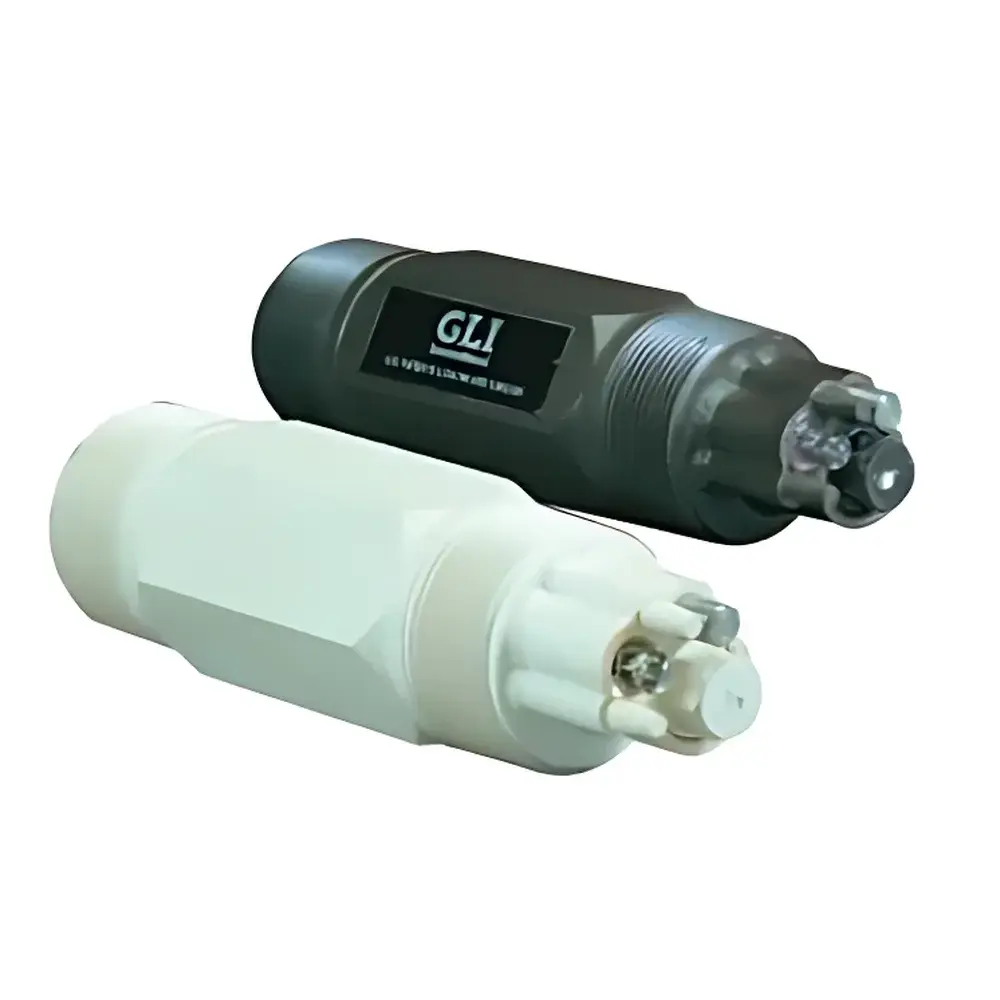
HACH GLI Differential pH/ORP Sensor Probe
| Brand | HACH |
|---|---|
| Origin | Imported |
| Manufacturer Type | Manufacturer |
| Instrument Type | Pen-style |
| Parameter Types | Dual (pH & ORP) |
| Temperature Range | –20 to 200 °C (PT100/PT1000) |
| pH Resolution | 0.001 |
| Calibration Buffers | pH 4.01, 7.00, 10.01 |
| Electrode Configuration | Triple-electrode differential design |
| Sensor Housing Materials | LCP (Liquid Crystal Polymer) and Ryton (PPS) |
| HF-Compatible Option | Antimony reference electrode |
| Replaceable Salt Bridge | Yes |
| Maximum Signal Transmission Distance | 914 m |
| Built-in Pre-amplifier | Yes |
| Mounting Options | Submersible, Flow-through, Retractable, and Pipe-threaded |
Overview
The HACH GLI Differential pH/ORP Sensor Probe is an industrial-grade electrochemical sensing platform engineered for continuous, high-reliability measurement of hydrogen ion activity (pH) and oxidation-reduction potential (ORP) in aggressive chemical environments. Unlike conventional two-electrode pH sensors, this probe implements GLI’s proprietary differential three-electrode architecture—comprising a measuring electrode, a reference electrode, and a solution ground (background) electrode—to eliminate common-mode errors induced by junction potential drift, ground loops, and reference contamination. This architecture fundamentally decouples the pH measurement from unstable liquid junction potentials, delivering enhanced long-term stability and immunity to fouling in slurries, viscous media, and highly conductive or low-conductivity solutions. The probe is widely deployed in flue gas desulfurization (FGD) systems for limestone slurry pH monitoring, caustic dosing control in wastewater treatment, and process analytics in chemical synthesis where exposure to aromatic hydrocarbons, ketones, esters, alcohols, and strong acids/bases is routine.
Key Features
- Differential triple-electrode configuration ensures stable, drift-resistant pH and ORP output under variable conductivity and temperature gradients
- Liquid Crystal Polymer (LCP) sensor body provides exceptional dimensional stability across thermal cycles, minimizing thermally induced signal curvature (thermal drift)
- Ryton (polyphenylene sulfide, PPS) housing offers superior chemical resistance to concentrated alkalis up to 50% NaOH at elevated temperatures
- Optional antimony-based reference electrode enables operation in hydrofluoric acid (HF)-containing streams where silver/silver chloride electrodes fail
- Integrated field-mounted preamplifier conditions the high-impedance mV signal locally, reducing noise susceptibility and enabling transmission over distances up to 914 meters without signal degradation
- Modular, user-serviceable design includes a replaceable salt bridge assembly—extending total probe service life and lowering total cost of ownership
- Multiple mechanical mounting options: submersible cage, inline flow cell, retractable assembly, and NPT-threaded process connection
Sample Compatibility & Compliance
The probe demonstrates proven compatibility with chemically heterogeneous matrices including lime slurry (CaCO₃/CaSO₄ suspensions), chlor-alkali brines, sulfuric acid scrubber solutions, organic solvent mixtures (e.g., acetone, methanol, ethyl acetate), and high-pH caustic wash streams. Its construction adheres to IEC 61298-2 for industrial process measurement equipment and meets IP68 ingress protection when installed with appropriate gland fittings. While not intrinsically rated for hazardous areas, it may be used in Zone 2/Class I Div 2 environments when paired with certified barrier systems. Calibration traceability aligns with NIST-traceable pH buffer standards (DIN 19266, ASTM D1293), supporting GLP and ISO/IEC 17025-compliant laboratory and plant QA/QC protocols.
Software & Data Management
The probe interfaces seamlessly with HACH SC Series controllers (e.g., SC200, SC1000), GLI 7000-series transmitters, and third-party PLCs via 4–20 mA analog output or Modbus RTU RS-485. Digital diagnostics—including electrode impedance monitoring, asymmetry potential tracking, and salt bridge depletion alerts—are accessible through HACH Insight software or native transmitter HMI screens. All calibration events, drift logs, and maintenance records are timestamped and support audit-ready export in CSV format. When integrated into validated systems, the probe’s firmware and data handling comply with FDA 21 CFR Part 11 requirements for electronic records and signatures, provided appropriate system-level controls (e.g., role-based access, electronic signatures, audit trail enablement) are implemented.
Applications
- Flue Gas Desulfurization (FGD): Real-time pH control of limestone slurry to optimize SO₂ removal efficiency and prevent scaling in absorber towers
- Chemical Manufacturing: In-line monitoring of reaction pH during esterification, neutralization, and polymerization processes involving aggressive organics
- Pharmaceutical Wastewater Treatment: ORP-guided redox control in biological denitrification and advanced oxidation processes
- Pulp & Paper Bleach Plant Control: Monitoring chlorine dioxide generation chemistry via ORP setpoint regulation
- Food & Beverage CIP Validation: Verifying alkaline cleaning cycle efficacy through pH/ORP endpoint detection
FAQ
What distinguishes the differential electrode architecture from conventional pH sensors?
It replaces the single reference electrode with two independent electrodes—a reference and a solution ground—enabling measurement of the potential difference between them. This cancels out common-mode interference such as ground loops and junction potential instability.
Can this probe be calibrated using standard NIST-traceable buffers?
Yes. It supports two-point or three-point calibration using certified pH 4.01, 7.00, and 10.01 buffers at 25 °C, with automatic temperature compensation via integrated PT100/PT1000 elements.
Is the probe suitable for high-temperature applications beyond 100 °C?
The PT1000 temperature element and Ryton/LCP materials permit continuous operation up to 200 °C; however, pH glass electrode response time increases above 80 °C, and calibration should be performed at process temperature when possible.
How often does the salt bridge require replacement?
Under typical FGD or wastewater conditions, replacement intervals range from 6 to 18 months depending on chloride concentration, flow velocity, and suspended solids loading—monitored via impedance diagnostics.
Does HACH provide warranty coverage for the differential sensor module?
Yes. HACH offers a 12-month limited warranty covering defects in materials and workmanship under normal use and proper installation per manufacturer guidelines.




