Hach GLI pH/ORP Online Analyzer
| Brand | Hach |
|---|---|
| Origin | USA |
| Manufacturer Type | Manufacturer |
| Product Category | Imported |
| Model | GLI pH/ORP |
| Price | Upon Request |
| pH Range | -2.00 to 14.00 |
| ORP Range | -2100 to +2100 mV |
| Temperature Range | -20.0 to +200.0 °C |
| Accuracy (pH) | ±0.05% FS (PRO-P3), ±0.2% FS (P53/P33) |
| Repeatability | ±0.05% FS (PRO-P3), ±0.1% FS (P53/P33) |
| Output | 4–20 mA (1 or 2 channels) |
| Relay Outputs | 4 (P53), 2 (P33), N/A (PRO-P3) |
| Enclosure Rating | NEMA 4X / IP65 |
| Explosion Protection | Class I, Division II, Groups A, B, C, D, T5 (PRO-P3 only) |
| Power Supply | 190–260 VAC (P53), 180–260 VAC (P33), 16–30 VDC (PRO-P3) |
| Mounting | Panel, Wall, or Pipe |
| Compliance | CE, UL, CSA, RoHS, EMC Directive 2014/30/EU, ATEX Directive 2014/34/EU (PRO-P3) |
Overview
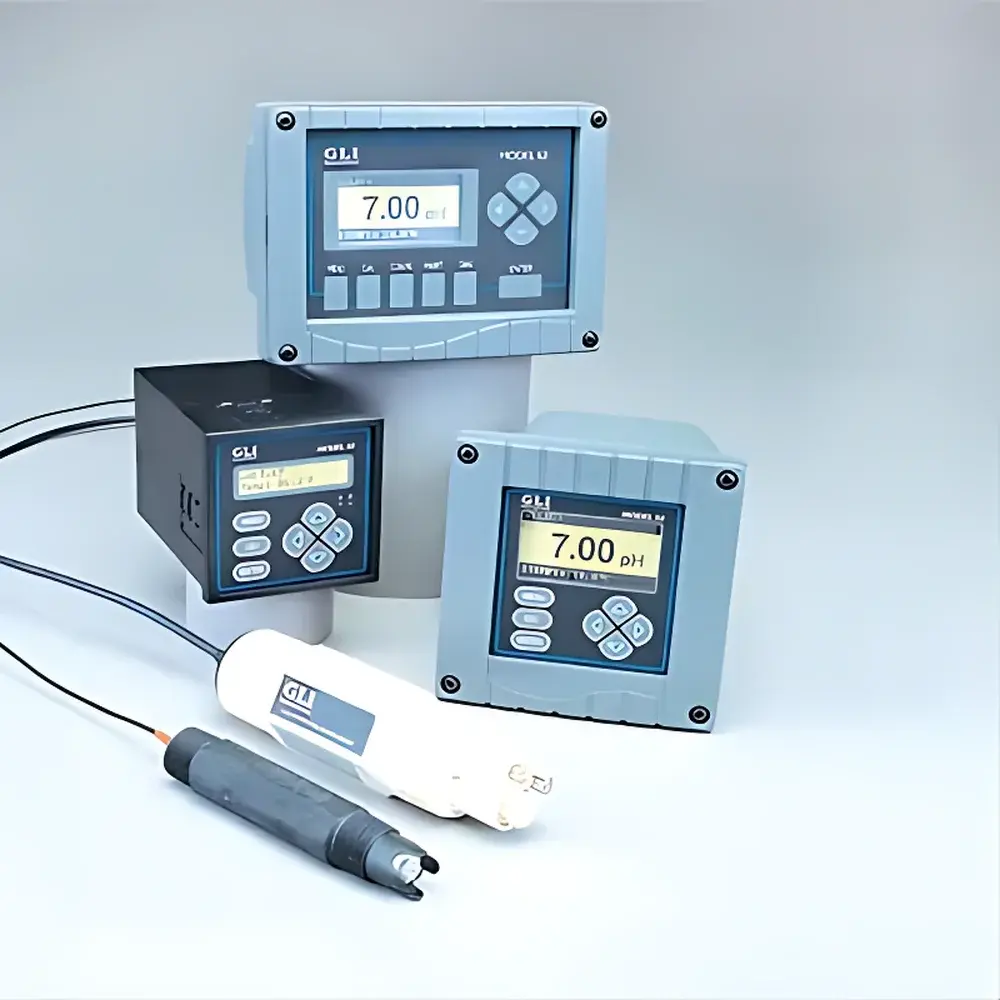
The Hach GLI pH/ORP Online Analyzer is an industrial-grade, continuous process monitoring instrument engineered for reliable measurement of hydrogen ion activity (pH) and oxidation-reduction potential (ORP) in demanding water and wastewater treatment, chemical processing, power generation, and pharmaceutical manufacturing applications. Based on potentiometric electrochemical principles, the analyzer interfaces with standard glass pH electrodes and noble-metal ORP reference electrodes to deliver stable, drift-resistant readings across aggressive chemical environments. Its modular architecture supports three controller variants—P53, P33, and PRO-P3—each optimized for distinct operational requirements: general-purpose industrial use (P53), compact panel-mount deployment (P33), and hazardous-area installation compliant with North American explosion-protection standards (PRO-P3). All models feature automatic temperature compensation (ATC) using integrated Pt100 or thermistor inputs, ensuring accurate pH and ORP values across the full operating range of –20.0 to +200.0 °C.
Key Features
- Triple-platform design: P53 (4-relay, dual 4–20 mA outputs, NEMA 4X/IP65), P33 (2-relay, dual 4–20 mA, panel-mount only), and PRO-P3 (intrinsically safe 4–20 mA transmitter, Class I Div 2 certified)
- High-precision analog signal conditioning with <0.05% full-scale accuracy (PRO-P3) and <0.1% repeatability
- Comprehensive diagnostics including electrode impedance monitoring, calibration status tracking, and sensor fault detection
- Password-protected configuration interface with multilevel access control (operator, technician, administrator)
- Full-featured menu navigation with intuitive LCD display and tactile keypad (P53/P33) or remote HART-enabled configuration (PRO-P3)
- Robust electromagnetic compatibility per EN 61326-1 and FCC Part 15, Class A, validated for plant-floor environments
- Configurable alarm logic with latching/non-latching modes, hysteresis adjustment, and time-delayed activation
Sample Compatibility & Compliance
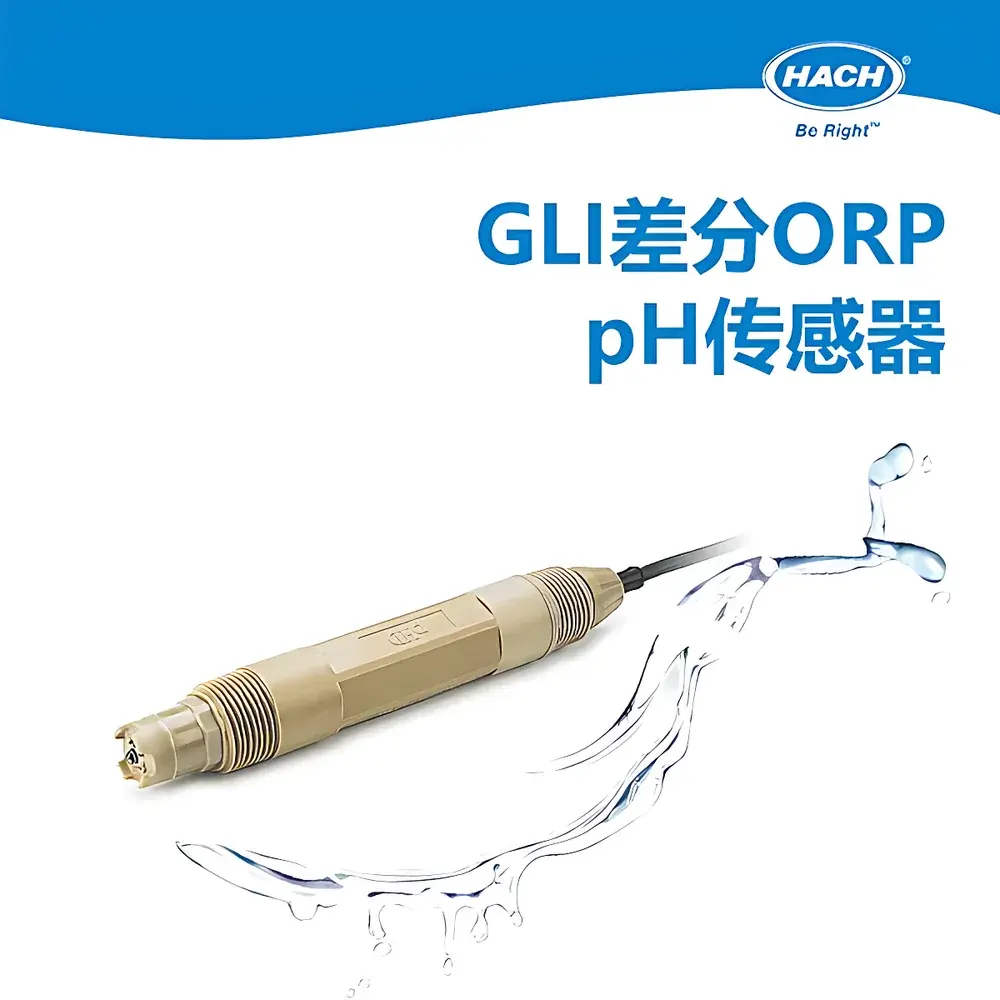
The GLI pH/ORP Analyzer is compatible with all industry-standard combination pH/ORP sensors—including double-junction, gel-filled, and refillable reference designs—as well as dedicated ORP electrodes with platinum or gold sensing elements. It supports both aqueous and low-conductivity media typical in boiler feedwater, ultrapure water (UPW), and semiconductor rinse applications. Regulatory compliance includes UL 61010-1 (safety), CSA C22.2 No. 61010-1, CE marking under the Low Voltage and EMC Directives, and ATEX certification (II 2G Ex db IIB T5 Gb) for the PRO-P3 variant. The system meets functional safety requirements aligned with IEC 61508 SIL 2 for critical control loops when integrated with appropriate safety instrumented systems (SIS).
Software & Data Management
While the GLI platform operates as a standalone field instrument, it integrates seamlessly into plant-wide automation via analog 4–20 mA outputs and optional HART 7 communication (PRO-P3). Configuration and calibration data—including date/time stamps, operator IDs, and calibration slope/asymmetry values—are retained internally with non-volatile memory. Audit trail functionality supports GLP/GMP environments by recording all parameter changes and calibration events with user attribution. For centralized monitoring, the analyzer connects to SCADA, DCS, or cloud-based asset management platforms through standard Modbus RTU (via optional interface module) or analog input cards. Firmware updates are performed via USB or serial interface, adhering to secure update protocols compliant with FDA 21 CFR Part 11 electronic record requirements when deployed in regulated pharmaceutical or biotech facilities.
Applications
- Continuous pH control in neutralization tanks, lime softening basins, and biological nutrient removal (BNR) systems
- ORP monitoring for chlorine, ozone, and permanganate dosing control in drinking water and wastewater disinfection
- Boiler and cooling tower chemistry management, including hydrazine and morpholine residual tracking
- pH stability verification in clean-in-place (CIP) and sterilize-in-place (SIP) cycles for food, beverage, and pharma production lines
- Effluent compliance monitoring per EPA NPDES permit limits and ISO 14001 environmental management systems
- Hazardous-area applications in petrochemical refineries, solvent recovery units, and flammable solvent blending stations (PRO-P3 variant)
FAQ
What is the difference between the P53, P33, and PRO-P3 controllers?
The P53 offers maximum flexibility with four programmable relays and dual isolated 4–20 mA outputs; the P33 is a space-optimized panel-mount version with two relays and dual outputs; the PRO-P3 is a single-channel, intrinsically safe transmitter designed exclusively for Class I, Division 2 hazardous locations.
Does the analyzer support automatic temperature compensation?
Yes—all models include built-in ATC using either Pt100 RTD or thermistor inputs, configurable via the setup menu to match the connected temperature sensor type and calibration curve.
Can the GLI pH/ORP Analyzer be used in ultrapure water applications?
It is suitable for UPW monitoring when paired with low-noise, flowing-junction pH electrodes and proper grounding practices to minimize electrical interference and junction potential drift.
Is firmware upgrade capability available?
Yes—firmware updates are delivered via Hach’s official support portal and installed using a USB-to-serial adapter or direct RS-232 connection, with version rollback and integrity verification included.
What documentation is provided for regulatory validation?
Hach supplies Factory Acceptance Test (FAT) reports, calibration certificates traceable to NIST standards, Declaration of Conformity (DoC), and IQ/OQ protocol templates supporting 21 CFR Part 11 and Annex 11 compliance.
Related Products