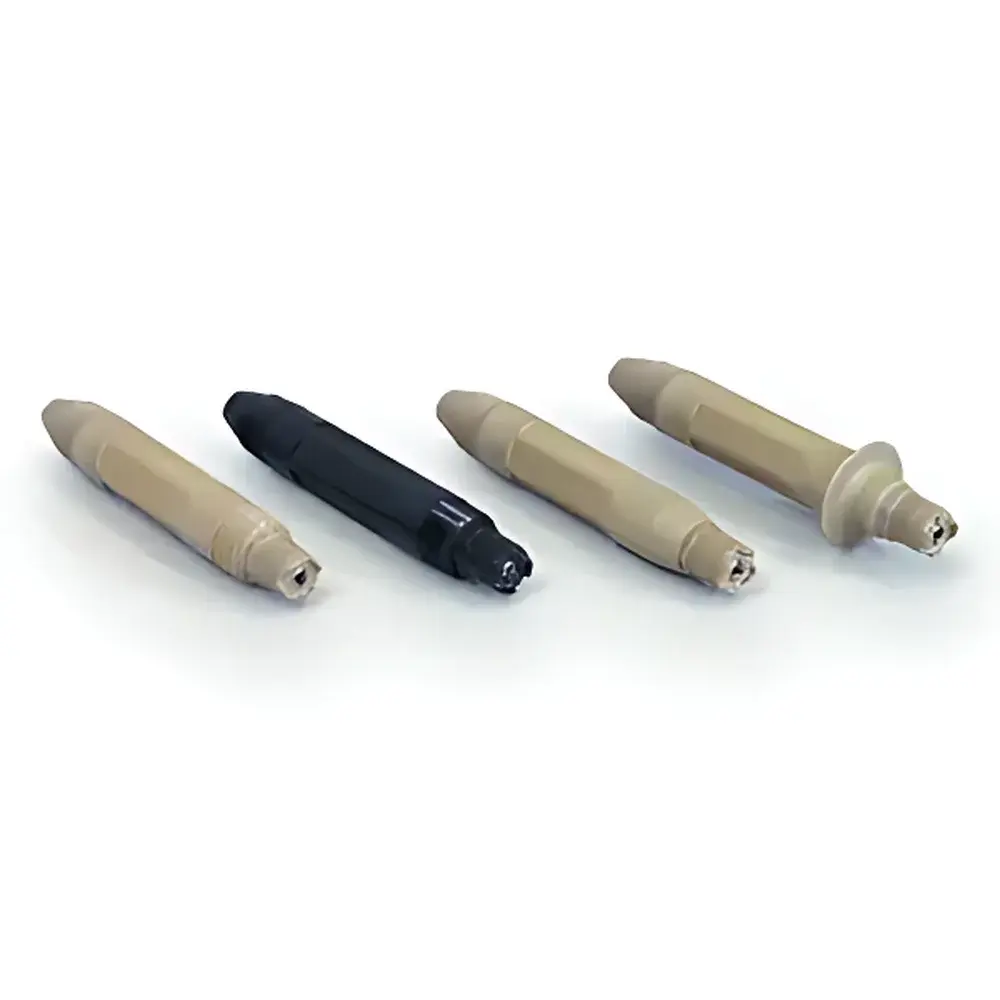
Hach GLI pHDTM Differential pH/ORP Electrode
| Brand | Hach |
|---|---|
| Origin | USA |
| Manufacturer Type | Authorized Distributor |
| Product Origin | Imported |
| Model | pHDTM Differential |
| Price | Upon Request |
| Measurement Range | pH 0–14, ORP −1500 to +1500 mV |
| Accuracy | ±0.01 pH, ±0.5 mV |
| Temperature Range | −5 to 95 °C |
| Max Pressure | 6.9 bar at 105 °C |
| Sensor Body Materials | PEEK or Ryton |
| Replaceable Salt Bridge | Yes |
| Optional Auto-Cleaning Assembly | Available |
| Patented Technology | US Patent No. 6,398,181 B1 |
Overview
The Hach GLI pHDTM Differential pH/ORP Electrode is an industrial-grade online sensing system engineered for high-reliability continuous measurement in aggressive process environments. Unlike conventional two-electrode pH sensors—comprising a single pH-sensitive glass electrode and a reference electrode—the pHDTM implements a patented three-electrode differential architecture (U.S. Patent No. 6,398,181 B1). This design introduces a third, stable background solution electrode that serves as a common reference point for both the measuring and reference elements. By computing the voltage difference between the measuring electrode and the background electrode, and separately between the reference electrode and the same background electrode, the system inherently cancels out common-mode drift, junction potential instability, and electrolyte contamination effects. This differential topology eliminates closed-loop errors associated with traditional reference electrode clogging or liquid junction polarization—particularly critical in lime slurry applications such as flue gas desulfurization (FGD) scrubbers, where high solids loading, abrasive particles, and extreme alkalinity challenge conventional sensor longevity and accuracy.
Key Features
- Patented differential three-electrode configuration ensures superior long-term stability and measurement reproducibility in harsh chemical environments.
- Replaceable salt bridge extends service life and simplifies maintenance without full sensor replacement.
- Integrated signal conditioning amplifier housed within the probe body minimizes noise pickup and improves signal integrity over extended cable runs (up to 4.5 m standard).
- Chemically resistant sensor body options: PEEK for broad compatibility—including resistance to hydrofluoric acid (HF) variants—and Ryton (PPS) for exceptional performance in highly caustic media (e.g., >15% NaOH).
- Multiple mechanical mounting configurations: insertion-type, sanitary tri-clamp flange, and threaded process connections compliant with ASME BPE and ISO 2852 standards.
- Optional integrated auto-cleaning assembly enables periodic mechanical or ultrasonic cleaning cycles to mitigate fouling in high-solids or viscous streams.
- Rated for continuous operation up to 95 °C and 6.9 bar (100 psi), with thermal expansion compensation engineered into PEEK and Ryton housings to prevent sensor delamination or seal failure.
Sample Compatibility & Compliance
The pHDTM electrode demonstrates proven compatibility across diverse industrial matrices: acidic and alkaline slurries, alcohols, hydrocarbons, aromatic solvents, esters, ketones, and oxidizing/reducing agents. It meets functional requirements for ASTM D1293 (Standard Test Method for pH of Water), ISO 7888 (Water Quality — Determination of pH), and USP (pH Measurements). Its robust construction supports compliance with GMP and GLP documentation frameworks when paired with Hach SC1000 or other validated transmitter platforms featuring audit-trail-enabled firmware (21 CFR Part 11–compliant data logging optional). The differential architecture inherently reduces calibration frequency drift, supporting extended intervals between verification per IEC 62255-2 and ISA-84.00.01 safety lifecycle guidelines for critical process control loops.
Software & Data Management
When interfaced with Hach’s SC1000 Universal Controller or compatible third-party DCS/PLC systems via 4–20 mA analog output or Modbus RTU/ASCII protocols, the pHDTM delivers time-stamped, temperature-compensated pH and ORP values with configurable alarm thresholds and diagnostic status flags (e.g., high impedance warning, salt bridge depletion indicator). Hach’s Instrument Manager software enables remote calibration validation, historical trend analysis, and predictive maintenance scheduling based on impedance monitoring logs. All calibration events, sensor diagnostics, and parameter changes are timestamped and user-logged—supporting traceability requirements under FDA 21 CFR Part 11 when deployed with electronic signature-enabled controllers.
Applications
- Flue Gas Desulfurization (FGD): Continuous pH monitoring of limestone/lime slurry in wet scrubbers, where traditional electrodes suffer rapid poisoning and drift.
- Chemical Manufacturing: Real-time control of batch neutralization, catalyst recovery, and waste stream treatment involving HF, chlorinated solvents, or strong alkalis.
- Pharmaceutical Water Systems: Monitoring purified water (PW) and water-for-injection (WFI) loop conductivity-pH correlation per USP .
- Pulp & Paper Bleach Plant Control: ORP-guided chlorine dioxide dosing in alkaline peroxide stages.
- Food & Beverage CIP Validation: Verification of acid wash and caustic rinse efficacy through dynamic pH/ORP profiling.
- Wastewater Biological Nutrient Removal (BNR): Anoxic zone redox potential monitoring for denitrification optimization.
FAQ
How does the differential measurement principle improve accuracy compared to conventional pH sensors?
It eliminates common-mode errors by referencing both the measuring and reference electrodes to a stable third background electrode—removing drift caused by reference junction contamination, temperature gradients, or ground-loop interference.
Can the pHDTM be used in hydrofluoric acid (HF) solutions?
Yes—select models (e.g., PD1P3) feature HF-resistant PEEK bodies and specialized reference electrolytes optimized for fluoride-rich environments.
Is the salt bridge truly field-replaceable without disassembling the entire probe?
Yes—modular salt bridge cartridges are accessed via a sealed rear port; replacement requires only standard torque tools and takes under five minutes.
What transmitter platforms are certified for use with the pHDTM?
Hach SC1000, SC200, and GLI 8000 series transmitters; also compatible with Emerson DeltaV, Siemens Desigo, and Rockwell Automation Logix PLCs via analog or Modbus interface.
Does the differential design affect calibration procedure?
No—calibration follows standard two-point (pH 4.01/7.00 or 7.00/10.01) methodology using NIST-traceable buffers; the transmitter automatically applies differential compensation algorithms internally.
Related Products