
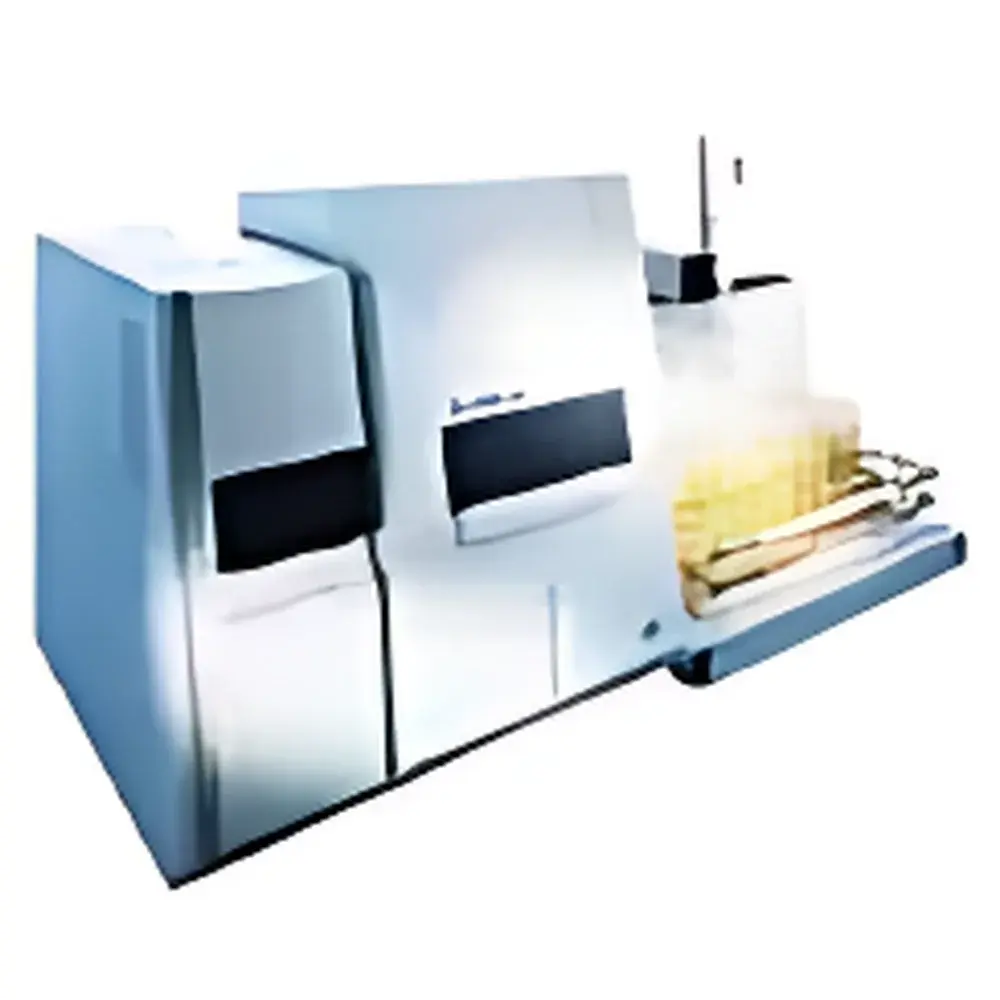
Hach IL500, IL530, and IL550 Series Total Organic Carbon (TOC) Analyzers
| Brand | Hach |
|---|---|
| Origin | Imported |
| Manufacturer Type | Manufacturer |
| Model | IL500, IL530, IL550 |
| Instrument Type | Laboratory Water Quality Analyzer |
| Oxidation Methods | UV/Persulfate (IL500), High-Temperature Catalytic Oxidation (IL530 & IL550) |
| Detection Method | NDIR for CO₂ |
| Sample Volume | 0.5–20 mL (IL500) |
| Measurement Parameters | TC, TIC, TOC, NPOC, TNb (optional) |
| TOC Range | 2 ppb–10,000 ppm (IL500) |
| Detection Limit | 2 µg/L (IL500) |
| Operating Temperature | 10–35 °C, ≤90% RH |
| Power Supply | 230 V, 50/60 Hz |
| Communication Interface | RS232 |
| Compliance | ISO 8245 |
Overview
The Hach IL500, IL530, and IL550 Series Total Organic Carbon (TOC) Analyzers are laboratory-grade instruments engineered for precise, trace-level quantification of organic carbon in aqueous matrices. These analyzers implement two complementary oxidation methodologies—ultraviolet/persulfate oxidation (IL500) and high-temperature catalytic oxidation up to 950 °C (IL530 and IL550)—to ensure complete conversion of refractory and non-volatile organic compounds into carbon dioxide. The resulting CO₂ is quantified using a highly stable, selective non-dispersive infrared (NDIR) detector. For IL550, the proprietary VITA (Velocity-Integrated Time-Averaged) signal processing technology normalizes transient fluctuations in carrier gas flow prior to integration, enabling accurate large-volume injections and delivering sub-ppb detection capability with minimal matrix interference. All models comply with ISO 8245 for TOC determination and support full speciation: total carbon (TC), total inorganic carbon (TIC), TOC (by difference or direct NPOC mode), and—on IL530 and IL550—total bound nitrogen (TNb) via parallel CLD (chemiluminescence detection) or ECD (electron capture detection).
Key Features
- Three-tier platform architecture: IL500 (UV/persulfate), IL530 (HTCO + TNb option), IL550 (HTCO + VITA-enhanced NDIR + dual TNb detection)
- VITA technology (IL550 only): Real-time gas-flow normalization eliminates drift from pressure or pump variability, ensuring reproducible integrals across variable sample loads
- Multi-parameter capability: Simultaneous or sequential measurement of TOC, TC, TIC, NPOC, and TNb without hardware reconfiguration
- Three-dimensional sample introduction: Automated syringe positioning enables rapid sequential analysis of up to three sample streams or standards without manual intervention
- High-temperature combustion module (HSC1300 optional): Extends capability to solid and slurry samples via 1300 °C flash combustion, compliant with ASTM D7573 for solids TOC
- No-dilution operation across full dynamic range: Eliminates manual dilution errors and reduces analyst workload while preserving low-end sensitivity
Sample Compatibility & Compliance
The IL series accommodates diverse water matrices—including potable water, wastewater effluents, industrial process streams, cooling tower water, and surface waters—with minimal pretreatment. Particle tolerance spans 50–500 µm (IL530/IL550), permitting direct injection of lightly turbid samples. For regulatory reporting, the systems meet ISO 8245 and are validated for use in GLP and GMP environments. Data integrity is maintained through audit-trail-enabled software compliant with FDA 21 CFR Part 11 requirements when configured with appropriate user access controls and electronic signatures. TNb measurements adhere to EPA Method 353.2 (CLD) and ISO 11908 (ECD), supporting integrated carbon–nitrogen mass balance assessments required in nutrient discharge monitoring.
Software & Data Management
Instrument control, method sequencing, calibration management, and report generation are handled via Hach’s TOC Expert software. The interface supports real-time graphical display of chromatographic-like CO₂ peaks, baseline correction algorithms, and automatic peak integration using customizable retention windows. All raw signals, processed results, operator actions, and system diagnostics are timestamped and stored with immutable audit trails. Export formats include CSV, PDF, and XML for LIMS integration. Remote diagnostics and firmware updates are supported over Ethernet (RS232 remains standard; optional USB/Ethernet adapters available). Calibration verification checks (e.g., continuing calibration verification per USP ) are programmable and automatically logged.
Applications
These analyzers serve critical roles across multiple sectors: validation of pharmaceutical water systems (PW, WFI, purified water per USP and EP 2.2.44); compliance monitoring of municipal wastewater discharge permits (e.g., NPDES); source water characterization in drinking water treatment plants; corrosion control in power plant cycle chemistry; and research on carbon cycling in environmental hydrology. The IL550’s VITA-enhanced sensitivity supports ultrapure water certification (e.g., ASTM D5127), while the IL530’s dual TNb detection supports simultaneous carbon and nitrogen load tracking in bioreactor effluents and denitrification studies.
FAQ
What oxidation method does the IL500 use, and how does it differ from IL530/IL550?
The IL500 employs UV/persulfate oxidation at 185 nm and 254 nm, suitable for low-to-moderate TOC concentrations in clean water matrices. IL530 and IL550 use high-temperature catalytic oxidation (up to 950 °C), enabling complete mineralization of recalcitrant organics found in wastewater and industrial effluents.
Can the IL550 measure total nitrogen without adding hardware?
Yes—TNb measurement is enabled via software configuration and selection of either CLD or ECD detection modules, both integrated within the same analyzer housing.
Is solid-sample analysis possible with these instruments?
Yes, when coupled with the optional HSC1300 high-temperature solid combustion module, all three models support TOC analysis of soils, sediments, and filter media per ASTM D7573.
How does VITA technology improve measurement robustness?
VITA dynamically corrects for carrier gas flow variations by time-normalizing the CO₂ signal integral, eliminating artifacts caused by pump pulsation or regulator instability—particularly beneficial during large-volume injections (>10 mL) and extended unattended runs.
Are calibration and verification procedures traceable to international standards?
All calibrations use NIST-traceable potassium hydrogen phthalate (KHP) and sodium bicarbonate standards. Verification protocols align with ISO/IEC 17025 requirements and include system suitability tests per USP , with full documentation exportable for regulatory audits.







