
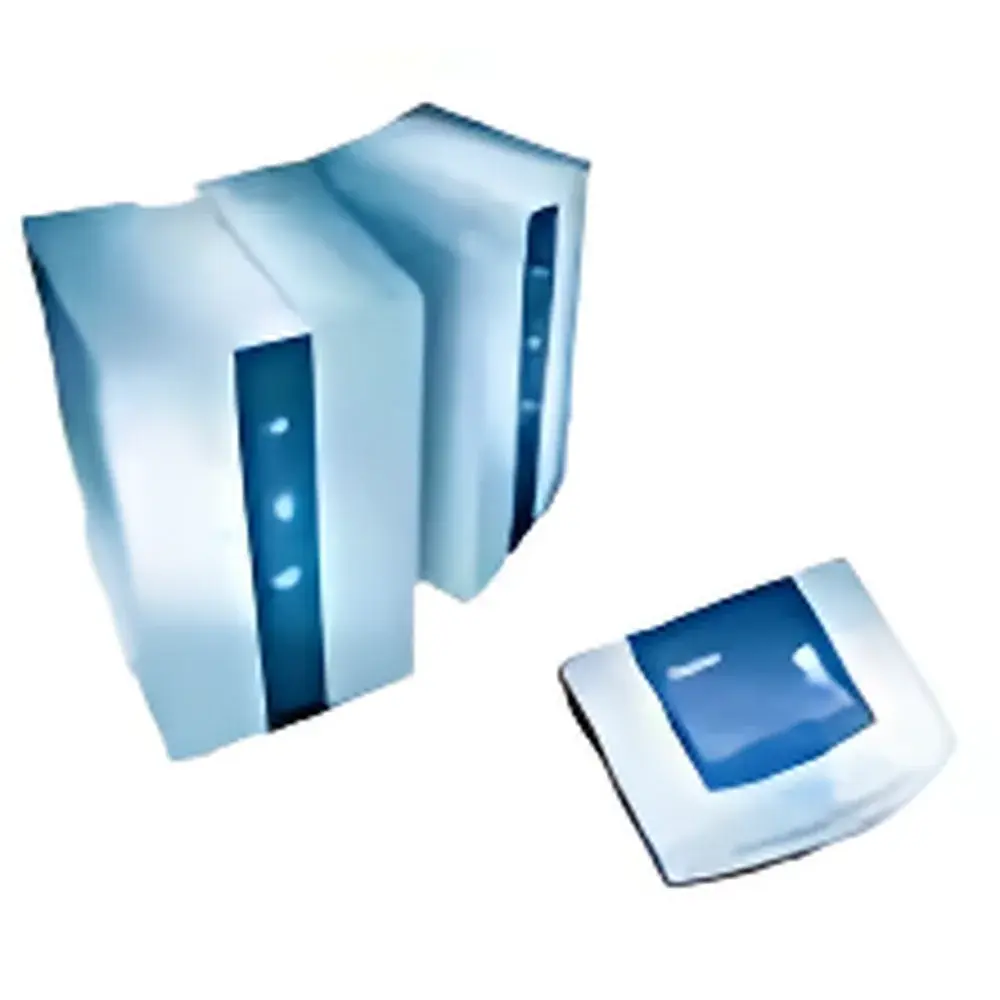
Hach IL500 Total Phosphorus Automated Analyzer
| Brand | Hach |
|---|---|
| Origin | Imported |
| Manufacturer Type | Manufacturer |
| Application | Laboratory Use |
| Measured Parameter | Total Phosphorus |
| Measurement Principle | Acidic Persulfate Digestion + Ammonium Molybdate Colorimetry at 880 nm |
| Measurement Range | 0.01–3.8 mg/L as PO₄–P |
| Accuracy | <2% at 1 mg/L |
| Detection Limit | 0.01 mg/L |
| Resolution | 0.001 mg/L |
| Sample pH Range | 2–10 |
| Digestion Conditions | 150 °C, 6 bar |
| Particle Tolerance | Up to 100 µm |
| Calibration Method | Single- or Multi-point |
| Auto-sampler Options | 36-position (with stirring) or 53-position (without stirring) |
| Display | Color LCD |
| Weight | 40 kg (digestion/analysis unit), 5 kg (auto-sampler) |
Overview
The Hach IL500 Total Phosphorus Automated Analyzer is a fully integrated laboratory instrument engineered for high-throughput, standardized determination of total phosphorus in water and wastewater samples. It implements a validated two-stage analytical workflow: first, acid persulfate oxidation under elevated temperature (150 °C) and pressure (6 bar) to convert all phosphorus species—including organic phosphates, condensed phosphates, and particulate-bound forms—into orthophosphate; second, colorimetric quantification via the ammonium molybdate method at 880 nm. This approach aligns with widely accepted regulatory frameworks including EPA Method 365.4, ISO 6878:2004, and DIN EN ISO 15681-1, ensuring data defensibility in compliance-driven environments such as municipal wastewater treatment plants, power generation facilities, and environmental testing laboratories operating under GLP or ISO/IEC 17025 accreditation.
Key Features
- Modular architecture comprising three dedicated units: Control Unit, Sample Transfer Unit, and Digestion & Analysis Unit—enabling serviceability, scalability, and operational redundancy.
- Two auto-sampler configurations: 36-position carousel with integrated magnetic stirring (for heterogeneous or settling-prone samples) and 53-position carousel optimized for maximum throughput in homogeneous matrices.
- Robust fluidic design permitting passage of suspended particles up to 100 µm—eliminating pre-filtration requirements for many raw wastewater and surface water applications.
- Automated post-measurement line rinsing with deionized water and air purge, minimizing carryover and ensuring measurement reproducibility across sample batches.
- Pre-packaged, factory-prepared reagents reduce analyst exposure to hazardous chemicals (e.g., concentrated sulfuric acid, potassium persulfate) and eliminate manual reagent preparation errors.
- Integrated color LCD interface provides real-time status monitoring of digestion cycles, optical absorbance readings, calibration progress, and system diagnostics.
- Controller supports concurrent operation of both IL500P (total phosphorus) and IL500N (total nitrogen) systems—streamlining multi-parameter analysis without hardware duplication.
Sample Compatibility & Compliance
The IL500 accepts liquid samples within pH 2–10 without dilution or neutralization. Its digestion chamber tolerates turbid, colored, or mildly saline matrices typical of influent wastewater, effluent discharges, cooling tower water, and lake/reservoir monitoring samples. The system meets functional requirements outlined in US EPA Clean Water Act reporting protocols and supports audit-ready documentation per 21 CFR Part 11 when paired with Hach’s compliant LIMS integration tools. All consumables—including digestion vials, cuvettes, and reagent cartridges—are traceably lot-numbered and supplied with CoA documentation. System validation reports include precision (RSD <1% at 1 mg/L), accuracy (recovery 98–102% on certified reference materials), and limit-of-detection verification (0.01 mg/L PO₄–P).
Software & Data Management
Instrument control and data handling are managed through Hach’s proprietary IL Series Software, compatible with Windows-based laboratory workstations. The software enables method configuration (digestion time/temperature, calibration curve type, QC frequency), automated report generation (PDF/CSV), and secure user access levels (operator, supervisor, administrator). Audit trails record all critical events—including method edits, calibration updates, and result overrides—with timestamps and operator IDs. RS232 serial and infrared wireless interfaces allow direct connection to local networks or legacy lab infrastructure. Data export conforms to ASTM E1382 and ISO/IEC 17025 clause 7.7 requirements for raw data integrity and long-term archival.
Applications
- Regulatory compliance monitoring at municipal and industrial wastewater treatment plants (NPDES permits, BAT limits).
- Process control in phosphate removal optimization (e.g., biological nutrient removal, chemical precipitation dosing).
- Environmental surveillance of eutrophication-sensitive watersheds and reservoirs.
- Quality assurance in boiler feedwater and condensate systems within thermal power generation.
- Research-grade phosphorus speciation studies when coupled with offline fractionation techniques.
FAQ
Does the IL500 require daily maintenance or recalibration?
Routine calibration is performed per user-defined schedule (e.g., before each batch or every 10 samples); no daily recalibration is mandated if QC checks meet acceptance criteria (±5% of target value). Preventive maintenance includes quarterly pump tubing replacement and annual optical path inspection.
Can the IL500 analyze total phosphorus in seawater or high-salinity samples?
Yes—provided salinity remains below 35 g/L (typical seawater). For brines or industrial process streams >50 g/L, matrix-matched calibration and optional dilution module integration are recommended.
Is method validation support available from Hach?
Hach provides application notes, ICP-MS cross-validation datasets, and on-site IQ/OQ documentation packages compliant with ISO/IEC 17025 and FDA expectations.
What safety certifications does the IL500 hold?
The system complies with IEC 61010-1 (Safety Requirements for Electrical Equipment for Measurement, Control, and Laboratory Use) and carries CE, UL, and CSA marks for global deployment.
How is data integrity ensured during power interruption?
Non-volatile memory retains method parameters, calibration curves, and pending results; upon restart, the system resumes digestion cycles from the last stable checkpoint without data loss.







