
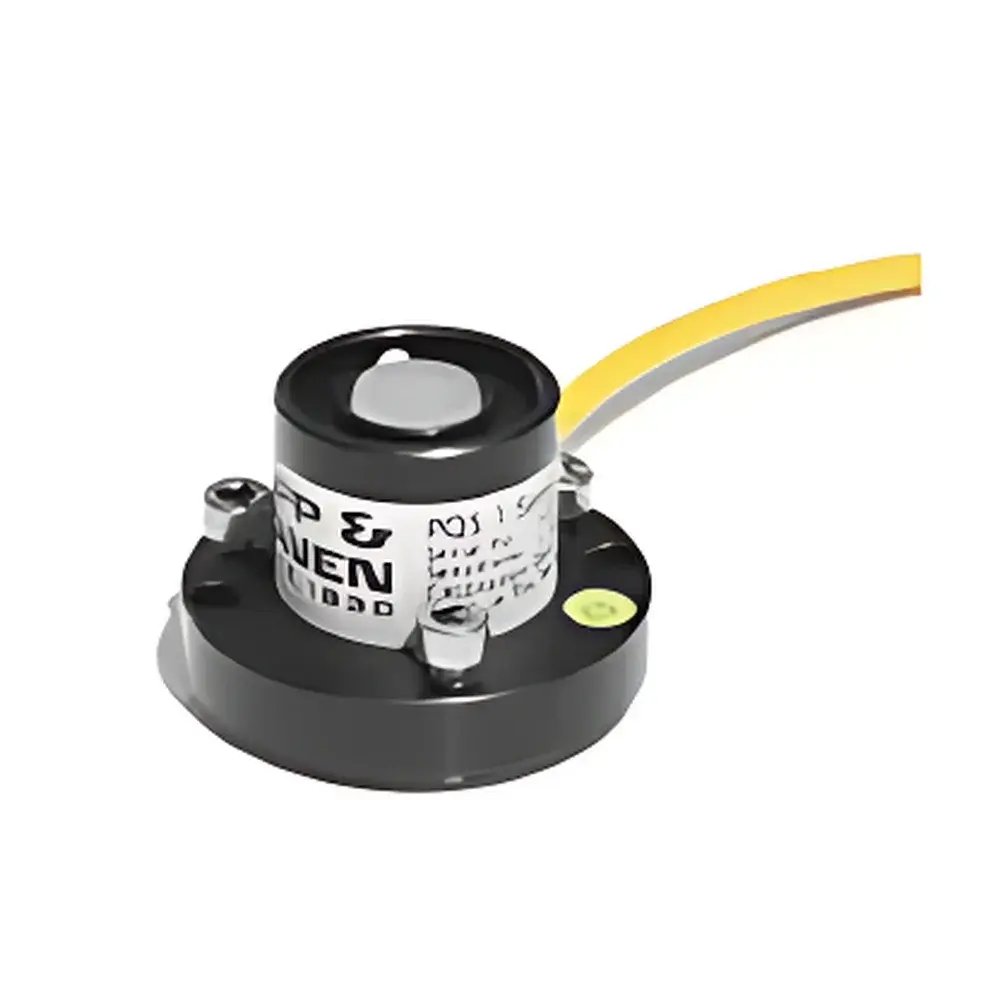
HACH PAR Quantum Sensor for Photosynthetically Active Radiation
| Brand | Kipp & Zonen |
|---|---|
| Origin | Imported |
| Model | PQS1 |
| Output Signal | 0–2.5 V analog (with integrated amplifier) |
| Cable Length | Standard 5 m (optional 15 m) |
| Spectral Range | 400–700 nm (McCree-defined PAR) |
| Cosine Response Error | < ±3% at 75° zenith angle |
| Operating Temperature | –40 °C to +70 °C |
| IP Rating | IP68 |
| Housing Material | Anodized aluminum with quartz diffuser |
| Compliance | ISO 9047, ASTM E2847, WMO Guide to Meteorological Instruments and Methods of Observation |
Overview
The HACH PAR Quantum Sensor (Model PQS1), engineered by Kipp & Zonen, is a precision optical instrument designed to quantify photosynthetically active radiation (PAR) in terrestrial and controlled-environment ecosystems. PAR—defined as the spectral irradiance between 400 nm and 700 nm—represents the photon flux density that drives photochemical reactions in plant chlorophyll systems. Unlike broadband solar radiometers, this sensor employs a quantum-based photodiode calibrated to McCree’s (1972) physiological action spectrum, ensuring each photon within the 400–700 nm band contributes equally to the output signal regardless of wavelength. The measurement output is expressed as photosynthetic photon flux density (PPFD) in µmol·m⁻²·s⁻¹—a biologically relevant metric essential for modeling carbon assimilation, stomatal conductance, and canopy-level energy partitioning. Its thermally stable silicon photodiode, coupled with a precision cosine-corrected quartz diffuser, delivers high angular response fidelity under variable sky conditions—from overcast diffuse illumination to direct beam incidence at low solar elevation angles.
Key Features
- Optimized quantum response aligned with the McCree PAR action spectrum (400–700 nm), traceably calibrated against NIST-traceable standards
- High-fidelity cosine correction (< ±3% error up to 75° zenith angle), validated per ISO 9047 for hemispherical irradiance measurement
- Robust anodized aluminum housing with IP68 ingress protection, resistant to UV degradation, pesticide exposure, and condensation
- Integrated signal conditioning amplifier delivering a linear 0–2.5 V analog output, compatible with Adcon, Campbell Scientific, Delta-T, and other industrial data loggers
- Field-serviceable design: removable quartz diffuser, accessible calibration port, and bubble-level-equipped mounting flange for rapid leveling during installation
- Extended cable options (5 m standard; 15 m optional) with shielded twisted-pair construction to minimize electromagnetic interference in greenhouse or agronomic settings
Sample Compatibility & Compliance
The PQS1 is suitable for continuous deployment across diverse environmental contexts—including open-field agriculture, forest canopy stratification studies, vertical farming installations, and climate-controlled growth chambers. It meets the performance criteria outlined in ASTM E2847 (Standard Practice for Measurement of Photosynthetically Active Radiation) and aligns with the World Meteorological Organization (WMO) Guide to Meteorological Instruments and Methods of Observation for solar radiation sensors. Its calibration protocol adheres to ISO/IEC 17025 requirements when performed by accredited laboratories. For regulated research environments—including GLP-compliant crop physiology trials or FDA-regulated horticultural pharmaceutical production—the sensor supports audit-ready documentation through optional calibration certificates with uncertainty budgets and traceability statements.
Software & Data Management
The PQS1 operates as a standalone analog transducer and integrates seamlessly into existing SCADA, IoT, or edge-data acquisition platforms. When paired with HACH’s Adcon telemetry systems or third-party loggers (e.g., CR1000X, DL2e), raw voltage outputs are converted to PPFD using factory-supplied sensitivity coefficients (typically 100 µmol·m⁻²·s⁻¹ per mV). Time-series data can be timestamped, stored locally, and transmitted via LoRaWAN, cellular, or Ethernet protocols. For long-term ecological monitoring, the sensor supports automated QA/QC routines—including temperature-compensated drift correction and periodic zero-check validation using onboard dark-current diagnostics. All calibration metadata and firmware revision logs are exportable in CSV or NetCDF format to support FAIR (Findable, Accessible, Interoperable, Reusable) data principles in academic and governmental repositories.
Applications
- Agricultural light management: Quantifying supplemental LED efficacy, optimizing photoperiod scheduling, and validating DLI (Daily Light Integral) targets for high-value crops
- Forest ecology: Measuring vertical PAR gradients above, within, and beneath canopies to parameterize LAI (Leaf Area Index) models and estimate net primary productivity (NPP)
- Controlled environment agriculture (CEA): Enabling closed-loop lighting control in greenhouses and vertical farms via real-time PPFD feedback
- Climate change research: Supporting long-term phenology studies by correlating PAR exposure with budburst timing, flowering onset, and senescence progression
- Solar energy co-location analysis: Assessing spectral shading impacts on bifacial PV arrays when deployed alongside agrivoltaic systems
- Academic teaching labs: Providing reproducible, field-validated PAR datasets for plant physiology, ecosystem modeling, and environmental instrumentation courses
FAQ
What is the difference between PAR and lux measurements?
PAR quantifies photon flux (µmol·m⁻²·s⁻¹) within the 400–700 nm range relevant to photosynthesis, while lux measures luminous flux (lm·m⁻²) weighted by human photopic vision—making lux unsuitable for plant science applications.
Does the PQS1 require periodic recalibration?
Yes. Annual recalibration is recommended for scientific-grade accuracy; however, field stability typically exceeds ±2% per year under normal outdoor exposure conditions.
Can the sensor be used underwater or in aquatic mesocosms?
No. Although IP68-rated for submersion in freshwater for short durations, its cosine response is optimized for air interface; water immersion introduces significant refraction errors and is not supported.
Is the analog output compatible with Modbus or SDI-12 protocols?
Not natively. The 0–2.5 V output requires an external ADC module or data logger with analog input capability; digital communication protocols must be implemented at the system level.
How does temperature affect measurement accuracy?
The integrated amplifier includes temperature compensation circuitry; residual thermal drift is specified at ≤ ±0.1 %/°C across the full operating range (–40 °C to +70 °C).
Related Products







