
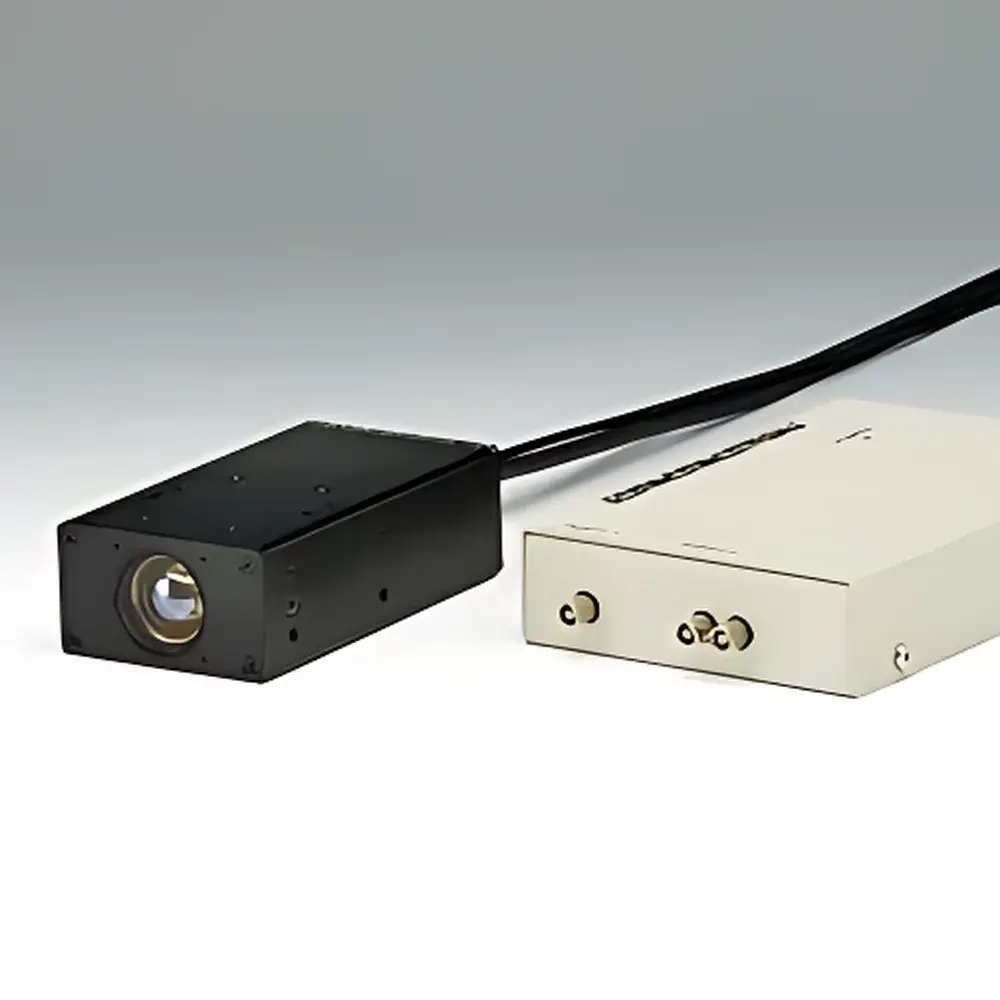
Hamamatsu Wide Dynamic Range Photomultiplier Tube Module H13126_C12918
| Brand | Hamamatsu |
|---|---|
| Origin | Japan |
| Manufacturer Type | Original Equipment Manufacturer (OEM) |
| Product Category | Imported Optical Component |
| Model | H13126_C12918 |
| Component Type | Optical Sensor Module |
| Output Interfaces | Digital (photon counting) + Analog (voltage) |
| Connectivity | USB 2.0 |
| Compliance | CE-marked (C12918-A1/A2/A3 variants for JP/US/EU markets) |
| Operating Temperature | 0 to +40 °C |
| Storage Temperature | −20 to +60 °C |
Overview
The Hamamatsu Wide Dynamic Range Photomultiplier Tube Module H13126_C12918 is an integrated optical detection system engineered for quantitative light measurement across eight decades of intensity—from single-photon events to milliwatt-level irradiance—within a single acquisition cycle. This capability is achieved through parallel signal extraction: the H13126 PMT head delivers time-resolved digital pulses for ultra-low-light photon counting, while simultaneously generating a high-fidelity analog voltage output proportional to incident flux in the visible-to-near-UV range (typical spectral response: 160–650 nm, peak at ~420 nm). The C12918 series data acquisition module serves as the synchronized interface, digitizing both signal streams with timestamp alignment and enabling real-time co-processing. Unlike conventional sequential-range switching or dual-instrument setups, this architecture eliminates gain recalibration delays, signal discontinuities, and dynamic range interpolation errors—critical for time-resolved spectroscopy, luminescence decay analysis, and transient optical event capture.
Key Features
- True 8-decade linear dynamic range (10−16 W to 10−8 W typical, dependent on photocathode QE and integration time)
- Simultaneous dual-output architecture: TTL-compatible digital photon counting channel + 16-bit analog voltage output (0–10 V full scale)
- Integrated high-voltage power supply (−1000 V DC, adjustable via software) with temperature-compensated stability (±0.05% over 0–40 °C)
- C12918 data acquisition module supports USB 2.0 interface with <10 µs inter-channel synchronization jitter
- Region-specific variants: C12918-A1 (JIS-compliant, 100 V AC), C12918-A2 (UL-listed, 120 V AC), C12918-A3 (EN 61000-6-3 compliant, 230 V AC)
- Optimized for low-noise operation: dark count rate <5 cps (H13126, cooled to 20 °C), analog RMS noise <150 µV (10 Hz–1 MHz bandwidth)
Sample Compatibility & Compliance
The H13126_C12918 module is compatible with standard 1/2-inch diameter optical mounts and accepts fiber-coupled (SMA 905), free-space, or lens-coupled illumination geometries. Its bialkali photocathode provides high quantum efficiency (>25% at 400 nm) and low thermionic emission—enabling reliable single-molecule fluorescence detection and chemiluminescence quantification without cryogenic cooling. The system complies with IEC 61000-6-2 (immunity) and IEC 61000-6-4 (emissions) for laboratory electromagnetic environments. C12918 variants meet regional safety standards: PSE (Japan), UL 61010-1 (USA), and EN 61010-1:2010+A1:2019 (EU). Firmware supports audit-trail logging per FDA 21 CFR Part 11 requirements when used with validated software configurations.
Software & Data Management
Hamamatsu provides the HCPL (Hamamatsu Control and Processing Library) SDK for Windows/Linux, supporting C/C++, Python (via ctypes), and MATLAB bindings. The included HCPL-Viewer application enables real-time overlay of photon-counting histograms and analog waveform traces, with export to HDF5, CSV, or TDMS formats. Signal fusion algorithms perform automatic gain-matching and temporal alignment between digital and analog channels using hardware-synchronized timestamps. Raw data buffers support ring-buffer acquisition at up to 20 MS/s aggregate throughput (combined channels), with onboard FIFO memory (128 MB) preventing USB transfer bottlenecks during long-duration experiments. All firmware updates are digitally signed and verified prior to installation.
Applications
- Time-resolved fluorescence lifetime imaging (FLIM) in confocal and widefield microscopes
- Ultra-weak bioluminescence monitoring in circadian rhythm and oxidative stress studies
- Plasma diagnostics requiring ns-scale pulse resolution and mW-level linearity
- Quantitative PCR and ELISA plate reader calibration traceability
- Low-light Raman spectroscopy where Stokes/anti-Stokes intensity ratios span >106
- Particle sizing via laser-induced fluorescence in aerosol and colloidal systems
FAQ
Can the H13126_C12918 be operated in photon-counting mode only, without analog output?
Yes—the analog output can be disabled in firmware, allowing dedicated single-photon counting with sub-nanosecond timing resolution.
Is external cooling required for optimal dark count performance?
Not mandatory; the H13126 achieves <5 cps dark count at ambient 20 °C. For sub-1 cps operation, optional Peltier cooling (H13126-COOL accessory) is available.
Does the C12918 module support trigger input for external synchronization?
Yes—TTL-compatible trigger input (BNC) enables precise start-of-acquisition alignment with lasers, choppers, or other lab equipment.
What is the maximum sustainable count rate before digital pulse pile-up occurs?
The H13126 supports up to 5 MHz sustained photon arrival rate with <1% dead-time loss; higher rates require pulse-height discrimination or deconvolution post-processing.
Are calibration certificates traceable to NIST or JCSS standards provided?
Yes—each unit ships with a factory calibration report (photocathode radiant sensitivity, dark current, gain uniformity) traceable to JCSS (Japan) or NIST (USA) via Hamamatsu’s ISO/IEC 17025-accredited metrology lab.





