
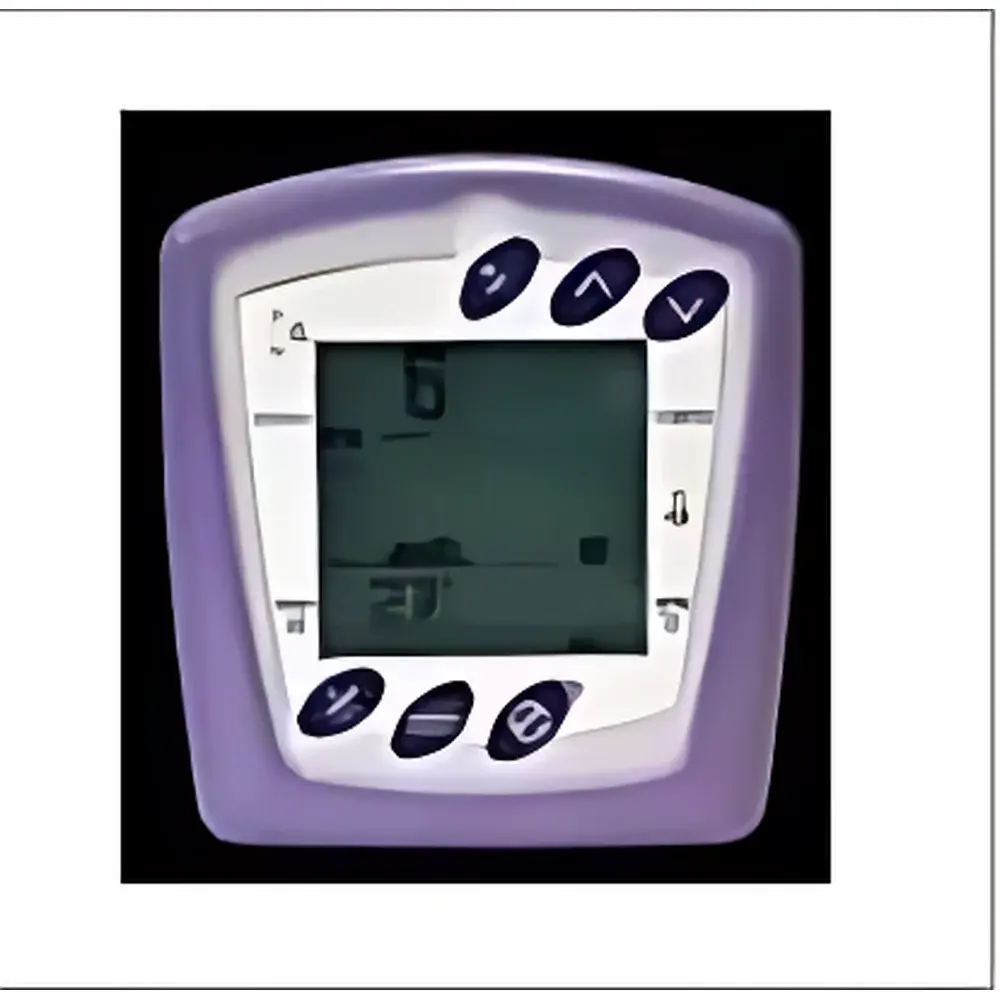
Handheld Capnograph for Animal Patient Monitoring
| Origin | USA |
|---|---|
| Manufacturer Type | Distributor |
| Origin Category | Imported |
| Model | CapnoScan Pro |
| Price | Upon Request |
Overview
The Handheld Capnograph for Animal Patient Monitoring is a portable, clinical-grade capnography device engineered for real-time, non-invasive measurement of end-tidal CO2 (EtCO2), respiratory waveform morphology, and spontaneous respiratory rate in conscious or anesthetized laboratory animals and veterinary patients. Based on mainstream infrared absorption spectroscopy (IR), the instrument detects CO2 concentration by measuring the characteristic 4.26 µm absorption band of carbon dioxide molecules in exhaled gas sampled via sidestream or mainstream configurations (adapter-dependent). Designed specifically for life science research and preclinical monitoring, it supports continuous waveform acquisition with millisecond-level temporal resolution, enabling precise assessment of ventilation adequacy, airway patency, cardiopulmonary resuscitation efficacy, and anesthetic depth in rodent, rabbit, canine, and porcine models.
Key Features
- Real-time EtCO2 display with numeric value (range: 0–150 mmHg), high-fidelity capnogram waveform, and automatic respiratory rate calculation (5–120 breaths/min)
- User-configurable audible and visual alarms — adjustable thresholds for EtCO2, apnea duration, and rate deviation; LED flash alerts synchronized with alarm events
- Integrated infrared (IR) data interface compliant with IrDA 1.1 standard for direct connection to compatible thermal printers (e.g., Brother PJ-600 series) without cables or drivers
- Rechargeable lithium-ion battery providing ≥8 hours of continuous operation; power management system with low-battery warning and auto-sleep mode
- Ergonomic handheld housing (630 g net weight) with IP22-rated enclosure for resistance against dust ingress and vertical dripping water during routine lab handling
- Quick-connect sampling line interface supporting both mainstream (for intubated subjects) and sidestream (for spontaneous breathing or nasal cannula use) configurations
Sample Compatibility & Compliance
The device is validated for use with common laboratory animal species including mice, rats, guinea pigs, rabbits, dogs, and pigs under ISO 13485–certified manufacturing conditions. It meets essential performance criteria outlined in ASTM F2307–22 (Standard Practice for Evaluation of Capnographs Used in Anesthesia and Critical Care) and aligns with IEC 60601-1 (Medical Electrical Equipment Safety) and IEC 60601-2-55 (Particular Requirements for Capnographs). The unit supports GLP-compliant data capture when paired with validated printer output; optional calibration verification using NIST-traceable CO2 test gas (recommended annually or per institutional SOP).
Software & Data Management
No embedded software installation is required for basic operation. Raw waveform and parameter data are exported via IR link as timestamped ASCII text files (.txt) compatible with MATLAB, LabChart, or custom Python analysis pipelines. Optional PC-based configuration utility (Windows 10/11, USB-to-IR dongle required) enables user-defined alarm profiles, firmware updates, and calibration log export. All data outputs include device serial number, session start time, and operator ID field — supporting audit trails required under FDA 21 CFR Part 11 for regulated preclinical studies.
Applications
- Monitoring ventilatory status during surgical anesthesia in rodent survival surgery protocols
- Assessing CO2 rebreathing efficiency in closed-circuit inhalation anesthesia systems
- Validating mechanical ventilation settings in large-animal ICU models
- Quantifying respiratory depression induced by opioid or sedative compounds in PK/PD studies
- Supporting ISO 10993 biocompatibility testing where respiratory endpoints are monitored
- Teaching capnography principles in veterinary and comparative physiology laboratories
FAQ
What type of CO2 measurement technology does this device use?
It employs nondispersive infrared (NDIR) spectroscopy at 4.26 µm wavelength, optimized for accuracy in low-flow, high-humidity animal exhalate streams.
Is the device suitable for use with neonatal or pediatric animal models?
Yes — with appropriate low-dead-volume sampling adapters (e.g., 2-mm ID mainstream sensor or 0.8-L/min sidestream flow), it maintains precision down to tidal volumes of 5 mL.
Does it require periodic recalibration?
While factory-calibrated for stability over 12 months, annual verification using certified 5% CO2/balance air calibration gas (Cat. No. CAP-CAL-5) is recommended per CLIA and AAALAC guidelines.
Can waveform data be saved internally?
No internal storage is provided; all waveform and parameter data must be printed in real time or transmitted via IR to external devices for archival.
Is the battery replaceable by the end user?
The sealed Li-ion pack is field-replaceable using authorized service tools and requires recalibration post-replacement to maintain traceability.




