
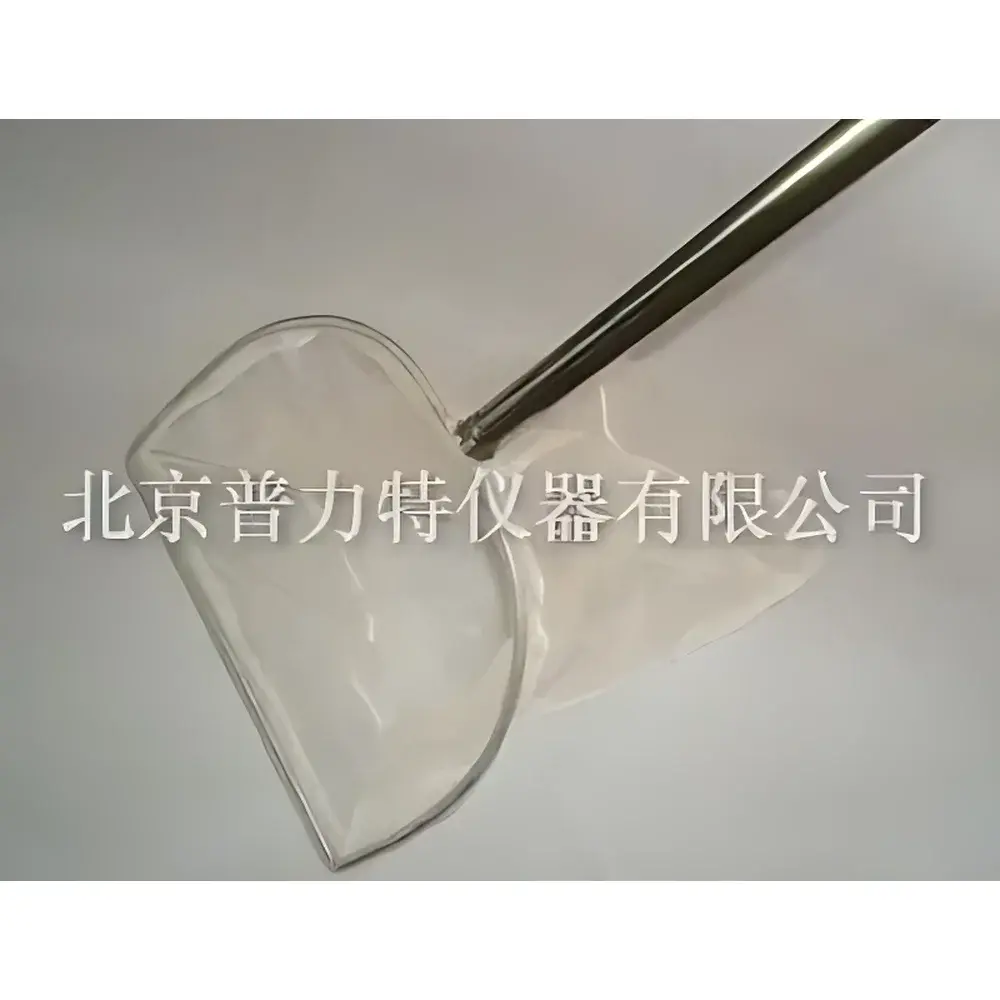
Handheld D-Type Benthic Sampler HBD-SC30
| Origin | Beijing |
|---|---|
| Manufacturer Type | Distributor |
| Origin Category | Domestic (China) |
| Model | HBD-SC30 |
| Price | Upon Request |
Overview
The Handheld D-Type Benthic Sampler HBD-SC30 is a manually operated, field-deployable sediment sampling device engineered for quantitative collection of benthic macroinvertebrates and associated sediments from shallow freshwater ecosystems. Designed in accordance with standard limnological and ecological survey protocols, it operates on the principle of direct mechanical disturbance and passive retention: the D-shaped rigid frame is pressed vertically into the sediment–water interface, then lifted to capture the upper 2–5 cm layer of substrate within the net cavity. Its compact geometry and low draft enable precise sampling in littoral zones, marginal wetlands, and central shallow areas (≤2 m depth) of rivers, lakes, and reservoirs—environments where boat-based or gravity coring systems are impractical or environmentally disruptive.
Key Features
- D-shaped stainless-steel frame (304 grade) with polymer-coated outer surface to prevent corrosion and minimize sediment smearing during insertion;
- Standardized 30 cm sampling edge length ensures consistent sample area (0.09 m²) across deployments, supporting statistical comparability in longitudinal or spatial monitoring programs;
- 40-mesh nylon mesh (nominal pore size: 0.5 mm) provides effective retention of common benthic taxa including chironomid larvae, oligochaetes, gastropods, and amphipods while allowing interstitial water drainage;
- Modular 1 m stainless-steel telescoping poles with threaded couplings allow rapid assembly/disassembly and ergonomic operation from banks or shallow wading positions;
- No external power source or calibration required—designed for immediate deployment in remote or resource-constrained field settings.
Sample Compatibility & Compliance
The HBD-SC30 is compatible with standard freshwater benthic assessment frameworks, including the U.S. EPA’s Rapid Bioassessment Protocols (RBPs) and the European Water Framework Directive (WFD) compliant macroinvertebrate sampling guidelines. Its 0.5 mm mesh aperture aligns with ISO 5667-3:2018 (Water quality — Sampling — Part 3: Guidance on preservation and handling of water samples) recommendations for qualitative/quantitative benthos collection. While not certified to GLP or ISO/IEC 17025, the device supports traceable, repeatable sampling when used in conjunction with documented field SOPs—including replicate counts, GPS-tagged station metadata, and sediment depth logging per sample event.
Software & Data Management
As a manual, non-instrumented sampling tool, the HBD-SC30 does not integrate with proprietary software or digital data acquisition systems. However, it is fully interoperable with widely adopted ecological data management platforms such as BioMonTools, QGIS-based benthic mapping workflows, and national monitoring databases (e.g., USGS NWIS, China’s National Surface Water Monitoring Network). Users are advised to record sampling parameters—including date, location (WGS84 coordinates), water depth, substrate type, and operator ID—in structured CSV or XML templates compliant with INSPIRE or Darwin Core standards to ensure long-term data reusability and audit readiness.
Applications
- Baseline biodiversity surveys for environmental impact assessments (EIAs) and post-restoration monitoring;
- Long-term trend analysis of benthic community composition under climate or land-use change scenarios;
- Regulatory compliance sampling for municipal wastewater discharge permits requiring benthic indicator species reporting;
- Educational field training in aquatic ecology and environmental science curricula;
- Targeted sampling of sediment-associated contaminants (e.g., microplastics, heavy metals) when paired with standardized subsampling and laboratory digestion protocols.
FAQ
What is the recommended maximum water depth for reliable use of the HBD-SC30?
The sampler is validated for depths ≤2 meters; beyond this, operator control over vertical orientation and sediment penetration decreases significantly.
Can the mesh be replaced or customized?
Yes—the 40-mesh nylon netting is field-replaceable using standard crimping tools; alternative mesh sizes (e.g., 20-mesh for coarse substrates or 60-mesh for fine-grained silt) can be installed following manufacturer-supplied mounting specifications.
Is the device suitable for marine or brackish environments?
While constructed from 304 stainless steel, prolonged exposure to saline conditions may accelerate pitting corrosion; for estuarine or coastal applications, users should perform post-deployment desalination rinsing and inspect threading interfaces regularly.
Does the HBD-SC30 meet ASTM D5122 or ISO 10703 requirements?
It is not formally certified to these standards, but its dimensional consistency, material traceability, and documented sampling methodology support adherence to their procedural principles for representative benthic sampling.
How should the sampler be maintained between uses?
Rinse thoroughly with deionized or tap water immediately after field use; air-dry completely before storage; inspect mesh integrity and thread coupling wear quarterly; avoid abrasive cleaning agents that may degrade polymer coatings.







