
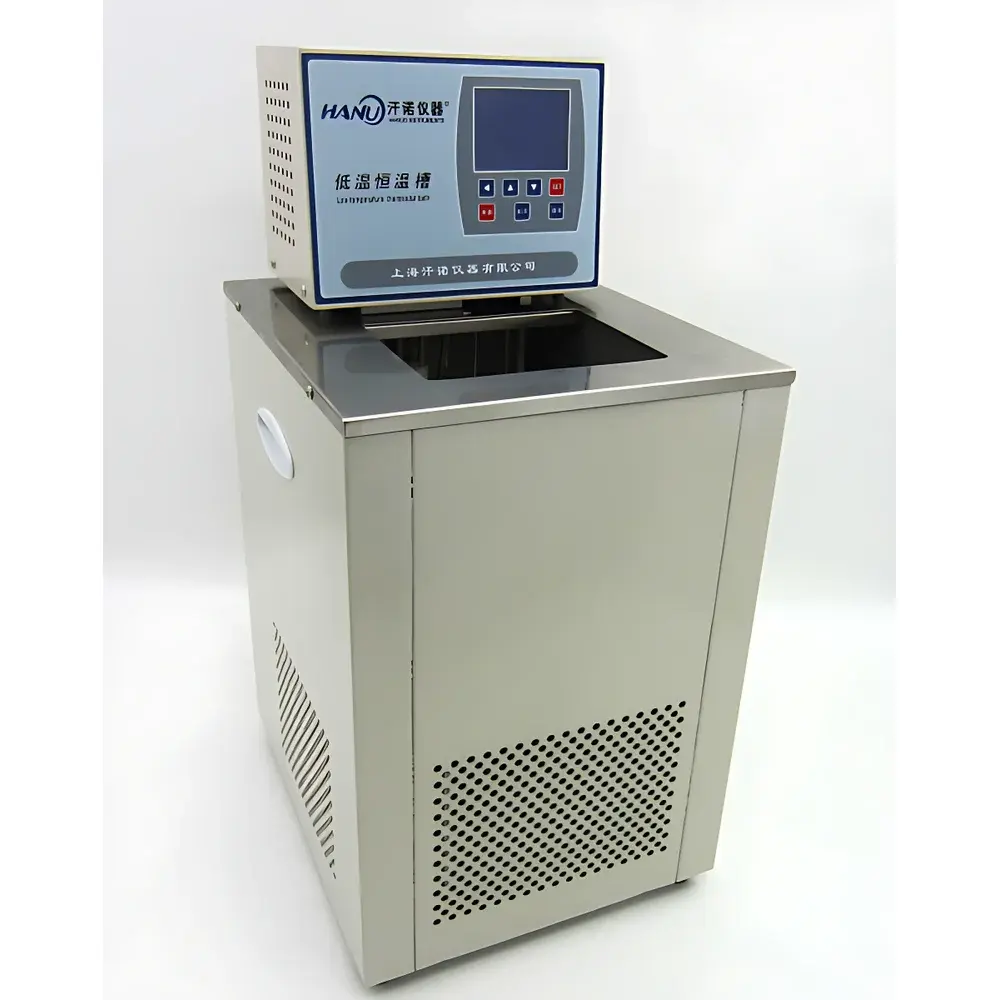
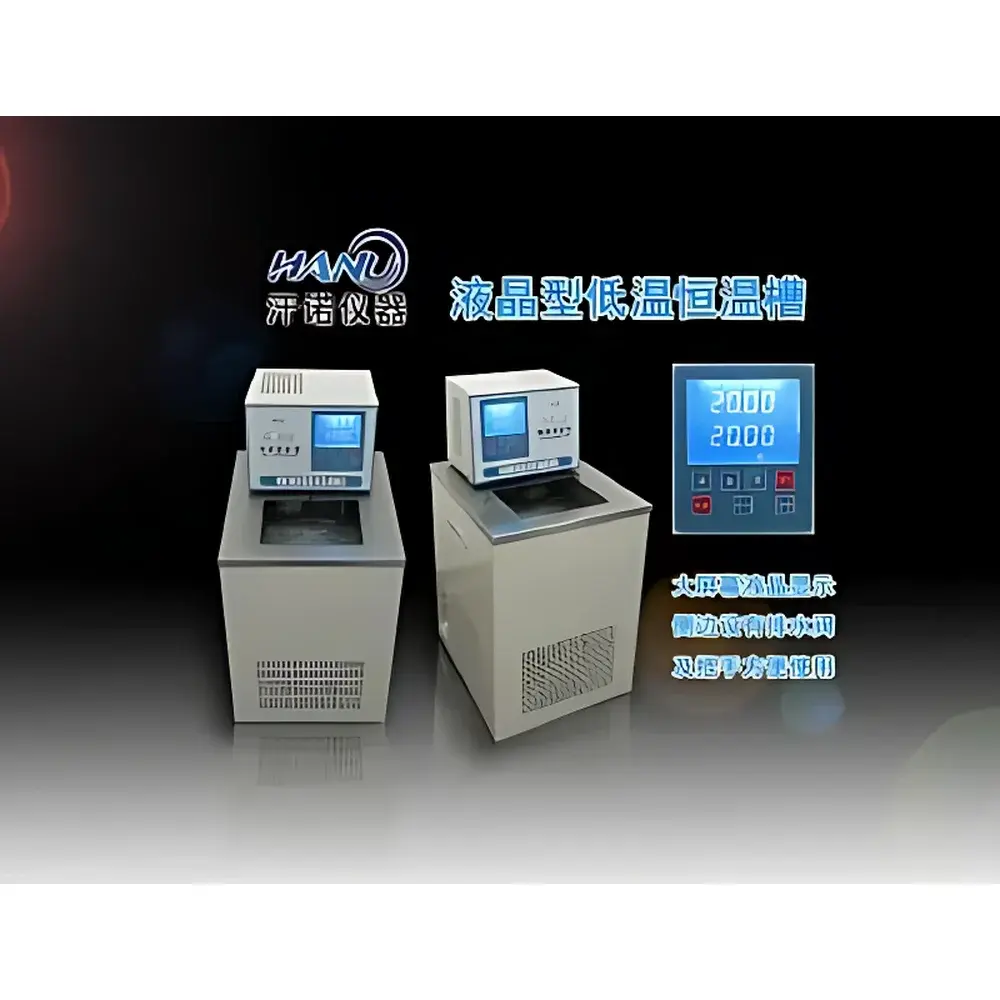
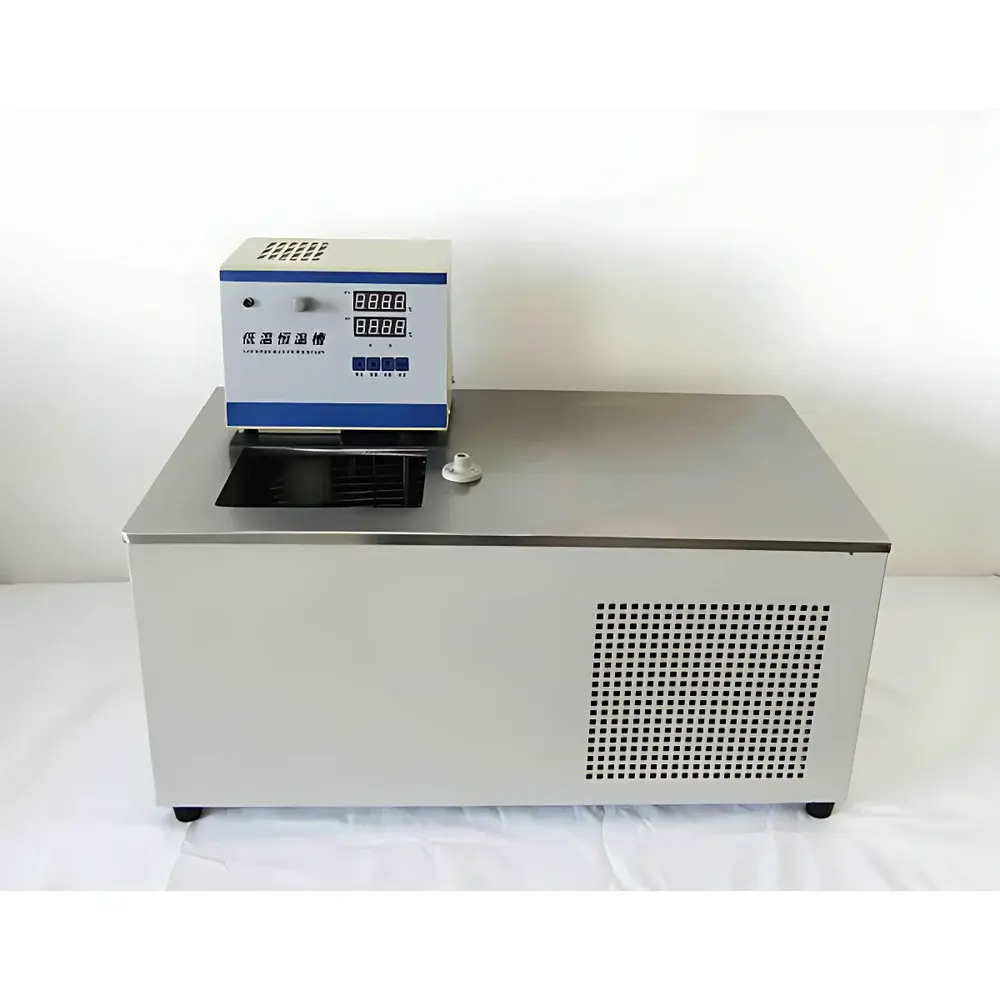
Hanuo DC-0506 Low-Temperature Constant-Temperature Circulating Bath
| Brand | Hanuo |
|---|---|
| Origin | Shanghai, China |
| Model | DC-0506 |
| Instrument Type | Constant-Temperature Bath |
| Circulation Mode | Internal & External |
| Temperature Control | Refrigeration & Heating |
| Bath Volume | 6 L |
| Temperature Range | −5 °C to 100 °C |
| Temperature Stability | ±0.05 °C |
Overview
The Hanuo DC-0506 Low-Temperature Constant-Temperature Circulating Bath is an engineered thermal management system designed for precise, stable, and repeatable temperature control in laboratory and industrial R&D environments. Utilizing a closed-cycle refrigeration architecture with a hermetically sealed compressor and dual-mode (heating/cooling) PID-controlled thermoregulation, the unit maintains setpoint accuracy within ±0.05 °C across its full operational range of −5 °C to 100 °C. Its 6-liter stainless-steel bath chamber serves as both a primary thermal reservoir and a source for externally circulated fluid—enabling direct temperature conditioning of external reactors, spectrophotometer cells, viscometers, or other process equipment. The system operates on the principle of forced convection heat exchange, where thermally regulated silicone oil or water–glycol mixtures are pumped at controlled flow rates (up to 6 L/min) via an integrated internal/external circulation pump. This architecture supports both immersion-based sample conditioning and secondary temperature field establishment—critical for applications requiring spatial thermal uniformity beyond the bath vessel itself.
Key Features
- Hermetically sealed high-efficiency refrigeration compressor with dual-stage thermal protection (overheat and overcurrent)
- Full 304 stainless-steel construction: bath interior, deck surface, and fluid pathways ensure corrosion resistance, cleanability, and long-term compatibility with aqueous and organic heat-transfer fluids
- XMT-series digital PID temperature controller with real-time display, programmable setpoint, and intuitive keypad interface
- Large-backlit LCD screen providing simultaneous readout of actual temperature, setpoint, and operational status
- Dual-circulation capability: internal recirculation for bath homogeneity; external port for connection to auxiliary equipment (e.g., jacketed reactors, calorimeters, or analytical instrumentation)
- Integrated drain valve and optional castor wheels for ergonomic handling and maintenance
- Configurable timer shutdown function (0–99999 minutes), supporting unattended operation under defined thermal protocols
- Optional RS232 or RS485 communication interface for integration into centralized lab monitoring systems (e.g., SCADA or LIMS)
Sample Compatibility & Compliance
The DC-0506 accommodates a broad spectrum of sample formats—including glassware (e.g., Erlenmeyer flasks, jacketed beakers), metal reaction vessels, and sensor housings—provided they fit within the bath’s 180 mm × 140 mm opening and do not exceed the 150 mm immersion depth. Fluid compatibility includes deionized water, 30%–50% ethylene glycol/water mixtures, and low-viscosity silicone oils (cSt ≤ 100 at 25 °C). The unit complies with IEC 61010-1:2010 safety standards for electrical equipment used in laboratory environments. While not certified to ISO/IEC 17025 or GLP out-of-the-box, its digital logging capability (when paired with optional software) supports audit-ready temperature traceability—making it suitable for QC laboratories operating under GMP or FDA 21 CFR Part 11–aligned workflows when configured with appropriate data integrity controls.
Software & Data Management
The DC-0506 supports optional PC-based control and data acquisition via standard serial communication protocols. When equipped with the Hanuo LabLink software suite, users can perform remote setpoint adjustment, real-time temperature trending, automated ramp/soak profiling, and CSV-exportable time-stamped logs. All logged data include instrument ID, timestamp (with millisecond resolution), setpoint, actual temperature, and system status flags—facilitating retrospective analysis and compliance documentation. Audit trail functionality (user login, parameter changes, and event timestamps) meets baseline requirements for regulated environments conducting method validation or stability testing per ICH Q1, USP <1031>, or ASTM E2877-21.
Applications
- Calibration of temperature-sensitive sensors (RTDs, thermistors, infrared detectors) against NIST-traceable references
- Thermal preconditioning of polymer samples prior to DSC, TGA, or rheological characterization
- Temperature stabilization of optical components in spectroscopy and interferometry setups
- Controlled cooling/heating of enzymatic reaction mixtures in biochemistry assays
- Thermal cycling support for accelerated aging studies in materials science and pharmaceutical packaging validation
- Heat sink simulation for electronics thermal management testing (e.g., IC junction temperature evaluation)
- Support of ASTM D2570 (viscosity-temperature profiling) and ISO 2555 (solution viscosity measurement) protocols
FAQ
What is the maximum external flow rate supported by the DC-0506’s circulation pump?
The unit delivers up to 6 L/min at minimal backpressure; performance decreases with increasing line resistance—consult the pressure–flow curve in the technical manual for system-specific derating.
Can the DC-0506 maintain −5 °C using only deionized water?
No. At sub-zero temperatures, a water–glycol mixture (minimum 30% v/v propylene glycol) is required to prevent freezing and ensure pump operability.
Is the stainless-steel bath compatible with chlorinated solvents such as chloroform or dichloromethane?
Not recommended. Chlorinated organics may induce pitting corrosion over time; use fluorinated heat-transfer fluids or stainless-steel–compatible alternatives for such applications.
Does the unit include factory calibration documentation?
Yes—a NIST-traceable calibration certificate (covering at least three points: 0 °C, 25 °C, and 70 °C) is provided with each shipment.
What maintenance intervals are recommended for optimal long-term stability?
Compressor oil and refrigerant levels should be verified annually; condenser coils require biweekly dust removal; fluid replacement is advised every 12 months or after 2000 operational hours, whichever occurs first.



