
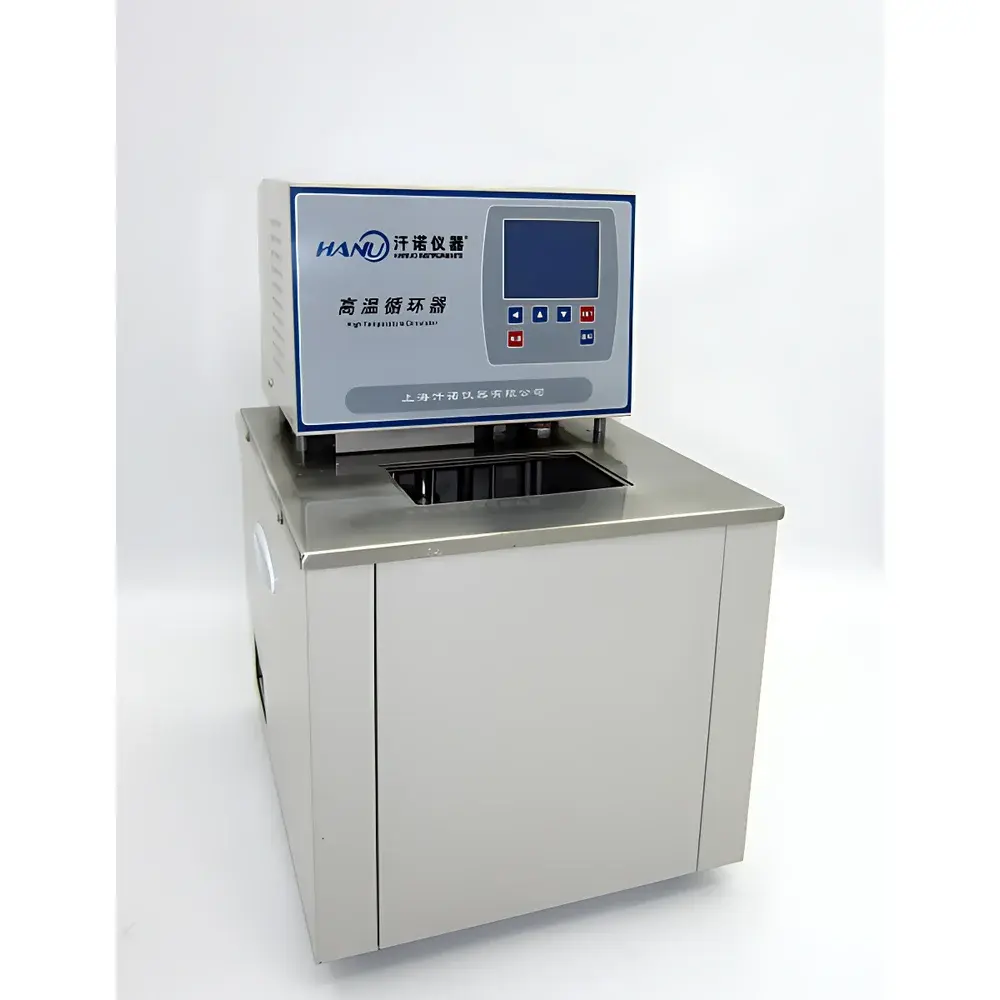
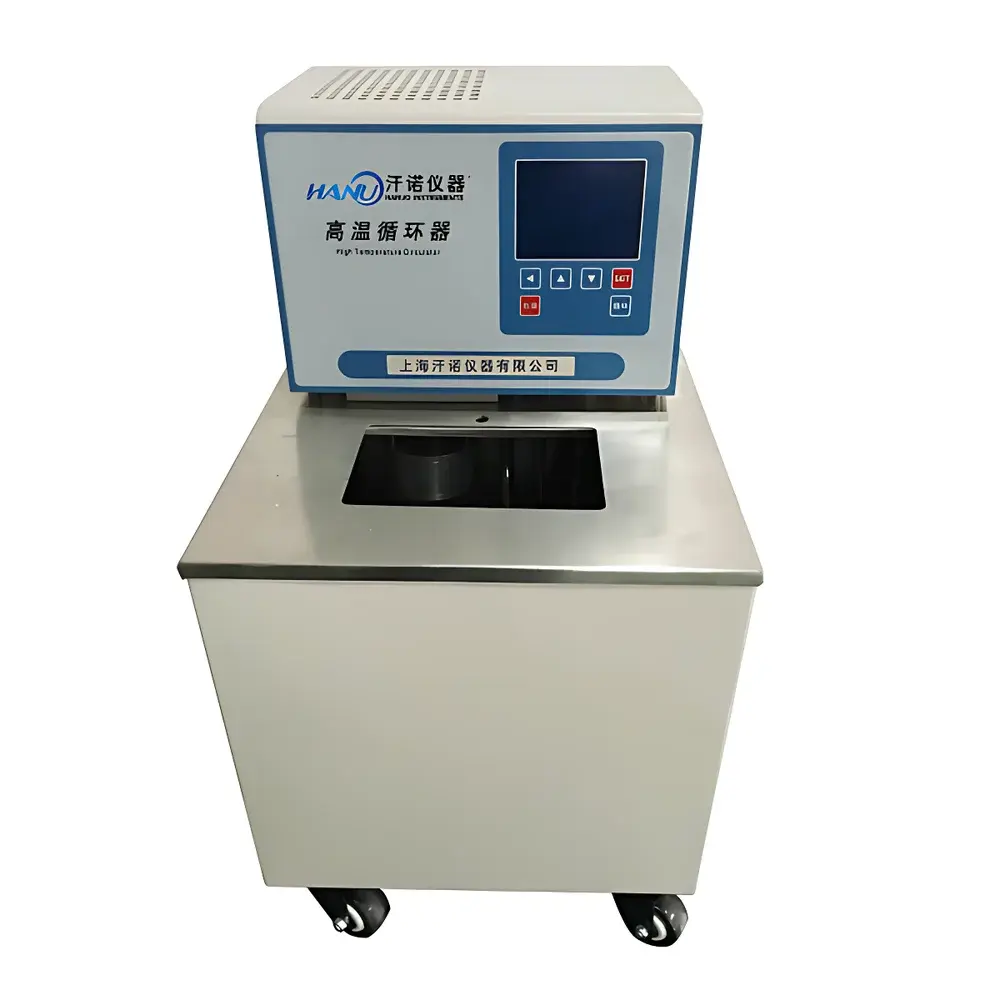
Hanuo GX-2050 High-Temperature Circulating Oil Bath
| Brand | Hanuo |
|---|---|
| Origin | Shanghai, China |
| Model | GX-2050 |
| Bath Volume | 50 L |
| Temperature Range | Ambient to 300 °C |
| Temperature Stability | ±0.2 °C |
| Circulation Mode | Internal & External |
| Pump Flow Rate | 15 L/min |
| Control System | Microprocessor-Based PID with LED Dual-Display |
Overview
The Hanuo GX-2050 High-Temperature Circulating Oil Bath is a precision-engineered thermal control system designed for sustained, stable heating and external heat transfer in demanding laboratory and pilot-scale applications. Operating on the principle of forced convection via an integrated high-flow circulation pump, the unit maintains uniform thermal distribution within its 50 L stainless steel bath reservoir and delivers conditioned fluid to external devices—including jacketed reactors, distillation columns, and semiconductor processing fixtures—via dual-port external circulation. Its operational range spans from ambient temperature up to 300 °C, enabled by high-temperature-resistant silicone oil or compatible synthetic heat-transfer fluids (not included). Unlike water-only baths, the GX-2050 supports both aqueous and oil-based media, making it suitable for processes requiring elevated boiling points, reduced vapor pressure, and long-term thermal stability beyond 100 °C. The system employs a microprocessor-controlled PID algorithm with real-time feedback from a calibrated Pt100 sensor, ensuring consistent setpoint adherence and minimizing thermal overshoot during ramping.
Key Features
- Stainless steel working bath (500 × 330 × 300 mm, depth 300 mm) with corrosion-resistant finish and reinforced insulation for energy efficiency and surface safety at high temperatures.
- Dual LED display showing simultaneous setpoint and actual bath temperature with 0.1 °C resolution; intuitive touch-key interface for parameter entry and mode selection.
- High-capacity external circulation pump delivering up to 15 L/min flow rate at low backpressure, compatible with tubing IDs ≥8 mm and loop lengths ≤15 m.
- Heating-only architecture optimized for reliability and longevity; no integrated cooling mechanism—designed for integration with optional external chiller units (e.g., tap-water or recirculating chillers) where rapid cooldown is required.
- Over-temperature protection, dry-run detection, and current-limiting circuitry ensure compliance with IEC 61010-1 safety standards for laboratory equipment.
- Modular design facilitates field serviceability; accessible heater elements, pump assembly, and sensor ports support routine maintenance without specialized tools.
Sample Compatibility & Compliance
The GX-2050 accommodates a wide range of process fluids—including silicone oils (e.g., Dow Corning 200 Fluid), polyalkylene glycols, and high-boiling-point mineral oils—provided viscosity remains below 100 cSt at operating temperature. It is not intended for use with flammable solvents or water above 95 °C due to vapor pressure and scaling risks. While the unit itself does not carry CE, UL, or UKCA certification, its electrical and mechanical construction conforms to general requirements outlined in ISO/IEC 17025–aligned laboratory infrastructure guidelines. Users implementing the GX-2050 in regulated environments (e.g., pharmaceutical development or materials qualification) are advised to perform IQ/OQ validation per internal SOPs and document calibration traceability to NIST-traceable references.
Software & Data Management
The GX-2050 operates as a standalone analog/digital hybrid controller without native Ethernet, USB, or RS-485 connectivity. Temperature logging requires external data acquisition via 0–10 V or 4–20 mA analog output signals (available as optional hardware add-on). No proprietary software is bundled; however, the analog outputs are compatible with third-party SCADA systems, LabVIEW, or industrial PLC platforms supporting standard signal protocols. Audit trails, electronic signatures, and 21 CFR Part 11 compliance are not natively supported but may be implemented through externally validated middleware when integrated into GxP workflows.
Applications
- Temperature control of jacketed glass or stainless steel reactors during exothermic synthesis, polymerization, or catalytic hydrogenation (ambient to 300 °C).
- Thermal conditioning of feed streams in pilot-scale distillation and extraction systems requiring precise pre-heating prior to column entry.
- Calibration and performance verification of high-temperature sensors, thermocouples, and pressure transducers under steady-state conditions.
- Material testing setups involving thermal aging, coefficient of thermal expansion (CTE) measurement, or rheological characterization of high-melting-point polymers.
- Supporting semiconductor wafer processing steps such as photoresist baking, annealing, and wet etch bath temperature stabilization.
FAQ
What is the maximum recommended operating temperature when using water versus heat-transfer oil?
Water is only recommended up to 95 °C to avoid excessive vapor pressure and scaling; silicone or synthetic oils must be used for operation between 100–300 °C.
Can the GX-2050 maintain temperature stability during external load fluctuations?
Yes—the PID controller and 15 L/min pump provide dynamic response to moderate thermal loads; however, stability may degrade under sudden, large-step changes (>5 kW) unless compensated by auxiliary cooling or pre-conditioning.
Is the bath volume fully usable for immersion applications?
The 50 L nominal capacity assumes fill level up to 20 mm below the rim; optimal immersion depth requires maintaining fluid level ≥50 mm above the pump inlet port.
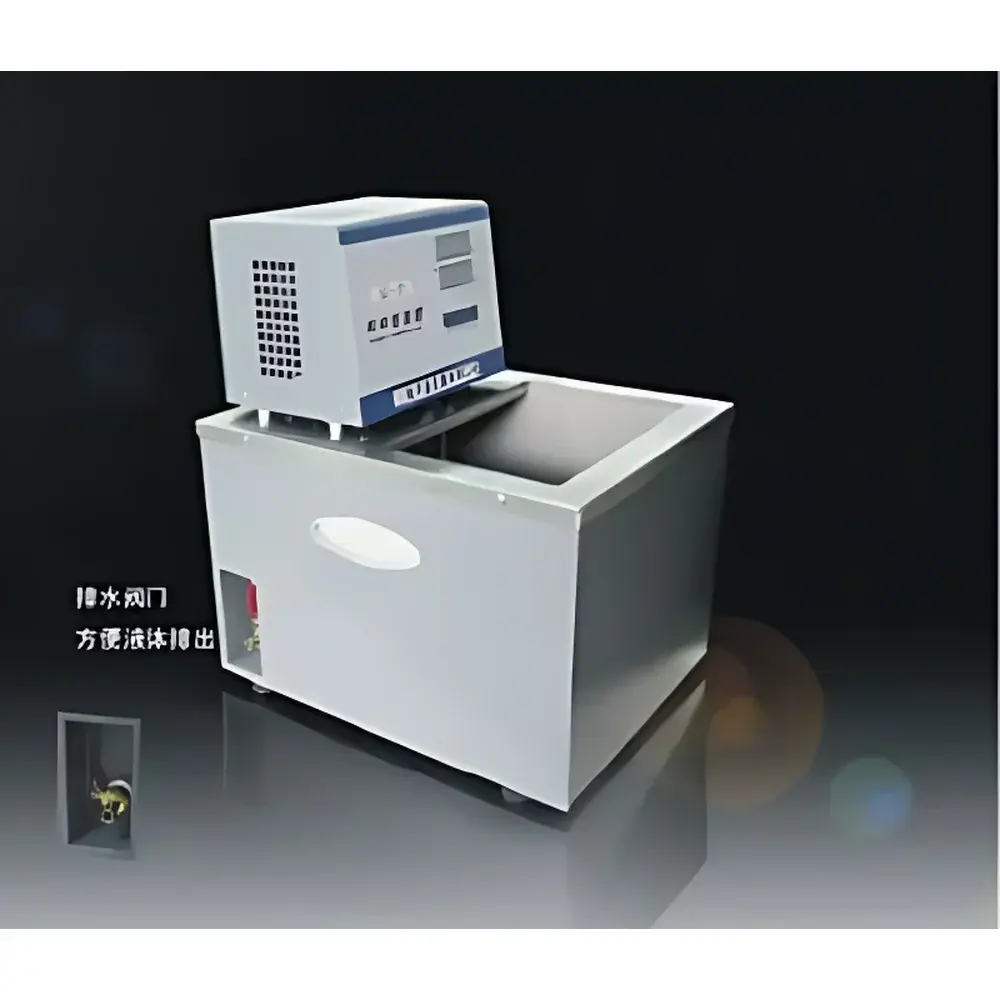
Does the unit include a drain valve for fluid replacement?
Yes—a front-mounted brass drain valve with quick-connect fitting enables safe, controlled fluid evacuation at shutdown temperatures below 60 °C.
What maintenance intervals are recommended for continuous 24/7 operation?
Inspect pump seals and heater insulation every 500 operating hours; recalibrate temperature sensor annually or per ISO/IEC 17025 calibration schedule.



