
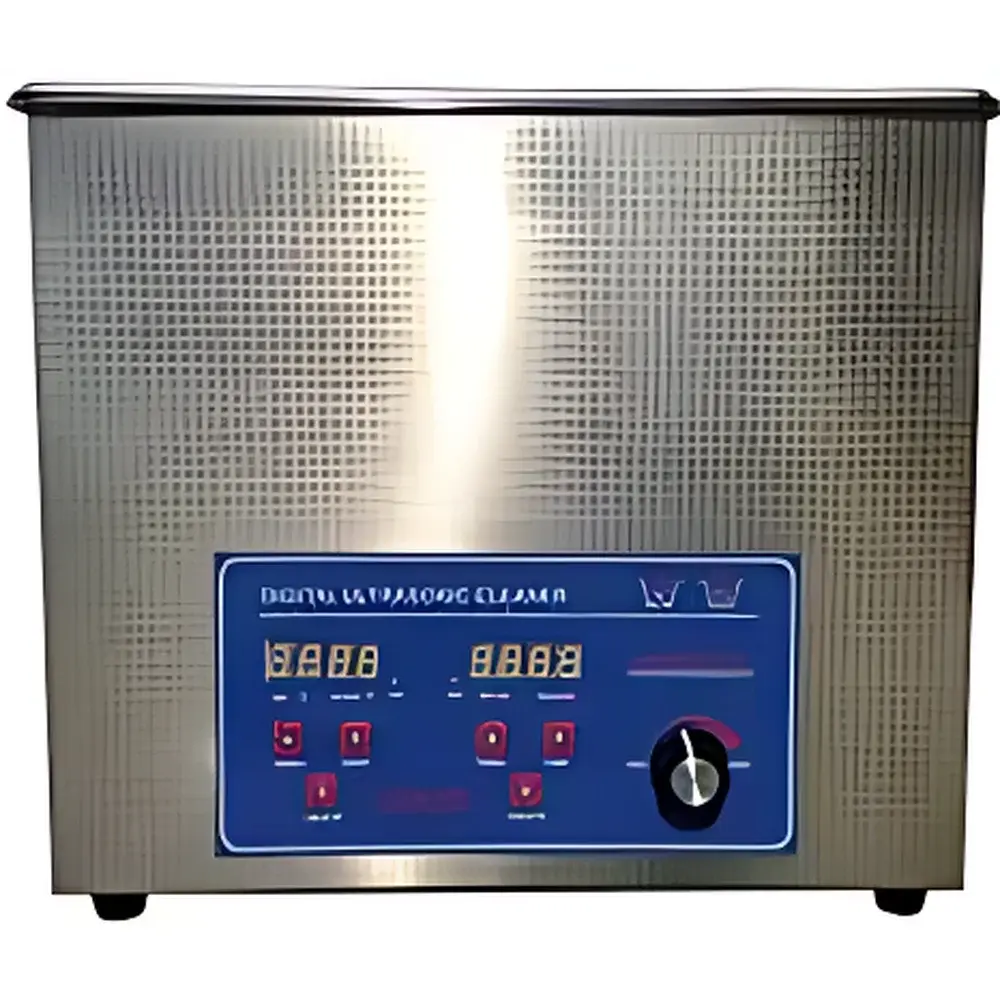
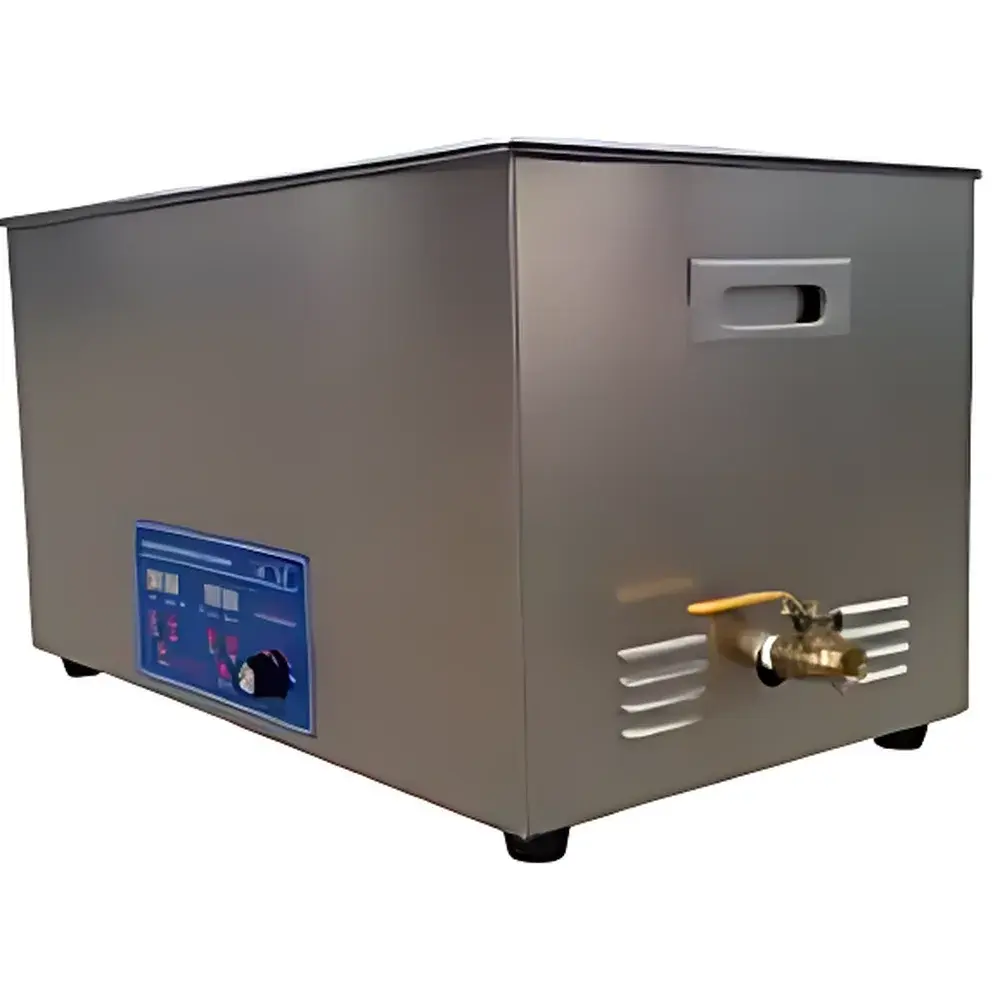
Hanuo HN-19AL Adjustable-Power Ultrasonic Cleaner
| Brand | Hanuo |
|---|---|
| Origin | Shanghai, China |
| Model | HN-19AL |
| Capacity | 19 L |
| Ultrasonic Frequency | 40 kHz |
| Ultrasonic Power | 400 W |
| Power Adjustment Range | 40–100% |
| Temperature Control Range | Ambient to 80 °C |
| Timer Range | 0–30 min |
| Lid with Sound-Dampening Design | Yes |
| Manual Drain/Refill | Yes |
| Instrument Type | General-Purpose Ultrasonic Cleaner |
Overview
The Hanuo HN-19AL Adjustable-Power Ultrasonic Cleaner is an engineered solution for precision cleaning of delicate and complex components across laboratory, clinical, and industrial environments. It operates on the principle of ultrasonic cavitation: high-frequency sound waves (40 kHz) generate microscopic vacuum bubbles in the cleaning solvent, which rapidly collapse to produce localized shockwaves and microstreaming effects. This physical mechanism effectively dislodges particulate contaminants—including organic residues, metal oxides, polishing compounds, and biofilms—without mechanical abrasion or chemical aggression. Designed for reproducible, non-destructive cleaning, the HN-19AL features a robust stainless-steel tank (304 grade), integrated heating, digital timer control, and continuously adjustable ultrasonic power output—enabling users to optimize energy delivery for sensitive substrates such as optical lenses, microfluidic devices, or calibrated reference standards.
Key Features
- Adjustable Ultrasonic Power Output: Precise 40–100% linear power control allows fine-tuning of cavitation intensity to match substrate fragility and soil load—critical for avoiding pitting on soft metals or delamination of thin-film coatings.
- Digital Temperature Regulation: Programmable heating from ambient up to 80 °C enhances cleaning efficacy for waxy, viscous, or thermally stable soils; temperature stability maintained within ±2 °C over full operating range.
- Programmable Timer (0–30 min): Supports repeatable cycle execution; auto-shutdown prevents overexposure and solvent evaporation, supporting GLP-compliant documentation protocols.
- Acoustic Damping Lid: Integrated insulated lid reduces airborne noise by >15 dB(A) and minimizes solvent vapor loss—essential for prolonged operation in shared lab spaces and compliance with occupational safety guidelines (OSHA 1910.95).
- Stainless Steel Construction: 304-grade tank and transducer housing ensure corrosion resistance against aqueous, alkaline, and mild acidic cleaning solutions commonly used per ASTM D2670 and ISO 14040 series protocols.
- Manual Drain & Fill Interface: Front-mounted valve enables controlled fluid exchange without tilting or lifting—facilitating safe handling of hot or hazardous solvents during routine maintenance or solution changes.
Sample Compatibility & Compliance
The HN-19AL accommodates a broad spectrum of sample geometries and materials, including but not limited to: printed circuit boards (PCBs), dental instruments (e.g., scaler tips, burs), surgical tools, precision optics, watch components, semiconductor wafers (pre-bonding), and analytical calibration standards. Its 19 L tank volume (internal dimensions: 330 × 300 × 150 mm) supports batch processing of medium-format fixtures and multi-position racks. The system meets general electrical safety requirements per IEC 61010-1:2010 and is compatible with common laboratory-grade cleaning agents—including aqueous alkaline detergents (e.g., Alconox®), ethanol/water mixtures, and low-surface-tension solvents—provided compatibility with stainless steel and operating temperature limits is verified. While not certified for sterile processing under ISO 13485 or FDA 21 CFR Part 820, it serves as a validated pre-sterilization cleaning step aligned with AAMI ST79:2017 Annex B recommendations.
Software & Data Management
The HN-19AL operates via an intuitive front-panel interface with LED display—no external software or driver installation required. All operational parameters (power %, temperature setpoint, timer duration) are retained in non-volatile memory after power cycling, enabling consistent setup recall. Though standalone in design, its digital control architecture supports integration into lab-wide asset tracking systems via optional RS-232 or analog voltage output modules (sold separately). For audit readiness, users may manually log cycle parameters and timestamps in accordance with internal SOPs or ISO/IEC 17025 Clause 7.8 requirements. No built-in electronic signature or 21 CFR Part 11 compliance is provided; however, the deterministic behavior and parameter repeatability support manual validation protocols per USP and .
Applications
- Research Laboratories: Removal of photoresist residues from silicon substrates; cleaning of NMR tube interiors; preparation of TEM grids prior to carbon coating.
- Clinical & Dental Settings: Decontamination of orthodontic brackets, impression trays, and endodontic files—validated for reduction of Enterococcus faecalis biofilm per ADA Specification No. 119.
- Electronics Manufacturing: Post-reflow flux removal from SMT assemblies; cleaning of MEMS sensors and piezoelectric actuators without altering dimensional tolerances.
- Quality Control Labs: Preparation of reference samples for SEM-EDS analysis; cleaning of hardness test indenters and profilometer styluses to prevent cross-contamination.
- Museum Conservation: Gentle removal of surface sulfidation from silver artifacts and particulate dust from archival film reels—using deionized water or ethanol-based formulations at reduced power settings.
FAQ
What is the recommended cleaning solution for general-purpose use?
Aqueous alkaline detergent solutions (pH 9–10.5) at 2–3% concentration, heated to 50–60 °C, provide optimal balance of soil removal and material compatibility for most metallic and ceramic substrates.
Can this unit be used with flammable solvents?
No. The HN-19AL is not explosion-proof and lacks solvent vapor monitoring or intrinsically safe circuitry. Only water-miscible, non-flammable cleaning media should be used.
Is degassing mode available?
The unit does not include a dedicated degas function; however, initiating operation at 40% power for 2–3 minutes prior to loading achieves effective air removal from fresh solvent.
How often should the tank be descaled?
In hard-water areas, perform weekly citric acid descaling (5% w/v, 60 °C, 10 min) to maintain transducer efficiency and prevent calcium carbonate buildup on the tank bottom.
Does the unit support continuous operation?
Yes—rated for intermittent duty cycles up to 30 min per session, with ≥10 min cooldown between successive runs to ensure thermal stability of piezoelectric elements.



