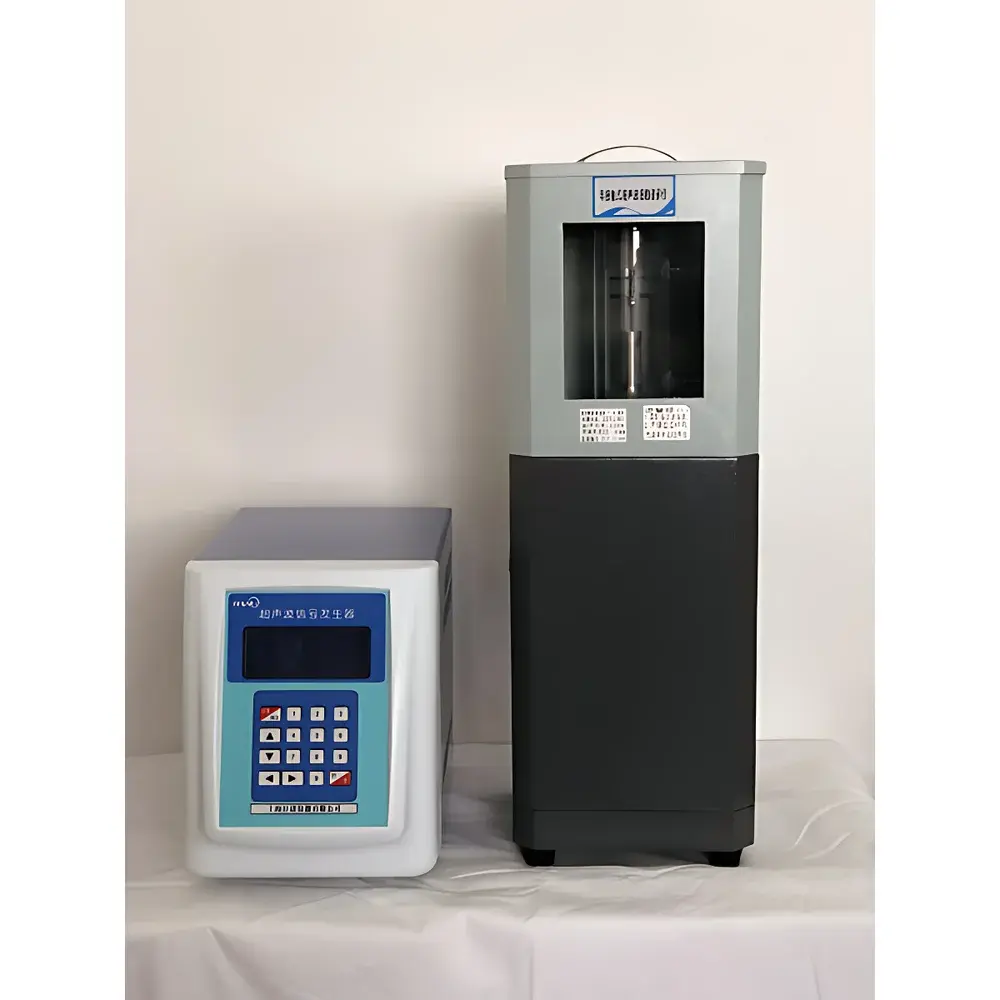
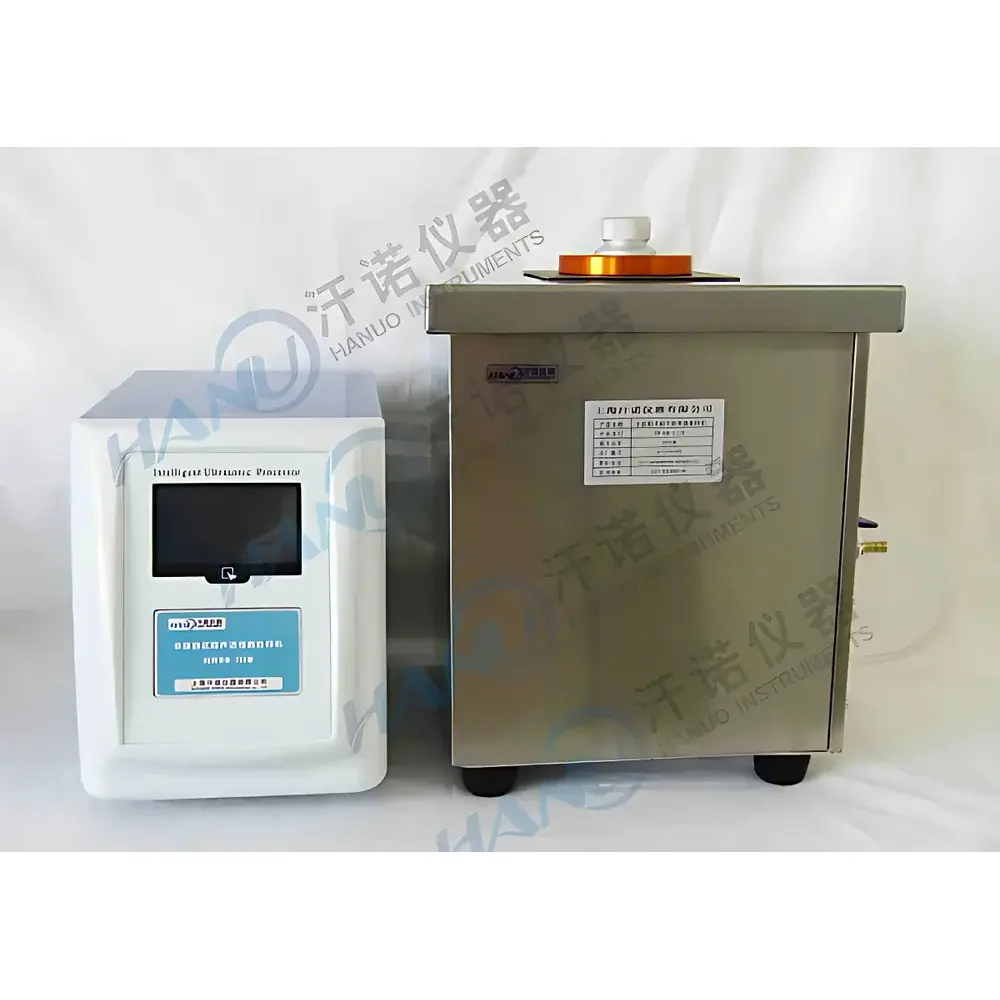
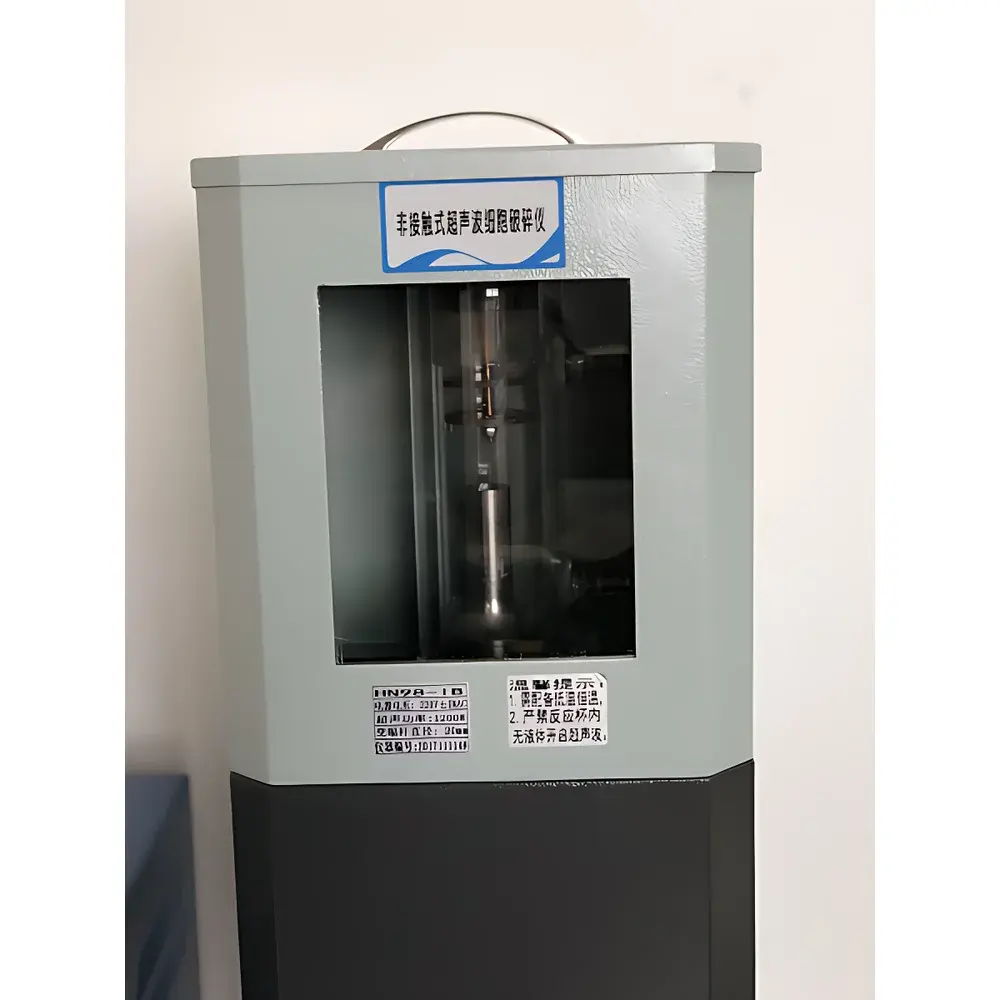
Hanuo HN98-IB Non-Contact Ultrasonic Cell Disruptor
| Brand | Hanuo |
|---|---|
| Origin | Shanghai, China |
| Manufacturer Type | Authorized Distributor |
| Country of Origin | China |
| Model | HN98-IB |
| Instrument Type | Non-Contact Ultrasonic Cell Disruptor |
| Ultrasonic Power | 1200 W |
| Operating Frequency | 20 kHz |
| Temperature Range | −5 to 100 °C |
| Sample Volume per Tube | 0.2 / 1.5 / 2.0 mL |
| Sample Capacity | 4 or 6 tubes simultaneously |
Overview
The Hanuo HN98-IB Non-Contact Ultrasonic Cell Disruptor is an engineered solution for controlled, reproducible, and contamination-free nucleic acid shearing and cellular lysis in molecular biology and epigenetics workflows. Unlike conventional probe-based sonicators that introduce mechanical shear stress, thermal gradients, and cross-contamination risks via direct probe immersion, this system employs high-intensity focused ultrasound transmitted through the walls of sealed microcentrifuge tubes—enabling true non-contact, bath-coupled energy delivery. The transducer operates at a nominal frequency of 20 kHz, generating acoustic cavitation within the liquid phase while maintaining sample integrity and minimizing protein denaturation or RNA degradation. This principle is particularly critical for chromatin immunoprecipitation (ChIP) assays, where preservation of protein–DNA interactions and narrow fragment size distribution (typically 200–700 bp) are prerequisites for library preparation and next-generation sequencing (NGS) compatibility.
Key Features
- Non-contact ultrasonic lysis: Energy transmission occurs through tube walls—no probe insertion, eliminating carryover risk and enabling full sterility compliance.
- Simultaneous processing of 4 or 6 samples (0.2–2.0 mL each), with programmable amplitude, pulse duration, and duty cycle (1–99.9%) for assay-specific optimization.
- Integrated temperature control interface supports external recirculating chillers (e.g., −5 to 10 °C operation), preventing thermal-induced epitope masking or nucleic acid fragmentation bias.
- Large backlit LCD display with optional touch interface for intuitive parameter entry, real-time status monitoring, and protocol recall.
- Acoustic damping enclosure with pneumatic lid lock ensures operator safety, noise reduction (<65 dB(A)), and consistent energy coupling across all positions.
- RS232/RS485 serial interface enables integration into automated lab environments and audit-trail-capable LIMS systems.
Sample Compatibility & Compliance
The HN98-IB accommodates standard 0.2 mL, 1.5 mL, and 2.0 mL microcentrifuge tubes (including PCR strips and skirted plates), supporting diverse biological matrices—including cultured mammalian cells, yeast, bacteria, tissue homogenates, and soil lysates. Its closed-tube architecture conforms to biosafety Level 2 (BSL-2) containment requirements and eliminates aerosol generation—critical when handling viral vectors (e.g., adenovirus, AAV) or pathogenic strains. The system supports GLP/GMP-aligned documentation practices through timestamped protocol logs and user-access-level controls. While not certified to ISO/IEC 17025, its operational repeatability meets internal validation criteria aligned with ASTM E2917 (Standard Practice for Validation of Analytical Methods) and USP (Analytical Instrument Qualification).
Software & Data Management
The device operates via embedded firmware with no external PC dependency; however, optional communication ports allow remote configuration and data export (CSV/Excel-compatible) for traceability. All protocols—including power level, cycle count, on/off time, and cooling setpoint—are stored with user ID and timestamp. When integrated with laboratory information management systems (LIMS), it supports 21 CFR Part 11-compliant electronic signatures and audit trails when paired with validated middleware. No proprietary cloud platform is required; raw operation logs are exportable for internal QA review or regulatory submission.
Applications
- Chromatin fragmentation for ChIP-seq, CUT&RUN, and ATAC-seq sample preparation.
- Genomic DNA shearing prior to Illumina or PacBio library construction.
- RNA fragmentation for ribosome profiling or RNA-seq with reduced 5′/3′ bias.
- Preparation of viral lysates (adenovirus, lentivirus) for titer determination and capsid analysis.
- Extraction of membrane proteins under native conditions without detergent overuse.
- Soil metagenomic extraction where mechanical homogenization induces bias toward Gram-positive taxa.
- Emulsification of lipid nanoparticles (LNPs) and nanosuspensions in formulation development.
FAQ
Is the HN98-IB compatible with cryogenic sample handling?
Yes—when connected to an external chiller unit capable of sub-zero outlet temperatures (e.g., −10 °C), the system maintains sample integrity during extended sonication cycles.
Can I process more than six samples per run?
The HN98-IB hardware supports only 4 or 6 positions; higher-throughput configurations (e.g., 16 or 32) require upgrading to the HN98-IIB or HN98-IIIB models.
Does this instrument meet FDA or CE regulatory requirements?
It carries CE marking for electromagnetic compatibility (EMC Directive 2014/30/EU) and low-voltage safety (LVD Directive 2014/35/EU); FDA clearance is not applicable as it is classified as a general-purpose laboratory instrument, not an IVD device.
How is energy uniformity ensured across multiple tubes?
The transducer array and bath geometry are optimized using finite element modeling (FEM) to deliver ±5% spatial intensity variation across all tube positions—verified by calorimetric mapping per ISO 24381:2021.
What maintenance is required for long-term reliability?
Annual verification of transducer impedance and bath fluid conductivity is recommended; no consumables beyond deionized water or ethanol-based cleaning solutions are needed.