
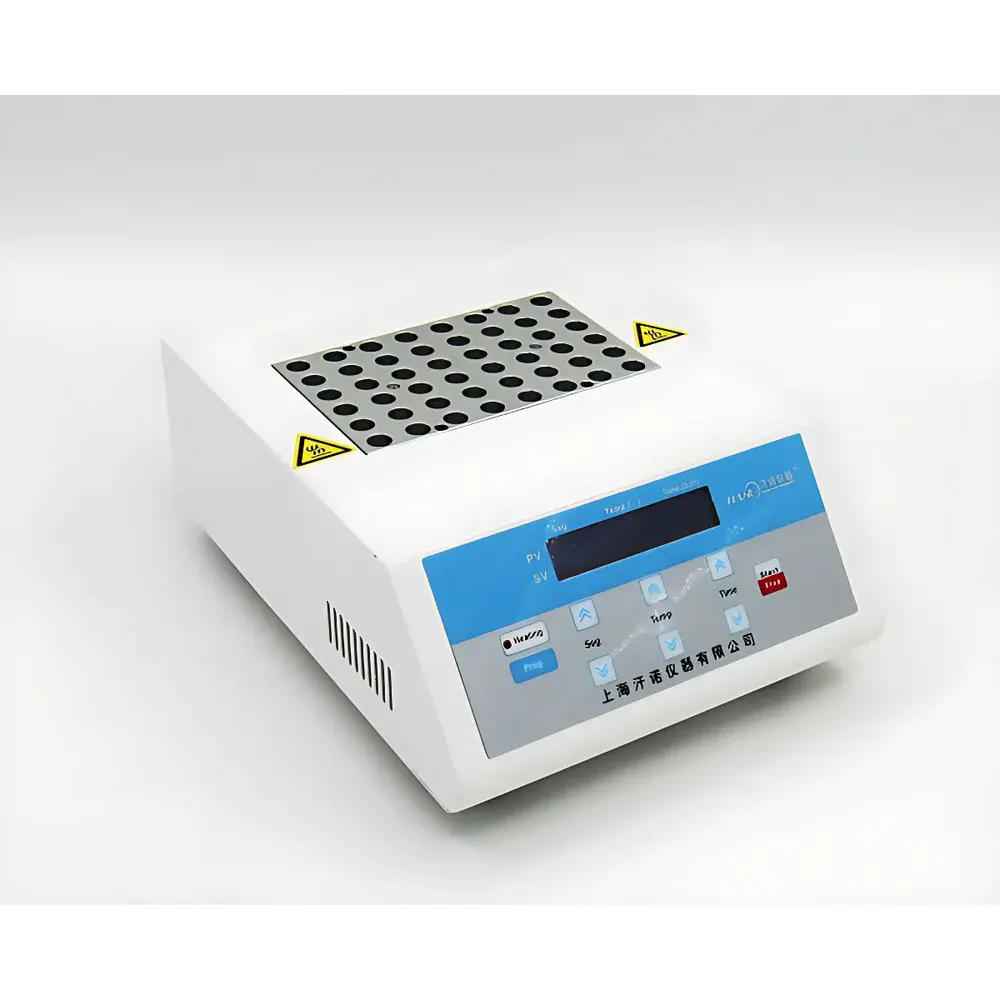
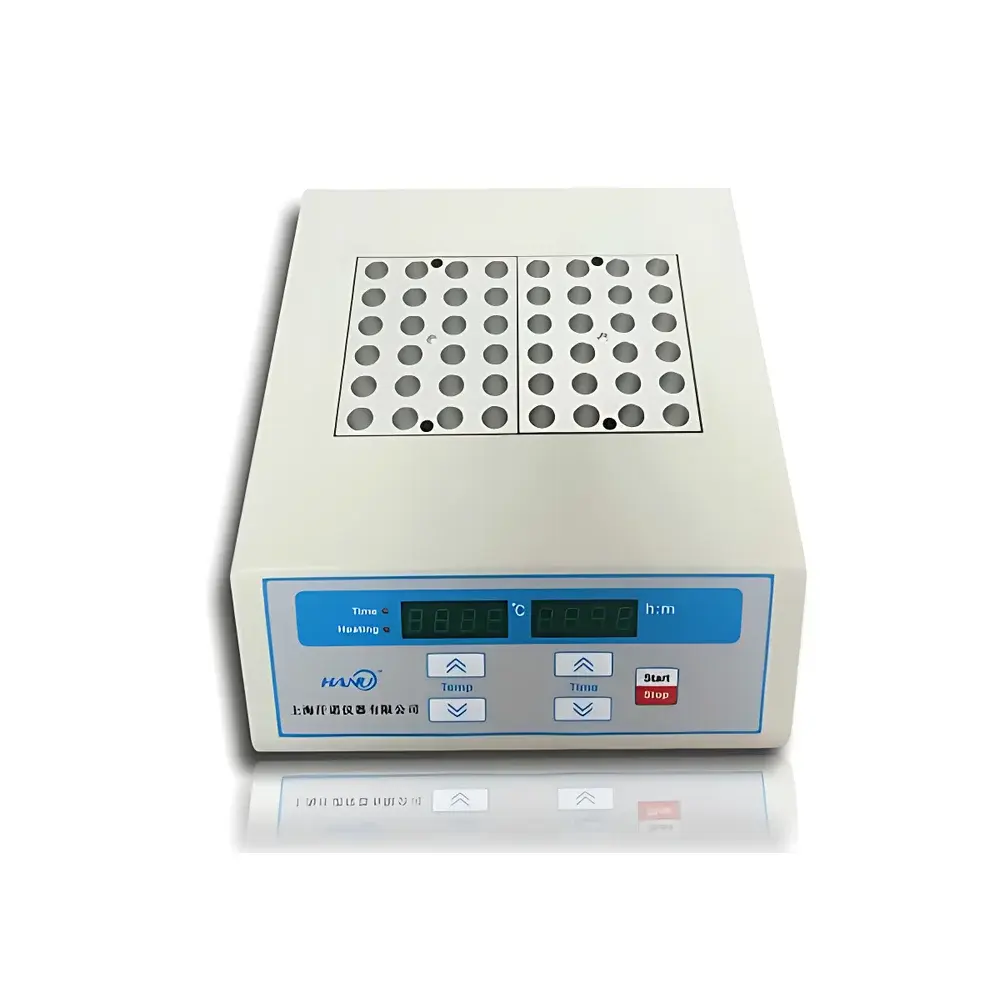
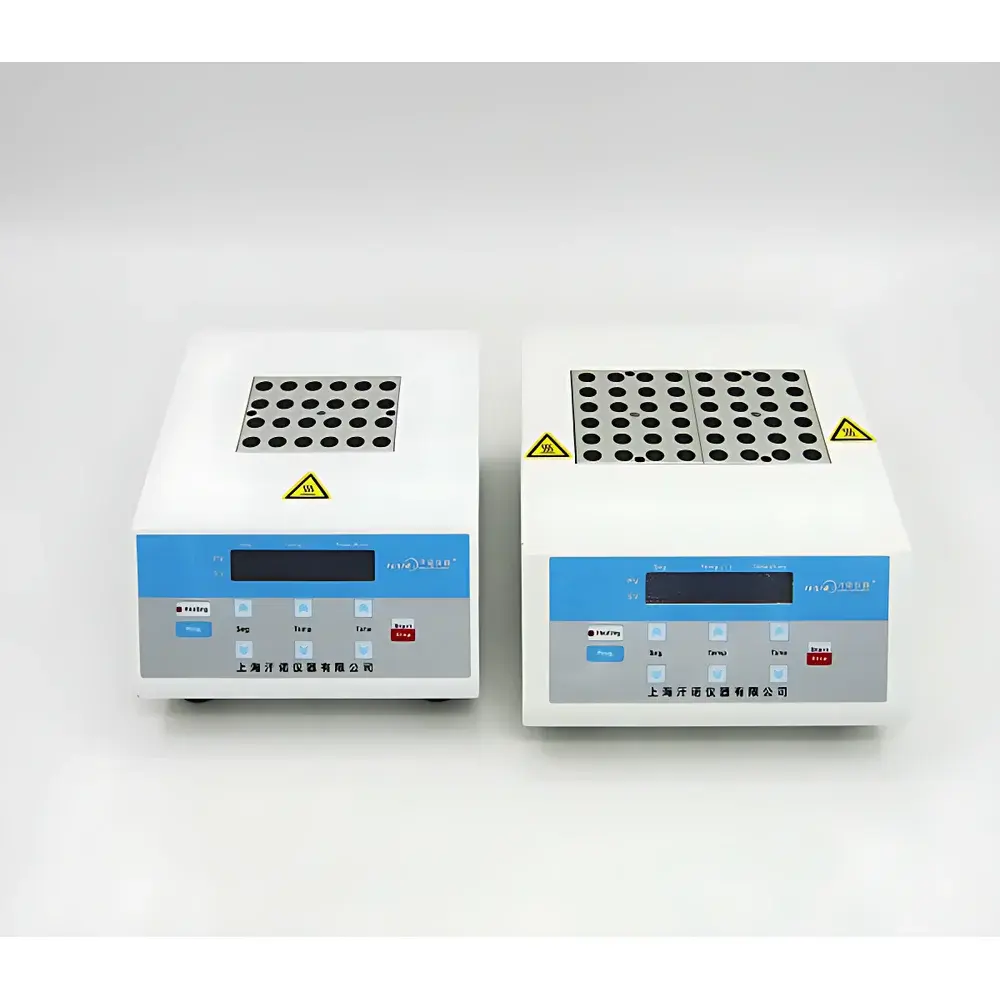
Hanuo HNDKT200-2 Precision Metal Block Heater
| Brand | Hanuo |
|---|---|
| Origin | Shanghai, China |
| Model | HNDKT200-2 |
| Temperature Range | Ambient +5°C to 150°C |
| Temperature Accuracy | ±0.5°C |
| Display Resolution | 0.1°C |
| Heating Time | ≤12 min (20°C to 100°C) |
| Block Uniformity | ≤±0.5°C @40°C |
| Power Consumption | 400 W |
| Dimensions (W×D×H) | 200×220×110 mm |
| Net Weight | 3 kg |
| Programmable Stages | Up to 5 segments |
| Timer Range | 1 min – 99 h 59 min |
| Safety | Built-in overtemperature protection, fuse (250 V, 3 A, Ø5×20 mm), auto-failure detection with audible alarm |
Overview
The Hanuo HNDKT200-2 Precision Metal Block Heater is a microprocessor-controlled dry heating system engineered for consistent thermal delivery across laboratory sample preparation workflows. Unlike water baths—whose temperature gradients, evaporation losses, and contamination risks limit reproducibility—the HNDKT200-2 employs direct conductive heating via a high-efficiency resistive heating film embedded beneath an aluminum alloy block. This architecture ensures rapid thermal response, minimal overshoot, and exceptional spatial uniformity across the entire heating surface. Designed for routine use in molecular biology, clinical diagnostics, and quality control laboratories, the unit supports critical protocols including DNA denaturation prior to PCR setup, serum coagulation assays, enzyme reaction incubation, and reagent pre-warming. Its operational envelope spans from ambient +5°C to 150°C, making it suitable for both low-temperature stabilization and high-temperature inactivation steps without requiring fluid media or external cooling.
Key Features
- High-resolution 0.1°C digital display with real-time temperature readout and countdown timer
- Dual independent parameter setting: simultaneous configuration of target temperature and dwell time
- Five-stage programmable ramp-and-hold functionality for complex thermal profiles (e.g., stepwise denaturation or multi-step incubation)
- Auto-diagnostic system with visual indicator and audible alert for sensor failure, overheating, or power anomaly
- User-accessible temperature offset calibration to compensate for inter-unit drift or probe-specific bias
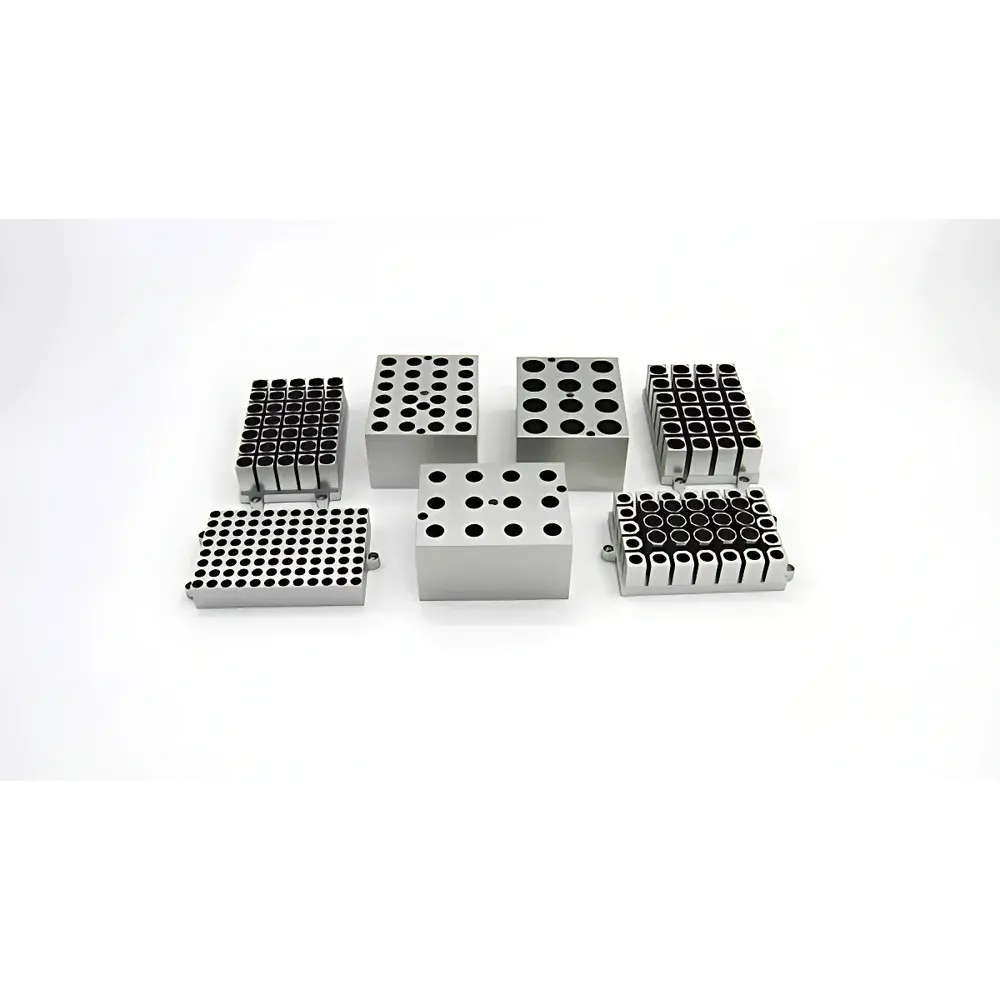
- Quick-release modular block design compatible with 13 standardized interchangeable aluminum blocks (including 0.2 mL PCR strips, 1.5/2.0 mL microcentrifuge tubes, and large-volume formats up to 40 mm diameter)
- Integrated thermal cutoff at 160°C and redundant fuse protection (250 V, 3 A, Ø5×20 mm)
- Low-noise, zero-emission operation with no moving parts or consumables—ideal for ISO Class 5–7 cleanrooms and GLP-compliant environments
Sample Compatibility & Compliance
The HNDKT200-2 accommodates a broad range of tube geometries and volumes through its field-replaceable aluminum blocks, each precision-machined to ensure optimal thermal contact and minimal cross-contamination risk. All blocks are autoclavable (121°C, 20 min) and chemically resistant to common laboratory solvents and disinfectants. The device meets IEC 61010-1:2010 safety requirements for electrical equipment used in laboratory settings. While not certified under FDA 21 CFR Part 11, its programmable log capability (via optional RS232 output) supports traceable recordkeeping aligned with internal SOPs for GMP-relevant applications such as raw material thawing or reference standard equilibration. Temperature accuracy (±0.5°C) and uniformity (≤±0.5°C at 40°C) comply with ASTM E220 and ISO/IEC 17025 recommendations for thermal validation of ancillary lab instrumentation.
Software & Data Management
The HNDKT200-2 operates as a standalone instrument with no proprietary software dependency. All functions—including multi-segment programming, temperature calibration, and alarm reset—are executed via intuitive capacitive touch keys. For integration into centralized lab data systems, an optional RS232 interface enables ASCII-based serial communication. When connected to a host PC running compliant terminal software (e.g., Tera Term or LabVIEW), users may capture timestamped temperature logs at user-defined intervals (1–60 s), export CSV-formatted datasets, and generate audit-ready reports. Firmware supports firmware version identification and allows future updates via secure serial protocol—ensuring long-term compatibility with evolving QC documentation standards.
Applications
- Pre-heating restriction enzymes and ligases prior to digestion/ligation reactions
- Controlled denaturation of genomic DNA and plasmid templates for electrophoresis or sequencing library prep
- Serum clotting assessment in coagulation studies (e.g., PT/INR validation)
- Thermal equilibration of calibration standards in viscosity or density measurement workflows
- Rapid warming of cryopreserved cell suspensions before viability staining
- Stabilization of thermolabile reagents during assay setup under laminar flow hoods
FAQ
What is the maximum recommended operating temperature for continuous use?
The HNDKT200-2 is rated for sustained operation up to 150°C; however, prolonged exposure above 130°C may accelerate thermal aging of silicone O-rings in certain tube caps and reduce long-term block emissivity.
Can the unit be used with non-Hanuo manufactured blocks?
Only Hanuo-certified aluminum blocks (MD-series) are validated for dimensional fit, thermal mass equivalence, and safety interlock compatibility. Third-party blocks may compromise temperature uniformity and void warranty coverage.
Is temperature calibration traceable to NIST standards?
The unit includes a user-accessible offset adjustment function. For formal metrological traceability, third-party calibration using a NIST-traceable PRT or thermocouple probe (e.g., Fluke 1523) is recommended annually per ISO/IEC 17025 Clause 6.5.
Does the device support remote start/stop via external TTL signal?
No. The HNDKT200-2 lacks hardware-triggered I/O ports; all operational commands must originate from the front-panel interface or RS232 host command set.
How often should the heating block be cleaned to maintain performance?
Wipe the block surface with >70% ethanol after each use. Perform deep cleaning with mild detergent and deionized water weekly—or immediately following spills involving glycerol, BSA, or agarose—to prevent residue-induced thermal resistance buildup.
Related Products



