
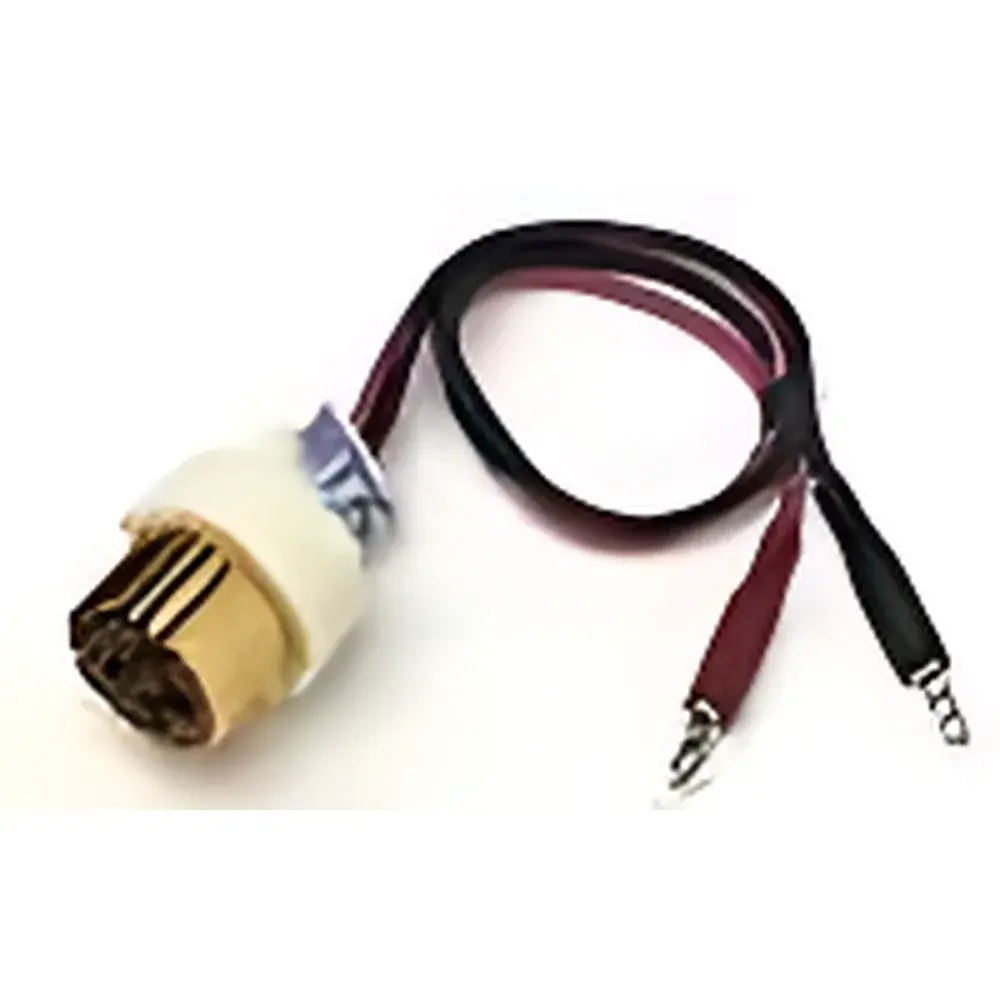
Harvard Apparatus PP35-2P Petri Pulser Electroporation Electrode for Adherent Cell Transfection
| Brand | Harvard Apparatus |
|---|---|
| Origin | USA |
| Model | PP35-2P |
| Type | Adherent-cell-specific electroporation electrode |
| Compatibility | Standard 35 mm Petri dishes with 2 mm gap electrodes |
| Application | In situ transfection of monolayer-cultured mammalian cells |
| Configuration | Dual parallel plate electrode assembly |
Overview
The Harvard Apparatus PP35-2P Petri Pulser is a purpose-engineered electroporation electrode system designed specifically for the efficient and physiologically relevant transfection of adherent mammalian cells cultured in standard 35 mm Petri dishes. Unlike conventional cuvette-based electroporation systems—which require enzymatic or mechanical detachment, suspension handling, and subsequent re-plating—the PP35-2P enables in situ electroporation directly within the culture dish. This eliminates disruptive dissociation steps that compromise cell viability, perturb cell cycle synchronization, impair intercellular junction integrity, and reduce post-transfection plating efficiency. The device operates on the principle of controlled transient membrane permeabilization via precisely delivered square-wave or exponential-decay electrical pulses across a defined 2 mm inter-electrode gap, generating uniform electric field distribution across the monolayer while minimizing localized Joule heating and arcing.
Key Features
- Optimized geometry for direct integration into 35 mm tissue culture dishes—no transfer, no trypsinization, no centrifugation
- Dual parallel stainless-steel electrode plates with precision-machined 2 mm spacing to ensure consistent field strength (V/cm) across the entire adherent layer
- Compatible with all major commercial electroporators supporting external electrode inputs (e.g., Harvard Apparatus ECM 830, BTX ECM 830, Genepulser Xcell)
- Autoclavable and chemically resistant construction for repeated use under sterile tissue culture conditions
- Minimal footprint design preserves standard incubator and biosafety cabinet workflows without requiring specialized chamber modifications
- Engineered for reproducible pulse delivery: low inductance path and stable contact interface reduce pulse distortion and improve temporal fidelity
Sample Compatibility & Compliance
The PP35-2P supports transfection of a broad spectrum of adherent cell lines—including but not limited to HEK293, HeLa, NIH/3T3, MCF-7, and primary human fibroblasts—cultured as confluent or subconfluent monolayers on standard TC-treated polystyrene surfaces. It is validated for use with plasmid DNA, siRNA, CRISPR RNP complexes, and fluorescent dyes. The electrode conforms to ISO 13485–aligned manufacturing controls and is supplied with documentation supporting GLP-compliant experimental recordkeeping. While the PP35-2P itself is not a medical device, its use in preclinical research aligns with FDA-recommended practices for nucleic acid delivery method validation (per FDA Guidance for Industry: “Considerations for Plasmid DNA Vaccines for Infectious Disease Indications”, 2020). All materials meet USP Class VI biocompatibility standards for short-term in vitro contact.
Software & Data Management
As a hardware electrode module, the PP35-2P does not incorporate embedded firmware or onboard software. Pulse parameters—including voltage, pulse duration, number of pulses, and interval—are fully controlled via the host electroporator’s native interface or programmable external pulse generators. When used with electroporators featuring audit-trail functionality (e.g., models compliant with 21 CFR Part 11), full parameter logging, user authentication, and electronic signature capture are preserved end-to-end. Experimental metadata—including dish lot number, cell passage, confluency estimation, and reagent batch IDs—can be systematically linked to electroporation events using LIMS-integrated lab notebooks or ELN platforms such as LabArchives or Benchling.
Applications
- High-efficiency CRISPR-Cas9 genome editing in adherent cell models without clonal selection bias introduced by suspension adaptation
- Functional genomics screening where preservation of native cell morphology and extracellular matrix interactions is critical
- Transient overexpression or knockdown studies requiring synchronized cell cycle status and minimal stress-induced transcriptional artifacts
- Delivery of large macromolecular complexes (e.g., Cas9-gRNA ribonucleoproteins >150 kDa) with improved cytosolic access compared to lipid-based methods
- Co-transfection of multiple constructs (e.g., reporter + effector plasmids) with stoichiometric control unattainable via viral vectors
- Electrophysiological preconditioning studies coupling electroporation with real-time impedance monitoring (when integrated with xCELLigence or ECIS systems)
FAQ
Can the PP35-2P be used with suspension cells?
No. The PP35-2P is engineered exclusively for adherent monolayers. Suspension cells require cuvette-based or flow-through electroporation systems optimized for homogeneous field distribution in liquid phase.
Is sterilization required between uses?
Yes. Autoclaving at 121°C for 15 minutes or immersion in 70% ethanol followed by UV irradiation (254 nm, 30 min) is recommended to maintain sterility and prevent cross-contamination.
What is the maximum recommended cell confluency for optimal transfection?
80–90% confluency is empirically optimal; higher densities may cause uneven field penetration, while lower densities increase risk of edge effects and reduced transfection uniformity.
Does the PP35-2P support multi-well plate formats?
No. It is dimensionally specific to single-use 35 mm Petri dishes. For higher-throughput adherent-cell electroporation, users should consider the Harvard Apparatus PP60-2P (60 mm) or custom electrode arrays compatible with 6-well plates.
How does pulse parameter optimization differ from cuvette protocols?
Due to lower conductive volume and absence of suspension buffer dilution, voltage settings are typically 10–25% lower than cuvette equivalents; pulse duration and number must be empirically calibrated per cell type using pilot viability and expression assays.




