
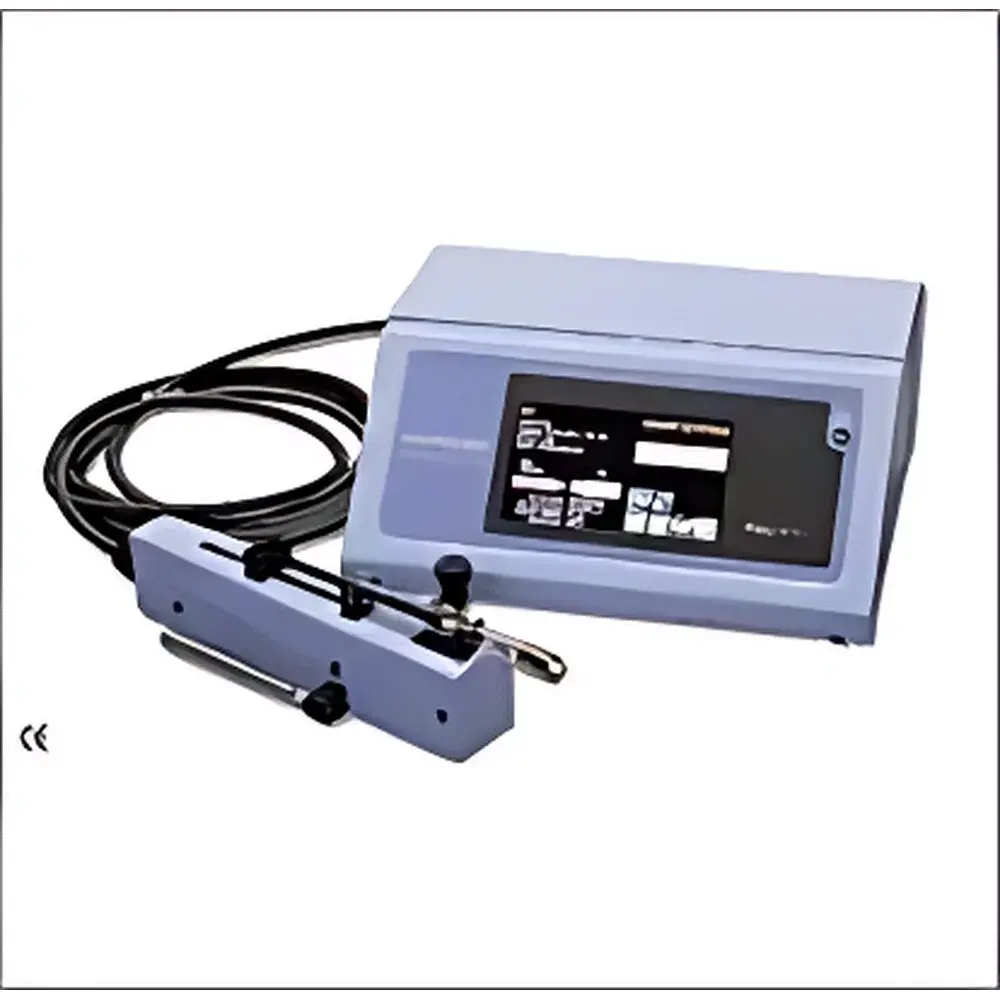
Harvard Apparatus PUMP 11 ELITE Nanomite 704507 Stereotaxic Microinfusion Pump
| Brand | Harvard Apparatus |
|---|---|
| Origin | USA |
| Model | PUMP 11 ELITE Nanomite 704507 |
| Precision | ±0.5% (accuracy), ±0.05% (repeatability) |
| Flow Range | 3.66 pL/min to 3.818 mL/min |
| Syringe Capacity | 0.5 µL–1 mL |
| Display | 4.3" WQVGA TFT color touchscreen |
| Motor Resolution | 0.198 µm/step |
| Linear Force | 5 kg |
| Power Input | 12–30 VDC / 100–240 VAC, 50/60 Hz |
| Certifications | CE, ETL (UL/CSA), WEEE, RoHS, CB Scheme |
| Interface | RS-232, USB, TTL footswitch, RS-485, IEEE-1394, 15-pin D-Sub, mini phono jack |
| Dimensions (Controller) | 22.6 × 17.78 × 15 cm |
| Weight | 1.96 kg |
Overview
The Harvard Apparatus PUMP 11 ELITE Nanomite 704507 is a microprocessor-driven stereotaxic microinfusion pump engineered for ultra-precise, programmable fluid delivery in neuroscience and in vivo animal research. Designed explicitly for integration with stereotaxic frames and micromanipulators, it operates on a high-resolution stepper motor actuation system coupled with a precision lead-screw mechanism—enabling volumetric control down to the picoliter-per-minute range. Its core measurement principle relies on displacement-based volumetric infusion: motor step count translates directly to plunger displacement, calibrated against syringe geometry to yield traceable flow rates. This architecture ensures minimal pulsatility and eliminates reliance on pressure feedback loops or peristaltic compression—critical for maintaining neuronal integrity during intracerebral microinjection, viral vector delivery, or pharmacological microdialysis.
Key Features
- Ultra-low flow capability: Programmable from 3.66 pL/min to 3.818 mL/min across four units (pL/min, pL/hr, µL/min, µL/hr), supporting both infusion and withdrawal protocols.
- Nanometer-scale actuation: Motor resolution of 0.198 µm per step enables sub-nanoliter volume increments with high positional reproducibility.
- Modular head design: Lightweight pump head (6.35 × 5.08 × 19.05 cm) decouples from controller for direct mounting onto stereotaxic arms, reducing mechanical coupling errors and vibration transmission.
- Smooth Flow™ technology: Advanced microstepping firmware suppresses torque ripple and minimizes flow transients—eliminating pulse-induced tissue shear stress during slow-rate infusions.
- High-fidelity calibration traceability: Accuracy ±0.5%, repeatability ±0.05% across full syringe range (0.5 µL–1 mL glass or plastic); validated per ISO 8536-4 and ASTM D3418 for volumetric dispensing systems.
- Full-featured human interface: 4.3″ WQVGA color touchscreen with intuitive menu navigation, real-time flow visualization, and on-device parameter logging.
Sample Compatibility & Compliance
The Nanomite accommodates standard Luer-lock syringes (glass or polypropylene) from 0.5 µL to 1 mL capacity, including custom borosilicate capillaries used in intracranial cannulation. Its non-contact plunger drive avoids syringe barrel deformation—preserving laminar flow profiles critical for viscous neurotracers or lentiviral suspensions. The system complies with CE marking requirements for laboratory equipment, UL/CSA ETL listing for electrical safety, and RoHS/WEEE directives for hazardous substance restriction. For GLP- and GCP-regulated preclinical studies, audit-ready operation is supported via non-volatile memory storage of all protocol parameters and execution timestamps. While not FDA 21 CFR Part 11–certified out-of-box, the device’s deterministic control logic, immutable parameter logging, and hardware-level TTL footswitch triggering provide foundational elements for lab-specific validation under ICH-GCP and AAALAC-accredited animal care programs.
Software & Data Management
The PUMP 11 ELITE Nanomite supports bidirectional communication via RS-232, USB virtual COM port, and TTL-triggered start/stop—enabling synchronization with electrophysiology rigs (e.g., patch-clamp amplifiers), behavioral tracking software (e.g., EthoVision), or real-time MRI acquisition triggers. All user-defined protocols—including multi-phase ramps, pause intervals, and bidirectional infusion-withdrawal cycles—are stored in onboard non-volatile memory with timestamped execution logs. Optional Harvard Apparatus PumpControl™ software (Windows/macOS) provides remote configuration, batch protocol deployment, and CSV export of time-stamped volume/time datasets compatible with MATLAB, Python (Pandas), and GraphPad Prism workflows. No proprietary cloud services or telemetry are embedded—data sovereignty remains fully under investigator control.
Applications
- Stereotaxic intracerebral injection of AAV vectors, CRISPR-Cas9 constructs, or optogenetic actuators into defined nuclei (e.g., hippocampus, striatum, VTA) with <100 nL precision.
- Chronic microinfusion via implanted cannulae for dose-response pharmacokinetic studies in rodent models of neurodegeneration or psychiatric disorders.
- Single-cell electroporation and cytoplasmic loading of dyes or biosensors in ex vivo brain slices mounted on recording chambers.
- Microchemical delivery in microfluidic organ-on-chip platforms requiring picoliter-level reagent dosing synchronized with perfusion cycles.
- Calibration reference for gravimetric or fluorometric flow validation in ISO/IEC 17025-accredited metrology labs.
FAQ
Can the Nanomite be used with glass syringes smaller than 0.5 µL?
No—mechanical and calibration limits are defined for syringes ≥0.5 µL. Sub-microliter delivery requires specialized capillary-based systems not supported by this model.
Is the pump compatible with third-party stereotaxic frames (e.g., David Kopf, Stoelting)?
Yes—the modular pump head includes universal mounting holes and low-profile geometry optimized for direct attachment to standard XYZ micromanipulator rails.
Does the device support closed-loop pressure monitoring?
No—it is an open-loop displacement-controlled system. Pressure sensing requires external transducers interfaced via analog input modules (not included).
How is accuracy maintained across different syringe materials and diameters?
Accuracy is preserved through user-initiated syringe calibration: the operator inputs inner diameter and stroke length, enabling real-time volume-to-step conversion based on geometric modeling—not empirical curve fitting.
What is the maximum backpressure tolerance during infusion?
Rated linear force is 5 kg (≈49 N), corresponding to ~100 psi at a 0.5 mm ID cannula—sufficient for most intraparenchymal injections but not for high-resistance microelectrodes or dense hydrogels without pre-clearance verification.
Related Products




