
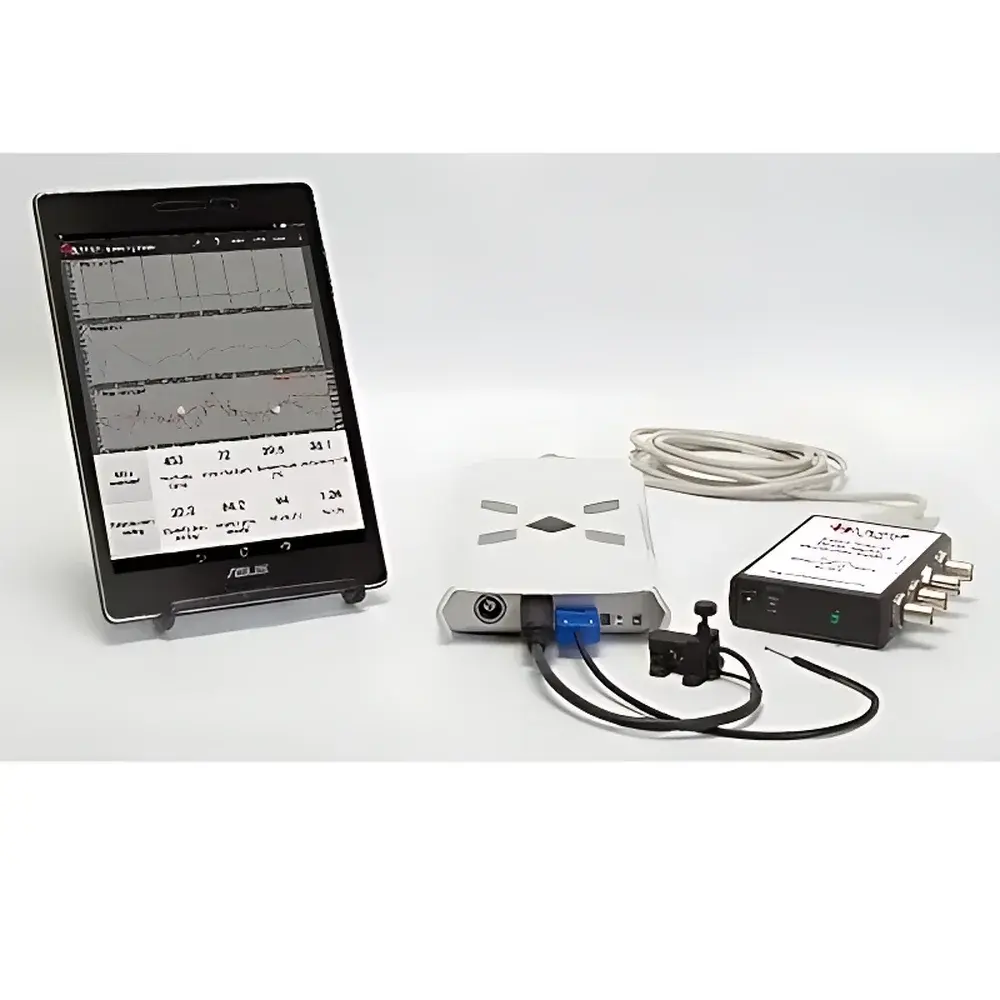
Harvard Apparatus Small Animal Physiological Monitoring System
| Brand | Harvard Apparatus |
|---|---|
| Origin | USA |
| Manufacturer Type | Authorized Distributor |
| Origin Category | Imported |
| Model | Small Animal Physiological Monitoring System |
| Instrument Type | Multi-Parameter Physiological Monitor |
| Measurement Parameters | Rectal Temperature, ECG, Respiration Rate, SpO₂, Non-Invasive Blood Pressure (NIBP), End-Tidal CO₂ (EtCO₂) |
| Heating Platform | Adjustable Thermostatic Surface (25–42 °C, ±0.1 °C stability) |
| Data Interface | Bluetooth 5.0 to Android Tablet (pre-installed monitoring software) |
| Data Export | CSV via USB or cloud-synced export to Windows/macOS workstations |
| Compliance | CE Marked, RoHS Compliant, Designed for GLP-Compliant Preclinical Research |
Overview
The Harvard Apparatus Small Animal Physiological Monitoring System is a purpose-engineered, integrated platform for real-time, multi-parameter physiological assessment during acute in vivo rodent and small mammal experiments. Built upon a modular architecture grounded in clinical-grade transduction principles, the system concurrently acquires and synchronizes six core hemodynamic and metabolic signals: rectal temperature (via precision thermistor probe), electrocardiography (ECG) with differential limb lead configuration, thoracic impedance-based respiration rate, pulse oximetry (SpO₂) using dual-wavelength red/infrared photoplethysmography, non-invasive blood pressure (NIBP) via volumetric tail-cuff plethysmography, and end-tidal CO₂ (EtCO₂) measured by mainstream infrared capnography. Its embedded thermostatic heating platform maintains stable core body temperature—critical for minimizing thermal stress-induced confounding in cardiovascular, neuropharmacological, and metabolic studies—while enabling precise experimental control over thermal homeostasis. The system operates under closed-loop feedback regulation, ensuring ±0.1 °C thermal stability across the physiologically relevant range of 25–42 °C.
Key Features
- Simultaneous acquisition of six synchronized physiological parameters with timestamp-aligned data streams for cross-modal correlation analysis
- Thermostatically regulated heating platform with digital PID control, calibrated against NIST-traceable reference standards
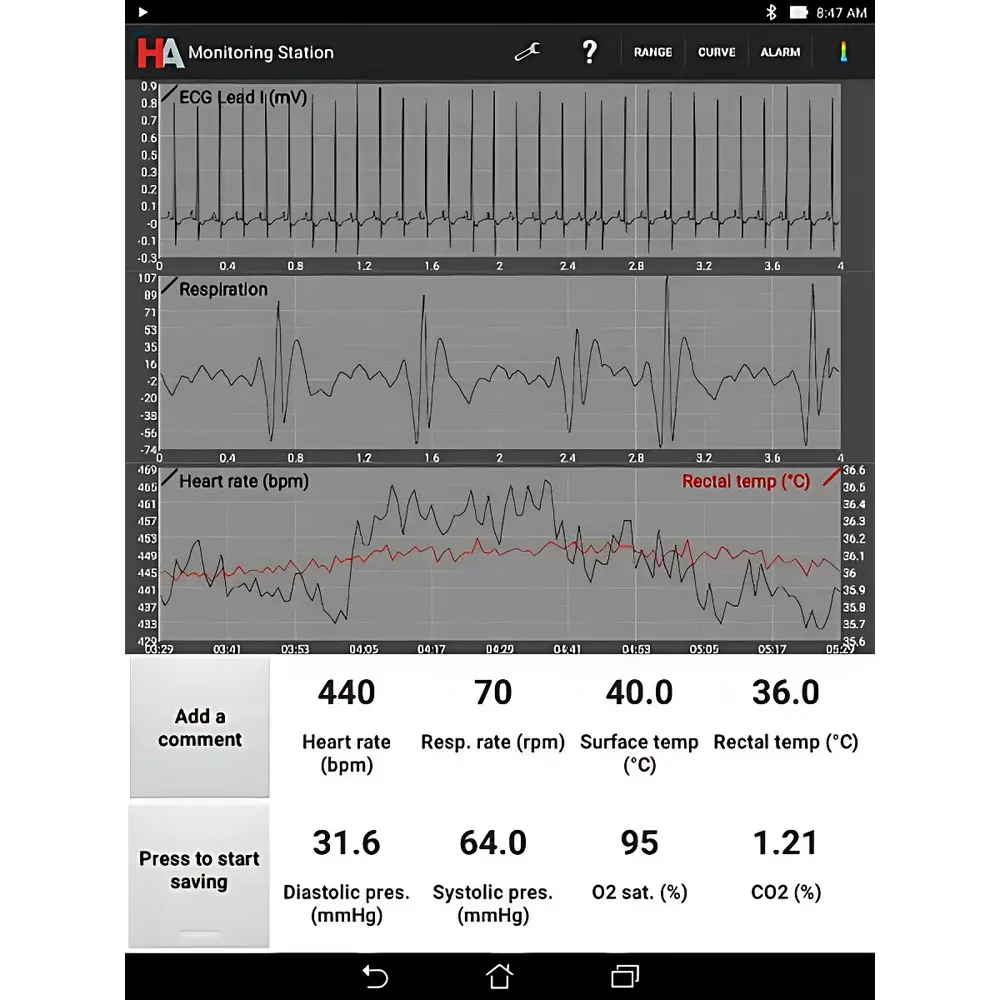
- Dedicated Android-based tablet interface with intuitive, touch-optimized GUI supporting real-time waveform visualization, alarm thresholds, and manual annotation
- Bluetooth 5.0 wireless telemetry enabling cable-free operation within a 10-meter radius—reducing mechanical artifact during delicate surgical procedures
- Pre-sterilized, reusable rectal temperature probe with medical-grade silicone sheath and low-thermal-mass thermistor (response time < 2 s)
- Integrated ECG electrode set with Ag/AgCl snap connectors and conductive gel formulation optimized for low-impedance dermal contact in murine models
- Export-ready data pipeline: raw time-series files (.csv) compatible with MATLAB, Python (NumPy/Pandas), LabChart, and GraphPad Prism
Sample Compatibility & Compliance
The system is validated for use with mice (18–35 g), rats (200–500 g), guinea pigs, and hamsters. All sensors and cuffs are sized according to NIH-recommended allometric scaling guidelines. Hardware and firmware comply with IEC 61000-6-3 (EMC emissions) and IEC 61000-6-1 (immunity), and meet essential requirements of the EU Medical Device Regulation (MDR 2017/745) Annex I for Class I non-invasive monitoring devices used in preclinical research settings. While not intended for human diagnostic use, its signal fidelity and calibration traceability align with ASTM F2917-22 (Standard Practice for Performance Testing of Physiological Monitors in Laboratory Animal Research) and support audit readiness for GLP-compliant study documentation per OECD Principles of Good Laboratory Practice.
Software & Data Management
The embedded Android application provides real-time display of waveforms, numeric vitals, trend plots, and configurable audio/visual alerts. Each recording session generates a metadata-rich .csv file containing columnar timestamps, raw sensor voltages, and processed physiological values (e.g., heart rate in bpm, systolic/diastolic MAP from oscillometric NIBP algorithm, respiratory rate derived from impedance zero-crossing detection). Data export supports direct USB transfer to any Windows or macOS workstation; optional secure cloud synchronization (AES-256 encrypted) enables centralized lab-wide data archiving. Audit trail functionality logs user login events, parameter changes, and export actions—supporting 21 CFR Part 11 compliance when deployed with institutional identity management systems.
Applications
This system is routinely deployed in pharmacokinetic/pharmacodynamic (PK/PD) studies assessing cardiovascular effects of novel compounds; ischemia-reperfusion injury models requiring continuous hemodynamic surveillance; neurobehavioral assays where autonomic stability must be preserved; and longitudinal toxicity screening under OECD Test Guidelines 407 and 422. Its capacity to maintain normothermia during prolonged anesthesia significantly improves survival rates and data reproducibility in transgenic mouse phenotyping workflows. The synchronized multi-parameter output also facilitates advanced analyses such as heart rate variability (HRV), respiratory sinus arrhythmia (RSA), and baroreflex sensitivity estimation—enabling translational mechanistic insight bridging rodent physiology and human pathophysiology.
FAQ
Is this system suitable for chronic implantation studies?
No—this is an acute, non-invasive monitoring platform designed for terminal or short-duration (< 6 h) surgical experiments. It does not support telemetry transmitter implantation or long-term ambulatory recording.
Can the heating platform be used independently of physiological monitoring?
Yes—the thermostatic surface operates autonomously via onboard controls and retains setpoint memory between sessions.
Does the system support integration with third-party DAQ hardware (e.g., PowerLab, Spike2)?
Raw analog outputs (ECG, respiration, temperature) are available via BNC breakout ports for external synchronization; digital data export remains the primary interoperability pathway.
What calibration procedures are required prior to use?
The system ships with factory calibration certificates. Users perform daily functional verification using the included test leads and reference temperature block; NIBP cuff calibration follows manufacturer-specified inflation protocol per ASTM F2917.
Is technical support available for protocol development and data analysis scripting?
Harvard Apparatus offers application engineering consultation—including Python/MATLAB script templates for automated HRV and EtCO₂ event detection—as part of extended warranty and service contracts.



