
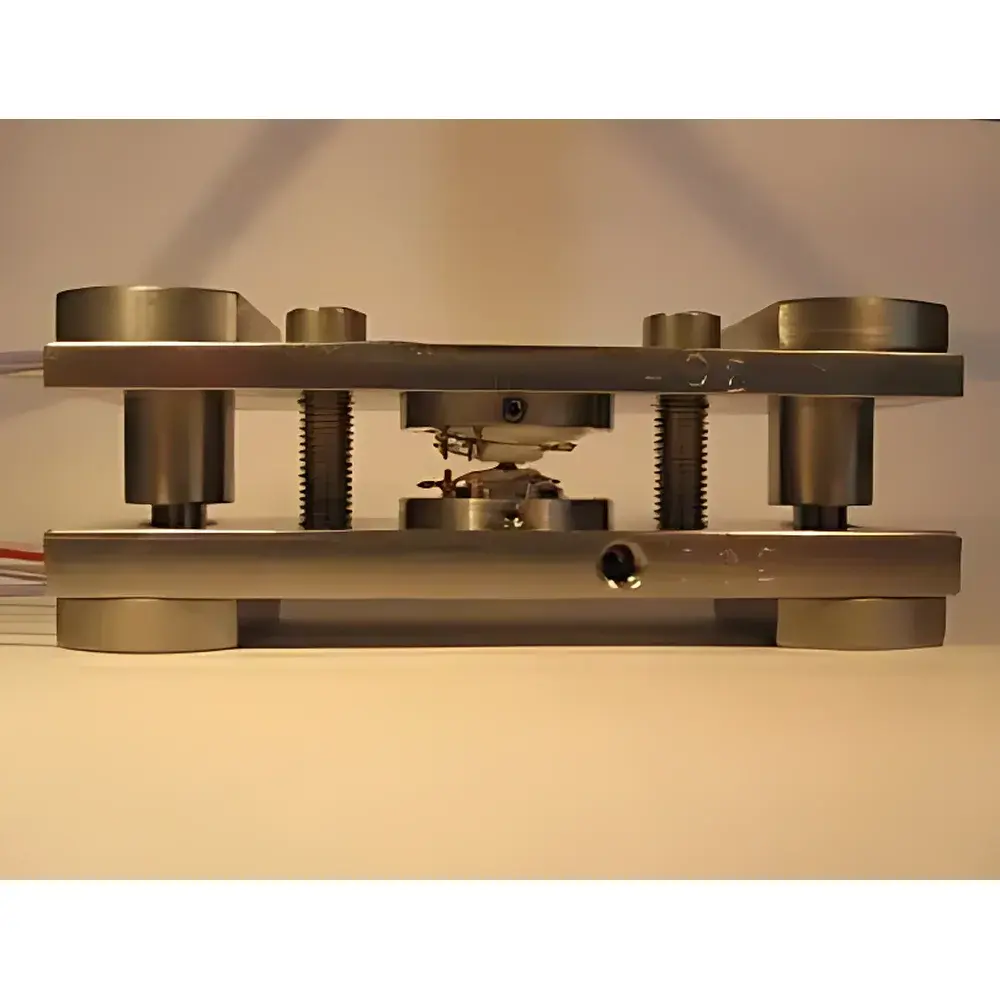
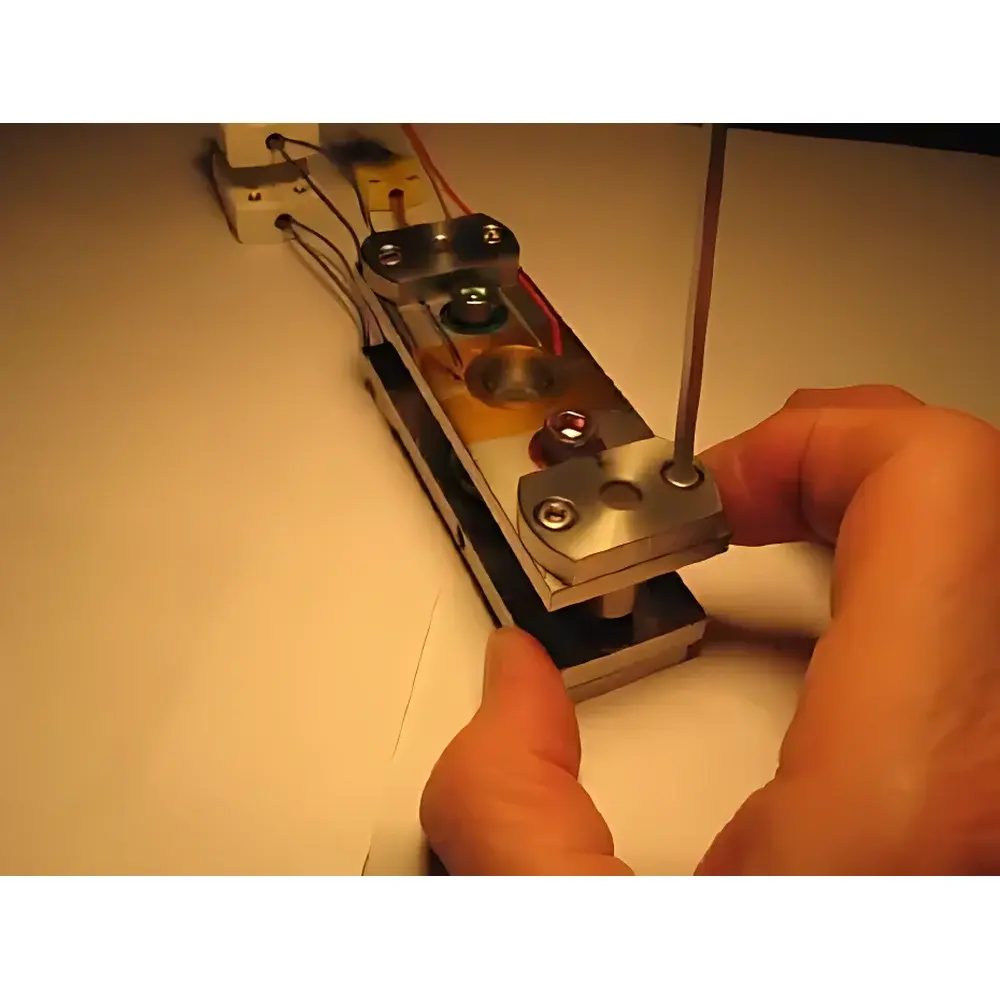
HDAC Diamond Anvil Cell for High-Pressure Optical Microscopy
| Origin | USA |
|---|---|
| Manufacturer Type | Authorized Distributor |
| Origin Category | Imported |
| Model | HDAC |
| Pricing | Available Upon Request |
Overview
The HDAC Diamond Anvil Cell (DAC) is a precision-engineered high-pressure optical cell designed for in situ, real-time observation of materials under extreme thermobaric conditions. Based on the well-established diamond anvil principle—where two opposing single-crystal diamond anvils compress a microsample within a gasketed chamber—the HDAC enables controlled hydrothermal experimentation across a broad range of temperatures (−180 °C to +1200 °C) and pressures (0.1–100 GPa). Its optically transparent diamond windows support full compatibility with transmitted and reflected light microscopy, Raman spectroscopy, FTIR, synchrotron X-ray diffraction, and X-ray fluorescence—making it a core platform for dynamic phase-transition studies in geosciences, condensed matter physics, and materials chemistry.
Key Features
- Optically transparent diamond anvils (type Ia, polished to λ/10 surface flatness) enabling high-resolution optical access across UV–NIR spectrum (200–2500 nm)
- Modular, interchangeable gasket system (steel, rhenium, or tungsten carbide) supporting diverse pressure media (H₂O, NaCl, silicone oil, methanol–ethanol mixtures)
- Integrated heating/cooling capability via resistive furnace (±0.5 °C stability) and cryogenic cooling stages (liquid nitrogen or closed-cycle helium)
- Full compatibility with standard inverted and upright metallurgical microscopes, including polarized light and differential interference contrast (DIC) configurations
- Mechanically robust stainless-steel body with calibrated screw-driven force transmission, ensuring reproducible load application and long-term dimensional stability
- Designed for seamless integration with motorized XYZ translation stages and automated focus systems for time-resolved imaging workflows
Sample Compatibility & Compliance
The HDAC accommodates solid, liquid, and multiphase samples—including mineral grains, synthetic crystals, fluid inclusions, ice–gas mixtures, and organic–aqueous systems—in sample chambers as small as 30–100 µm in diameter. It conforms to ASTM E2779–21 (Standard Practice for High-Pressure Experiments Using Diamond Anvil Cells) and supports experimental protocols aligned with ISO/IEC 17025 requirements for calibration traceability. When used in conjunction with certified pressure standards (e.g., ruby fluorescence, gold or platinum equation-of-state references), the system meets metrological criteria for quantitative thermobarometry in peer-reviewed geological research. Its construction and operational documentation are compatible with GLP-compliant lab environments requiring audit-ready instrumentation logs.
Software & Data Management
While the HDAC itself is a passive mechanical-optical platform, it is routinely deployed with third-party instrumentation control software (e.g., LabVIEW-based DAQ systems, Thermo Scientific OMNIC, Bruker OPUS, or custom Python-controlled stage/microscope interfaces). All compatible acquisition systems support timestamped metadata embedding—including temperature, pressure (via calibrated transducers), stage position, illumination mode, and exposure parameters—to ensure FAIR (Findable, Accessible, Interoperable, Reusable) data practices. For laboratories operating under FDA 21 CFR Part 11 requirements, validated instrument drivers and electronic signature-capable logging modules are available through authorized integration partners.
Applications
- Geological Fluid Inclusion Thermobarometry: Direct observation and pressure-dependent homogenization temperature measurements of synthetic and natural fluid inclusions; derivation of pressure correction functions for accurate trapping condition reconstruction.
- High-Pressure Ice Polymorphism: In situ tracking of ice Ih, II, III, V, VI, and VII phase transitions under cryogenic hydrostatic loading, with correlation to theoretical lattice dynamics models.
- Magma and Crustal Rock Melting Simulations: Real-time monitoring of partial melting onset, melt fraction evolution, and crystallization kinetics in granitic, basaltic, and clay-rich systems (e.g., montmorillonite dehydration).
- Clathrate Hydrate Formation Kinetics: Visual characterization of CH₄–H₂O nucleation, growth morphology, and dissociation hysteresis under subzero, high-pressure conditions relevant to planetary science and energy resource assessment.
- Mineralogical Phase Transitions: In situ identification of pressure-induced amorphization, spin transitions (e.g., Fe²⁺ in olivine), and symmetry-breaking structural changes using coupled Raman/XRD detection.
FAQ
What pressure calibration methods are recommended for the HDAC?
Ruby fluorescence (R1-line shift), gold or platinum equation-of-state references, and internal standard techniques (e.g., quartz or MgO) are widely accepted and supported by peer-reviewed calibration protocols.
Can the HDAC be used with synchrotron radiation sources?
Yes—the standard 3–5 mm culet diameter anvils and low-background stainless-steel body are optimized for compatibility with micro-XRD, XANES, and X-ray imaging beamlines at facilities such as APS, ESRF, and SPring-8.
Is vacuum compatibility supported?
The base HDAC configuration is not vacuum-rated; however, optional ultra-high-vacuum (UHV)-compatible variants with metal-sealed flanges and bake-out rated components are available upon request.
What sample preparation tools are recommended?
Standard DAC toolkits—including gasket dies, diamond alignment jigs, micro-diamond paste, and focused ion beam (FIB)-assisted sample loading accessories—are supplied by authorized technical support partners.
Does the HDAC require specialized training for safe operation?
Yes—users must complete institutionally accredited high-pressure safety certification covering diamond handling, pressure medium selection, thermal runaway mitigation, and emergency decompression procedures prior to first use.



