
HEL BioXplorer 100 Parallel Bioreactor System
| Brand | HEL (UK) |
|---|---|
| Origin | United Kingdom |
| Model | BioXplorer 100 |
| Reactor Type | Benchtop & Miniature Parallel Bioreactor |
| Vessel Material | Borosilicate Glass |
| Operating Pressure | Low-Pressure (Vacuum to 1 MPa) |
| Working Volume Range | 0.03–10 L |
| Control Channels | 8 Independent Bioreactors |
| Temperature Range | 25–60 °C |
| Stirring Speed (Magnetic) | 200–1200 rpm |
| Stirring Speed (Overhead) | 50–1500 rpm |
| pH & Redox Monitoring | Yes |
| Sterilizable Sensors | Yes |
| Software Modules | Entry-level Simulation, Programmable Multi-step, Full Logic Control |
Overview
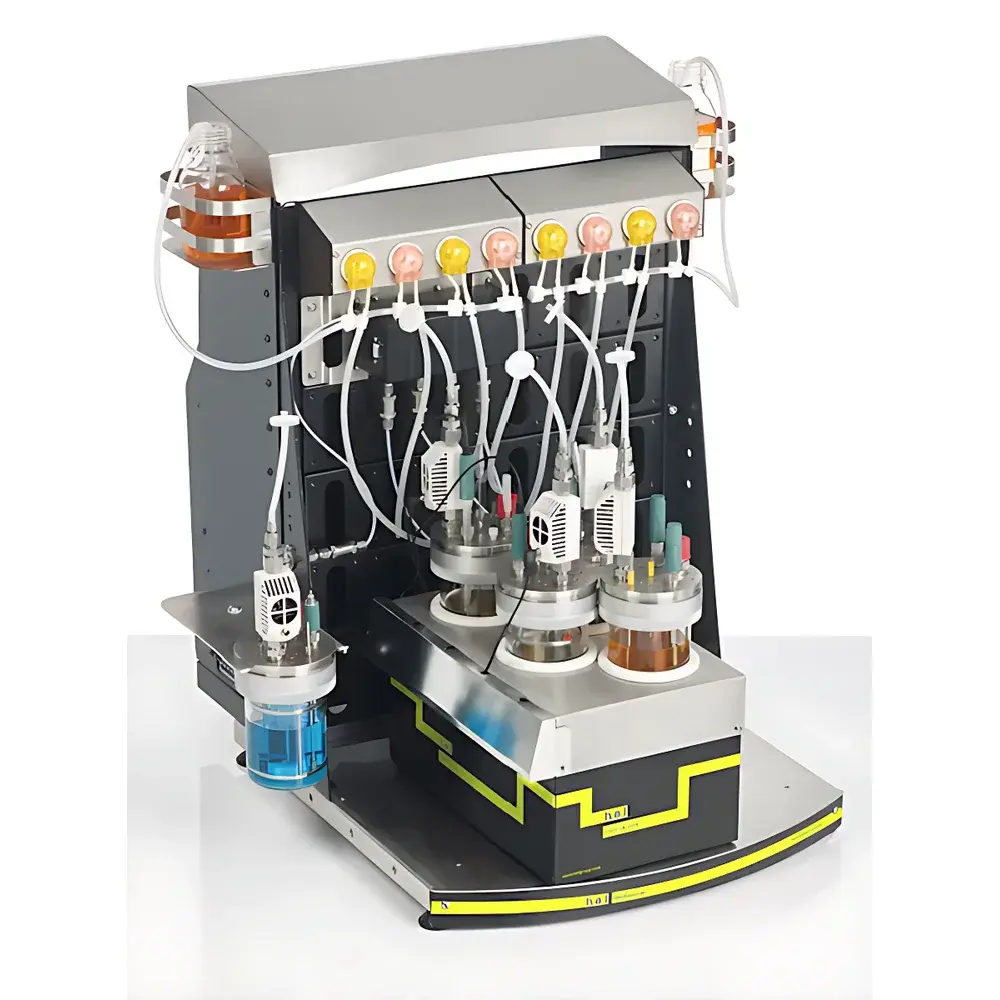
The HEL BioXplorer 100 is a modular, parallel bioreactor platform engineered for scalable bioprocess development—from early-stage strain screening and media optimization through to process intensification and tech-transfer readiness. Based on proven Couette-type mixing dynamics and integrated mass transfer monitoring, the system enables simultaneous operation of up to eight independent glass vessels (0.03–10 L), each with fully decoupled control of temperature, agitation, pH, redox potential, dissolved oxygen (via gas blending), and optional in-line turbidity or UV-Vis spectral tracking. Its architecture reflects a response to industry-wide demands for reproducible, audit-ready small-scale fermentation data that directly informs scale-up decisions—particularly critical in microbial, yeast, and mammalian cell culture workflows where physiological heterogeneity across conditions must be quantified without cross-channel interference.
Key Features
- True Parallelism: Eight thermally and mechanically isolated reaction channels, each with dedicated PID-controlled heating/cooling, magnetic or overhead stirring, and calibrated sensor inputs—no shared actuators or signal multiplexing.
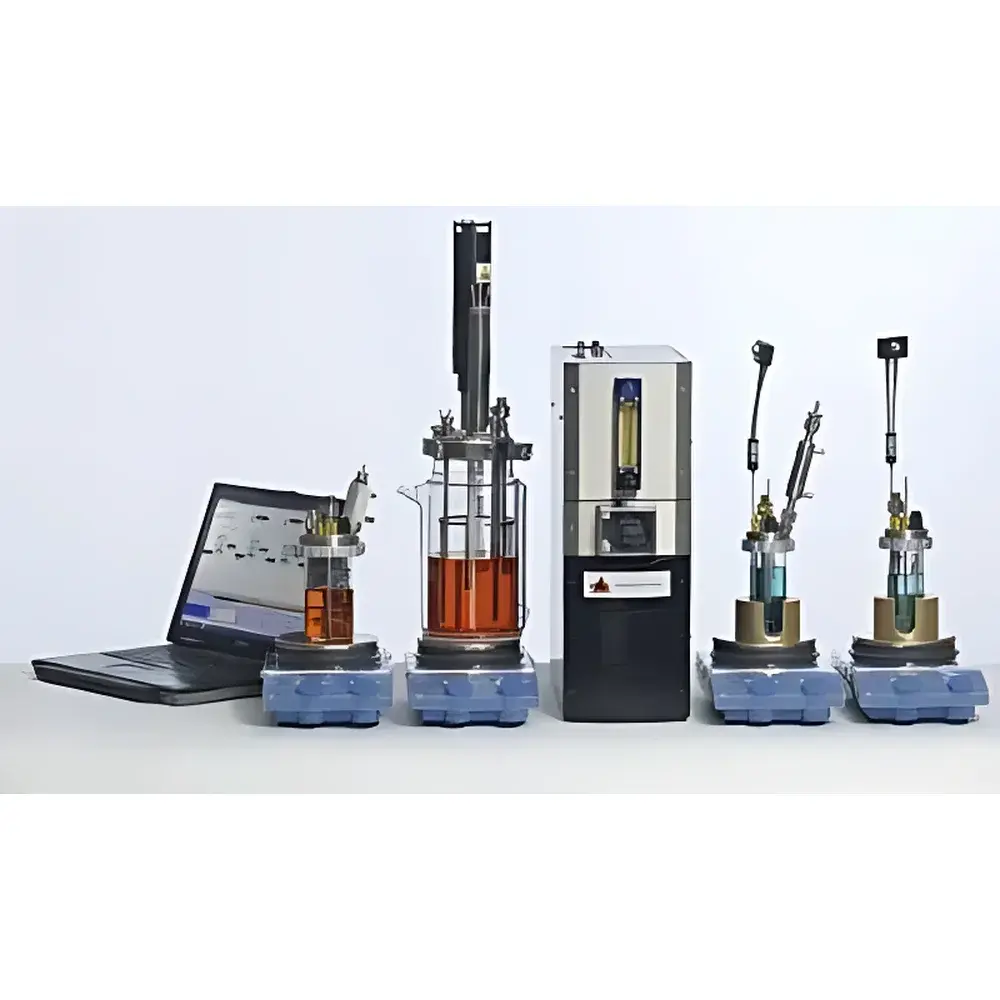
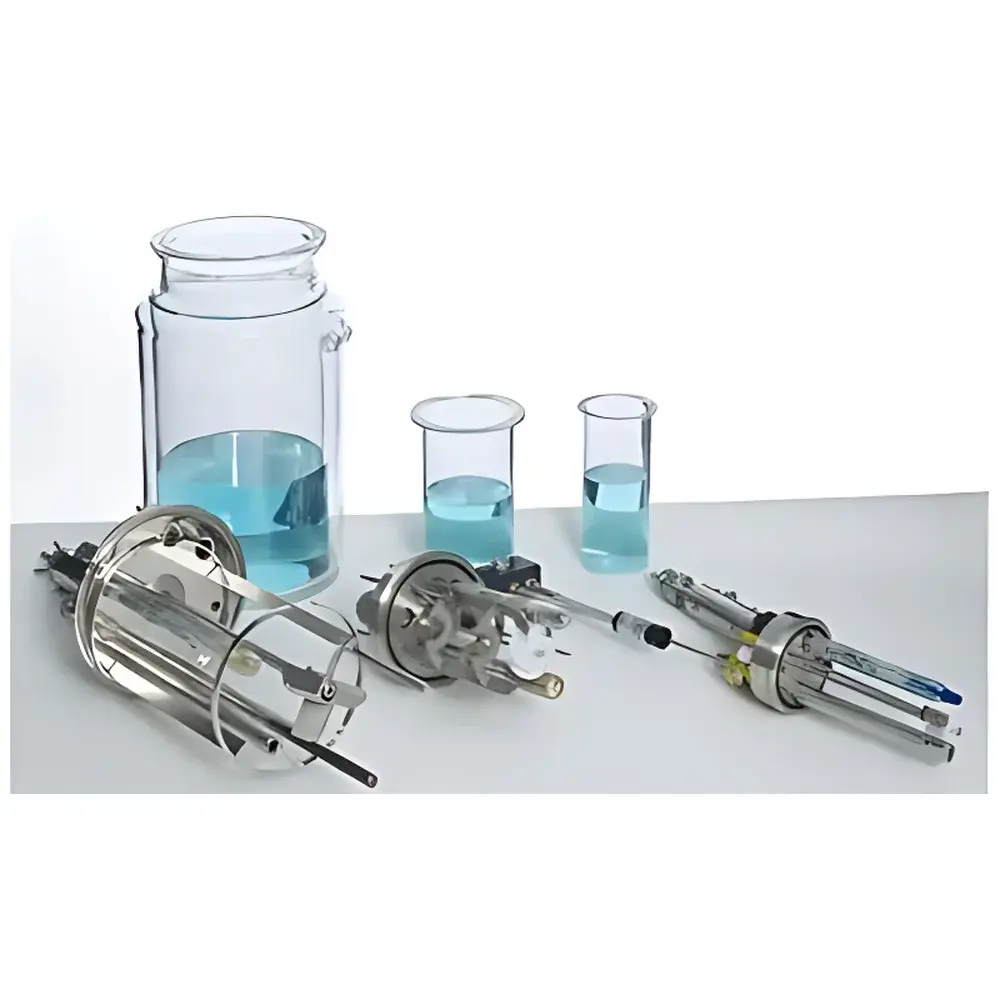
- Modular Vessel Compatibility: Interchangeable borosilicate glass reactors spanning three miniaturized ranges (30–100 mL, 100–350 mL, 175–500 mL) and five benchtop sizes (0.5, 1, 2, 5, and 10 L), all mountable on the same base unit and controlled via unified software.
- Flexible Agitation Architecture: Standard high-torque magnetic drive for sub-500 mL vessels; optional overhead motor-driven stirring with mechanical or magnetic seals for ≥1 L configurations—both support custom impeller geometries and geometric scaling protocols per ASTM E2500-13 guidelines.
- Gas Management System: Four-channel mass flow controller (MFC)-based gas blending (air, O2, N2, CO2) with CO2-mediated pH control and optional sparging calibration routines compliant with USP <1058> analytical instrument qualification.
- Autoclavable Sensor Suite: All pH, redox, and temperature probes are Class VI-certified for steam sterilization at 121 °C/20 min; optional in-line turbidity cells and fiber-optic UV-Vis probes maintain calibration post-sterilization.
Sample Compatibility & Compliance
The BioXplorer 100 accommodates aerobic and microaerobic cultivations of bacteria (e.g., E. coli, Bacillus), yeasts (S. cerevisiae, P. pastoris), filamentous fungi, and suspension-adapted mammalian cells (CHO, HEK293). Vessels conform to ISO 3585 specifications for borosilicate glass 3.3 and operate within ASME BPE-2021-compliant pressure boundaries (0–1 MPa gauge, vacuum-rated). The system supports GLP/GMP-aligned workflows: full electronic audit trail (21 CFR Part 11-compliant), user role-based access control, and raw data export in CSV/ASAM MDF4 formats for traceability. Calibration certificates for all sensors follow ISO/IEC 17025-accredited procedures.
Software & Data Management
HEL’s BioControl™ software comprises three interoperable modules: (1) Simulation Mode for single-step protocol validation; (2) Programmable Mode, enabling multi-stage experiments with conditional branching (e.g., pH-triggered feed initiation); and (3) Full Logic Mode, supporting real-time decision trees based on sensor thresholds, derivative analysis, or external API inputs. All modules provide synchronized time-series visualization, automatic metadata tagging (vessel ID, operator, timestamp, environmental log), and encrypted local storage with optional cloud backup. Remote monitoring is enabled via TLS-secured WebSocket connection—accessible from any standards-compliant browser without client-side installation.
Applications
- High-throughput bioprocess parameter screening (pH setpoint, temperature ramping, feeding strategy)
- Strain comparison under identical environmental constraints
- Media formulation optimization using Design of Experiments (DoE) frameworks
- Scale-down model development aligned with pilot- and production-scale bioreactors
- Real-time monitoring of metabolic shifts via combined turbidity + redox + pH trend analysis
- Process characterization studies required for Q5A(R2) comparability assessments
FAQ
Can the BioXplorer 100 be used for anaerobic fermentations?
Yes—when configured with nitrogen or argon gas blending and sealed vessel headplates, it maintains O2 levels below 0.1 ppm using calibrated electrochemical sensors.
Is the system suitable for cGMP manufacturing environments?
While intended for R&D and process development, its 21 CFR Part 11 compliance, audit trail functionality, and IQ/OQ documentation packages enable use in regulated development labs supporting IND/IMPD submissions.
How is temperature uniformity validated across multiple vessels?
Each channel includes dual-point PT100 sensing (vessel wall + bulk liquid), with real-time delta-T logging and automated thermal mapping reports generated per ICH Q5C stability protocol requirements.
What level of support is provided for method transfer to larger-scale reactors?
HEL provides scale-up consultation services—including dimensionless number matching (Re, Fr, PO/VL), impeller tip speed correlation, and mass transfer coefficient (kLa) benchmarking—based on empirical data from over 200 installed BioXplorer systems globally.
Are third-party sensors (e.g., Mettler Toledo, Hamilton) compatible?
Yes—the system features universal analog (4–20 mA, 0–10 V) and digital (RS485 Modbus RTU) input interfaces, with driver libraries available for common OEM sensor families.



