
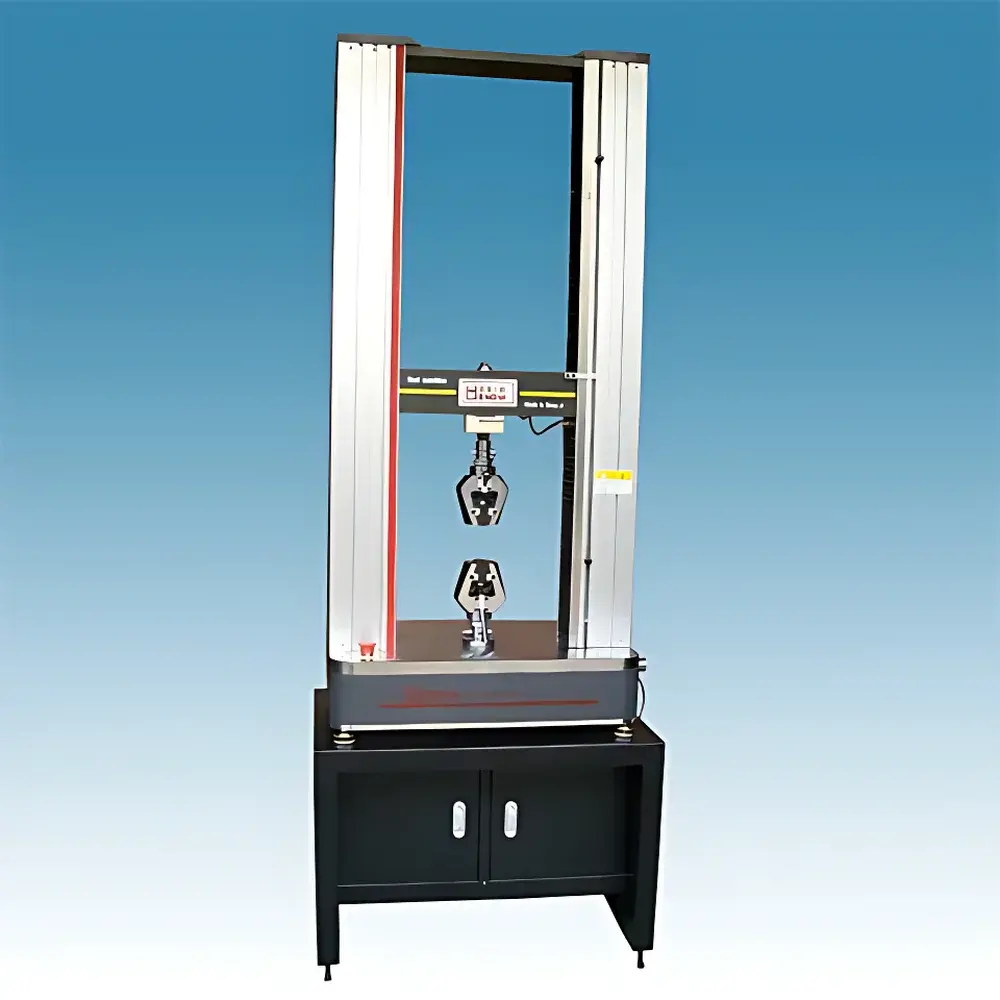
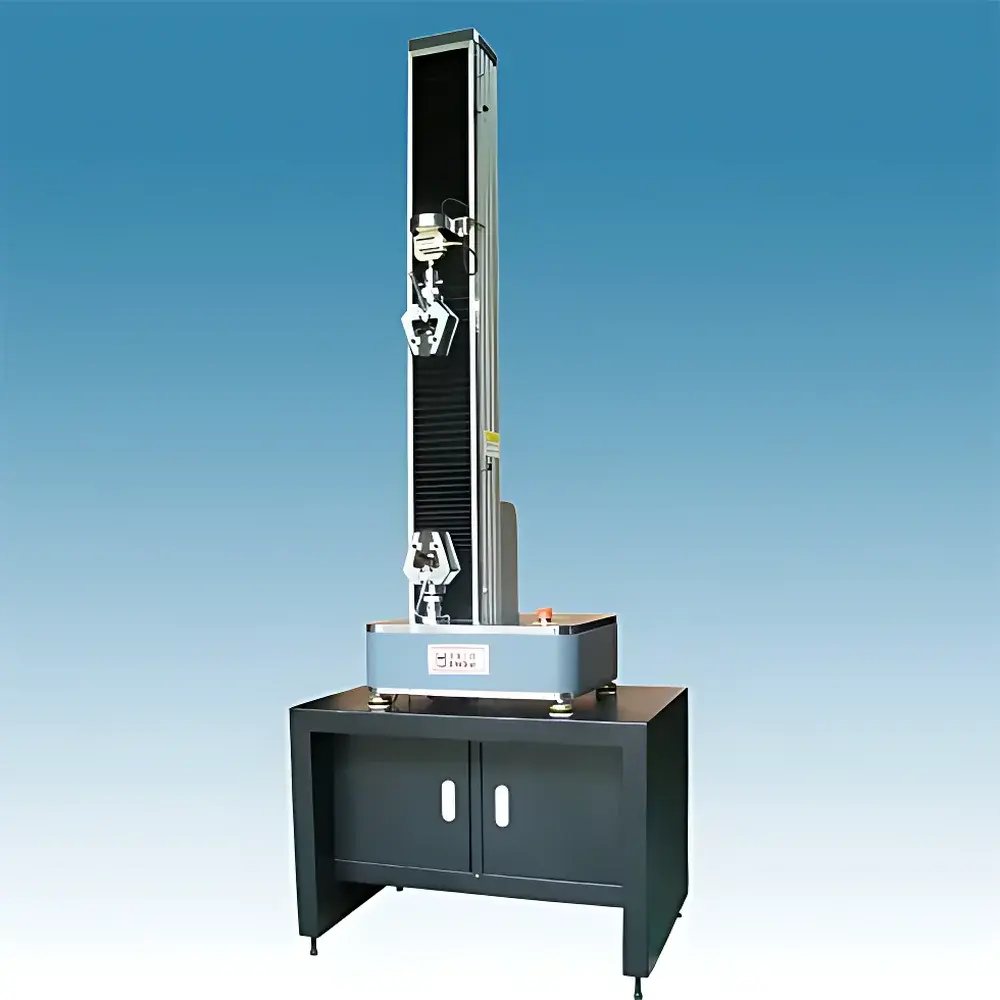
Hengyi HY-0580MNB Small & Large Rodent Biomechanical Testing System
| Brand | Hengyi |
|---|---|
| Origin | Shanghai, China |
| Manufacturer Type | Direct Manufacturer |
| Country of Origin | China |
| Model | HY-0580MNB |
| Instrument Type | Electromechanical Tensile Tester |
| Max Test Load | 5 kN |
| Force Measurement Range | 0.001–100% FS |
| Force Accuracy | ±0.5% of reading |
| Stroke | 800 mm |
| Displacement Resolution | 0.001 mm |
| Speed Range | 0.001–500 mm/min |
| Speed Accuracy | ±0.5% of set value |
| Position Accuracy | ±0.5% of reading |
| Strain Control Range | 0.002–6% FS/s |
| Stress Control Range | 0.005–6% FS/s |
| Load Cell Options | 1 N to 5000 N (interchangeable) |
| Effective Test Width | 120 mm |
| Power Supply | 220 V AC, 50 Hz, 750 W |
| Dimensions (W×D×H) | 470 × 400 × 1510 mm |
| Weight | 95 kg |
Overview
The Hengyi HY-0580MNB Small & Large Rodent Biomechanical Testing System is a precision electromechanical universal testing platform engineered for quantitative mechanical characterization of biological tissues and biomaterials in preclinical research. Designed specifically for biomechanical evaluation of murine and rat specimens—including cortical bone, trabecular bone, tendons, ligaments, cartilage, vascular grafts, and orthopedic implants—the system implements closed-loop servo-controlled actuation to deliver high-fidelity static and quasi-static loading protocols. Its architecture conforms to the fundamental principles of uniaxial and three-point bending mechanics as defined in ASTM F2118 (Standard Practice for Mechanical Testing of Bone Cement), ISO 5833 (Implants for Surgery – Acrylic Resin Cements), and ISO 14801 (Dental Implants – Fatigue Testing of Dental Implant Systems). The system supports force-, displacement-, and strain-controlled test modes with real-time feedback, enabling compliance with GLP-compliant experimental workflows in academic, pharmaceutical, and regulatory preclinical laboratories.
Key Features
- Modular load cell configuration supporting interchangeable transducers from 1 N to 5000 N—optimized for both delicate soft-tissue tensile testing (e.g., mouse Achilles tendon rupture force) and high-load structural evaluation (e.g., rat femoral diaphysis three-point bending)
- High-resolution displacement measurement with 0.001 mm resolution and ±0.5% accuracy across full 800 mm stroke—critical for precise strain quantification in low-deformation bone or hydrogel specimens
- Programmable speed control from 0.001 to 500 mm/min with ±0.5% speed fidelity—enabling slow-rate creep/relaxation studies and rapid failure testing under standardized ISO 527 or ASTM D638 conditions
- Dual-speed manual positioning and automatic return-to-start functionality—reducing operator intervention between sequential specimen tests
- Integrated electronic limit protection, overload cutoff (>110% FS), and self-diagnostic routines for drive system voltage, current, and load signal integrity
- Rigid four-column frame with 120 mm effective test width—accommodating custom fixtures for axial tension, compression, bending, shear, pull-out, and suture retention testing
Sample Compatibility & Compliance
The HY-0580MNB accommodates standardized and custom-shaped biological and synthetic specimens per ISO 5832-1 (Metallic Materials for Surgical Implants), ASTM F1800 (Guide for Testing Orthopaedic Fixation Devices), and USP (Assessment of Mechanical Performance of Biomaterials). Validated applications include: murine tibia three-point bending; rat lumbar vertebral body compression; porcine coronary artery tensile testing; PCL scaffold elongation; titanium alloy bone screw pull-out; and polyetheretherketone (PEEK) spinal cage compressive yield analysis. All force, displacement, and time data are timestamped and traceable, supporting audit readiness for FDA 21 CFR Part 11–compliant environments when paired with validated software.
Software & Data Management
The system operates with Hengyi’s proprietary BioTest Suite v4.x—a Windows-based application supporting method-driven test sequencing, real-time curve overlay, and automated parameter extraction (ultimate tensile strength, modulus, yield point, energy to failure, flexural rigidity, fatigue cycles to failure). Raw data exports to CSV, Excel, and XML formats; stress–strain curves comply with ASTM E8/E8M formatting conventions. Audit trail logging records user actions, calibration events, and system errors. Optional integration with LIMS via TCP/IP enables centralized data archiving aligned with ISO/IEC 17025 documentation requirements.
Applications
- Biomechanical phenotyping of genetically modified mouse models (e.g., osteogenesis imperfecta, Marfan syndrome)
- Preclinical evaluation of bone cement mechanical stability under cyclic loading (ISO 5833)
- Mechanical validation of resorbable fixation devices (Mg alloys, PLLA screws) per ASTM F3038
- Tensile characterization of decellularized extracellular matrix scaffolds
- Compression testing of intervertebral disc prostheses and vertebral body replacements
- Shear adhesion assessment of tissue-engineered skin grafts on porcine dermis substrates
- Dynamic fatigue life assessment of cardiovascular stents and heart valve leaflets
FAQ
Is the HY-0580MNB compliant with ISO 17025 or GLP requirements?
Yes—when operated with validated software, calibrated load cells, and documented maintenance logs, the system meets infrastructure and procedural prerequisites for GLP studies and ISO/IEC 17025-accredited testing laboratories.
Can the system perform cyclic fatigue testing?
It supports programmable sinusoidal, triangular, and trapezoidal waveforms up to 5 Hz with closed-loop displacement control—suitable for low-cycle fatigue (LCF) studies per ASTM D3479.
What fixture options are available for rodent bone bending?
Standard three-point bending fixtures include 2.5 mm and 5 mm span supports with 1 mm radius rollers, compatible with murine femora and tibiae per ASTM F2118 Annex A1.
Does the system support ASTM D638 or ISO 527 tensile testing standards?
Yes—its force accuracy (±0.5%), displacement resolution (0.001 mm), and speed control fidelity meet minimum instrumentation requirements specified in both standards.
How is calibration traceability maintained?
Load cells are supplied with NIST-traceable calibration certificates; displacement encoder verification is performed using Class I laser interferometry per ISO 9513.



