
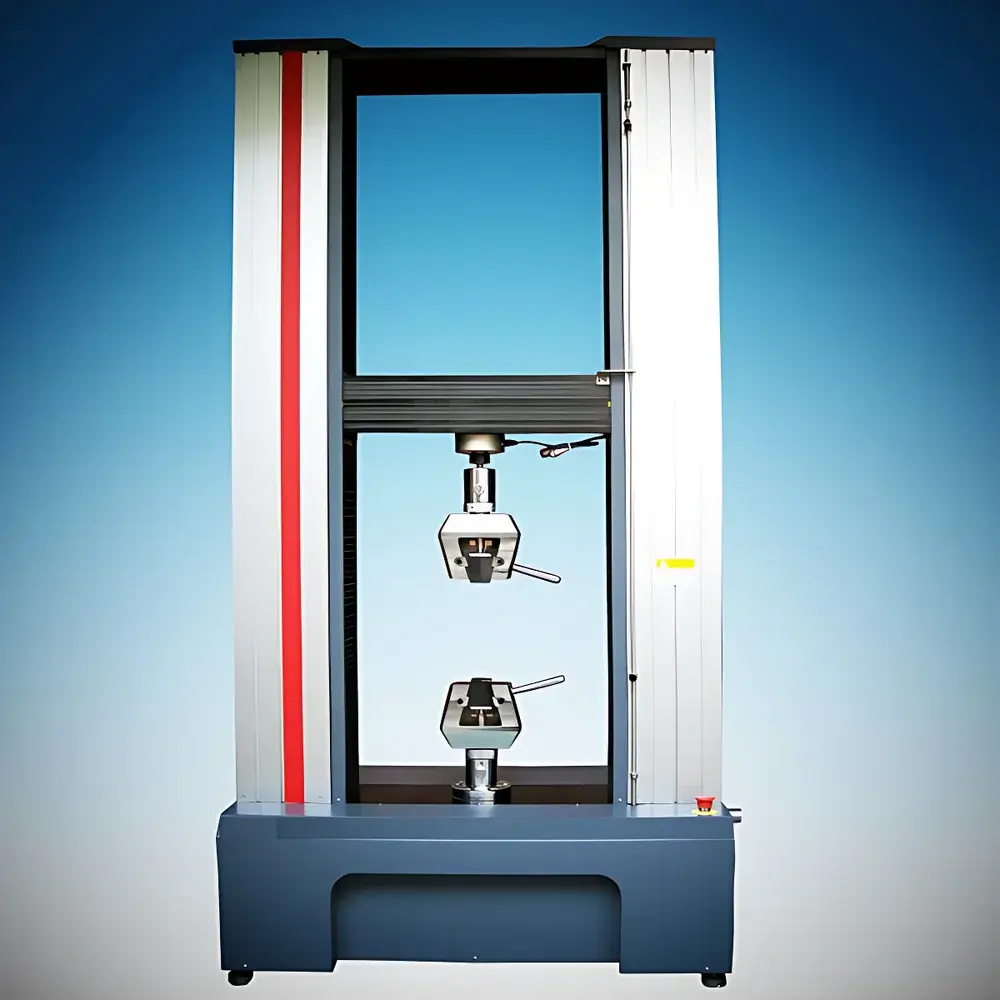
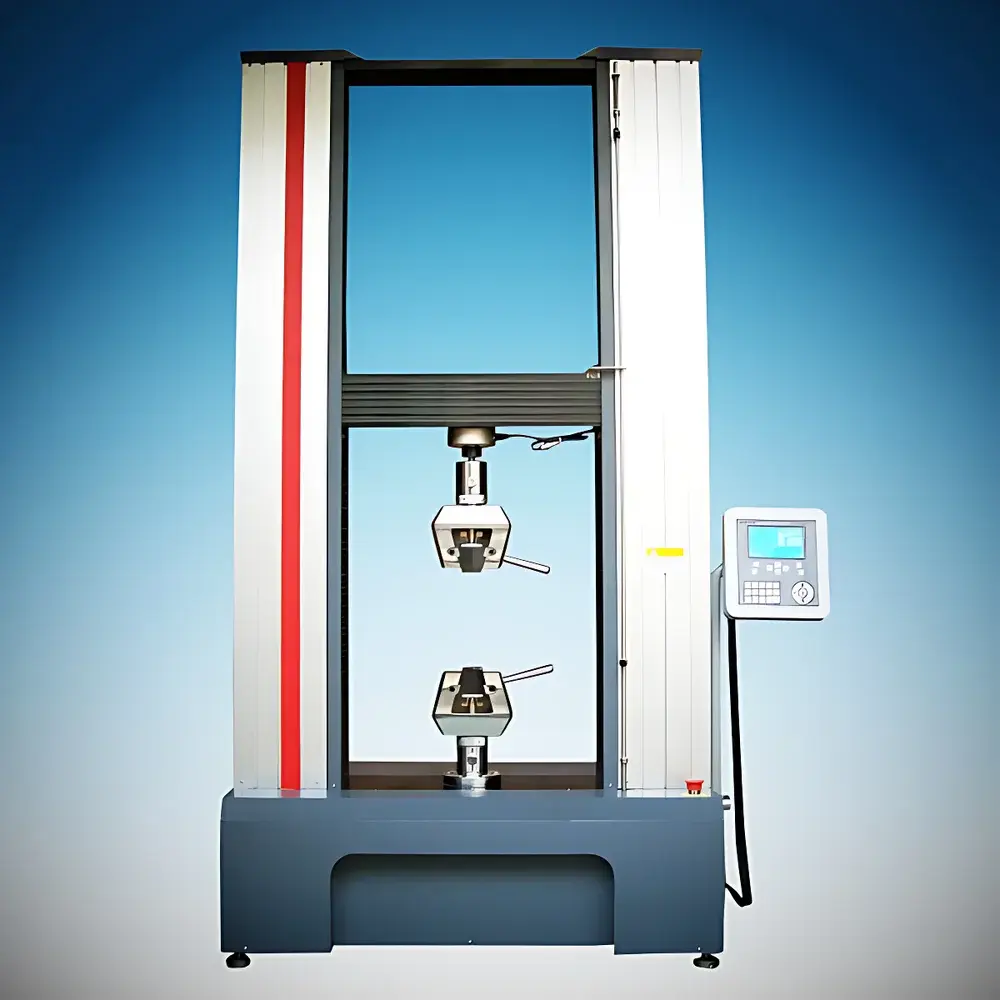
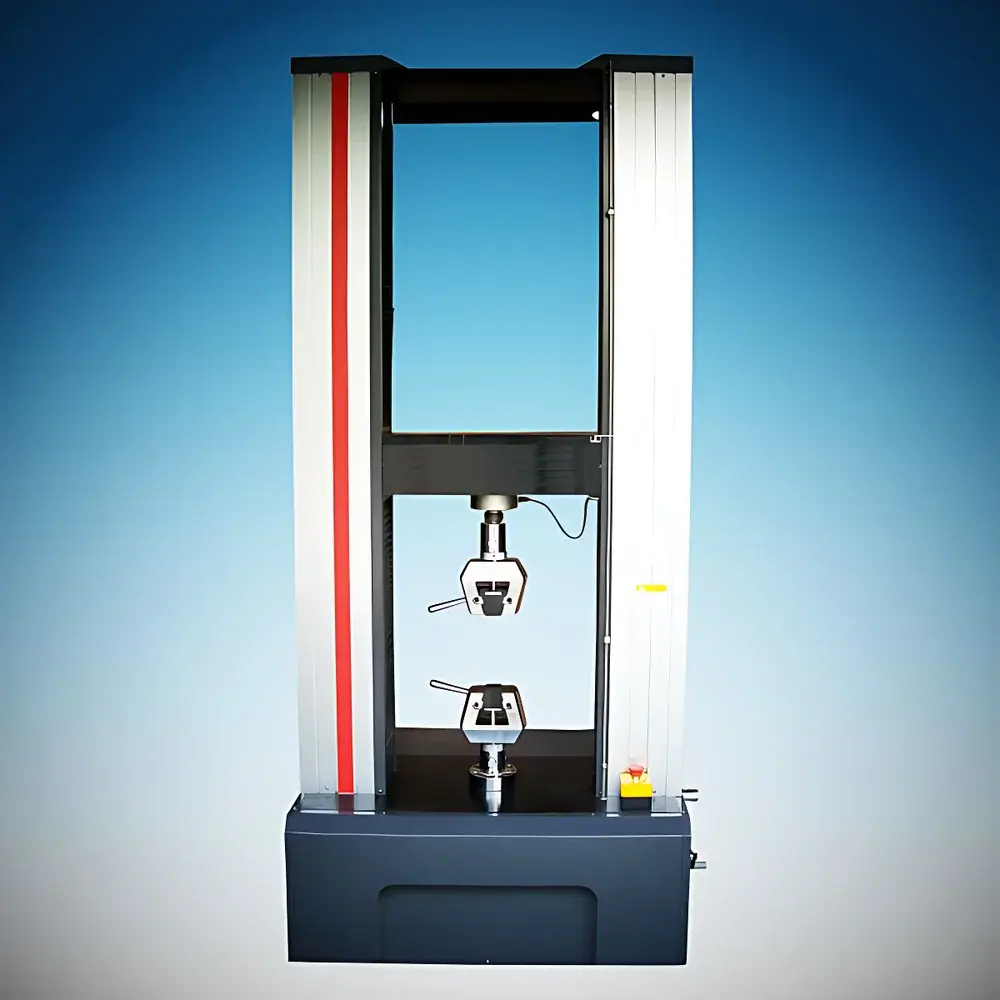
Hengyi HY-30080PLIN 300 kN Electromechanical Tensile Testing Machine
| Key | Brand: Hengyi |
|---|---|
| Origin | Shanghai, China |
| Manufacturer Type | Direct Manufacturer |
| Product Category | Domestic |
| Model | HY-30080PLIN |
| Max Test Load | 300 kN |
| Force Measurement Range | 0.001–100% FS |
| Force Accuracy | ±0.5% of reading |
| Test Stroke | 800 mm |
| Displacement Resolution | 0.001 mm |
| Control Mode | Closed-loop electromechanical servo |
| Frame Type | Dual-column龙门 (Portal) design |
| Power Supply | 380 V AC, 3 kW |
| Weight | 1650 kg |
| Dimensions (W×D×H) | 1000 × 680 × 2300 mm |
Overview
The Hengyi HY-30080PLIN is a high-capacity, closed-loop electromechanical tensile testing machine engineered for precision static mechanical property evaluation of metallic and non-metallic materials—including low-carbon steels, structural alloys, composites, polymers, and elastomers. Based on the fundamental principles of uniaxial force-displacement transduction and strain-controlled actuation, the system applies controlled axial loads while synchronously measuring load, displacement, and—when equipped with optional extensometry—true strain. Its 300 kN (≈30.6 ton-force) capacity supports full-scale characterization of construction-grade rebar, welded joints, rolled steel plates, and heavy-section components in accordance with international standard test protocols. The machine complies with core metrological and structural requirements defined in GB/T 16491–1996 (Electronic Universal Testing Machines), GB/T 228.1–2021 (Metallic Materials — Tensile Testing — Part 1: Method of Test at Room Temperature), ISO 6892-1:2019, ASTM E8/E8M, and EN 10002-1, ensuring traceable, auditable, and inter-laboratory comparable results.
Key Features
- High-fidelity dual-range load cell architecture supporting seamless measurement from 0.001% to 100% of full scale (FS), with resolution up to 1/500,000 codes at maximum load—eliminating range-switching artifacts.
- Electromechanical servo drive system delivering precise crosshead velocity control from 0.001 to 500 mm/min, with speed accuracy maintained within ±0.5% of setpoint across the entire range.
- Rigid portal frame (1000 × 680 × 2300 mm) constructed from high-tensile steel with reinforced base plate and guided column assembly, minimizing deflection and ensuring axial alignment stability under peak load.
- Integrated electronic limit protection, overload shutdown (>110% FS), real-time self-diagnostic monitoring of drive current, voltage, and thermal thresholds, and programmable emergency stop logic compliant with IEC 61508 SIL2.
- Modular fixture interface (T-slot table) enabling rapid interchange of standardized夹具 per ISO 23718 and ASTM E1012—tensile grips (pneumatic/hydraulic/wedge-type), compression platens, 3-/4-point bending fixtures, shear adapters, peel & tear clamps, and indentation hardness modules.
- Optional high-precision clip-on or video extensometers (e.g., ISO 9513 Class 0.5 or better) for direct strain measurement during yield plateau, necking, and post-ultimate deformation analysis.
Sample Compatibility & Compliance
The HY-30080PLIN accommodates specimens up to 600 mm wide and 800 mm effective gauge length, with customizable height extension for large-profile samples. It supports standardized specimen geometries per GB/T 228.1, ASTM E8, ISO 6892-1, and JIS Z 2241, including flat sheet, round bar, threaded rod, and notched tensile coupons. All hardware and firmware comply with national and international regulatory frameworks governing mechanical testing infrastructure: GB/T 2611 (General Technical Requirements for Testing Machines), GB/T 12160 (Extensometer Specifications), ISO 7500-1 (Static Calibration of Force Measuring Systems), and ISO 17025:2017 clause 6.4 (Equipment Verification). For GLP/GMP-regulated environments, the system supports audit-trail-enabled operation when paired with validated software (see Software & Data Management section).
Software & Data Management
The machine operates via Hengyi’s proprietary PC-based control and analysis suite, compatible with Windows 10/11 64-bit platforms. The software provides fully scriptable test sequences—including stress-rate, strain-rate, and load-controlled ramp-hold cycles—with real-time visualization of force–displacement, stress–strain, and time-series derivative curves. Raw data export is supported in CSV, XLSX, and universal ASCII formats; metadata tagging includes operator ID, sample ID, environmental conditions (optional sensor integration), calibration certificate reference, and timestamped version history. When configured with 21 CFR Part 11-compliant modules, the system delivers electronic signatures, role-based access control, immutable audit trails, and secure user authentication—meeting FDA, EMA, and MHRA expectations for regulated material qualification workflows.
Applications
- Determination of mechanical parameters per ISO 6892-1 and ASTM E8: ReH (upper yield strength), ReL (lower yield strength), Rp0.2 (0.2% offset yield), Rm (tensile strength), A (elongation at break), Ag (gauge elongation), At (total elongation), and Young’s modulus (E).
- Compression testing of cast iron, concrete cores, and sintered metal parts per GB/T 7314 and ASTM E9.
- Bending characterization of structural beams and weldments using three- and four-point configurations per GB/T 14452 and ASTM D790.
- Cyclic loading studies (low-cycle fatigue pre-screening), creep/relaxation hold tests, and proof-load verification for fasteners and anchor systems.
- Quality assurance in steel mills, rebar fabrication plants, aerospace component suppliers, and third-party certification laboratories performing ISO/IEC 17025-accredited testing.
FAQ
What standards does the HY-30080PLIN comply with for tensile testing of low-carbon steel?
It conforms to GB/T 228.1–2021, ISO 6892-1:2019, ASTM E8/E8M, and EN ISO 6892-1, including all procedural, dimensional, and uncertainty requirements for yield point detection, strain measurement, and result reporting.
Can the system be used for both tensile and compression testing without hardware modification?
Yes—the dual-column portal frame and reversible load train allow immediate switching between tension and compression modes using interchangeable platens and alignment fixtures, with no recalibration required.
Is the displacement measurement traceable to national metrology institutes?
Displacement sensors are calibrated per GB/T 6825.1–2002 and ISO 7500-2, with certificates issued by CNAS-accredited calibration laboratories; optional NIST-traceable verification kits are available upon request.
What safety certifications apply to the electrical and mechanical subsystems?
The mainframe meets GB/T 2611 Class B safety requirements, including IP2X enclosure protection, emergency stop redundancy, and CE-marked servo drives compliant with EN 61800-5-1.
Does the system support automated report generation aligned with ISO 17025 documentation requirements?
Yes—template-driven reporting includes instrument ID, calibration status, environmental logs, raw data plots, statistical summaries, and digital signature fields, all exportable as PDF/A-1b compliant files.



