
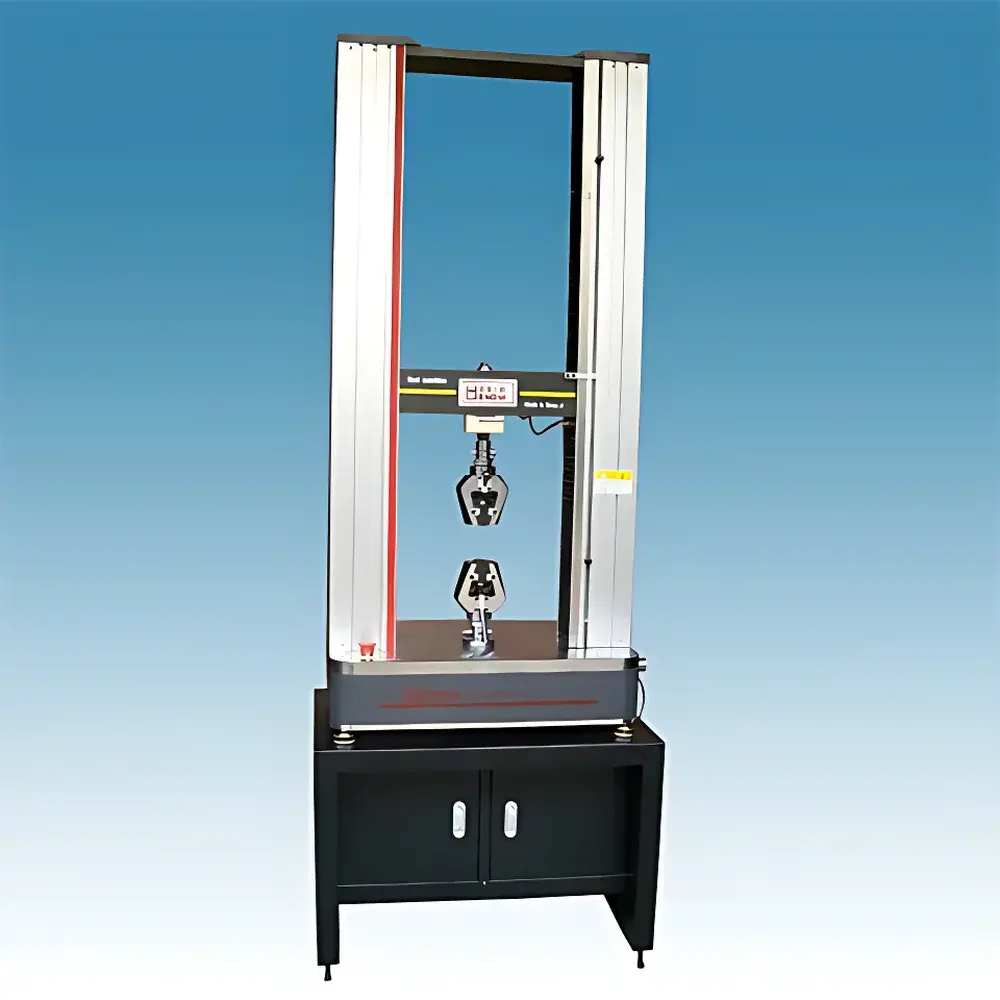
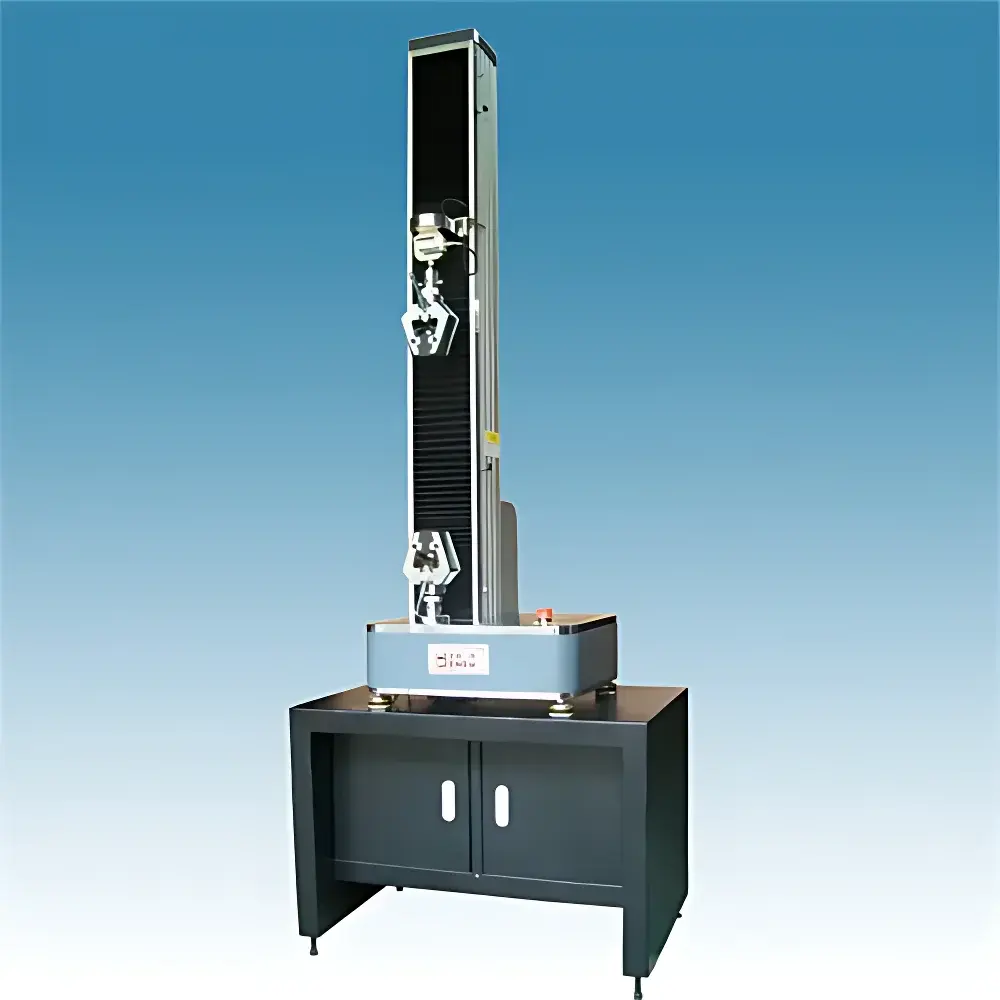
Hengyi HY-3080 (Portal-Type) Electromechanical Universal Testing Machine
| Brand | Hengyi / Hengyitest |
|---|---|
| Origin | Shanghai, China |
| Manufacturer Type | Direct Manufacturer |
| Regional Category | Domestic (China) |
| Model | HY-3080 (Portal-Type) |
| Instrument Type | Electromechanical Universal Testing Machine |
| Load Capacity Options | 1 N to 30 kN (interchangeable load cells) |
| Force Accuracy | ≤ ±0.5% of reading |
| Effective Test Width | 380 mm (expandable) |
| Effective Vertical Travel | 800 mm (extendable) |
| Speed Range | 0.001–1000 mm/min (closed-loop controlled) |
| Speed Accuracy | ±0.5% of set value |
| Displacement Measurement Accuracy | ±0.5% of reading |
| Strain Measurement Accuracy | ±0.5% of reading |
| Force Resolution | ±500,000 counts (full-scale, no range switching) |
| Power Supply | 220 V AC, single-phase, 0.75 kW |
| Host Dimensions | 700 × 420 × 1600 mm |
| Net Weight | 210 kg |
Overview
The Hengyi HY-3080 (Portal-Type) Electromechanical Universal Testing Machine is a precision-engineered static mechanical testing system designed for tensile, compression, flexural (three-point and four-point bending), peel, shear, and tear testing of solid and quasi-solid materials. It operates on the principle of servo-controlled electromechanical actuation, employing high-rigidity dual-column portal architecture, preloaded precision ball screws, and bidirectional load cells traceable to national metrological standards. The system conforms to fundamental mechanical testing principles defined in ISO 6892-1 (tensile testing of metallic materials), ASTM E4 (load verification), ASTM E83 (extensometer verification), and ISO 527 (plastics tensile properties). Its modular design supports seamless integration into quality control laboratories, R&D facilities, and academic institutions requiring repeatable, auditable, and standards-compliant mechanical characterization across diverse material classes.
Key Features
- High-stiffness, low-deflection portal frame with reinforced crosshead and base—engineered for minimal frame compliance during high-load testing up to 30 kN.
- Dual preloaded precision ground ball screws driven by maintenance-free AC servo motor and digital servo drive—ensuring smooth motion, zero backlash, and long-term positional stability.
- Interchangeable high-accuracy load cells (1 N to 30 kN range), each calibrated to ≤ ±0.5% full-scale accuracy per ISO 376; all cells support bidirectional force measurement without hardware reconfiguration.
- Real-time synchronized acquisition of force, displacement, and optional strain (via extensometer or video-based DIC)—sampled at ≥1 kHz with 24-bit ADC resolution and full-scale linearity maintained across entire dynamic range (0.1–99.999% FS).
- Programmable closed-loop control modes: force control, displacement control, strain control, and ramp-hold sequences—compliant with ISO 6892-1 Annex A and ASTM D638/D790 test protocols.
- Dual-speed manual jog interface and programmable auto-return function—enabling rapid setup, safe specimen handling, and unattended post-test recovery.
- Integrated electronic limit protection, overload cut-off (>110% FS), and real-time self-diagnostic monitoring of drive voltage, current, thermal status, and sensor integrity.
Sample Compatibility & Compliance
The HY-3080 accommodates specimens ranging from ultra-thin films (e.g., PET, PI, Al/Cu foils, photovoltaic ribbons) to rigid structural components (e.g., fasteners, composite laminates, biomedical implants). Standard fixtures include pneumatic wedge grips, screw-action vise grips, bend supports (ASTM D790-compliant), peel fixtures (ASTM D903), and compression platens. Optional accessories support ASTM D3039 (composite tensile), ISO 1133 (melt flow index correlation), USP (suture tensile strength), and ISO 10993-12 (biocompatibility extraction validation). All firmware and controller logic are structured to support GLP/GMP-aligned audit trails when paired with compliant software (see Software section). Mechanical calibration certificates comply with ISO/IEC 17025 requirements when issued by accredited third-party labs.
Software & Data Management
The system operates with Hengyi’s proprietary Windows-based testing software, supporting multilingual UI (English, German, French, Japanese, Chinese) and SI/imperial unit conversion. Data acquisition and analysis modules implement VB.NET + SQL Server Express backend architecture—ensuring deterministic timing, encrypted database logging, and version-controlled method templates. Each test record stores raw time-series data (force, displacement, strain), metadata (operator ID, environmental conditions, calibration dates), and digital signatures. Export formats include CSV, XML, PDF reports (with embedded stress–strain curves), and ASTM E1432-compliant test summary files. For regulated environments, optional 21 CFR Part 11 add-on enables electronic signatures, role-based access control, and immutable audit logs—validated for use in pharmaceutical, medical device, and aerospace QA/QC workflows.
Applications
This platform serves as a core mechanical characterization tool across industries requiring standardized material property quantification. In polymer science, it measures modulus, yield strength, elongation-at-break, and creep compliance per ISO 527 and ASTM D638. In electronics manufacturing, it validates solder joint shear strength (IPC-J-STD-001), flexible circuit peel adhesion (IPC-TM-650), and battery tab tensile integrity. In biomedical engineering, it supports suture tensile testing (ISO 10993-12), stent radial strength (ASTM F2082), and hydrogel compression modulus evaluation. Academic users apply it to nanocomposite fracture mechanics, wood–polymer interface shear, and additive-manufactured lattice structure collapse analysis. Metrology labs utilize its traceable force chain for inter-laboratory comparison studies under CNAS or UKAS accreditation scopes.
FAQ
What load cell options are available for the HY-3080, and can multiple cells be installed simultaneously?
The HY-3080 supports hot-swappable load cells from 1 N to 30 kN. While only one cell operates per test, the system’s mechanical interface and controller firmware allow rapid physical replacement and automatic recognition—no recalibration required beyond cell-specific verification.
Does the system meet ISO/IEC 17025 requirements for accredited testing laboratories?
Yes—the mechanical architecture, force measurement chain, and calibration documentation align with ISO/IEC 17025 clause 6.4 (equipment) and 6.5 (traceability). Full compliance requires user-performed periodic verification using certified reference standards and documented uncertainty budgets.
Can the software generate reports compliant with FDA 21 CFR Part 11?
The base software does not include Part 11 functionality; however, an optional validated software module provides electronic signatures, audit trail encryption, and role-based permissions—deployed only after site-specific risk assessment and IQ/OQ documentation.
Is three-point bending testing supported out-of-the-box?
Yes—standard configuration includes ASTM D790-compliant three-point bend fixtures with adjustable span length (25–300 mm) and roller diameter options (2–10 mm), fully integrated into test method templates.
What is the maximum specimen height accommodated without modification?
The standard vertical test space is 800 mm between grips; custom-height columns and extended crossheads are available for specimens up to 1500 mm tall—maintaining full load capacity and accuracy specifications.



