
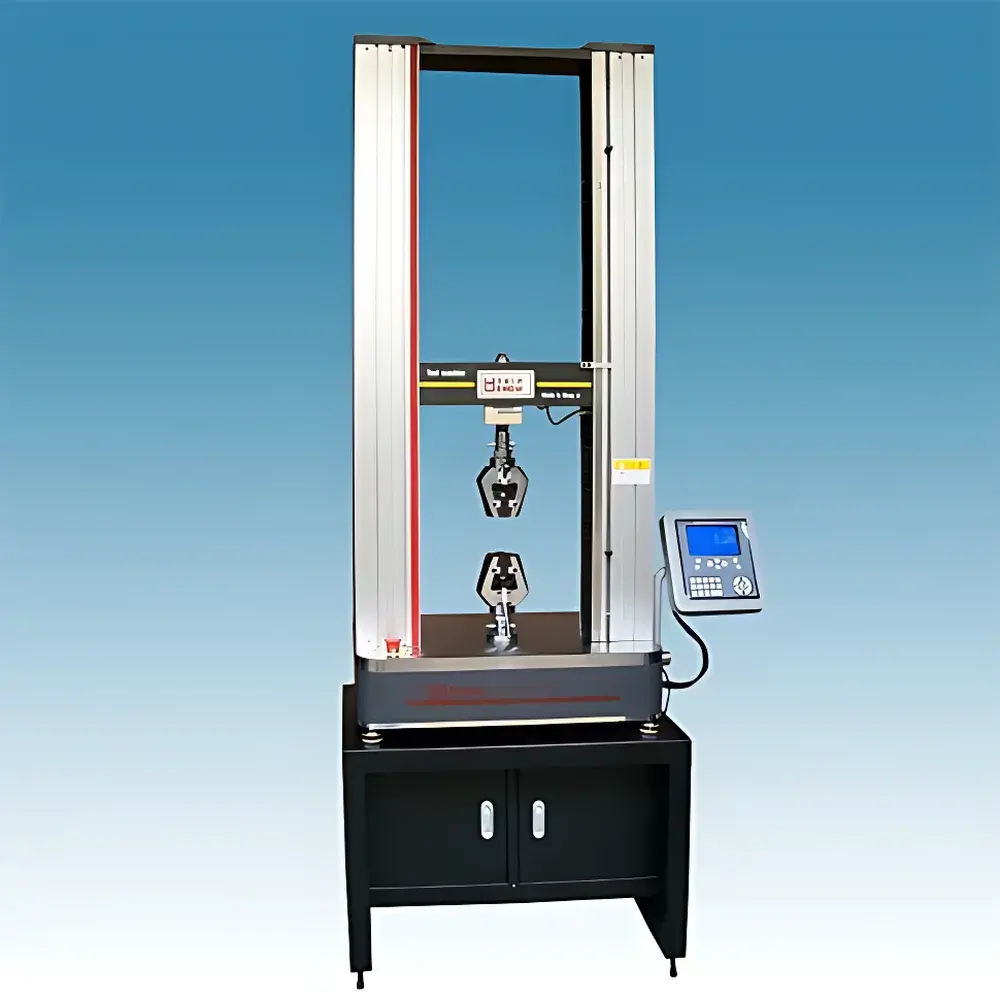
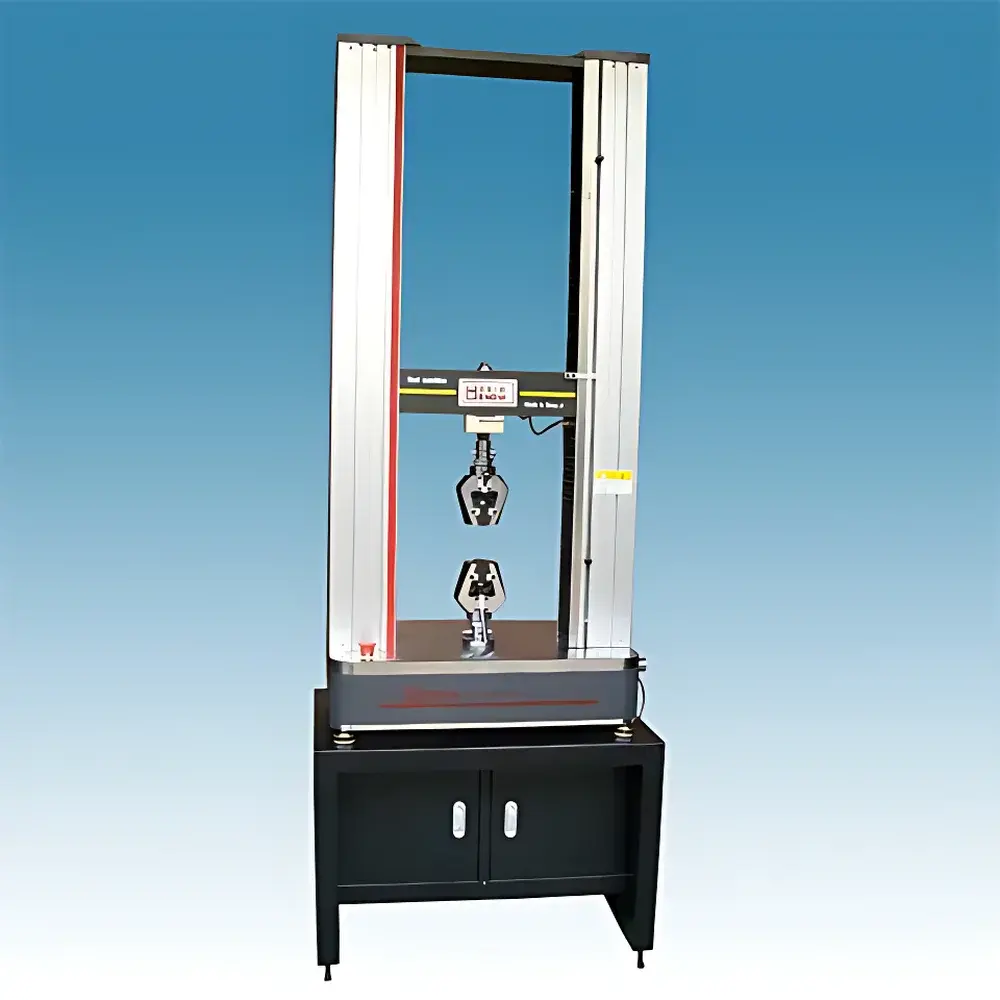
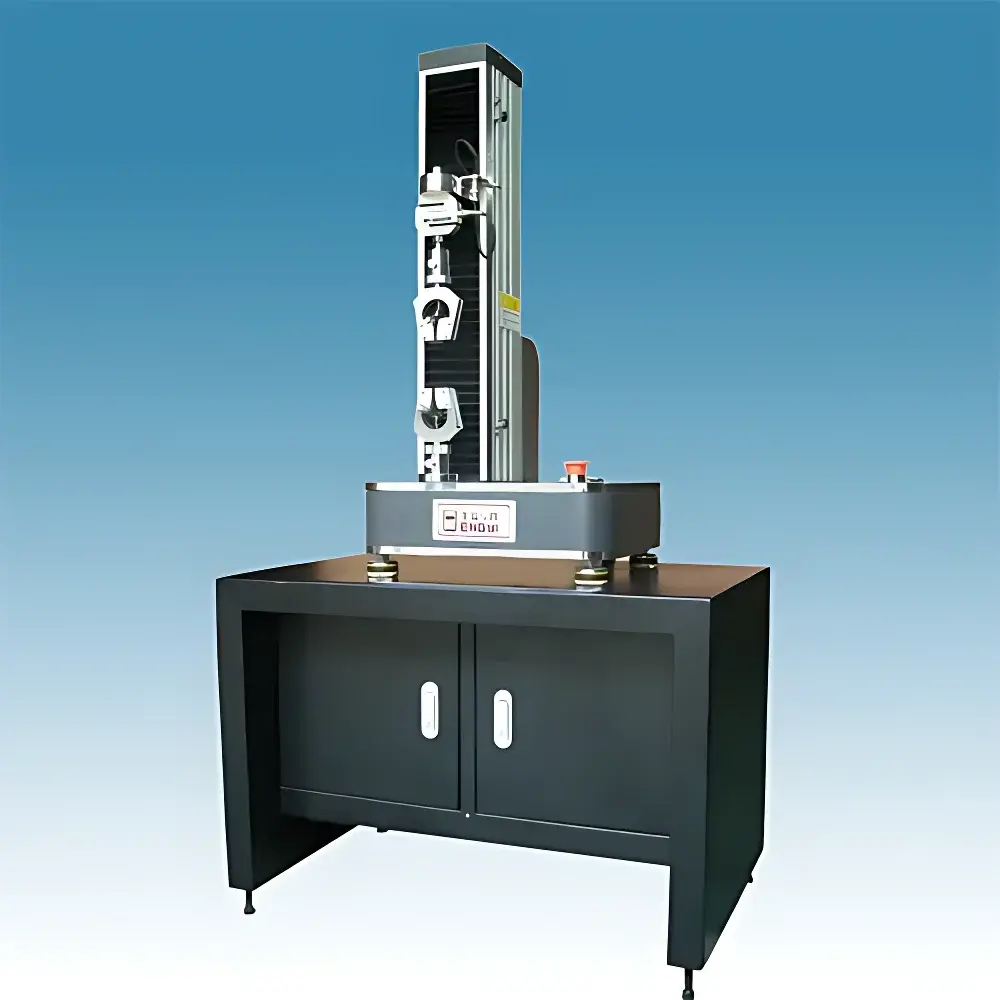
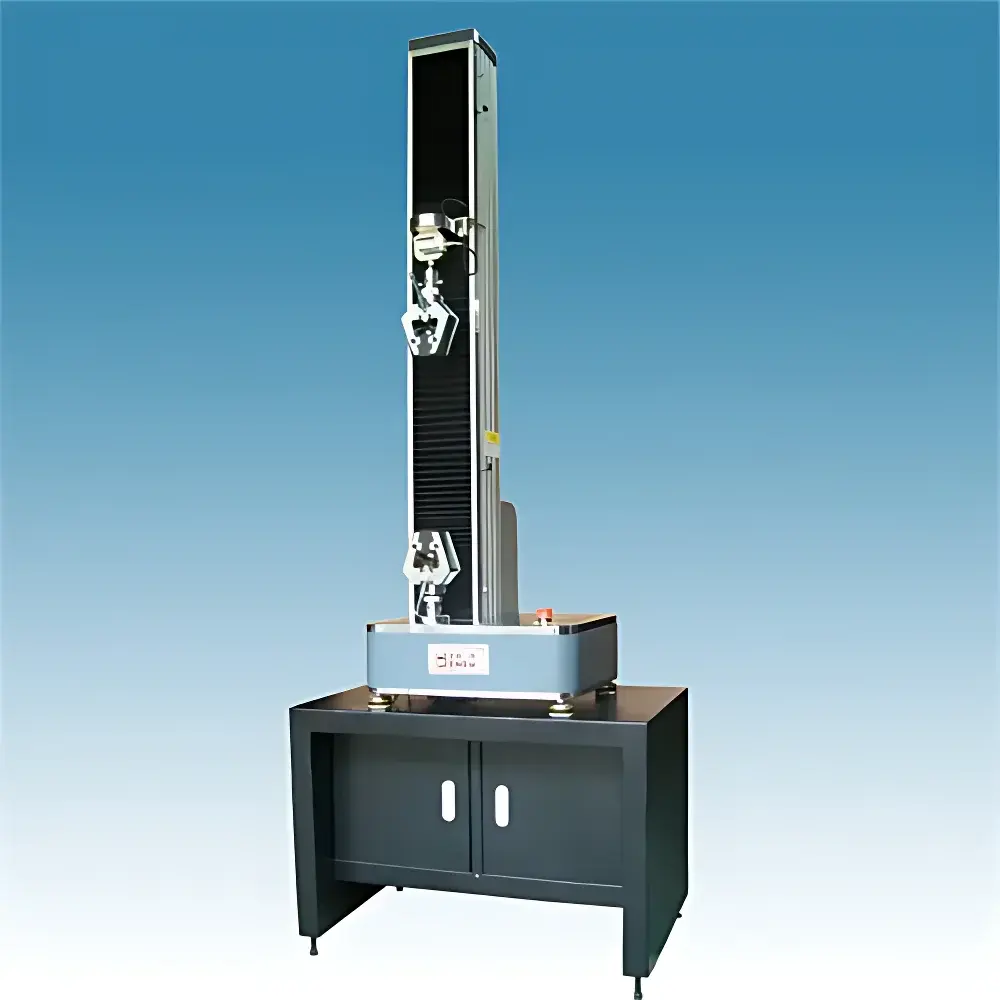
Hengyi HY-3080 Universal Testing Machine (Desktop Dual-Column Electromechanical Tensile Tester)
| Brand | Hengyi |
|---|---|
| Origin | Shanghai, China |
| Manufacturer Type | Direct Manufacturer |
| Product Category | Domestic |
| Model | HY-3080UKBNBG |
| Instrument Type | Electromechanical Universal Testing Machine |
| Load Capacity | Up to 30 kN |
| Accuracy Class | ≤0.5% |
| Effective Test Width | 380 mm |
| Effective Test Height | 800 mm |
| Speed Range | 0.001–1000 mm/min |
| Force Resolution | ±500,000 counts (full-scale, no range switching) |
| Displacement Accuracy | ±0.5% of reading |
| Strain Control Range | 0.002–6% FS/S |
| Stress Control Range | 0.005–6% FS/S |
| Power Supply | 220 V AC, 0.75 kW |
| Dimensions (W×D×H) | 700 × 420 × 1600 mm |
| Weight | 210 kg |
Overview
The Hengyi HY-3080 is a high-rigidity, dual-column electromechanical universal testing machine engineered for precision mechanical property evaluation of materials across research, quality control, and production environments. Designed on the principles of servo-controlled force-displacement feedback and high-fidelity load cell transduction, it operates under quasi-static loading conditions compliant with ISO 6892-1, ASTM E8/E21, and GB/T 228.1 standards. Its compact desktop footprint (700 × 420 × 1600 mm) accommodates constrained laboratory spaces while delivering full-scale tensile, compression, flexure, peel, and shear testing capabilities up to 30 kN. The system integrates a preloaded, precision-ground ball screw transmission train, maintenance-free AC servo motor drive, and bidirectional load cell with ±500,000-count resolution—enabling reproducible measurement of force, displacement, and strain with ≤0.5% uncertainty across the entire operational range.
Key Features
- Robust dual-column frame with high axial stiffness and minimized deflection under load—optimized for consistent modulus and yield point determination.
- Two pre-tensioned, ground ball screws driven by a low-inertia AC servo motor and digital servo amplifier—ensuring smooth, noiseless motion and long-term positional repeatability.
- High-accuracy bidirectional load cell (available in 1 N to 30 kN ranges), calibrated to national metrological standards with traceable certification.
- Digital controller supporting open-loop and closed-loop operation, configurable for force, displacement, or strain control modes with real-time PID tuning.
- Multi-language UI (English, Chinese, Spanish, German, French) and unit-switching capability (N/kN, lbf, mm/in, MPa/psi) without firmware reflash.
- Integrated hand-held remote control for rapid jog, start/stop, and safety-initiated emergency halt—reducing operator proximity during high-load tests.
- Comprehensive safety architecture: electronic travel limits, overload protection (110% FS), automatic return-to-home, and self-diagnostic routines for drive, sensor, and power subsystems.
Sample Compatibility & Compliance
The HY-3080 supports standardized and non-standard specimens per ISO 527, ASTM D638/D3039/D882, USP , and YY/T 0127 series. Verified compatibility includes thin films (PET, PE, BOPP), elastomers (silicone, EPDM), fine wires (Cu, NiTi, stainless steel <0.5 mm Ø), medical tubing (PVC, TPE), suture materials, photovoltaic interconnect ribbons, battery foil laminates, adhesive tapes, foam cores, and composite coupons. All mechanical test data comply with GLP and GMP documentation requirements when paired with optional audit-trail-enabled software. The system meets CE Machinery Directive 2006/42/EC, RoHS 2011/65/EU, and electromagnetic compatibility (EMC) EN 61326-1.
Software & Data Management
The HY-3080 operates with Hengyi TestMaster v4.x—a Windows-based acquisition and analysis platform built on VB.NET and SQL Server Compact. It supports synchronized acquisition of force, crosshead displacement, and extensometer-derived strain at up to 100 Hz sampling rate. Real-time plotting includes auto-scaling axes, multi-curve overlay, and dynamic parameter annotation (e.g., yield strength Rp0.2, tensile strength Rm, elongation A50). Users define custom test methods via drag-and-drop sequence editors—enabling programmable hold steps, ramp rates, fracture detection thresholds (load drop >5% FS), and conditional returns. Raw data exports to CSV, Excel, and XML; reports are PDF-generatable with embedded metadata (operator ID, calibration date, environmental conditions). Optional 21 CFR Part 11 compliance module provides electronic signatures, role-based access control, and immutable audit trails.
Applications
This tester serves as a primary mechanical characterization tool in accredited QC labs (e.g., automotive Tier-1 suppliers verifying hose burst pressure), polymer R&D centers (measuring creep compliance of biodegradable PLA films), medical device manufacturers (validating suture knot strength per ISO 10993-12), photovoltaic material suppliers (testing ribbon pull-off adhesion), and academic institutions conducting fundamental viscoelasticity studies. Its wide speed range (0.001–1000 mm/min) enables both quasi-static tensile mapping and quasi-dynamic fatigue pre-screening. The 380 mm test width and 800 mm vertical clearance allow modular fixture integration—including pneumatic grips, wedge-action clamps, bend fixtures, and environmental chambers (–40°C to +150°C, not included).
FAQ
What load cell options are available for the HY-3080?
Standard configurations include interchangeable load cells from 1 N to 30 kN; multi-cell setups support automatic range switching within a single test sequence.
Is the system compatible with third-party extensometers?
Yes—it features analog voltage (±10 V) and digital TTL inputs for LVDT, clip-on, or video extensometers meeting ISO 9513 Class 1 or better.
Can test methods be exported/imported between instruments?
Yes—XML-based method files ensure full portability across HY-3080 units and backward compatibility with HY-2080 series controllers.
Does the controller support real-time control loop adjustment during testing?
Yes—PID parameters for force, displacement, or strain control can be modified on-the-fly without interrupting data acquisition.
What documentation is provided for regulatory submissions?
Factory calibration certificates (traceable to NIM, China), IQ/OQ protocols, and a complete Design Qualification (DQ) dossier are available upon request.



