
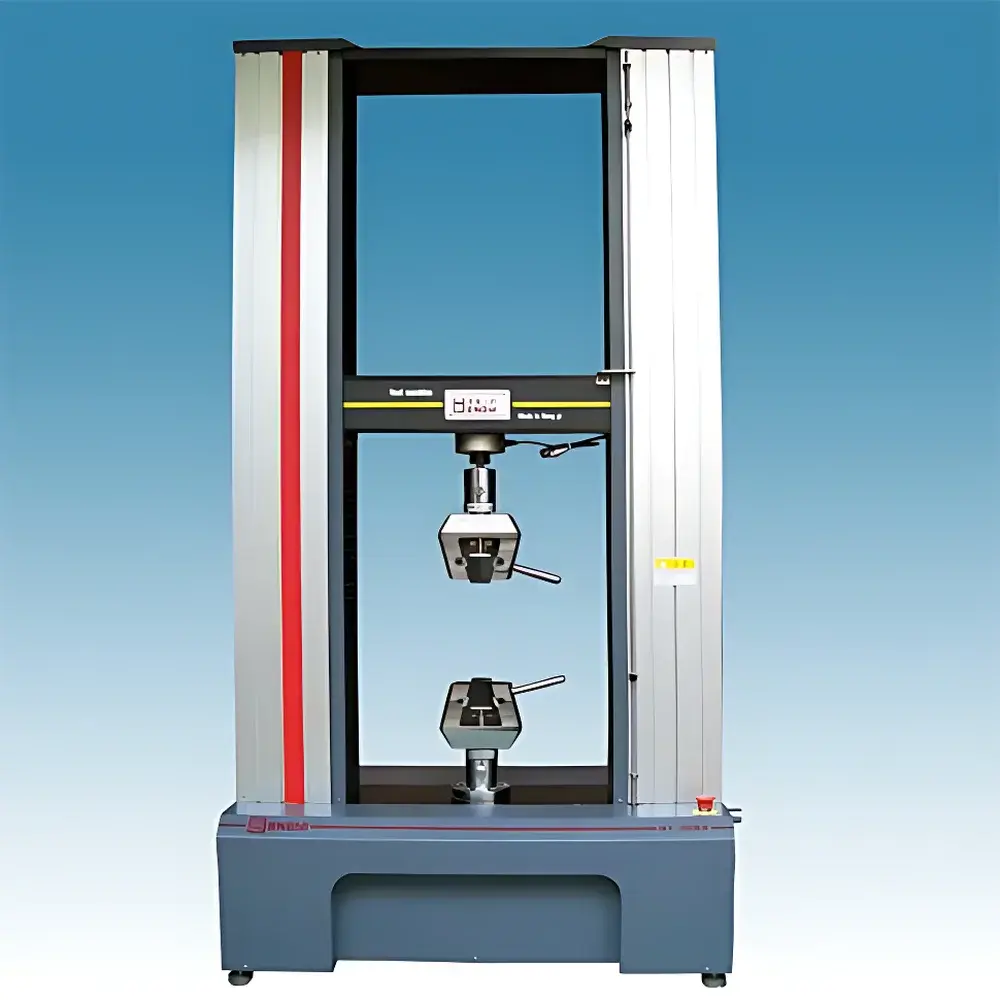
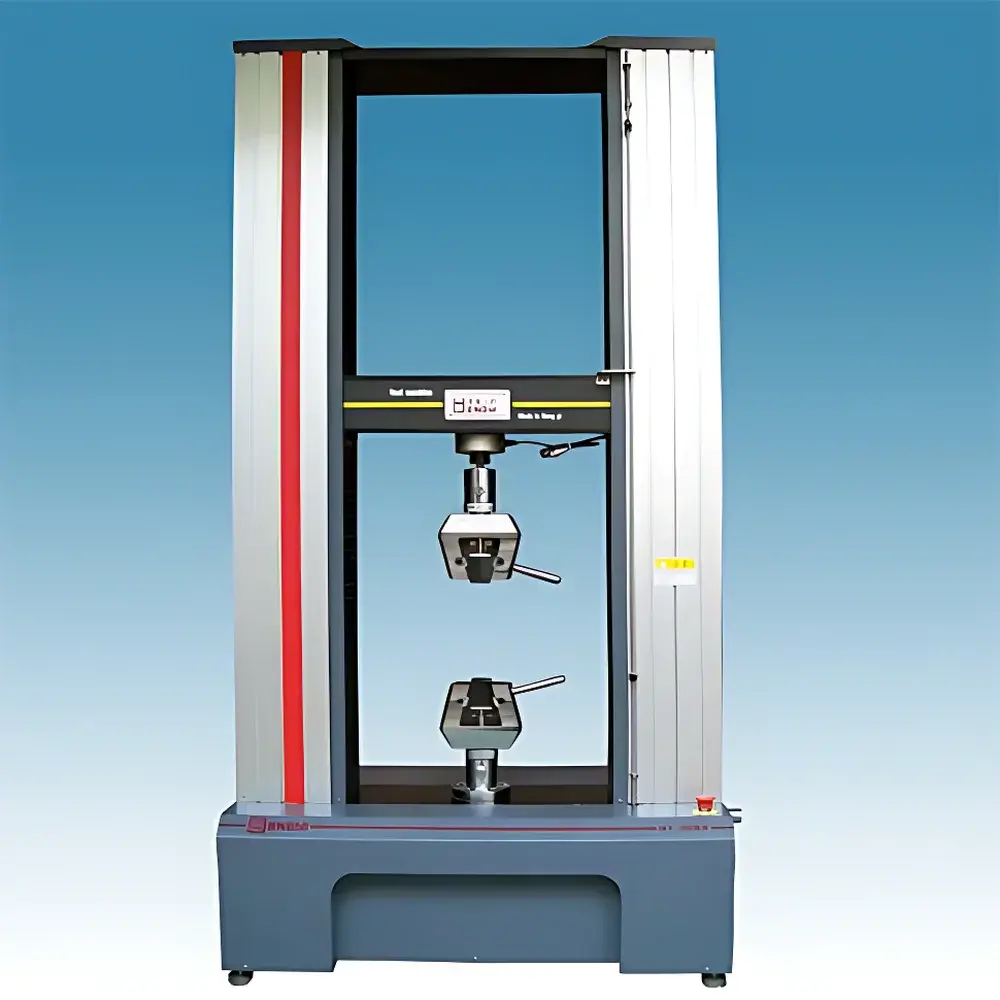
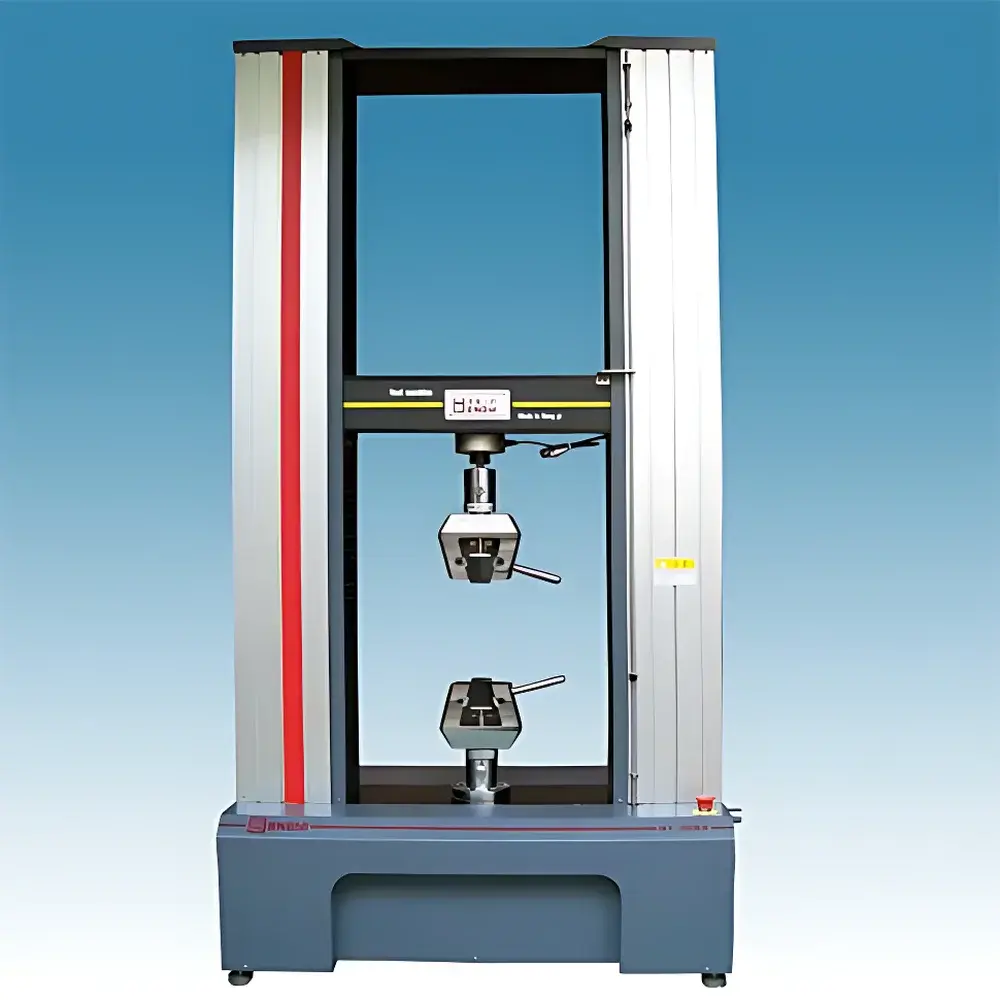
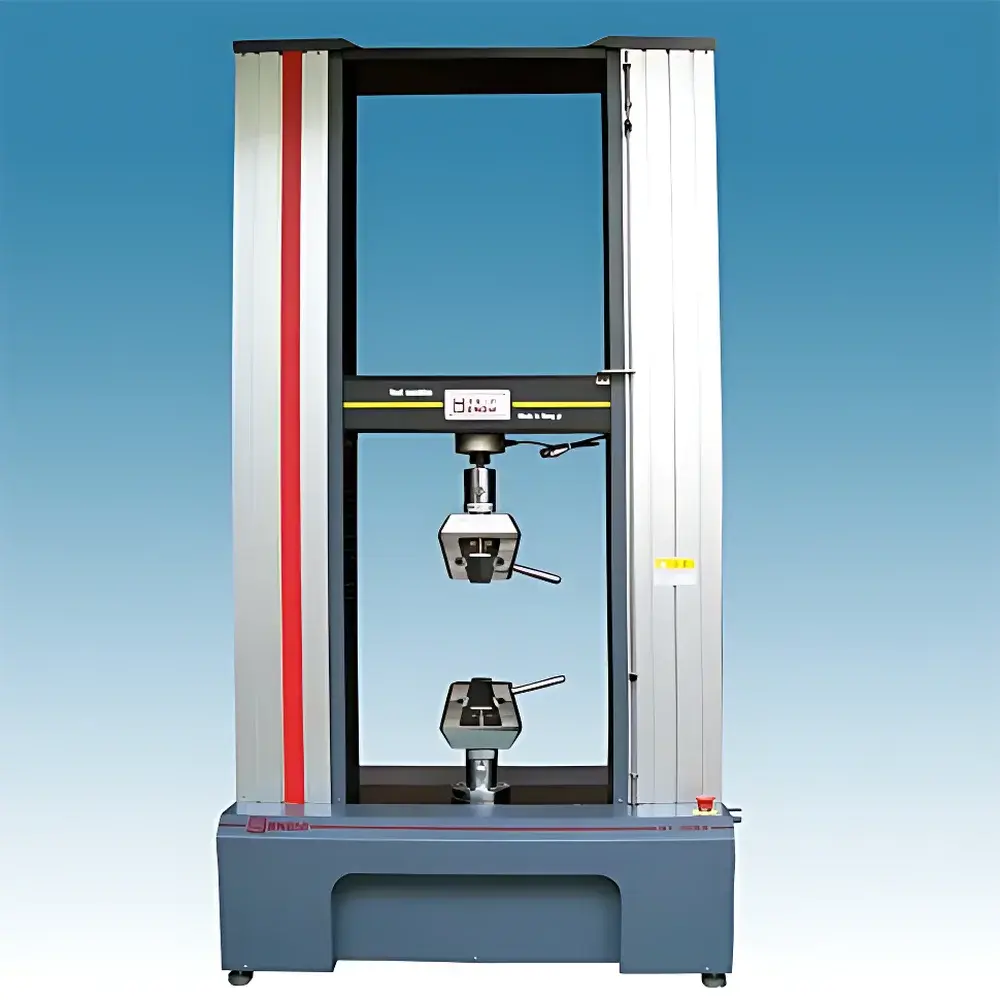
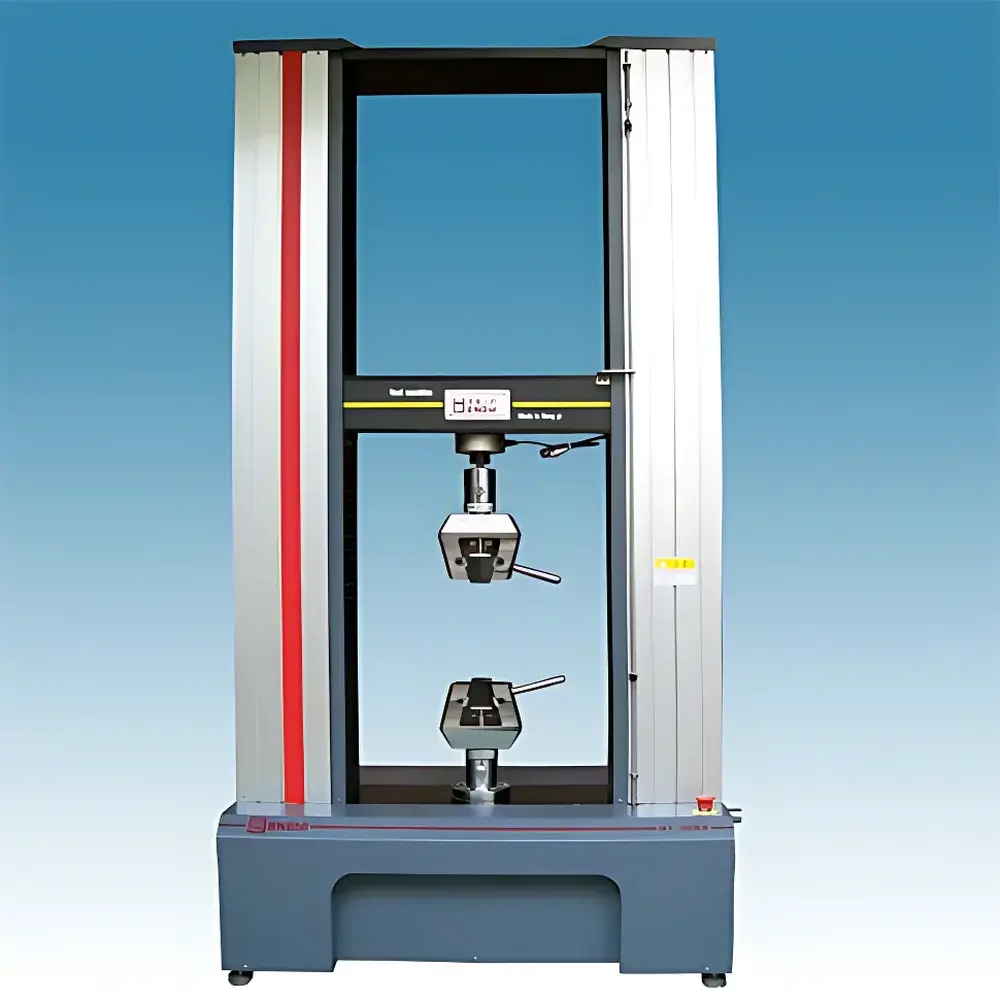
Hengyi HY-5080N Universal Tensile Testing Machine
| Brand | Hengyi / Hengyitest |
|---|---|
| Origin | Shanghai, China |
| Manufacturer Type | Direct Manufacturer |
| Product Category | Domestic |
| Model | HY-5080N |
| Max Test Load | 50 kN |
| Force Measurement Range | 0.001–100% FS |
| Force Accuracy | ±0.5% |
| Stroke | 800 mm |
| Displacement Resolution | 0.001 mm |
| Speed Range | 0.001–500 mm/min |
| Effective Width | 500 mm |
| Load Cell Resolution | ±1/250000 (full-scale, constant) |
| Displacement Accuracy | ±0.5% of reading |
| Deformation Accuracy | ±0.5% of reading |
| Overload Protection | 10% above full scale |
| Power | 1.5 kW |
| Dimensions (W×D×H) | 1015 × 540 × 1900 mm |
| Weight | 700 kg |
Overview
The Hengyi HY-5080N Universal Tensile Testing Machine is an electromechanical static testing system engineered for high-reproducibility mechanical characterization of metallic materials and other solid specimens under uniaxial tension, compression, and flexure. Based on servo-controlled ball-screw actuation and precision load cell feedback, the system complies with fundamental principles defined in ISO 6892-1 (metallic materials – tensile testing), ASTM E8/E8M, and GB/T 228.1–2021. Its modular architecture supports standardized test protocols across quality control laboratories, R&D departments, and third-party certification bodies, delivering traceable force-displacement data essential for material certification, process validation, and failure analysis.
Key Features
- High-stiffness dual-column frame constructed from reinforced aluminum alloy housing—resistant to oxidation, UV degradation, and dimensional drift over extended service life.
- 50 kN capacity load cell with ±0.5% force accuracy and constant resolution of ±1/250,000 full scale across the entire measurement range—enabling reliable low-load testing (e.g., thin foils, fine wires) and high-load structural evaluation without range switching.
- Adjustable crosshead travel of 800 mm and 500 mm effective test width—accommodating standard ASTM/ISO specimen geometries as well as custom-sized coupons used in aerospace or nuclear component qualification.
- Wide-speed actuation system (0.001–500 mm/min) with programmable ramp-hold-step profiles—suitable for quasi-static tensile tests, creep compliance measurements, and strain-rate-sensitive yield assessments.
- Dual-mode positioning: motorized fast/slow speed control with jog function and electronic end-stop limit protection—ensuring operator safety and repeatable sample alignment.
- Integrated overload cutoff at 110% of rated capacity and automatic return-to-start functionality post-test—reducing manual intervention and improving throughput in high-volume QA environments.
- Robust 1.5 kW AC servo drive system with thermal monitoring—maintaining stable velocity control and torque response under sustained loading conditions.
Sample Compatibility & Compliance
The HY-5080N accepts flat, round, and notched specimens conforming to ISO 6892-1 Type 1A/2, ASTM E8 dog-bone, and GB/T 228.1 rectangular or circular cross-sections. Optional grips—including wedge-action pneumatic, hydraulic, and screw-type—support metals (steel, aluminum, titanium alloys), composites, weldments, and coated substrates. All mechanical and software operations adhere to ISO/IEC 17025 requirements for testing laboratories. Force calibration traceability is maintained per ISO 376, while displacement verification follows ISO 9513. The system meets electromagnetic compatibility (EMC) standards IEC 61326-1 and safety requirements IEC 61000-6-2/6-4.
Software & Data Management
HYtestV7.0 is a multilingual (English, German, French, Spanish, Japanese, Korean, Russian, Portuguese, Chinese) Windows-based control and analysis platform compatible with Windows XP through Windows 10. It supports real-time data acquisition at up to 1 kHz sampling rate, configurable test sequences, and automated report generation compliant with ISO 14289-1 (PDF/A) archiving standards. Units are fully convertible between N, kN, lbf, kgf, tonf, and MPa—facilitating cross-regional data exchange. Audit trail functionality logs user actions, parameter changes, and calibration events in accordance with FDA 21 CFR Part 11 and GLP/GMP documentation requirements. Raw data export is available in CSV, Excel, and universal ASCII formats for integration with LIMS or statistical process control (SPC) systems.
Applications
This system serves routine and advanced mechanical testing needs across regulated and industrial sectors: tensile strength and elongation-at-break evaluation of rolled steel sheets per ASTM A370; proof stress determination for stainless steel fasteners (ISO 898-1); yield point analysis of aluminum extrusions (EN 755-2); fracture toughness pre-cracking setup support; weld joint qualification per AWS D1.1; and high-temperature tensile testing when paired with environmental chambers (not included). End users include metrology institutes, Tier-1 automotive suppliers, cable manufacturers, medical device OEMs validating implant-grade alloys, and university materials science departments conducting structure-property correlation studies.
FAQ
What international standards does the HY-5080N comply with for tensile testing?
It supports execution and reporting per ISO 6892-1, ASTM E8/E8M, EN 10002-1, JIS Z2241, and GB/T 228.1–2021—with software templates preconfigured for each.
Is the system suitable for testing non-metallic materials such as plastics or composites?
Yes—when equipped with appropriate grips and extensometers, it meets ASTM D638 (plastics), ISO 527-2, and ASTM D3039 (composites) requirements.
Does the machine include built-in calibration verification tools?
It supports external verification using Class E1 or F1 reference weights and certified displacement standards per ISO 9513, with calibration certificates issued by accredited providers.
Can test data be exported directly to enterprise quality management systems?
Yes—CSV and XML exports are structured for seamless ingestion into SAP QM, TrackWise, or ETQ Reliance via API or scheduled file transfer.
What maintenance intervals are recommended for long-term accuracy retention?
Load cell and encoder verification every 12 months; lubrication of lead screws and guide rails every 6 months; visual inspection of safety interlocks prior to each shift.



