
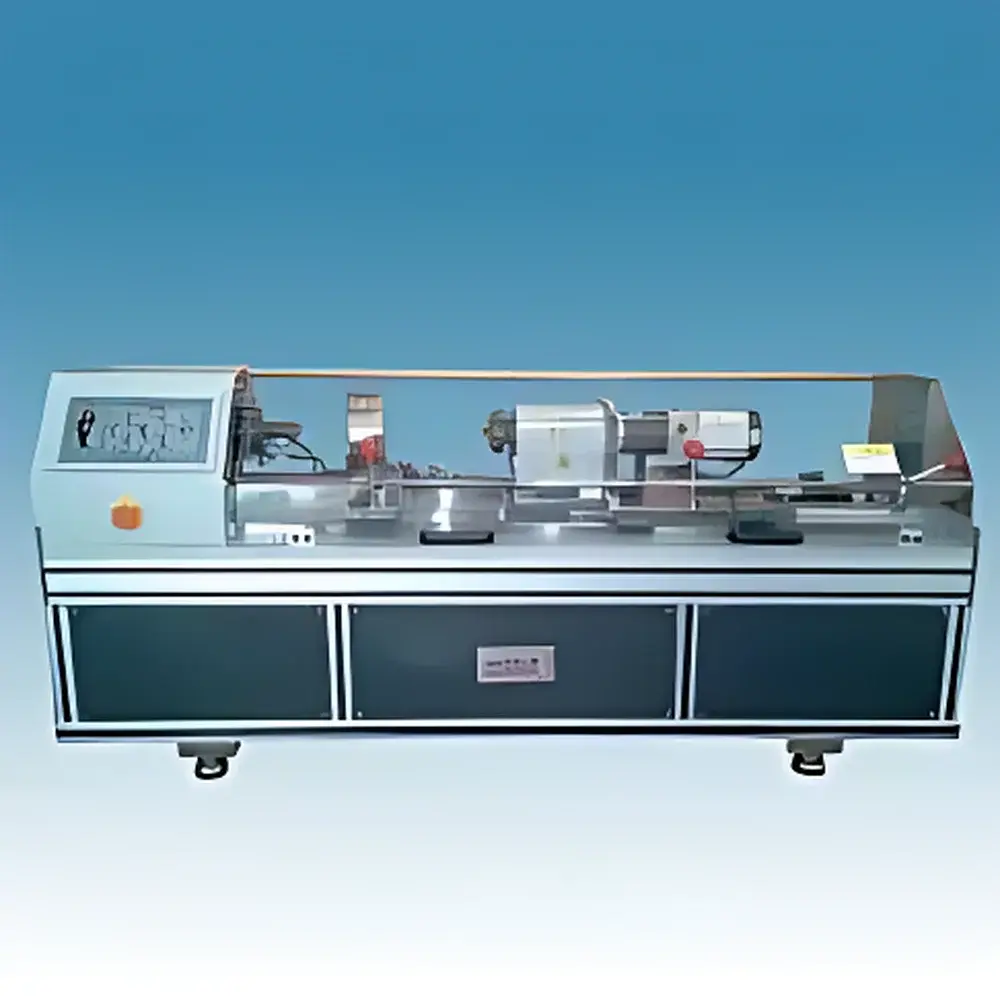
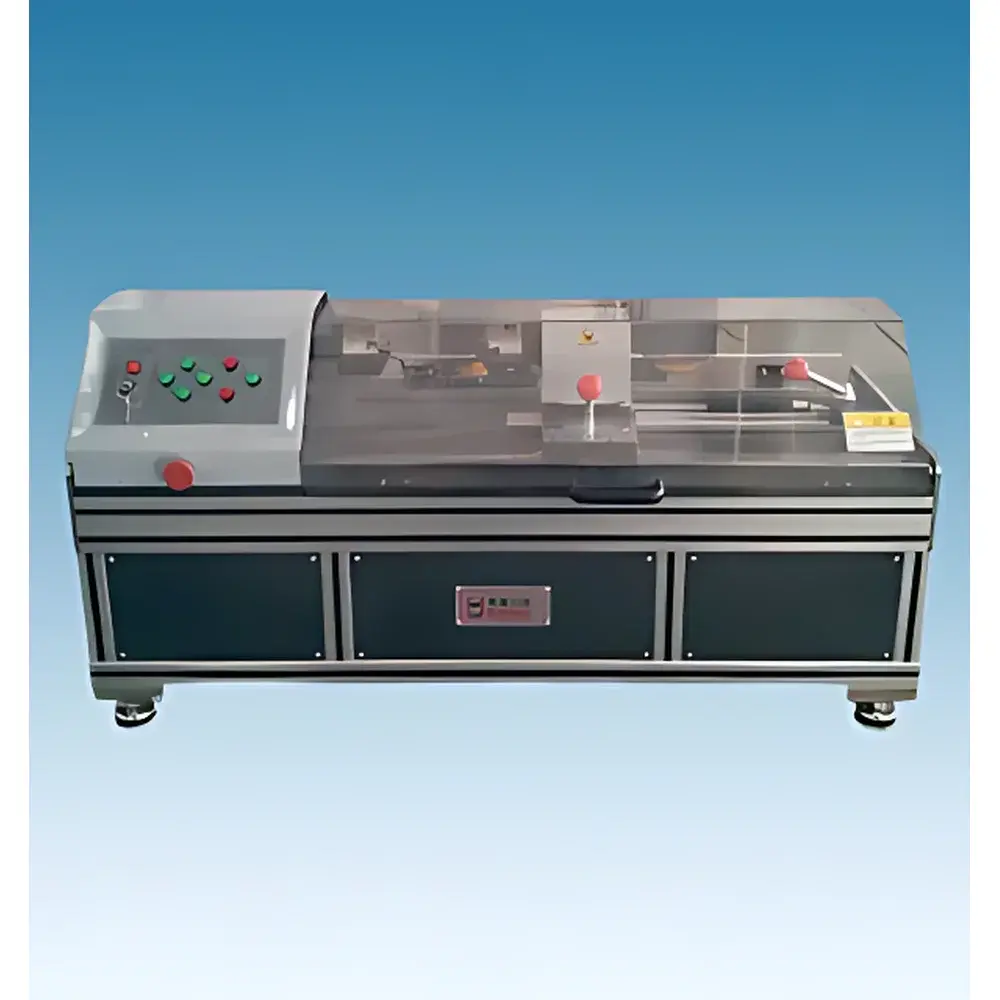
Hengyi HY-50N·m Bone Screw Torsion Testing Machine
| Brand | Hengyi |
|---|---|
| Origin | Shanghai, China |
| Manufacturer Type | Direct Manufacturer |
| Product Category | Domestic |
| Model | HY-50N·mRNN HJH |
| Max Torque | 50 N·m |
| Torque Measurement Range | 0.1–50 N·m |
| Torque Resolution | 1/500,000 FS |
| Torsion Angle Range | 0–100,000° (or continuous rotation) |
| Motor Power | 0.4 kW |
| Torque Accuracy | ±0.5% FS |
| Angular Accuracy | ±0.5% FS |
| Angular Resolution | 0.0045° |
| Rotational Speed Range | 0–1000°/min |
| Specimen Clamping Diameter | Φ1–Φ5 mm (customizable) |
| Test Space (Grip Separation) | 200 mm (adjustable) |
| Dimensions (L×W×H) | ~1000 × 420 × 500 mm |
| Weight | 200 kg |
Overview
The Hengyi HY-50N·m Bone Screw Torsion Testing Machine is a precision-engineered torsion testing system specifically designed for biomechanical evaluation of orthopedic implants—particularly bone screws—under controlled static and quasi-static torsional loading. It operates on the principle of direct torque transduction via high-stability strain-gauge-based torque sensors and closed-loop servo control of angular displacement, enabling accurate quantification of torsional yield strength, ultimate torsional failure torque, plastic deformation onset, and torsional stiffness in accordance with standardized biomechanical test protocols. The instrument meets the functional requirements for ISO 13485-compliant device validation laboratories and supports regulatory submission workflows under FDA 21 CFR Part 820 and ISO 14155 for implant mechanical characterization.
Key Features
- High-resolution torque measurement system with full-scale resolution of 1/500,000 FS and verified accuracy of ±0.5% FS across the entire 0.1–50 N·m range.
- Precision angular encoder delivering 0.0045° torsion angle resolution and ±0.5% angular measurement accuracy up to 100,000°, supporting both finite-angle and continuous-rotation test modes.
- Dual-directional, fully automated torsional actuation with programmable rotational speed from 0.01°/min to 1000°/min and real-time bidirectional torque feedback control.
- Modular grip assembly accommodating screw diameters from Φ1 mm to Φ5 mm; standard grip separation of 200 mm (extendable per ASTM F543 Annex A specifications).
- Embedded 32-bit ARM microprocessor architecture enabling 100 Hz real-time data acquisition, synchronized multi-curve display (Torque vs. Time, Angle vs. Time, Torque vs. Angle), and on-the-fly parameter extraction including peak torque, yield torque, torsional modulus, and failure angle.
- Compliance-ready control software with audit trail logging, user-level access permissions, electronic signature support, and export compatibility with CSV, PDF, and XML formats for GLP/GMP documentation.
Sample Compatibility & Compliance
This system is validated for mechanical testing of metallic and bioresorbable bone screws used in cranial, maxillofacial, spinal, and long-bone fixation applications. It accommodates standardized test specimens per ASTM F543 (Standard Specification and Test Methods for Metallic Medical Bone Screws), ISO 6474-1 (Ceramic implants — Part 1: Zirconia), and ISO 13357-1 (Implants for surgery — Metallic materials — Titanium alloy). The machine supports specimen-specific test sequences—including ramp-to-failure, stepwise torque hold, and cyclic torsion—with automatic compliance correction based on grip deformation compensation algorithms. All hardware and firmware conform to IEC 61000-6-2/6-4 electromagnetic compatibility standards and meet CE marking requirements for laboratory equipment under Directive 2014/30/EU.
Software & Data Management
The proprietary Hengyi TorsionTest v4.2 software platform is built on a deterministic real-time kernel and provides full traceability per FDA 21 CFR Part 11 requirements: electronic signatures, immutable audit trails, role-based user authentication, and time-stamped metadata for every test record. Data acquisition includes synchronized timestamping at sub-millisecond resolution, configurable auto-save intervals, and batch report generation aligned with ISO/IEC 17025 reporting templates. Raw datasets are stored in vendor-neutral HDF5 format, enabling third-party post-processing in MATLAB, Python (SciPy), or biomechanics-specific tools such as AnyBody or ANSYS Mechanical. Software updates are delivered via secure HTTPS channel with SHA-256 integrity verification.
Applications
- Quantitative torsional failure analysis of cortical and cancellous bone screws under simulated physiological loading conditions.
- Evaluation of torque-to-yield behavior in self-tapping and non-self-tapping screw designs per ISO 14801 dental implant standards.
- Comparative assessment of torsional fatigue life across material systems (e.g., Ti-6Al-4V vs. Mg-Zn-Ca alloys) using stepped-load protocols.
- Validation of sterilization-induced mechanical degradation in resorbable polymer screws (e.g., PLLA, PDLA) following ISO 10993-12 extraction protocols.
- Supporting preclinical regulatory submissions for 510(k) and De Novo pathways by generating GLP-compliant test reports referencing ASTM F2193 and ISO 5832-3.
FAQ
What standards does this tester comply with for orthopedic screw testing?
It supports test execution and reporting per ASTM F543, ISO 14801, ISO 10993-12, ISO 5832-3, and ISO 13485 Annex C for quality system integration.
Can the system perform cyclic torsion tests?
Yes—software-defined waveforms (sinusoidal, trapezoidal, block) enable controlled cyclic torsion between ±0.1° and ±5000° with frequency up to 5 Hz.
Is calibration traceable to national metrology institutes?
Torque and angular sensors are factory-calibrated against NIM (China National Institute of Metrology) certified reference standards, with optional UKAS-accredited calibration certificates available.
Does the system support custom test method scripting?
Yes—TorsionTest v4.2 includes an embedded Python 3.9 interpreter for user-defined test logic, conditional branching, and dynamic parameter adjustment during runtime.
What maintenance is required for long-term accuracy stability?
Annual verification of torque sensor linearity and encoder zero drift is recommended; no routine lubrication or mechanical recalibration is required due to brushless servo motor and optical encoder architecture.



