
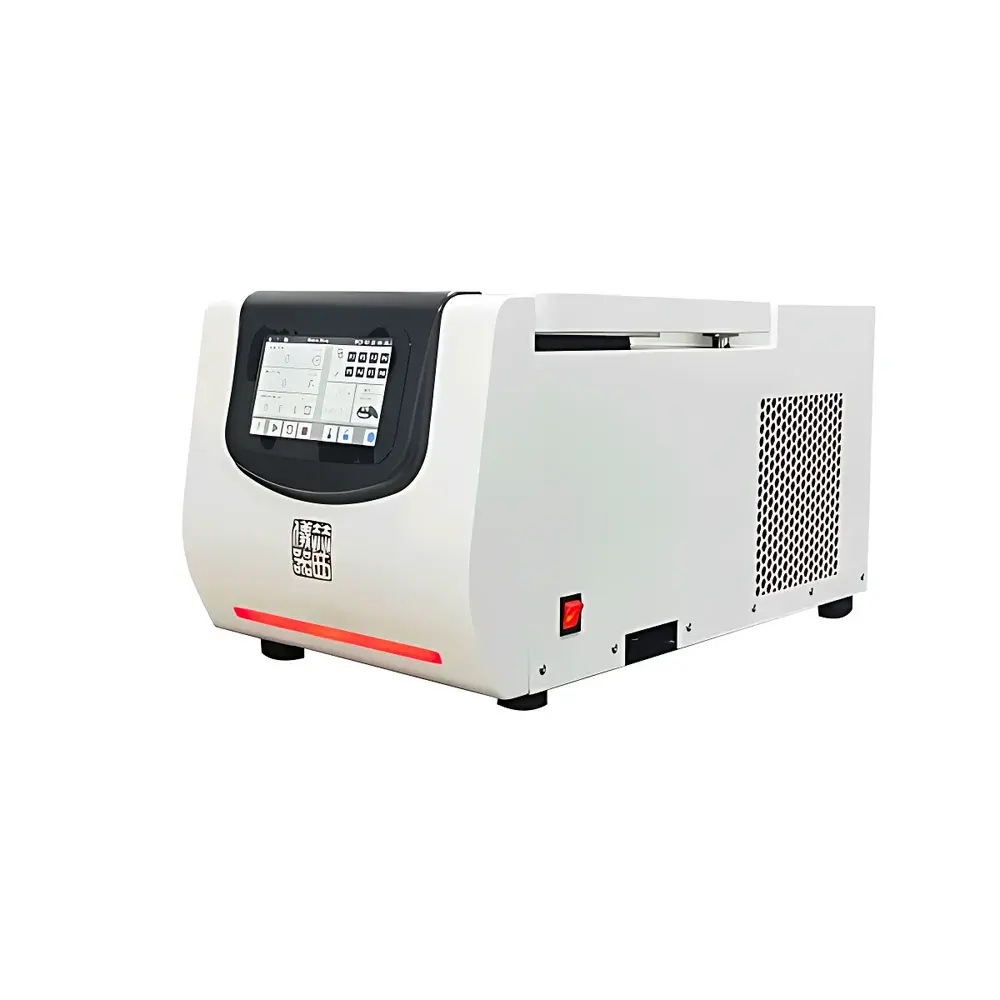
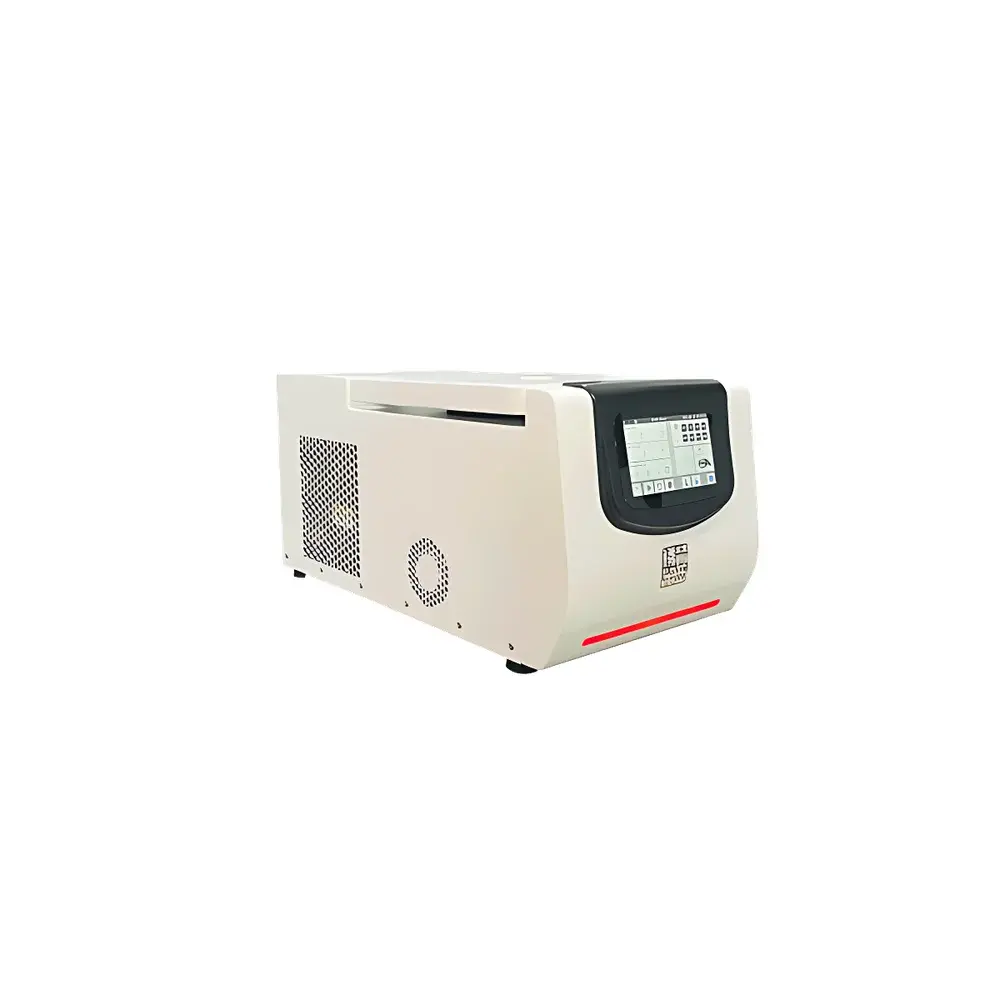
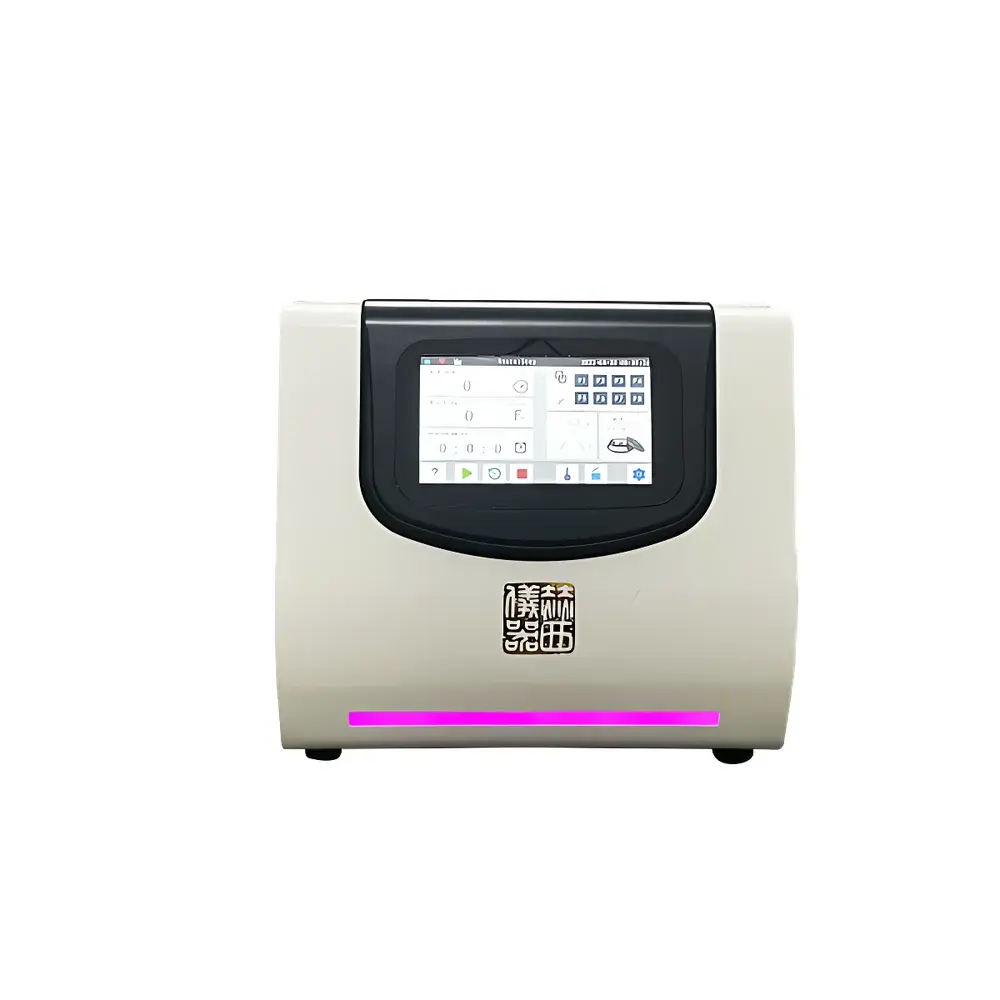
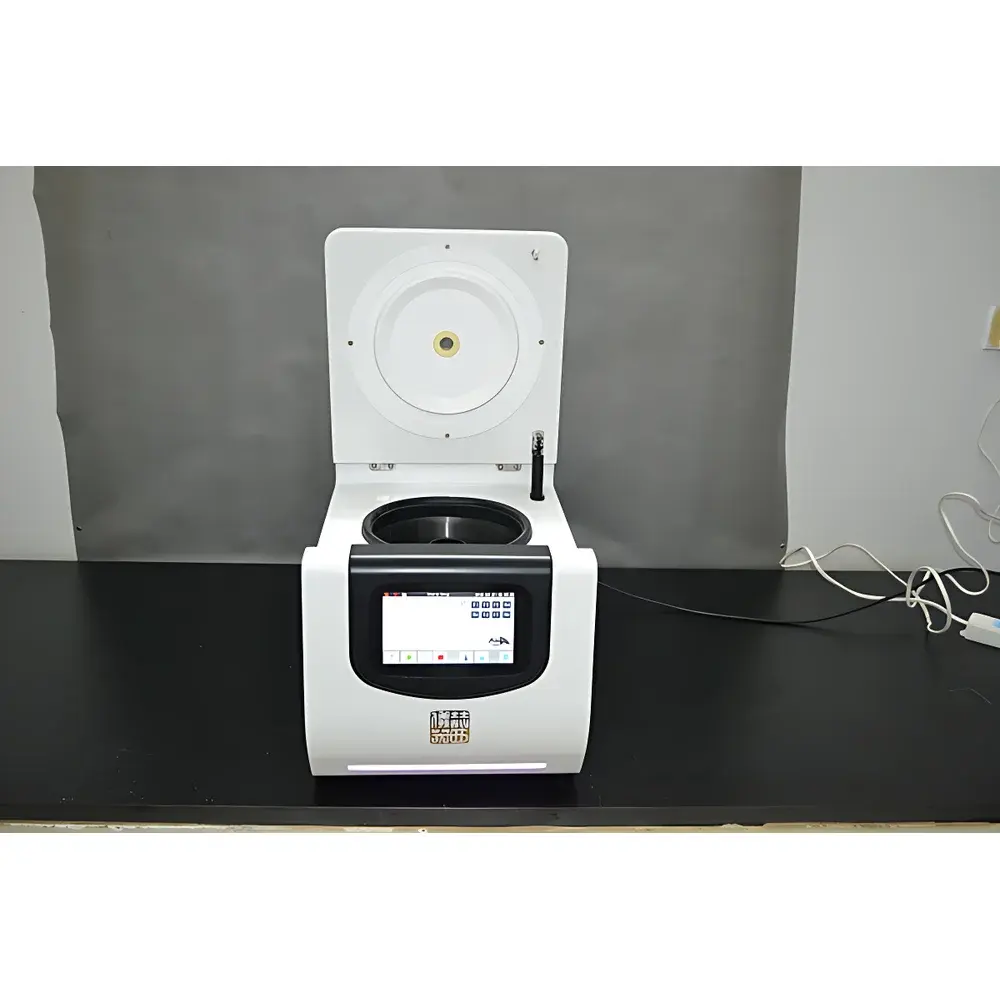
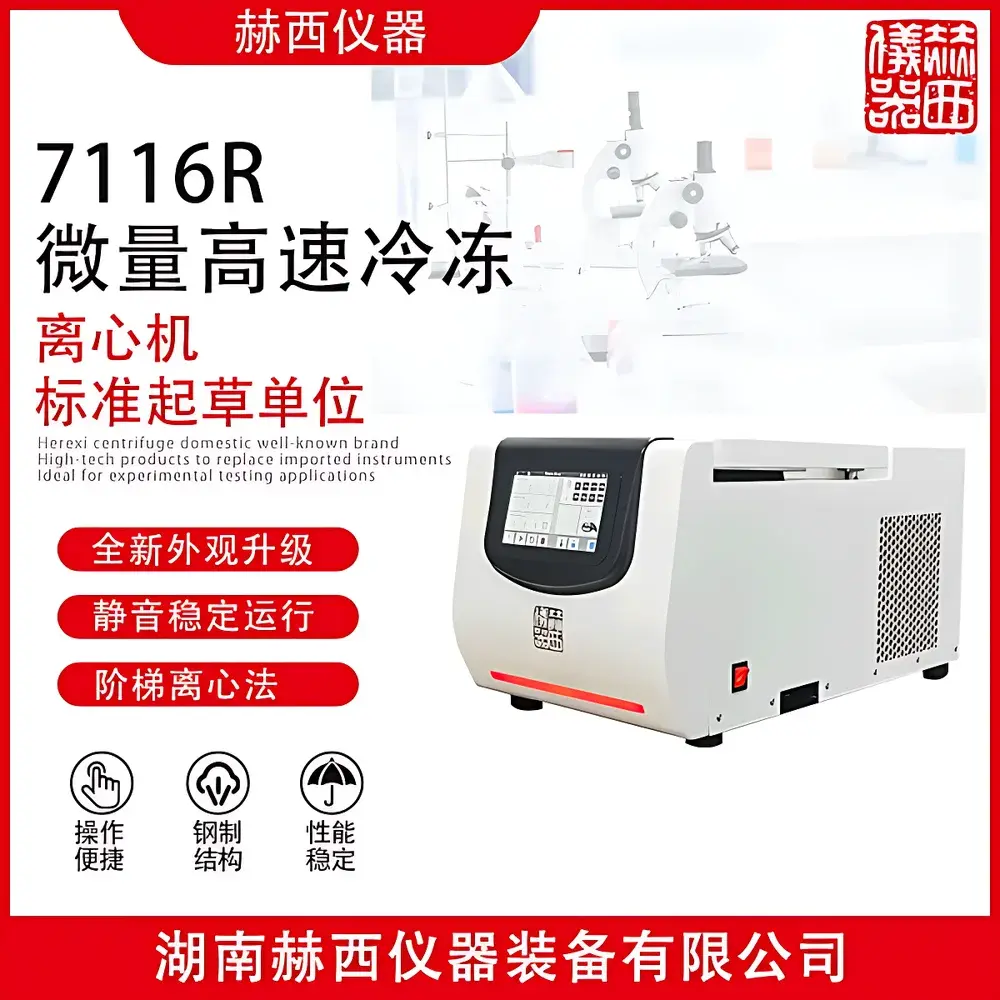
Hershey 7116R Benchtop High-Speed Micro-Ultracentrifuge with Refrigeration
| Brand | Hershey |
|---|---|
| Origin | Hunan, China |
| Model | 7116R |
| Type | Benchtop Refrigerated Centrifuge |
| Speed Range | Up to 16,500 rpm |
| Max RCF | 22,500 × g |
| Max Capacity | 48 × 2.0 mL tubes |
| Dimensions (W×D×H) | 650 × 350 × 325 mm |
| Display | 7-inch capacitive touchscreen |
| Cooling Range | −20 °C to +40 °C |
| Rotor Type | Fixed-angle rotor compatible with PCR strip tubes (8-well) |
| Power Supply | 220 V, 50/60 Hz |
Overview
The Hershey 7116R is a compact benchtop refrigerated high-speed centrifuge engineered for precision micro-volume sample processing in molecular biology, clinical diagnostics, and cell biology laboratories. It operates on the principle of sedimentation under controlled gravitational force (RCF), utilizing fixed-angle rotor geometry to generate rapid, reproducible separation of biomolecules—including nucleic acids, proteins, viruses, and subcellular organelles—based on differences in density, size, and shape. With a maximum rotational speed of 16,500 rpm and an RCF of 22,500 × g, the 7116R delivers performance comparable to mid-tier ultracentrifuges while maintaining footprint efficiency—measuring only 650 × 350 × 325 mm—making it one of the smallest high-speed refrigerated centrifuges available for routine lab use. Its integrated compressor-based refrigeration system maintains precise temperature control from −20 °C to +40 °C during operation, critical for preserving thermolabile analytes such as RNA and enzymatic complexes.
Key Features
- Compact benchtop design optimized for space-constrained environments including biosafety cabinets and laminar flow hoods.
- 7-inch capacitive touchscreen interface with intuitive icon-driven navigation, multi-language support (English, German, French, Spanish), and real-time parameter monitoring (speed, RCF, time, temperature, rotor status).
- Seven-color ambient LED lighting system providing visual feedback for operational status (e.g., standby, acceleration, deceleration, error) and enhancing ergonomic workflow identification.
- Pre-programmed protocols for common applications including DNA/RNA precipitation, viral pellet recovery, bacterial lysate clarification, and PCR tube strip centrifugation (compatible with standard 8-well PCR strips).
- Brushless frequency-controlled motor ensures low vibration, extended service life, and minimal acoustic noise (<58 dB(A) at maximum speed).
- Automatic rotor recognition via embedded RFID tag ensures correct speed and temperature limits are enforced per rotor configuration.
- Active lid lock with mechanical and electronic dual-safety interlocks compliant with IEC 61010-2-020 safety standards for centrifugal equipment.
Sample Compatibility & Compliance
The 7116R accommodates up to 48 × 2.0 mL microcentrifuge tubes in its standard fixed-angle rotor, with optional adapters supporting 0.2–1.5 mL tubes, PCR strips, and filter spin columns. It is validated for use with standard polypropylene and polycarbonate consumables meeting ISO 10993 biocompatibility requirements. The instrument conforms to key international safety and electromagnetic compatibility directives: IEC 61010-1 (Electrical Safety), IEC 61326-1 (EMC), and EN 61000-6-3 (Emission). While not certified for GLP/GMP production environments, its audit-ready event log (including start/stop timestamps, temperature deviations, rotor ID, and error codes) supports traceability in regulated research settings aligned with ISO/IEC 17025 and CLIA guidelines.
Software & Data Management
Data integrity is maintained through a non-volatile internal memory storing ≥1,000 run records with timestamp, rotor ID, parameters, and outcome status. Export is supported via USB 2.0 port in CSV format for integration into LIMS or ELN systems. No proprietary software installation is required; raw logs are human-readable and compatible with standard spreadsheet analysis tools. The system supports FDA 21 CFR Part 11–aligned user access control when deployed with external authentication servers (via optional network module), enabling role-based permissions and electronic signature logging for audit trails.
Applications
- Routine nucleic acid purification workflows involving ethanol/isopropanol precipitation and silica-membrane column elution.
- High-yield recovery of lentiviral or AAV particles from transient transfection supernatants.
- Subcellular fractionation of mitochondria, nuclei, and cytosolic extracts from cultured mammalian cells.
- Clinical specimen processing—including serum separation from whole blood, urinary exosome isolation, and CSF protein concentration.
- Environmental microbiology applications requiring rapid pelleting of low-biomass waterborne bacteria or phytoplankton.
- Quality control steps in diagnostic assay development where reproducible micro-volume pelleting directly impacts downstream sensitivity.
FAQ
What is the minimum sample volume this centrifuge can process effectively?
The 7116R achieves reliable pelleting down to 10 µL volumes in 2.0 mL tubes when using appropriate rotor orientation and acceleration/deceleration profiles.
Does the unit support swing-bucket rotors?
No—the 7116R is configured exclusively with fixed-angle rotors optimized for high-speed microcentrifugation; swing-bucket configurations are incompatible with its mechanical architecture.
Can the refrigeration system maintain −20 °C during continuous 30-minute runs at maximum speed?
Yes—thermal management has been validated for sustained operation at −20 °C across full speed range under nominal ambient conditions (≤25 °C, ≤60% RH).
Is rotor calibration required by the user?
No—rotor balancing and angular alignment are factory-performed and verified; users must only ensure tube symmetry and mass equivalence prior to each run.
How often does the compressor require maintenance?
The sealed R134a refrigeration system is designed for 10,000 hours of operation without scheduled servicing; annual verification of cooling performance is recommended in high-throughput labs.



