
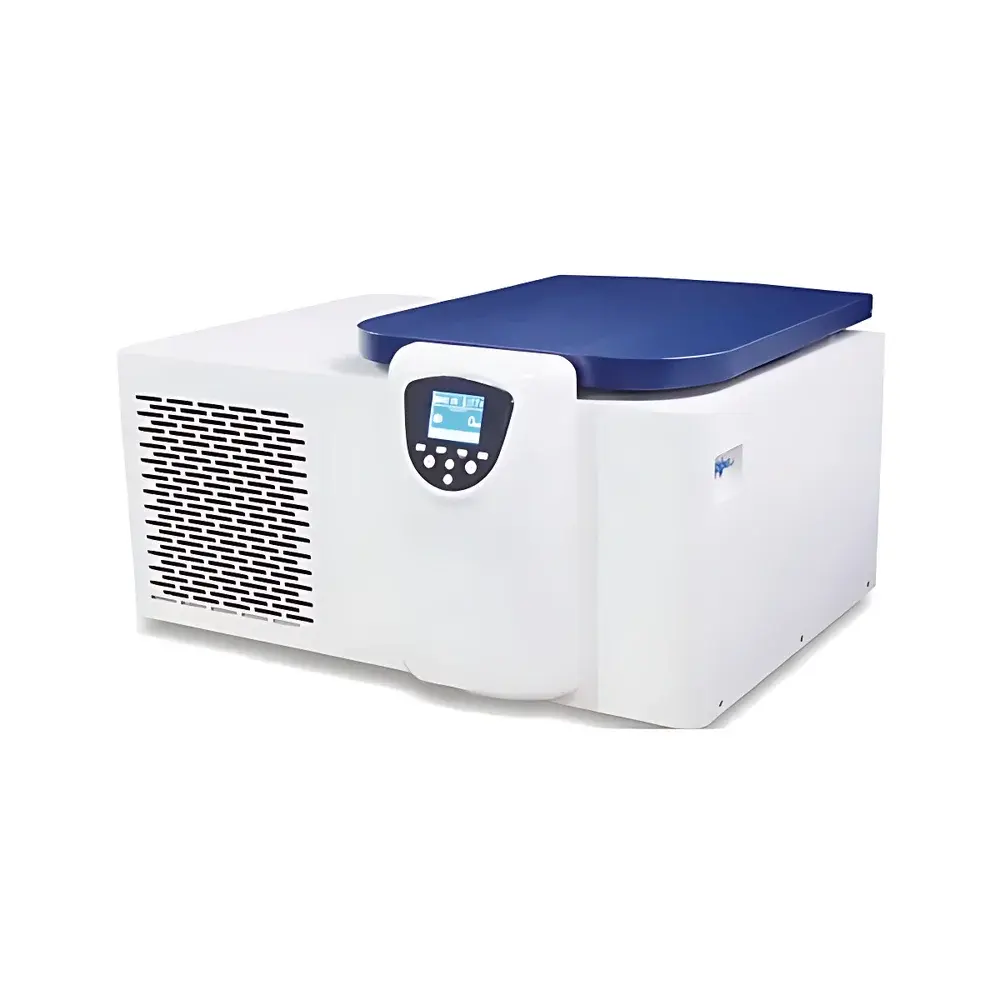
Hesley TDL6M Benchtop Low-Speed Refrigerated Centrifuge
| Brand | Hesley |
|---|---|
| Origin | Hunan, China |
| Model | TDL6M |
| Type | Benchtop Refrigerated Centrifuge |
| Max Speed | 6500 rpm |
| Max RCF | 4800 × g |
| Max Capacity | 4 × 500 mL |
| Temperature Range | −20 °C to +40 °C |
| Temp. Accuracy | ±1 °C |
| Acceleration/Deceleration | 10-step control |
| Noise Level | ≤65 dB(A) |
| Dimensions (L×W×H) | 630 × 760 × 400 mm |
| Weight | 110 kg |
| Power | 1.8 kW |
| Timer Range | 1 min – 99 h 59 min |
| Certified | ISO 9001:2015, ISO 13485:2016, CFDA Registered |
Overview
The Hesley TDL6M Benchtop Low-Speed Refrigerated Centrifuge is engineered for high-capacity, temperature-sensitive separation tasks in regulated laboratory environments. Operating on the principle of sedimentation under controlled gravitational force (RCF), it delivers reproducible pelleting, clarification, and phase separation across a wide range of biological and clinical sample types. Its refrigerated architecture—featuring an imported CFC-free R404a compressor system—enables precise thermal management from −20 °C to +40 °C, with real-time temperature setpoint adjustment during operation. Designed for routine use in quality control laboratories, blood banks, pharmaceutical R&D, and academic core facilities, the TDL6M supports both continuous and timed centrifugation modes, with programmable run durations up to 99 hours and 59 minutes. The unit’s robust mechanical design integrates a high-torque brushless AC motor, microprocessor-based speed and temperature regulation, and triple-stage damping to ensure operational stability and minimize sample resuspension.
Key Features
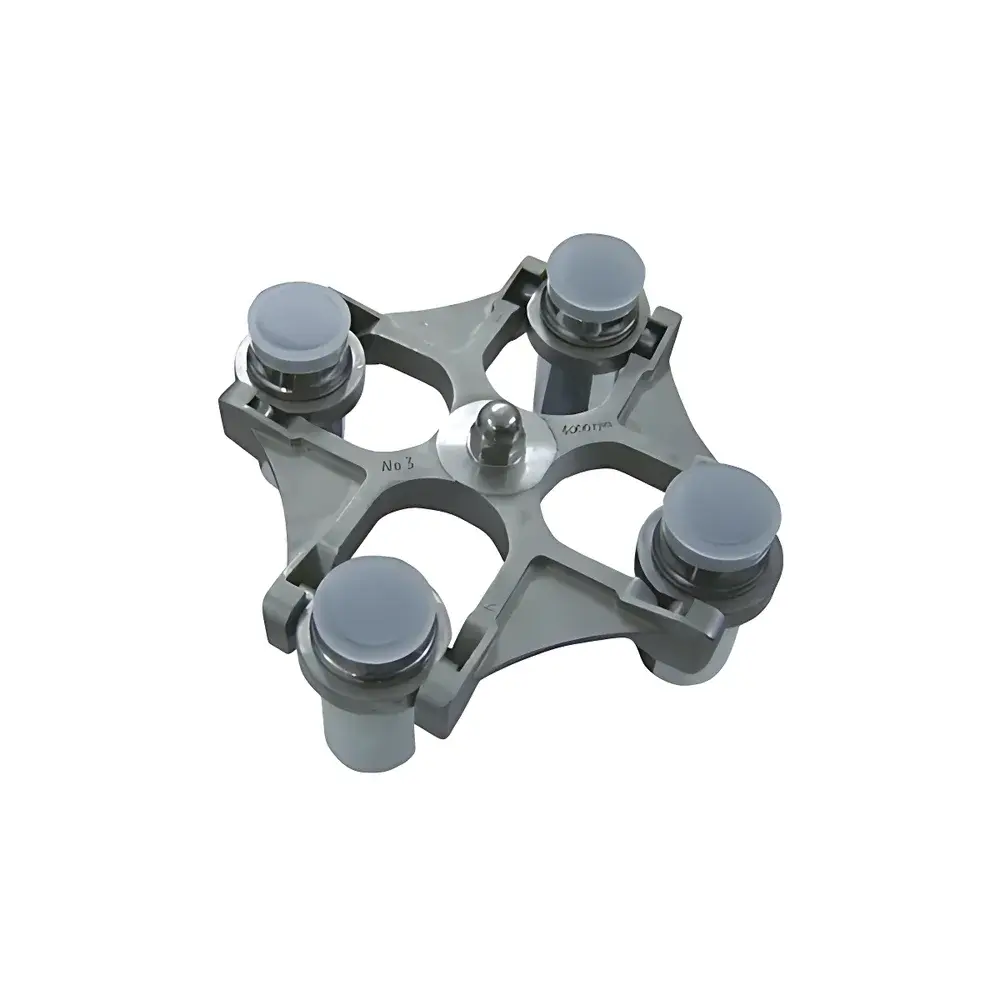
- High-throughput capacity: accommodates up to four 500 mL centrifuge bottles simultaneously using a horizontal rotor configuration
- Refrigerated performance: maintains stable chamber temperature during extended runs; includes pre-cool, standby cooling, and automatic defrost functions
- Intuitive dual-mode interface: TFT-LCD color display with tactile buttons and capacitive touch controls; real-time display of setpoints and actual values (speed, RCF, time, temperature)
- Enhanced safety architecture: three-level mechanical damping, RoHS-compliant silicone gasketed biocontainment rotors, stainless-steel centrifuge chamber, and reinforced steel housing with triple-layer protective casing
- Comprehensive protection suite: active monitoring for overspeed, overtemperature, imbalance, under/over-voltage, and door interlock failure
- Flexible operation: 10 selectable acceleration/deceleration profiles; 20 user-programmable protocols stored in non-volatile memory; last-run protocol auto-recall on power-up
- Regulatory-compliant construction: CE-marked per IEC 61010-1; certified to ISO 9001:2015 (Quality Management) and ISO 13485:2016 (Medical Device QMS); registered with China’s National Medical Products Administration (NMPA, formerly CFDA)
Sample Compatibility & Compliance
The TDL6M accepts standard horizontal rotors compatible with conical-bottom centrifuge bottles (up to 500 mL), universal tubes (0.2–100 mL), and multiwell formats including 96-well PCR plates, deep-well plates, and cell culture plates—enabled by optional polyamide fiber adapters. Its sealed rotor design meets biosafety requirements for handling potentially infectious materials, preventing aerosol escape during deceleration or lid opening. The instrument complies with key international standards governing laboratory equipment safety and data integrity, including ISO/IEC 17025:2017 (for accredited testing labs), CLSI EP17-A2 (for centrifuge validation), and aligns with Good Laboratory Practice (GLP) and Good Manufacturing Practice (GMP) documentation expectations. While not natively Part 11 compliant, audit trails and parameter locking may be implemented via external LIMS integration.
Software & Data Management
The TDL6M operates autonomously without proprietary software dependency; all configuration and execution occur via the onboard controller. However, its serial communication port (RS-232 or optional RS-485) supports bidirectional data exchange with laboratory information management systems (LIMS) or electronic lab notebooks (ELN). Timestamped run logs—including start/stop times, final RCF, temperature deviation history, and fault codes—are retained in internal memory and exportable for QA/QC review. Protocol parameters are protected against accidental overwrite and support version-controlled archiving when synchronized with networked systems. Language localization includes English, Chinese, Russian, and Portuguese—facilitating multilingual lab environments and regulatory inspections.
Applications
This centrifuge is routinely deployed in applications requiring gentle yet scalable separation under temperature control: plasma and serum isolation from whole blood (e.g., CLSI H37-A4 protocols), cell harvesting in bioprocessing (adherent and suspension cultures), purification of extracellular vesicles, clarification of fermentation broths, isolation of organelles (mitochondria, nuclei), and preparation of reagents for ELISA, Western blotting, and nucleic acid extraction. It is also used in food safety labs for pathogen concentration (e.g., ISO 6579 for Salmonella enrichment) and in agricultural research for soil suspension fractionation and plant tissue homogenate cleanup.
FAQ
What is the maximum relative centrifugal force (RCF) achievable with the TDL6M?
The TDL6M achieves a maximum RCF of 4800 × g at its rated speed of 6500 rpm with the standard horizontal rotor.
Can the temperature be adjusted while the centrifuge is running?
Yes—the system allows real-time temperature setpoint modification during active rotation without interrupting the run.
Is rotor autoclaving supported?
No—rotors are not designed for autoclave sterilization; cleaning must follow manufacturer-recommended protocols using approved disinfectants.
Does the TDL6M meet FDA 21 CFR Part 11 requirements?
The device itself does not include built-in electronic signature or audit trail features required for Part 11 compliance; however, it can be integrated into validated workflows where such controls are managed externally.
What certifications apply to this model?
It holds ISO 9001:2015 and ISO 13485:2016 certification, and is registered with China’s NMPA as a Class II medical device. It conforms to IEC 61010-1 for electrical safety in laboratory equipment.



