
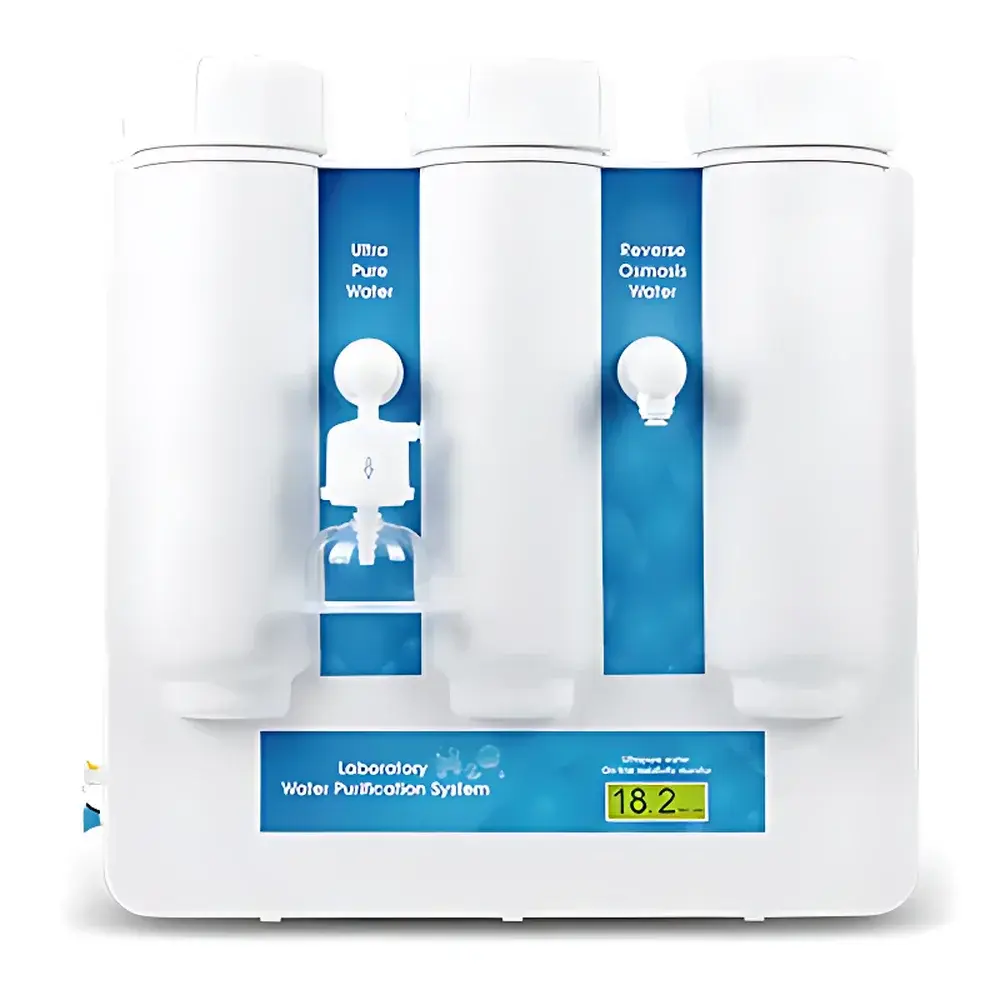
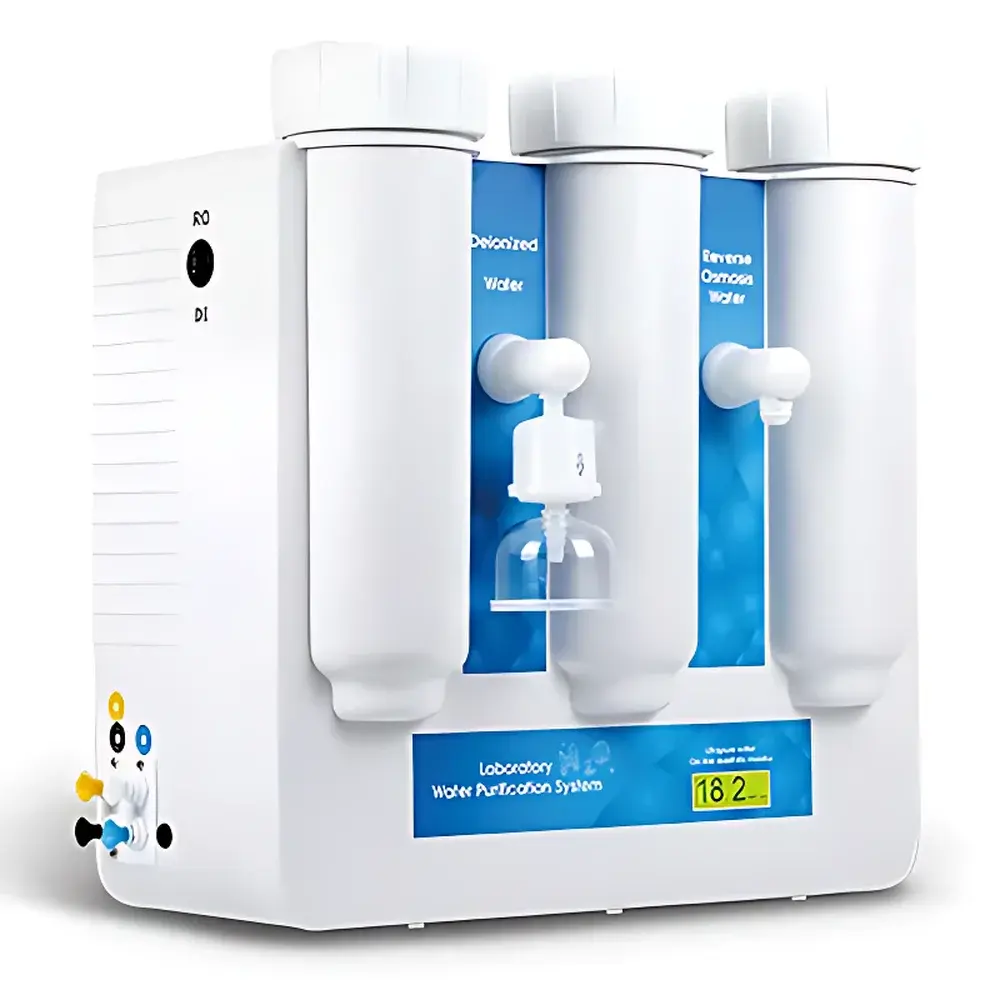
HHitech Smart-D Ultra Pure Water System (Distilled Water Feed)
| Brand | HHitech |
|---|---|
| Origin | Shanghai, China |
| Manufacturer Type | Manufacturer |
| Product Category | Domestic |
| Model | Smart-D |
| Price | USD 2,390 (approx.) |
| Purified Water Grade | ASTM Type I / ISO 3696 Grade 1 / GB/T 6682-2008 Class I |
| Resistivity | 18.2 MΩ·cm @ 25 °C |
| Heavy Metals & Soluble Silica | < 0.01 ppb |
| Total Organic Carbon (TOC) | < 3 ppb |
| Microbial Count | < 0.01 CFU/mL |
| Endotoxin | < 0.001 EU/mL |
| Particles (>0.1 µm) | < 1 particle/mL |
Overview
The HHitech Smart-D Ultra Pure Water System is a laboratory-grade, single-pass purification platform engineered for consistent production of Type I ultrapure water (UPW) when fed with pre-purified source water—such as distilled, reverse osmosis (RO), or deionized water. Unlike systems designed for municipal tap feed, the Smart-D eliminates variability introduced by fluctuating feedwater composition, delivering stable resistivity ≥18.2 MΩ·cm at 25 °C and TOC <3 ppb under controlled operating conditions. Its core purification architecture integrates activated carbon (AC), mixed-bed ion exchange (DI), dual-wavelength UV photooxidation (185 nm + 254 nm), and terminal 0.1 µm PES membrane filtration—enabling compliance with stringent analytical, life science, and pharmaceutical water specifications including ASTM D1193-20, ISO 3696:1987, USP , EP 2.2.44, CLSI C3-A4, and GB/T 6682-2008 Class I and GB/T 33087-2016.
Key Features
- Integrated housing fabricated from medical-grade polypropylene (PP) via one-piece injection molding—chemically inert, non-leaching, and compliant with ISO 10993 biocompatibility requirements.
- Internalized modular cartridge design: all purification stages—including AC prefilter, dual DI columns, UV lamp assembly, UF membrane (optional), and 0.1 µm final filter—are housed within the chassis to minimize footprint and reduce contamination risk.
- Tool-free top-access service: quick-release lid enables on-site replacement of prefilters without opening the main enclosure—supporting GLP-aligned maintenance documentation and audit readiness.
- Intelligent microprocessor control with pressure transducers: fully automated operation includes feed interruption detection, reservoir auto-fill logic, full-tank shutdown, and dry-run protection.
- Real-time water quality monitoring: backlit LCD display shows UPW resistivity (0.01–18.2 MΩ·cm resolution) and temperature-compensated values; includes handheld battery-powered TDS/conductivity meter for feedwater verification.
- NSF/ANSI 61-certified fluid path components: all tubing, fittings, and valves meet material safety standards for potable water contact—critical for regulatory traceability in GMP environments.
Sample Compatibility & Compliance
The Smart-D is validated for use with feed streams meeting ASTM D1193 Type II or higher (e.g., RO permeate, distilled water, or DI water). It is not intended for direct municipal feed. Final UPW output satisfies critical application requirements: HPLC mobile phase preparation, IC analysis, atomic absorption spectroscopy (AAS), ICP-MS sample dilution, cell culture media formulation, and molecular biology workflows (including qPCR, NGS library prep, and CRISPR applications). System validation documentation supports alignment with FDA 21 CFR Part 11 data integrity expectations when paired with optional audit trail logging software. All purification modules are compatible with routine PQ/OQ protocols per ISO/IEC 17025 and ISO 9001 frameworks.
Software & Data Management
While the base Smart-D operates via embedded firmware without external PC dependency, its resistivity sensor outputs analog signals compatible with third-party SCADA or LIMS integration (0–5 V or 4–20 mA optional). The onboard LCD retains last 30 days of timestamped resistivity logs (1-min intervals), exportable via USB upon firmware upgrade. Optional data logger module adds electronic signature capability, user access levels, and encrypted CSV export—meeting ALCOA+ principles (Attributable, Legible, Contemporaneous, Original, Accurate) required under GLP and GMP audits.
Applications
- Analytical chemistry: blank preparation for trace metal analysis (ICP-MS, GF-AAS), calibration standard dilution, and solvent formulation where low TOC and ionic interference are essential.
- Life sciences: sterile-grade water for mammalian cell culture, embryo transfer (IVF), organoid maintenance, and endotoxin-sensitive assays (e.g., Limulus amebocyte lysate testing).
- Molecular diagnostics: nuclease-free water for RNA/DNA handling, RT-qPCR master mix preparation, and next-generation sequencing workflows requiring RNase/DNase <1 pg/mL and <5 pg/mL respectively.
- Pharmaceutical QC: compendial water for USP purified water system qualification, stability study buffers, and extractables/leachables testing.
- Materials science: solvent-grade water for nanomaterial synthesis, thin-film deposition, and electrochemical cell electrolyte preparation.
FAQ
What feed water quality is required for optimal Smart-D performance?
Distilled water, RO permeate (≥1 MΩ·cm), or deionized water at 5–45 °C and 1 atm is mandatory. Feed conductivity >5 µS/cm will reduce DI column lifespan and compromise TOC/endotoxin removal efficiency.
Can the Smart-D be integrated into a centralized lab water network?
Yes—via optional pressurized loop adapter kit (PN: SM-D-NET) supporting up to 30 m of 1/4″ PFA tubing and flow rates up to 1.5 L/min at point-of-use.
How often must consumables be replaced?
Under typical usage (10 L/day), the DI cartridge lasts 6–12 months; UV lamp requires replacement every 12 months; 0.1 µm final filter every 6 months. Replacement intervals scale inversely with feedwater ionic load and TOC content.
Is the system compliant with ISO 13485 for medical device manufacturing?
The Smart-D itself is not certified to ISO 13485, but its output water meets ISO 13485 Annex A requirements for “water for production processes” when operated per HHitech’s PQ/OQ protocol and maintained with genuine DOW® nuclear-grade resin and Sartorius® PES membranes.
Does the Smart-D support remote monitoring?
Remote status alerts (low pressure, high TOC, lamp failure) are available via optional Ethernet/WiFi module (SM-D-IO-ETH), enabling SNMP-based integration into facility-wide building management systems.



