
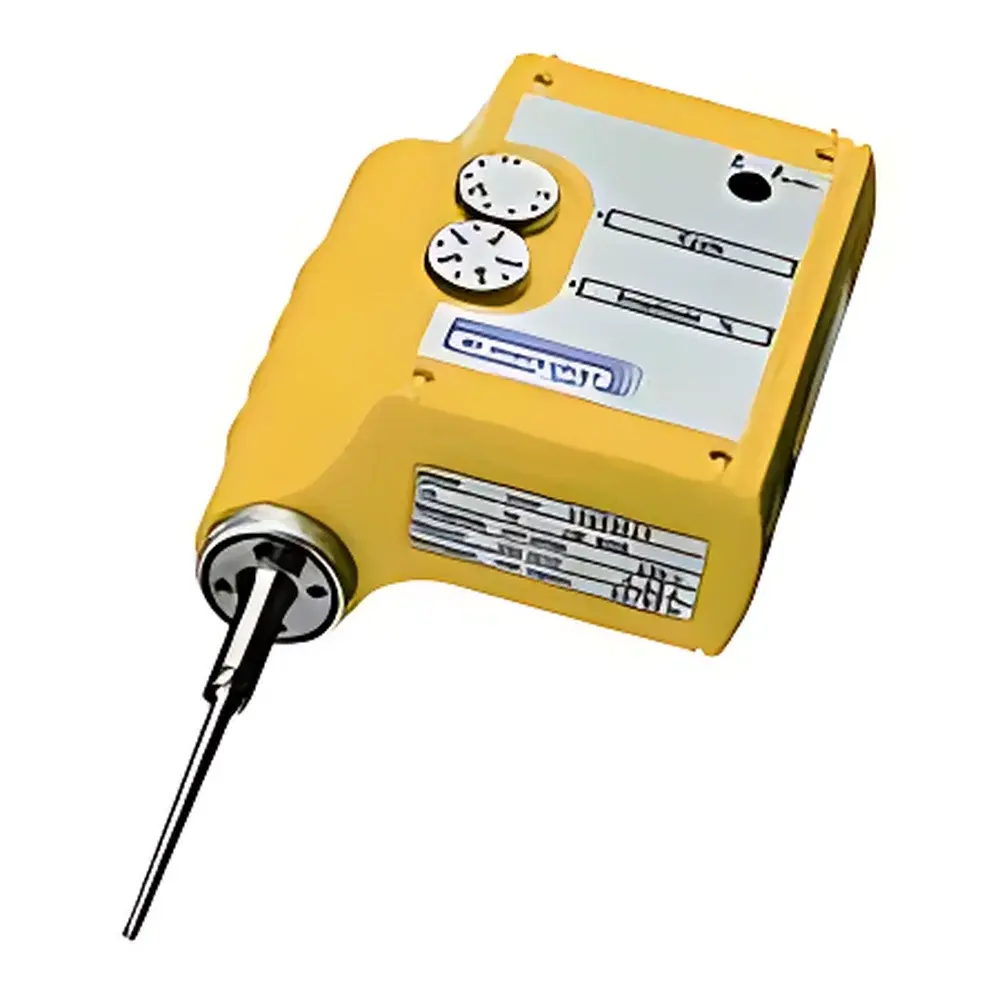
Hielscher UP100H Handheld Ultrasonic Processor
| Brand | Hielscher |
|---|---|
| Origin | Germany |
| Model | UP100H |
| Ultrasonic Power | 100 W |
| Operating Frequency | 30 kHz (auto-tuned) |
| Amplitude Control Range | 20–100% |
| Pulse Mode | 0–100% duty cycle |
| Sample Volume Capacity | 0.5–50 mL |
| Weight | 1.2 kg |
| Dimensions (L×W×H) | 180 × 130 × 50 mm |
| Power Supply | 230 V, 1 A, 50–60 Hz |
| Temperature Monitoring | Not integrated (external probe recommended for thermal-sensitive applications) |
Overview
The Hielscher UP100H Handheld Ultrasonic Processor is a compact, high-precision sonication device engineered for reproducible cell disruption, homogenization, emulsification, and extraction in life science laboratories. Based on piezoelectric ultrasonic transduction, the UP100H generates high-intensity acoustic cavitation in liquid media through a titanium alloy probe (horn), operating at a nominal frequency of 30 kHz with automatic frequency tracking to maintain optimal energy transfer across varying sample loads and viscosities. Unlike fixed-frequency systems, its adaptive resonance control ensures consistent amplitude delivery and minimizes probe wear or overheating during extended operation. Designed for benchtop use in R&D, QC, and small-scale preparative workflows, the UP100H delivers 100 W of continuous ultrasonic output—sufficient for efficient lysis of bacterial, yeast, and mammalian cells while preserving labile biomolecules when operated under controlled pulse conditions.
Key Features
- Handheld ergonomic design with integrated digital controls for real-time adjustment of amplitude (20–100%) and pulse duty cycle (0–100%), enabling fine-tuned energy input to prevent thermal degradation or over-shearing.
- Auto-tuning circuitry continuously monitors and adjusts operating frequency to match the mechanical resonance of the probe–sample system, ensuring maximum energy transfer efficiency and stable performance across viscosity changes.
- Titanium alloy sonotrode (standard 3 mm tip diameter; optional tips available) provides high corrosion resistance, mechanical durability, and minimal metal leaching—critical for sensitive biological and pharmaceutical applications.
- Compact footprint (180 × 130 × 50 mm) and lightweight construction (1.2 kg) support flexible deployment in biosafety cabinets, cold rooms, or mobile lab environments without requiring external cooling or mounting hardware.
- No internal temperature sensor; however, the device is compatible with external PT100 probes and third-party temperature monitoring systems for GLP-compliant process documentation when used with validated protocols.
Sample Compatibility & Compliance
The UP100H accommodates sample volumes from 0.5 mL to 50 mL in standard microcentrifuge tubes, Eppendorf-style vials, and small beakers. It is routinely employed for Gram-negative and Gram-positive bacterial lysis (e.g., E. coli, B. subtilis), yeast cell wall disruption (S. cerevisiae), tissue homogenization, nucleic acid and protein extraction, nanoparticle dispersion, and degassing of viscous reagents. While not certified as an IVD or GMP production tool, the UP100H supports Good Laboratory Practice (GLP) workflows when paired with traceable calibration records, amplitude verification using calorimetric or hydrophone methods per ASTM E2794, and documented pulse parameter logging. Its electrical safety complies with EN 61010-1:2019 for laboratory equipment.
Software & Data Management
The UP100H operates via front-panel push-button interface with LED display—no PC connection or proprietary software required. All operational parameters (amplitude %, pulse on/off time, total run duration) are manually set and retained in non-volatile memory. For audit-ready data capture, users may integrate the device into broader laboratory information management systems (LIMS) via external timers, USB-connected data loggers, or programmable logic controllers (PLCs). Though lacking native FDA 21 CFR Part 11 compliance features (e.g., electronic signatures, user access levels), it supports manual record-keeping aligned with ISO/IEC 17025 and USP analytical instrument qualification frameworks when deployed within validated SOPs.
Applications
- Preparative cell lysis for recombinant protein purification and plasmid isolation
- Homogenization of plant and animal tissues prior to metabolite or RNA extraction
- Emulsification of lipid nanoparticles (LNPs) and nanostructured lipid carriers (NLCs)
- Dispersion of carbon nanotubes, graphene oxide, and metal oxide nanoparticles in aqueous or organic media
- Accelerated solvent extraction (ASE) of natural products and phytochemicals
- Microbubble generation and degassing of high-viscosity polymer solutions or enzyme reaction mixtures
FAQ
What is the maximum recommended continuous operating time per cycle?
For thermal management and probe longevity, Hielscher recommends ≤ 30 seconds of continuous sonication followed by ≥ 30 seconds of rest—especially at amplitudes >70%. Pulse mode (e.g., 5 s on / 5 s off) is strongly advised for heat-sensitive samples.
Can the UP100H be used with corrosive solvents such as chloroform or strong acids?
Titanium alloy probes resist most organic solvents and mild acids, but prolonged exposure to concentrated HCl, HF, or bromine-based reagents requires specialized probe coatings or alternative materials; consult Hielscher’s chemical compatibility chart before use.
Is calibration traceable to national standards available?
Yes—Hielscher offers optional amplitude calibration services using NIST-traceable hydrophone systems (per IEC 61847) and calorimetric power verification reports compliant with ASTM E2794.
Does the UP100H meet CE or UKCA marking requirements?
Yes—the device carries CE marking per Directive 2014/30/EU (EMC) and 2014/35/EU (LVD), and UKCA marking for post-Brexit Great Britain market access.
What maintenance is required for long-term reliability?
Routine inspection of the sonotrode tip for pitting or erosion, periodic torque verification of the probe coupling nut (25 N·cm), and cleaning with ethanol or isopropanol after each use constitute standard maintenance; no scheduled lubrication or internal servicing is required.






