
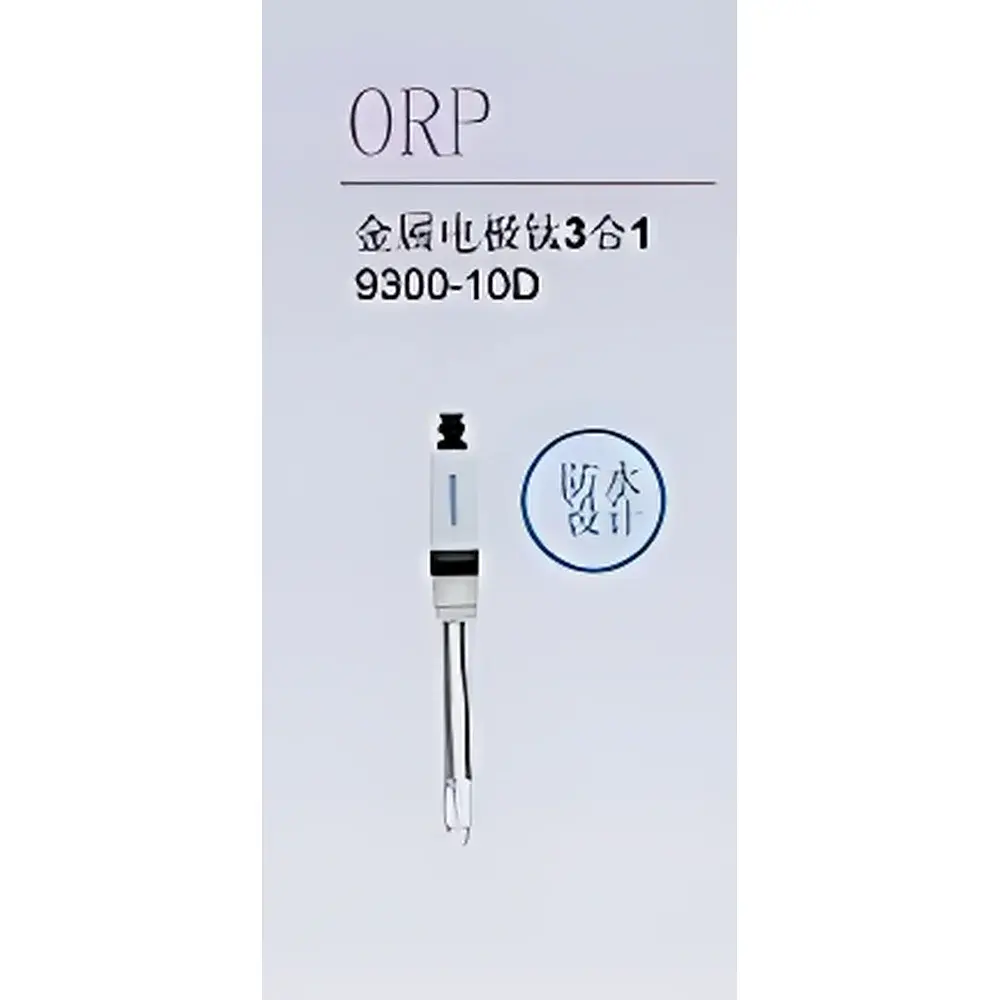
HORIBA 9300-10D Waterproof Platinum Composite ORP Electrode
| Brand | HORIBA |
|---|---|
| Origin | Japan |
| Model | 9300-10D |
| Temperature Range | 0–60 °C |
| Electrode Type | Waterproof Pt-based composite redox electrode |
| Compatibility | Designed for standalone ORP measurement (not to be used simultaneously with pH or other reference electrodes) |
| Compliance | Engineered for routine electrochemical monitoring in accordance with ISO 10523, ASTM D1293, and EPA Method 150.1 |
Overview
The HORIBA 9300-10D is a robust, waterproof platinum composite redox (oxidation-reduction potential, ORP) electrode engineered for precise, stable, and reproducible measurement of electron activity in aqueous solutions. Unlike conventional single-element ORP sensors, the 9300-10D integrates a platinum sensing element with an integrated Ag/AgCl reference system within a sealed, chemically resistant glass body—eliminating liquid junctions and minimizing drift during extended immersion. Its design adheres to fundamental potentiometric principles: ORP is measured as the open-circuit voltage (mV) between the inert Pt surface and a stable internal reference, relative to the Standard Hydrogen Electrode (SHE). This electrode operates exclusively in ORP mode and must not be co-deployed with pH or other reference electrodes in the same solution, as concurrent electrochemical interference compromises thermodynamic equilibrium and invalidates potential readings per IUPAC guidelines.
Key Features
- Waterproof construction with hermetically sealed glass body and IP67-rated housing for continuous submersion in process streams, wastewater, or environmental monitoring applications.
- Pt composite sensing element ensures rapid response (<60 s to 95% stability), low polarization resistance, and high tolerance to oxidizing/reducing environments including chlorinated water, ozone-treated effluents, and electroplating baths.
- Integrated Ag/AgCl reference system with solid-state electrolyte eliminates refill requirements and reduces maintenance frequency—ideal for unattended or remote deployments.
- Operating temperature range of 0–60 °C supports use in ambient water quality assessment, cooling tower control, aquaculture systems, and industrial rinse monitoring.
- Standard BNC connector enables direct compatibility with HORIBA LAQUA twin series meters (e.g., LAQUA twin ORP, LAQUA DO-1100), as well as third-party benchtop and portable mV/ORP analyzers compliant with IEC 61000-4-8 immunity standards.
Sample Compatibility & Compliance
The 9300-10D is validated for use in low-to-moderate ionic strength aqueous matrices—including drinking water, surface water, wastewater effluent, swimming pool disinfection systems, and bioreactor influents. It is not recommended for non-aqueous solvents, highly viscous slurries, or samples containing sulfide, cyanide, or heavy metal ions above trace levels without prior validation, as these may poison the Pt surface or destabilize the reference potential. The electrode conforms to ISO 10523 (water quality — determination of pH), ASTM D1293 (standard test method for pH of water), and EPA Method 150.1 (electrode-based ORP measurement), supporting data integrity under GLP and routine QA/QC protocols. Calibration verification is performed using standardized quinhydrone or Zobell’s solution (225 ± 5 mV at 25 °C vs. SHE).
Software & Data Management
While the 9300-10D is an analog sensor requiring external metering hardware, it fully supports HORIBA’s LAQUA Connect software suite when paired with compatible LAQUA twin or Smart Sensor platforms. This integration enables time-stamped mV logging, automatic temperature compensation (ATC) via optional 4163-10T probe, audit-trail generation per FDA 21 CFR Part 11 requirements, and export to CSV or Excel formats for trend analysis. All measurements are traceable to NIST-certified reference standards, and firmware updates maintain alignment with latest IEC 62304 medical device software lifecycle requirements where applicable.
Applications
- Real-time disinfection efficacy monitoring in municipal water treatment (chlorine, chlorine dioxide, ozone).
- Redox control in anaerobic digesters and denitrification basins for nitrogen removal optimization.
- Process validation in semiconductor wet benches and printed circuit board manufacturing.
- Environmental compliance reporting for ORP thresholds in NPDES permits and landfill leachate monitoring.
- Research-grade redox profiling in microbial fuel cell (MFC) studies and sediment pore-water characterization.
FAQ
Can the 9300-10D be used for pH measurement?
No. It is a dedicated ORP electrode with no pH-sensitive glass membrane. Attempting pH measurement will yield non-reproducible, thermodynamically invalid results.
Is temperature compensation automatic?
The electrode itself does not compensate; ATC requires pairing with a separate temperature probe (e.g., HORIBA 4163-10T) and a meter supporting dual-input compensation algorithms.
What cleaning protocol is recommended for fouled Pt surfaces?
Soak in 0.1 M HNO₃ for 5 minutes, rinse thoroughly with deionized water, then recondition in 1 mM KCl for 30 minutes before calibration.
Does this electrode require storage solution?
Yes. Store immersed in 3 M KCl or HORIBA’s ORP Storage Solution (Cat. No. 9300-SS) to maintain junction stability and prevent reference electrode dehydration.
Can it be sterilized by autoclaving?
No. Maximum operating temperature is 60 °C; exposure to steam sterilization (>121 °C) will irreversibly damage the internal reference system and seal integrity.





