
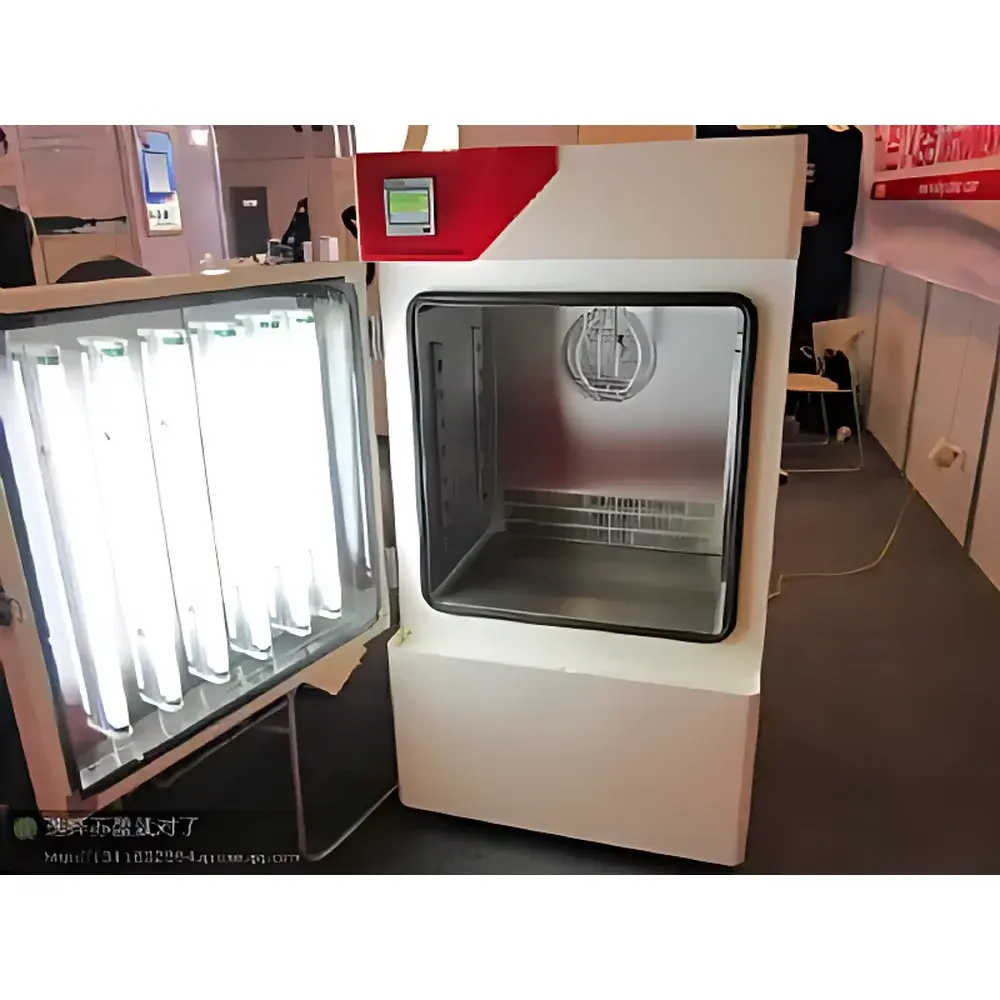
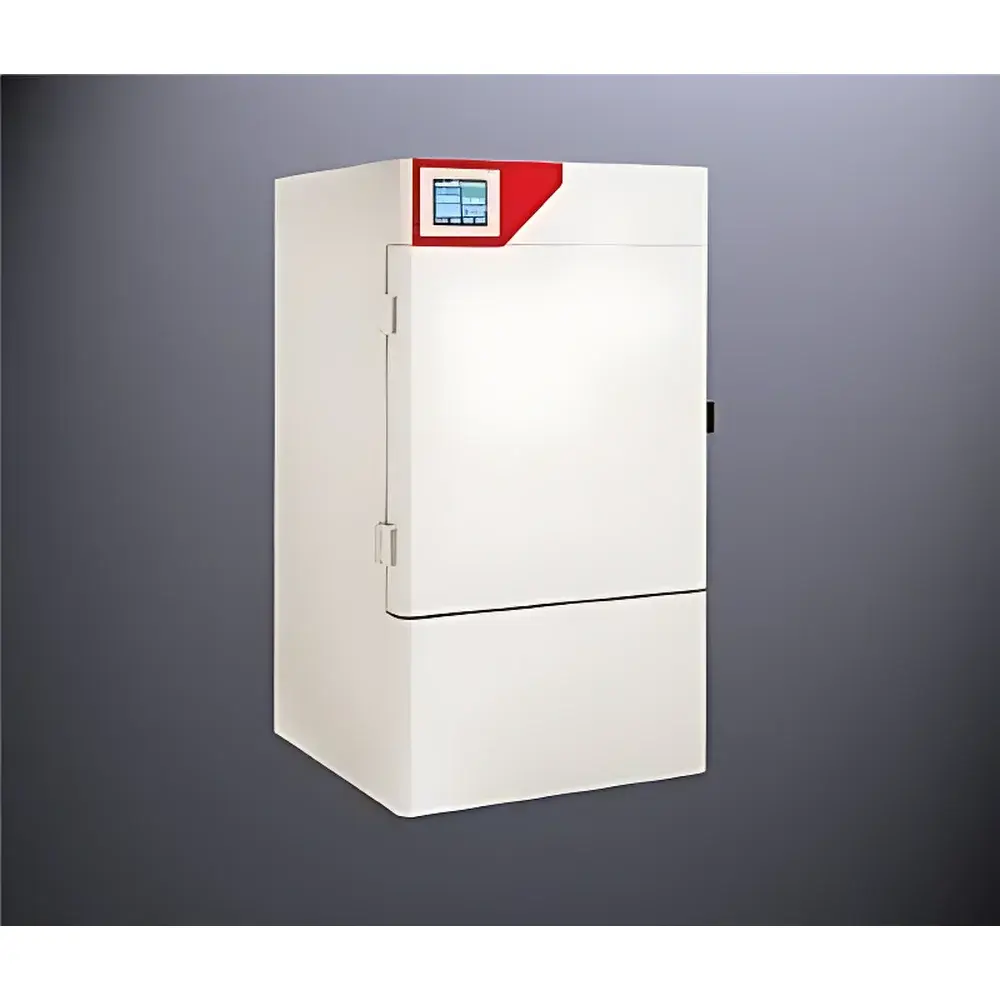
Hinds Instruments YP-SD / SDP / GSD / GSP Series Pharmaceutical Stability Testing Chambers
| Brand | Hinds Instruments |
|---|---|
| Origin | Shanghai, China |
| Model Variants | YP-SD, YP-SDP, YP-GSD, YP-GSP150/250/500/1000 |
| Chamber Volume | 150 L / 250 L / 500 L / 1000 L |
| Temperature Range (Dark) | 0–65 °C |
| Temperature Range (Illuminated) | 10–65 °C |
| Temperature Uniformity | ±0.5 °C |
| Humidity Range | 40–95 %RH |
| Humidity Uniformity | ±0.5 %RH |
| Illuminance Range | 0–4500 lx (adjustable) |
| Illuminance Accuracy | ≤±500 lx |
| Cooling System | Hermetic Danfoss Compressor (R404A/R23) |
| Control Resolution | 0.1 °C / 0.1 %RH |
| Power Supply | AC 220 V ±10%, 50 Hz |
| Safety Protections | Compressor Overheat, Overload, Low-Water, Overtemperature, Electrical Short-Circuit |
Overview
Hinds Instruments YP-SD, YP-SDP, YP-GSD, and YP-GSP series pharmaceutical stability testing chambers are engineered for precision-controlled environmental simulation in compliance with ICH Q1–Q5 guidelines, WHO Technical Report Series No. 953 (2009), and the Chinese Pharmacopoeia (2020 Edition) Chapter 9001 “Stability Testing of Drug Substances and Products.” These chambers replicate long-term (25 °C/60 %RH) and accelerated (40 °C/75 %RH, 6 months) storage conditions defined by regulatory frameworks for stability-indicating studies. Unlike generic climate chambers, this system integrates synchronized temperature, humidity, and photometric control within a single chamber or multi-compartment architecture—enabling concurrent dark/humid, illuminated/humid, or segregated light-only testing per ICH Q1B photo-stability requirements. The design adheres to thermodynamic principles of balanced heating/cooling and vapor mass transfer, ensuring stable setpoint maintenance under dynamic load conditions typical of real-world pharmaceutical sample configurations.
Key Features
- Multi-zone architecture options: Single-chamber (YP-SD/SDP), dual-chamber (YP-GSD), and triple-chamber (YP-TSD) configurations support parallel testing under divergent ICH protocols—e.g., simultaneous long-term, accelerated, and photostability trials without cross-contamination or parameter interference.
- High-fidelity environmental control: Imported Fuji or TEMI880 programmable controllers with PID auto-tuning deliver 0.1 °C/0.1 %RH resolution; Pt100 platinum resistance sensors and high-molecular humidity transducers ensure traceable metrological performance aligned with ISO/IEC 17025 calibration practices.
- Optimized thermal-hygrometric uniformity: Patented arc-shaped internal geometry and centrifugal air circulation system achieve ≤±0.5 °C temperature deviation and ≤±0.5 %RH humidity deviation across full working volume—validated per ASTM E2251-22 Annex A2 spatial mapping procedures.
- Photometric integrity: Adjustable 0–4500 lx illumination (±500 lx accuracy) using calibrated LED arrays compliant with ICH Q1B Option 2 (near-UV/visible spectrum); large-view vacuum-insulated tempered glass door enables non-intrusive visual monitoring without thermal leakage.
- Robust mechanical construction: Mirror-finish SUS304B stainless steel interior resists corrosion from aggressive excipients and cleaning agents; reinforced door gasketing and high-density polyurethane insulation maintain energy efficiency and minimize ambient drift during extended 24/7 operation.
Sample Compatibility & Compliance
The chambers accommodate standard pharmaceutical packaging formats—including blister packs, HDPE bottles, glass vials, and aluminum pouches—on adjustable stainless-steel shelves (2 standard trays included). Optional perforated trays and cable ports (left-side access) facilitate real-time monitoring of active pharmaceutical ingredients (APIs) via external analyzers. All models conform to GB/T 10586–2018 “Environmental Test Equipment—General Specifications,” as well as pharmacopeial requirements for stability protocol execution under GLP and GMP environments. Data integrity meets FDA 21 CFR Part 11 criteria when paired with optional audit-trail-enabled controller firmware (TEMI880 with Ethernet logging).
Software & Data Management
Standard controllers support up to 100 programmable cycles with segment-based ramp/soak profiles. Optional Ethernet or RS485 interfaces enable integration into centralized laboratory information management systems (LIMS) or SCADA platforms. Raw sensor logs (temperature, humidity, illuminance, alarm status) are timestamped and exportable in CSV format. For regulated environments, Hinds Instruments provides IQ/OQ documentation packages—including installation verification checklists, operational qualification test scripts, and uncertainty budgets for critical parameters—supporting validation against USP , EP 2.2.45, and ISO 14644-3 cleanroom ancillary equipment standards.
Applications
- ICH Q1A(R2)/Q1B-compliant stability studies for new drug applications (NDAs), abbreviated new drug applications (ANDAs), and post-approval changes.
- Forced degradation studies assessing oxidative, hydrolytic, photolytic, and thermal degradation pathways of APIs and formulations.
- Excipient compatibility screening under variable RH and irradiance conditions per ICH Q5C.
- Reference standard storage validation and shelf-life assignment per WHO TRS 953 Annex 2.
- Biologics and cold-chain product stability assessment when configured with low-temperature variants (–25 °C to 55 °C range available upon request).
FAQ
What regulatory standards does this chamber meet for pharmaceutical stability testing?
It complies with ICH Q1–Q5, Chinese Pharmacopoeia Chapter 9001, WHO TRS 953, USP , and GB/T 10586–2018. Full validation support documentation is provided for GMP/GLP audits.
Can the chamber perform photostability testing per ICH Q1B Option 2?
Yes—the integrated LED light source delivers spectrally appropriate near-UV/visible irradiance (290–800 nm) with intensity control from 0 to 4500 lx, meeting Option 2 threshold requirements.
Is remote monitoring and data export supported?
Standard models include RS485; Ethernet-enabled TEMI880 controllers support real-time web-based dashboard viewing, automated CSV report generation, and LIMS integration.
How is temperature and humidity uniformity verified across the chamber volume?
Uniformity is validated using 9-point NIST-traceable sensor mapping per ASTM E2251-22, with results documented in the factory OQ report supplied with each unit.
What safety protections prevent equipment or sample damage during extended operation?
Comprehensive safeguards include compressor overheat shutdown, refrigerant low-pressure lockout, water reservoir dry-run detection, independent overtemperature cutoff, and circuit-level short-circuit interruption—all logged with timestamps in the controller event history.
Related Products






