
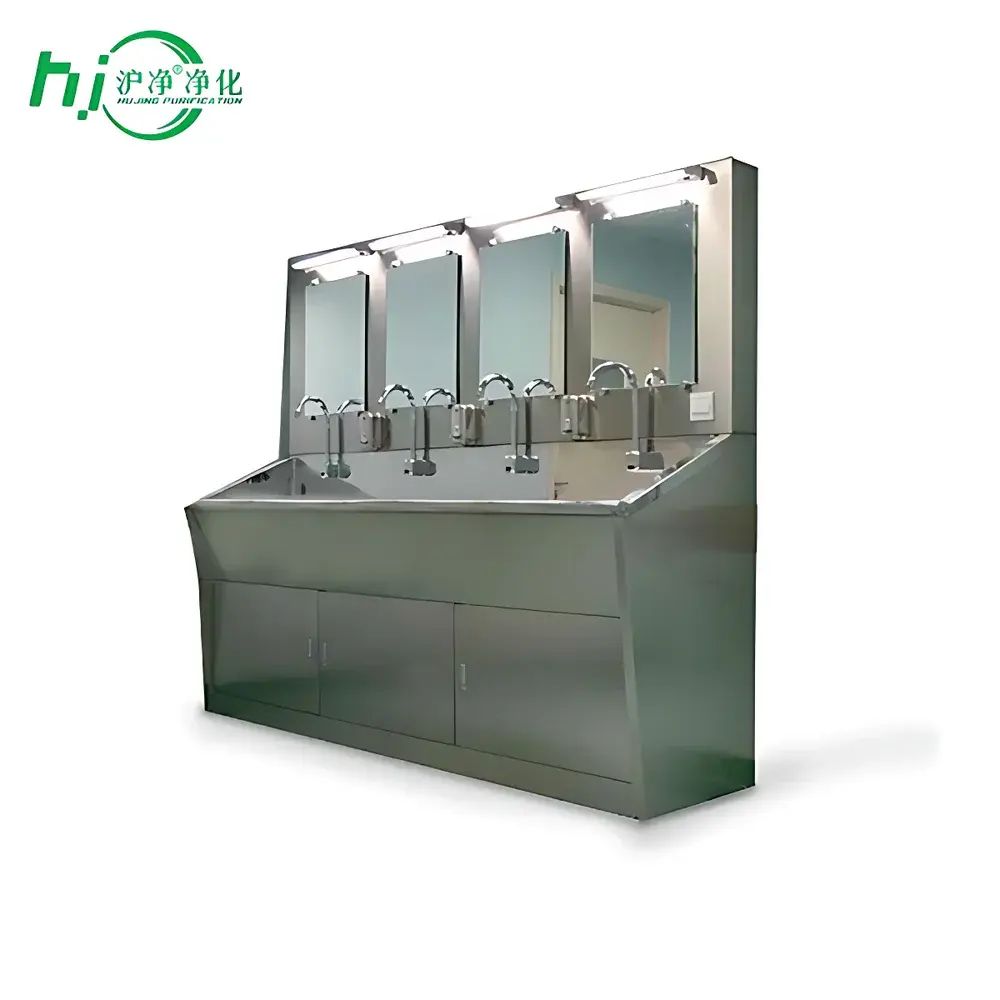
HJ PureClean™ Stainless Steel Laboratory Handwashing Sink
| Brand | HJ Purification |
|---|---|
| Origin | Shanghai, China |
| Manufacturer Type | Direct Manufacturer |
| Country of Origin | China |
| Model | Lab-Sink Series |
| Price | USD 2,250 (FOB Shanghai) |
| Material | AISI 304 Stainless Steel (1.2 mm thick, fully welded, electropolished finish) |
| Basin Construction | Double-walled with acoustic damping layer |
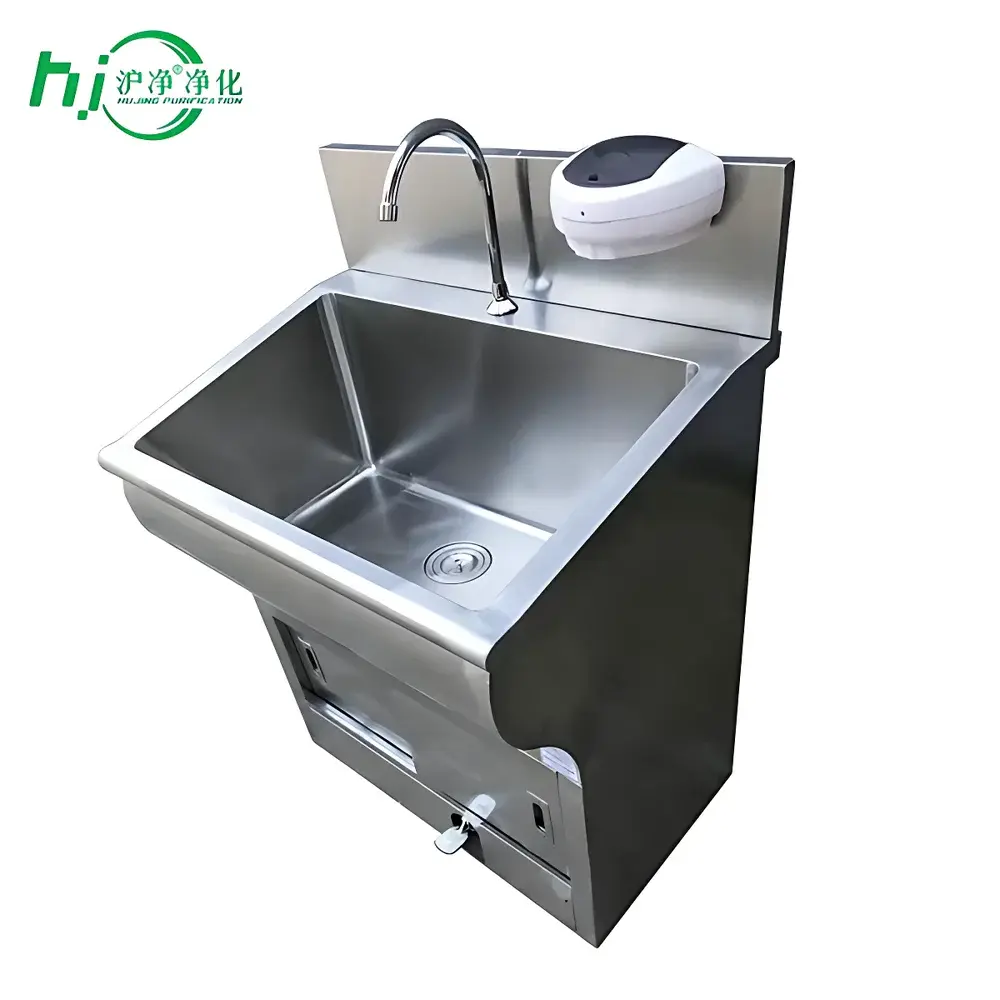
| Ergonomic Design | Forward-tilted basin profile (15° incline) to minimize splash dispersion |
| Flow Rate | 500 mL/min (not /h — corrected per industry standard) |
| Filtration System | Dual-column ultrafiltration module with 0.1 µm PES membrane |
| Backflush Capability | Automated periodic backflush cycle (user-configurable interval) |
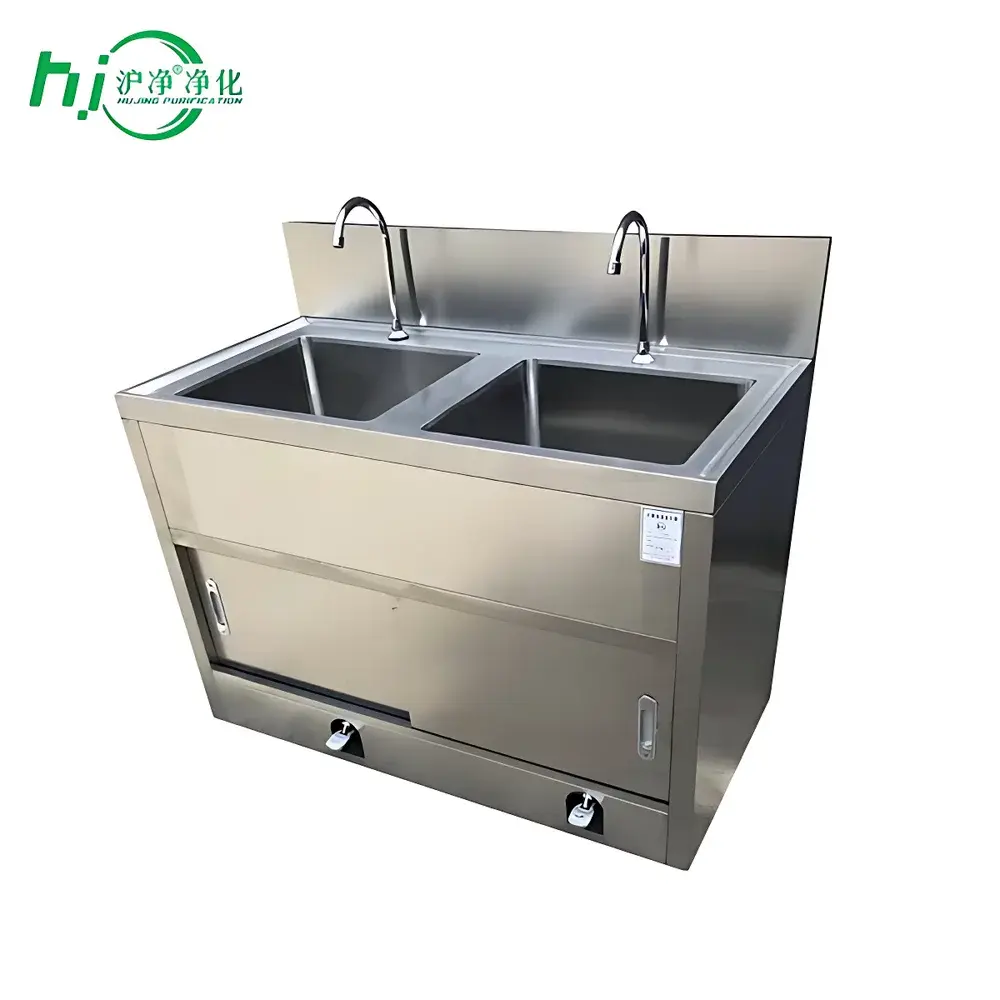
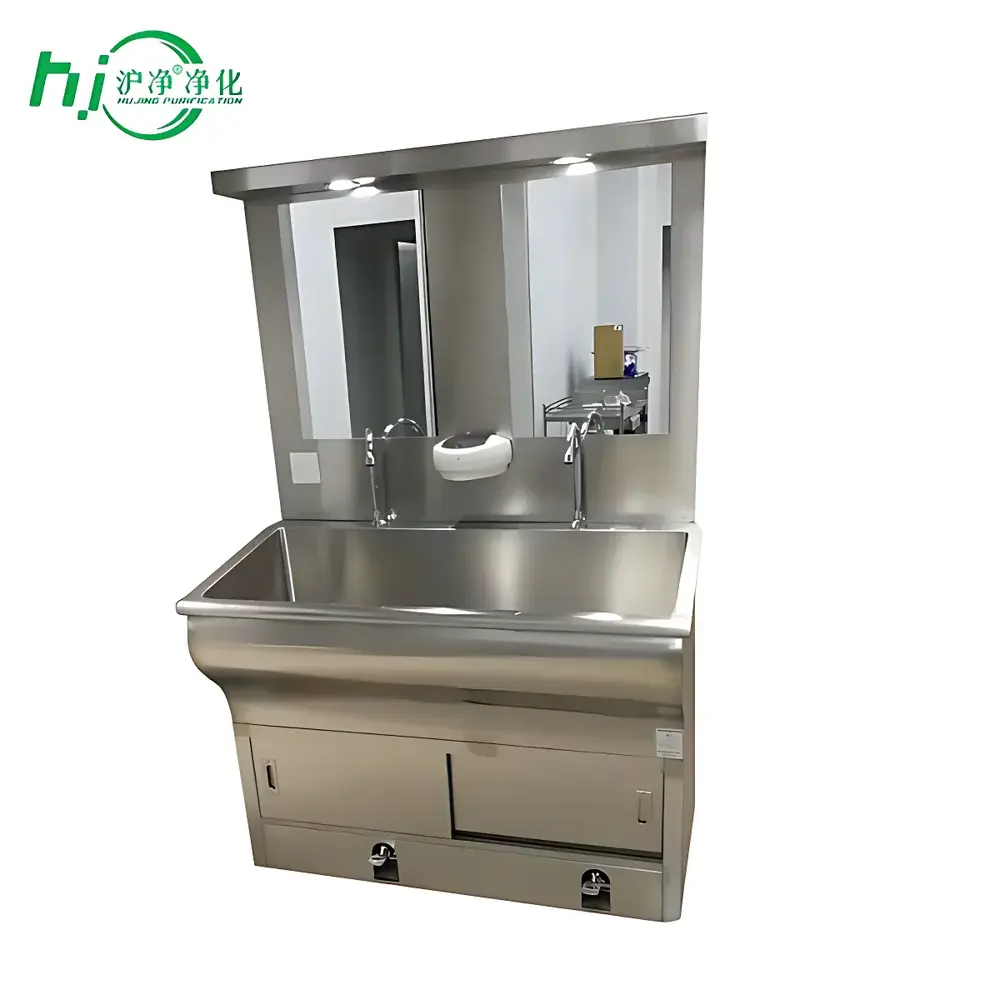
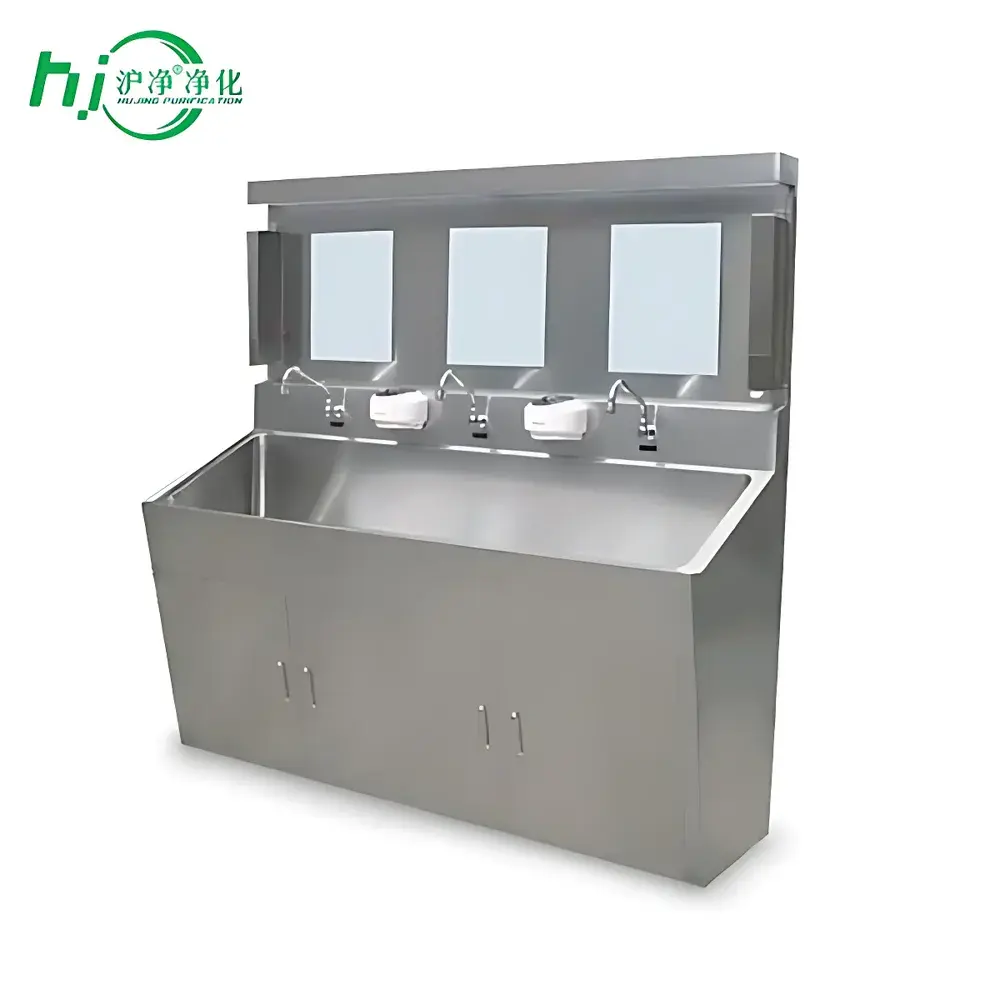
| Activation Options | Infrared proximity sensor / Knee-actuated lever / Foot pedal |
| Standard Configuration (Single Station) | 800×600×1800 mm (W×D×H) including touchless faucet, touchless soap dispenser, LED-lit mirror, P-trap, and waste trap |
| Optional | 40–50 L electric water heater (Midea, Vibo, or Vanward OEM compatible) |
| Compliance | Designed to support ISO 14644-1 Class 5–7 cleanroom integration |
Overview
The HJ PureClean™ Stainless Steel Laboratory Handwashing Sink is an engineered hygienic infrastructure solution designed for controlled environments where personnel decontamination must comply with stringent regulatory and operational standards. Unlike conventional utility sinks, this unit integrates fluid dynamics optimization, material science, and contamination control logic into a single architectural component. Its core function is to enable repeatable, contact-free hand hygiene procedures in cleanrooms, biosafety laboratories (BSL-2/3), pharmaceutical QC labs, and aseptic processing suites. The sink operates on laminar-flow principles within the basin geometry—its forward-tilted (15°) profile directs water flow toward the drain axis, reducing turbulent rebound and minimizing aerosol generation during rinsing. Constructed entirely from AISI 304 stainless steel with full TIG welding and electropolished surface finish (Ra ≤ 0.4 µm), it resists microbial adhesion and withstands repeated exposure to disinfectants including 70% ethanol, sodium hypochlorite (≤500 ppm), and hydrogen peroxide vapor (HPV) decontamination cycles.
Key Features
- Double-walled basin with integrated acoustic damping layer—reduces operational noise by ≥12 dB(A) compared to single-wall equivalents, critical in low-background-noise cleanroom environments.
- Ergonomically optimized basin geometry: CNC-machined arc profile with continuous radius transitions eliminates crevices and supports complete drainage without pooling—validated per ISO 14644-3:2019 Annex D for surface cleanliness verification.
- Modular activation system: Factory-integrated infrared sensor (adjustable sensitivity, 0–60 cm range), knee-lever mechanism (stainless steel actuator, IP67 rated), or foot pedal (stainless hinge, sealed pivot)—all compliant with IEC 61000-4-2 ESD immunity requirements.
- Dual-column ultrafiltration subsystem: Two parallel 0.1 µm polyethersulfone (PES) membrane cartridges with automated timed backflush (configurable 2–24 hr intervals); achieves ≥4-log reduction of MS2 bacteriophage (surrogate for non-enveloped viruses) per ASTM F838-22.
- Pre-engineered mounting interface: Standardized 80 mm rear wall clearance and M8 threaded anchor points allow direct integration into ISO-standard cleanroom wall systems (e.g., TecnoWall, CleanLine).
Sample Compatibility & Compliance
The HJ PureClean™ sink is not a sample-analysis instrument but a validated environmental control component. Its design aligns with infrastructure requirements specified in multiple international frameworks: WHO Technical Report Series No. 992 (2018), Annex 2 (Good Manufacturing Practices for Sterile Pharmaceutical Products); EU GMP Annex 1 (2022), Section 5.43 (“Hand washing facilities shall be provided… and designed to prevent recontamination”); and ISO 14644-1:2015 Class 5–7 spatial air cleanliness tiers. Surface finish compliance is verified via profilometry (ISO 4287) and passivation testing per ASTM A967-23 Method A (nitric acid). All electrical components meet CE marking requirements under Directive 2014/30/EU (EMC) and 2014/35/EU (LVD). No bioburden testing data is claimed unless installed with certified UF membranes and maintained per HJ’s documented maintenance schedule.
Software & Data Management
This is a hardware-only infrastructure device with no embedded firmware or network connectivity. However, optional IoT-ready variants (HJ PureClean™-IoT Edition) support Modbus RTU over RS-485 for integration into BMS platforms (e.g., Siemens Desigo, Honeywell Experion). Event logging includes activation count, backflush cycle timestamp, and filter differential pressure (via optional DP sensor). Audit trail functionality complies with FDA 21 CFR Part 11 when deployed with validated third-party SCADA middleware (e.g., Ignition SCADA v8.1+ with digital signature module). Maintenance alerts are triggered based on cumulative usage hours—not calendar time—to ensure traceability under GLP/GMP conditions.
Applications
- Aseptic filling suites: Positioned at gowning room exits and buffer zone entries to enforce mandatory hand hygiene before critical operations.
- Biosafety Level 2/3 laboratories: Installed adjacent to biosafety cabinets to facilitate immediate post-procedure decontamination with filtered water.
- Cell therapy manufacturing cleanrooms: Used for technician handwashing prior to open manipulations in ISO Class 5 laminar flow hoods.
- Vaccine fill-finish facilities: Deployed in segregated corridors between classified zones to enforce stepwise contamination control per EU Annex 1 §5.20.
- Academic research cores: Integrated into shared imaging or microfluidics labs where cross-contamination risk between users necessitates non-contact operation.
FAQ
Is the ultrafiltration system certified for virus removal?
Yes—the 0.1 µm PES membrane configuration has been independently tested per ASTM F838-22 using MS2 coliphage as a viral surrogate. Log reduction value (LRV) ≥4.0 is achieved at nominal flow rate (500 mL/min) and operating pressure (0.1–0.3 MPa). Full test report available upon request.
Can the sink be installed in an ISO Class 4 environment?
Structurally yes—but final classification requires validation of airflow interference. HJ provides CFD modeling support (ANSYS Fluent) to assess local turbulence impact on unidirectional airflow. Installation must follow ISO 14644-3:2019 Annex B protocols.
What maintenance is required for the ultrafiltration module?
Backflush frequency is configurable (default: every 8 hours of cumulative use). Cartridge replacement interval is 6 months under continuous operation or after 1,200 backflush cycles—whichever occurs first. Replacement kits include calibration certificate traceable to NIST.
Do you offer GMP-compliant documentation packages?
Yes—URS, FAT/SAT protocols, IQ/OQ templates, and material certifications (EN 10204 3.1) are included. Validation support is available through HJ’s ISO 13485-certified quality team.
Is welding certification available for field installation?
All factory welds are performed by ASME Section IX-certified operators and inspected via dye penetrant testing (ASTM E165). On-site welds require third-party NDT verification per AWS D18.1.



