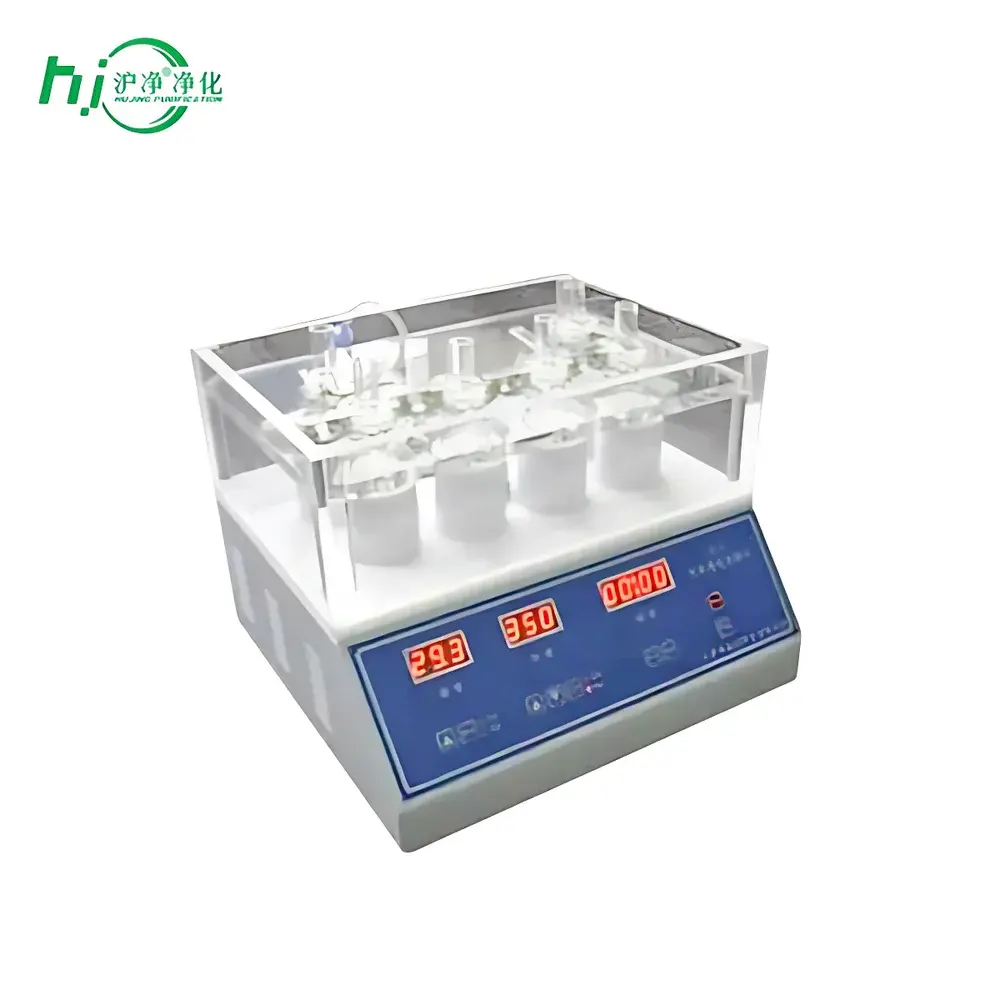
HJ TP-6 Intelligent Transdermal Diffusion Tester
| Brand | HJ (Hujing Purification) |
|---|---|
| Origin | Shanghai, China |
| Manufacturer Type | Direct Manufacturer |
| Region Classification | Domestic (China) |
| Model | TP-6 |
| Price | Upon Request |
| Diffusion Cell Count | 6 |
| Receiver Compartment Volume | 15 mL (vertical configuration, standard) |
| Temperature Control Range | 30–40 °C |
| Temperature Accuracy | ±0.1 °C |
| Stirring Speed Range | 100–800 rpm |
| Speed Accuracy | ±5% |
| Power Supply | 220 V ±10%, 50 Hz, 360 W |
Overview
The HJ TP-6 Intelligent Transdermal Diffusion Tester is a precision-engineered in vitro system designed for quantitative assessment of drug permeation across biological membranes—primarily excised animal or synthetic skin models—under physiologically relevant conditions. It operates on the principle of Franz diffusion cell methodology, a globally standardized approach endorsed by regulatory authorities including the U.S. FDA, EMA, and ICH guidelines for transdermal drug delivery system (TDDS) development and quality control. The instrument maintains strict thermal and hydrodynamic control over both donor and receptor compartments, enabling reproducible measurement of cumulative drug flux, permeability coefficient (Kp), and steady-state diffusion rates. Its architecture conforms to the fundamental requirements of USP Chapter 724 “Drug Release” and aligns with ISO 10993-12 for biocompatibility evaluation of medical devices involving skin contact.
Key Features
- Six independent vertical Franz-type diffusion cells with standardized 15 mL receptor volume (configurable options: 5 mL horizontal / 10 mL vertical available upon request), ensuring parallel experimental throughput without cross-contamination.
- Microprocessor-controlled water-jacketed temperature regulation system with high-stability platinum resistance thermometer (PT100) sensors; achieves and sustains setpoint temperatures between 30–40 °C at ±0.1 °C accuracy—critical for mimicking human skin surface conditions and maintaining membrane integrity.
- Digital PID-based stirring control with adjustable speed range from 100 to 800 rpm, optimized for uniform receptor phase mixing while minimizing shear-induced membrane disruption; speed stability maintained within ±5% tolerance across operational range.
- Full digital circuitry architecture with isolated power supply design, electromagnetic interference (EMI) shielding, and fail-safe thermal cutoff protection—ensuring long-term operational reliability in GLP-compliant laboratory environments.
- Intuitive front-panel interface with real-time display of temperature, stirring speed, and elapsed test time; supports unattended overnight operation with programmable start/stop functions.
Sample Compatibility & Compliance
The TP-6 accommodates a broad spectrum of membrane types, including porcine ear skin, human cadaver skin (when ethically sourced and validated), silicone membranes (e.g., Strat-M®), and polymeric diffusion barriers used in formulation screening. Each cell features standardized 9 mm or 12 mm effective diffusion area apertures per USP 724 specifications. All wetted components are constructed from medical-grade stainless steel (316L) and borosilicate glass, compliant with ISO 8536-1 for pharmaceutical glass containers and resistant to organic solvents commonly used in receptor media (e.g., PBS with 0.5–2% v/v ethanol or propylene glycol). The system meets national pharmaceutical industry standards YY/T 0895–2013 (“In Vitro Transdermal Permeation Test Apparatus”) and supports audit-ready documentation for GMP and GLP validation protocols.
Software & Data Management
While the base TP-6 operates via embedded microcontroller logic, optional PC connectivity (RS-232 or USB-to-serial adapter) enables integration with third-party data acquisition platforms such as LabVIEW or custom Python-based scripts for time-series logging. Raw output includes timestamped temperature, RPM, and runtime metadata—structured for direct import into statistical analysis tools (e.g., GraphPad Prism, JMP). For regulated environments, users may implement supplementary electronic lab notebook (ELN) systems that enforce 21 CFR Part 11-compliant audit trails, user access controls, and electronic signatures when paired with validated software layers.
Applications
- Formulation optimization of transdermal patches, gels, creams, and microneedle arrays.
- Comparative permeation studies across different vehicle systems, penetration enhancers, or nanocarrier platforms (e.g., liposomes, transfersomes).
- Stability-indicating release profiling under accelerated storage conditions (e.g., 40 °C/75% RH).
- Quality control testing of commercial TDDS batches against pre-established release specifications.
- Academic and preclinical research on skin barrier function, dermatotoxicology, and cutaneous pharmacokinetics.
FAQ
Is the TP-6 compatible with human skin samples?
Yes—provided ethical approval and proper tissue procurement protocols are followed per local IRB and institutional biosafety guidelines. Users must validate membrane thickness, hydration state, and viability prior to use.
Can receptor volume be modified during an experiment?
No—receptor volume is fixed per cell configuration. Sample withdrawal must follow USP 724-specified protocols (e.g., partial replacement with fresh medium to maintain sink conditions) and documented in SOPs.
Does the system support automated sampling?
Not natively; however, it is mechanically compatible with external autosamplers equipped with syringe pumps and fraction collectors when mounted on a vibration-isolated bench.
What calibration certificates are supplied?
Factory calibration reports for temperature and rotational speed are included. Users are responsible for periodic in-house verification using NIST-traceable reference standards.
How is compliance with 21 CFR Part 11 achieved?
The hardware itself does not provide Part 11 functionality; compliance requires integration with validated software systems that deliver audit trails, role-based access, and electronic signature capabilities—fully supported through documented interface protocols.