
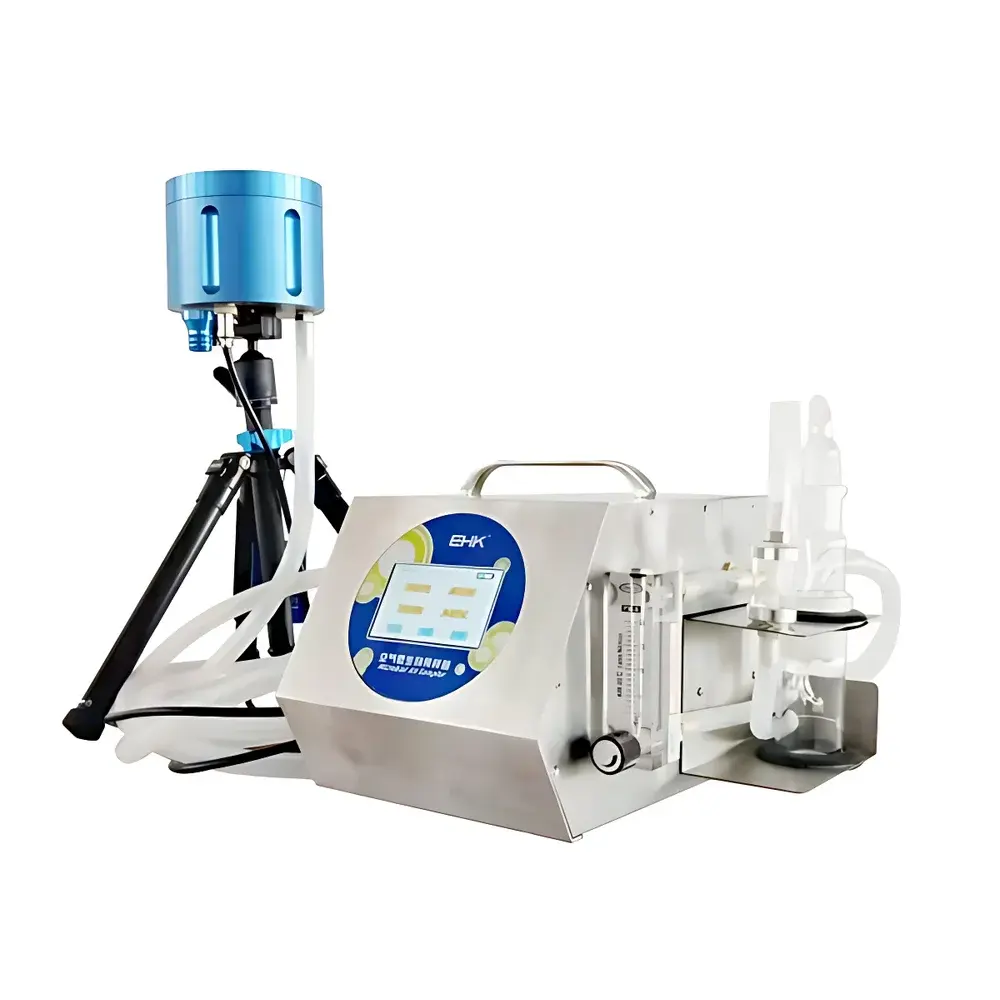
HK-QR-1 Air Microbial Aerosol Concentrator Sampler by Guangdong Huan Kai (BHK)
| Brand | Guangdong Huan Kai (BHK) |
|---|---|
| Model | HK-QR-1 |
| Sampling Principle | Virtual Impactor-Based Liquid Impingement |
| Total Flow Range | 0–9999 L |
| Total Flow Rate | 50–130 L/min, ±5% |
| Concentration Flow Rate | 5–15 L/min, ±5% |
| Flow Repeatability Error | ±2% |
| Sampling Time Range | 0–9999 s |
| Delay Time Range | 0–9999 s |
| Programmed Sampling Cycles | Up to 255 |
| Theoretical Concentration Ratio | 1:10 |
| Collection Liquid Volume | 20 mL |
| Inlet Load Capacity (with Separator) | ≥2 kPa |
| Concentration Circuit Load Capacity | ≥50 kPa |
| Operating Temperature | Ambient |
| Operating Humidity | Ambient |
| Data Storage Capacity | 4000 Records with Location ID, Group ID, Volume, Timestamp, etc. |
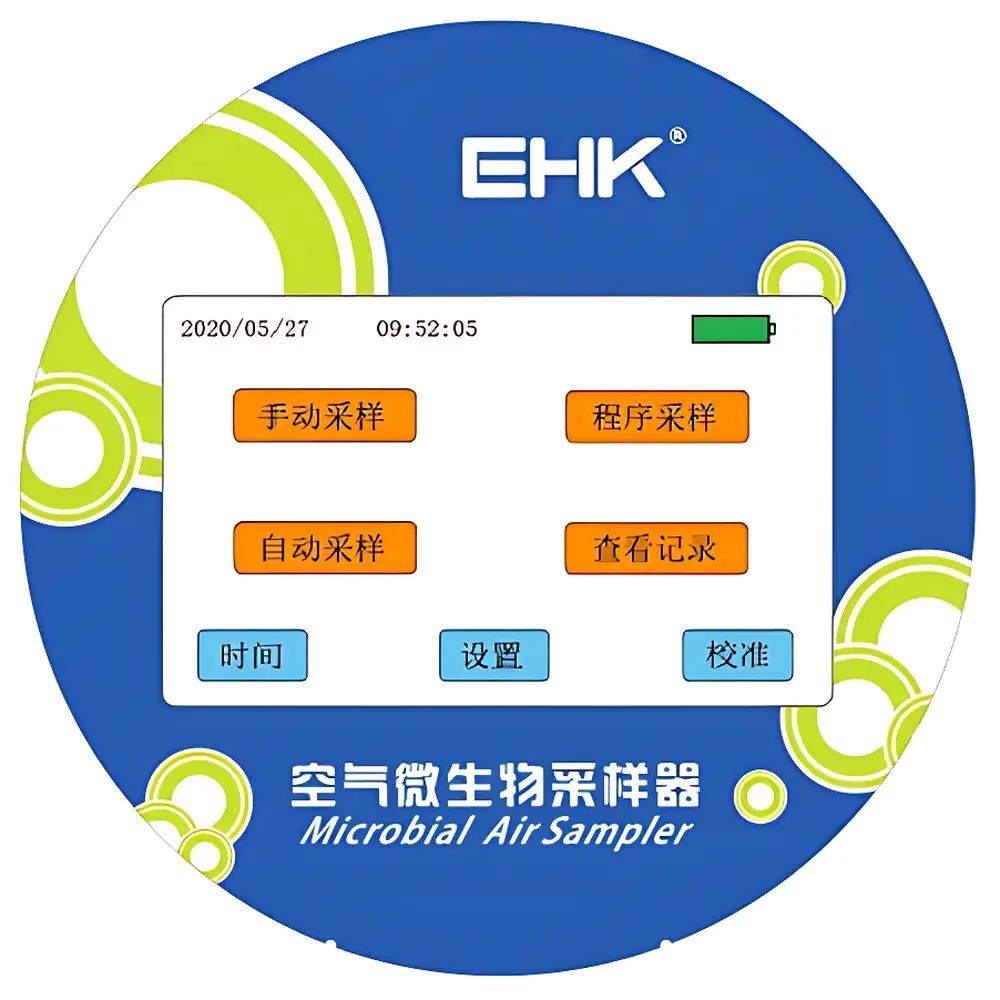
| Display | 3.5-inch HD Touchscreen (Bilingual UI) |
| Compliance | GB/T 18204.5–2013, WS 394–2012, GB/T 38517–2020, GB/T 18204.3–2013, JJF 1826–2020 |
Overview
The HK-QR-1 Air Microbial Aerosol Concentrator Sampler is an engineered solution for high-efficiency collection and concentration of airborne microorganisms in low-to-moderate concentration environments. It operates on a dual-stage principle combining virtual impactor pre-concentration with liquid impingement capture — a methodology grounded in aerodynamic particle separation physics and validated by ISO/IEC 17025-aligned calibration protocols. Unlike conventional single-stage samplers limited by volumetric throughput and biological viability loss over extended durations, the HK-QR-1 achieves real-time aerosol enrichment via a dedicated concentration circuit (5–15 L/min) upstream of a standard impingement chamber (20 mL collection volume), enabling rapid accumulation of viable bioaerosols without significant desiccation or shear-induced inactivation. Designed specifically for HVAC system surveillance — including cooling towers, air handling units, and ducted supply air — it supports regulatory monitoring of Legionella pneumophila, fungal spores, endotoxins, and other respirable bioaerosol hazards in public buildings, hospitals, and transportation infrastructure.
Key Features
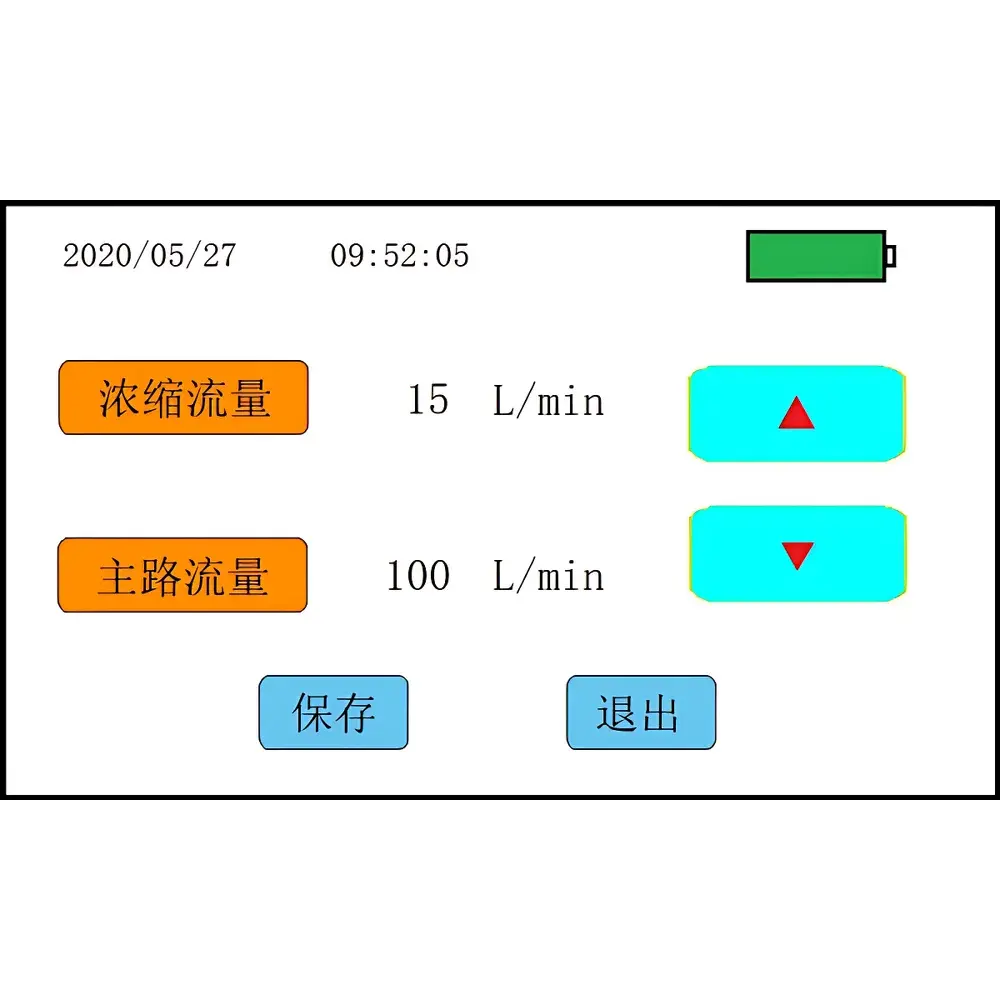
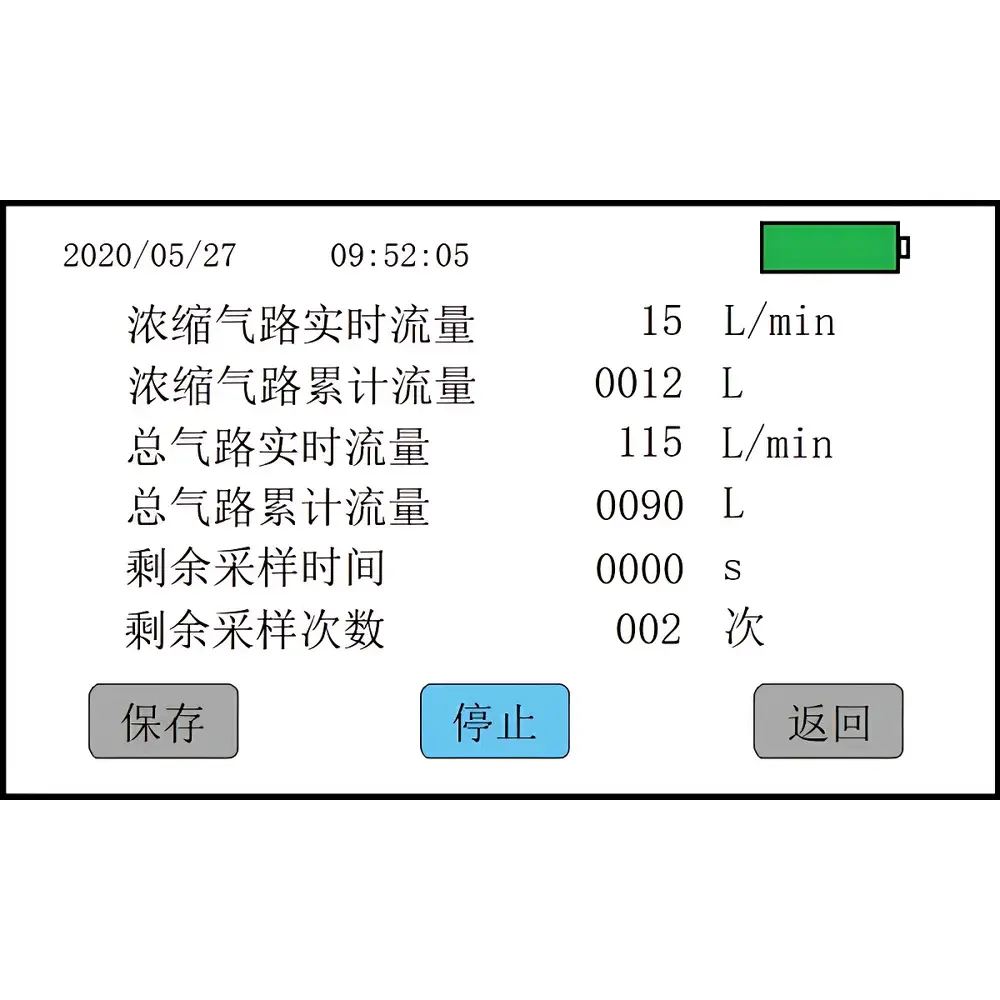
- Dual independent flow control: Simultaneous real-time monitoring and manual adjustment of total inlet flow (50–130 L/min) and concentrator flow (5–15 L/min), both displayed concurrently on the 3.5-inch HD touchscreen.
- Three operational modes: Programmable sampling (up to 255 sequential cycles with user-defined duration and interval), fixed-volume sampling, and manual start/stop — configurable via intuitive bilingual (English/Chinese) menu navigation.
- High-fidelity data logging: Automatic timestamped storage of 4000 complete sampling events, including location identifier, group code, cumulative volume, elapsed time, and flow stability metrics — compliant with GLP audit trail requirements.
- Robust impingement capture: Borosilicate glass impactor bottle optimized for ≥90% collection efficiency of particles ≥0.5 μm and ≥80% for ≥3 μm, maintaining microbial viability for up to 8 hours under continuous operation.
- Extended system load tolerance: Capable of sustaining ≥50 kPa backpressure across the concentrator circuit and ≥2 kPa at the main inlet — ensuring stable performance when interfaced with cyclonic separators or inline filters.
- USB-enabled traceability: Direct export of raw sampling logs via HKM Data Management Software for integration into LIMS, QA/QC reporting, and FDA 21 CFR Part 11–compatible electronic record systems.
Sample Compatibility & Compliance
The HK-QR-1 is validated for use with standard microbiological culture media (e.g., BCYE agar for Legionella, Sabouraud dextrose broth for fungi) and compatible with downstream molecular analysis (qPCR, metagenomic sequencing). Its physical design and operational parameters align with Chinese national standards governing indoor air quality and HVAC hygiene: GB/T 18204.5–2013 (Public Place Hygiene Testing Methods – Part 5: Central Air Conditioning Ventilation Systems), WS 394–2012 (Hygiene Specifications for Central Air Conditioning Ventilation Systems), GB/T 38517–2020 (General Principles for Sampling and Analysis of Particulate Bioaerosols), and GB/T 18204.3–2013 (Air Microbiological Testing Methods). Calibration procedures follow JJF 1826–2020 (Calibration Specification for Air Microbial Samplers), supporting metrological traceability to national reference standards.
Software & Data Management
The HKM Data Management Software provides secure local archiving, temporal filtering, and batch export in CSV and PDF formats. Each record includes metadata fields required for regulatory submissions: sampling site ID, operator ID, ambient temperature/humidity (if externally logged), flow deviation alerts, and pass/fail status against preset tolerance thresholds (±2% flow repeatability). Audit logs track all configuration changes, user logins, and data exports — fulfilling documentation requirements under GLP and GMP frameworks. Optional API integration allows synchronization with enterprise environmental health & safety (EHS) platforms.
Applications
- Routine surveillance of HVAC systems in commercial buildings, hotels, and healthcare facilities per WS 394–2012 guidelines.
- Outbreak investigation support for Legionella-associated pneumonia clusters in institutional settings.
- Baseline bioaerosol profiling during building commissioning or post-renovation air quality assessments.
- Research-grade sampling for aerobiology studies requiring concentrated biomass for DNA extraction or culturing.
- Validation of air disinfection technologies (e.g., UV-C, bipolar ionization) through pre- and post-treatment microbial load comparison.
FAQ
What is the theoretical concentration ratio of the HK-QR-1, and how is it achieved?
The device delivers a nominal 10:1 concentration ratio by diverting a representative substream (5–15 L/min) from the total airflow (50–130 L/min) into a high-efficiency virtual impactor, followed by inertial deposition into 20 mL of collection fluid.
Does the HK-QR-1 meet international standards such as ISO 14698 or ASTM E2997?
While designed to meet China’s national standards (GB/T, WS), its physical sampling methodology conforms to the aerodynamic principles outlined in ISO 14698-1:2003 (Biocontamination control) and ASTM E2997-15 (Standard Guide for Bioaerosol Sampling), though formal third-party certification to those standards requires additional validation per laboratory SOP.
Can the unit operate unattended for overnight sampling?
Yes — programmable scheduling supports autonomous multi-cycle operation up to 9999 seconds per cycle, with battery-backed clock and non-volatile memory retention during power interruption.
Is the impinger bottle autoclavable?
The borosilicate glass impactor bottle is fully autoclavable at 121°C for 20 minutes; O-rings and gaskets are supplied as replaceable consumables rated for repeated sterilization.
What maintenance intervals are recommended for field deployment?
Daily visual inspection of tubing integrity and impactor cleanliness; quarterly calibration verification using a primary-standard dry calibrator per JJF 1826–2020; annual full system performance audit including pressure drop characterization and capture efficiency revalidation.







