
HKM MFS Series Stainless Steel Vacuum Filtration System for Microbial Limit Testing
| Brand | HKM |
|---|---|
| Origin | Guangdong, China |
| Model | MFS |
| Instrument Type | Automated Membrane Filtration System for Microbial Enumeration |
| Detection Throughput | Up to 6 Samples Simultaneously |
| Filter Membrane Compatibility | 47 mm or 35 mm Diameter, Pore Sizes 0.22 µm and 0.45 µm |
| Construction Material | 316L Sintered Stainless Steel Support Pad, 316 Stainless Steel Body |
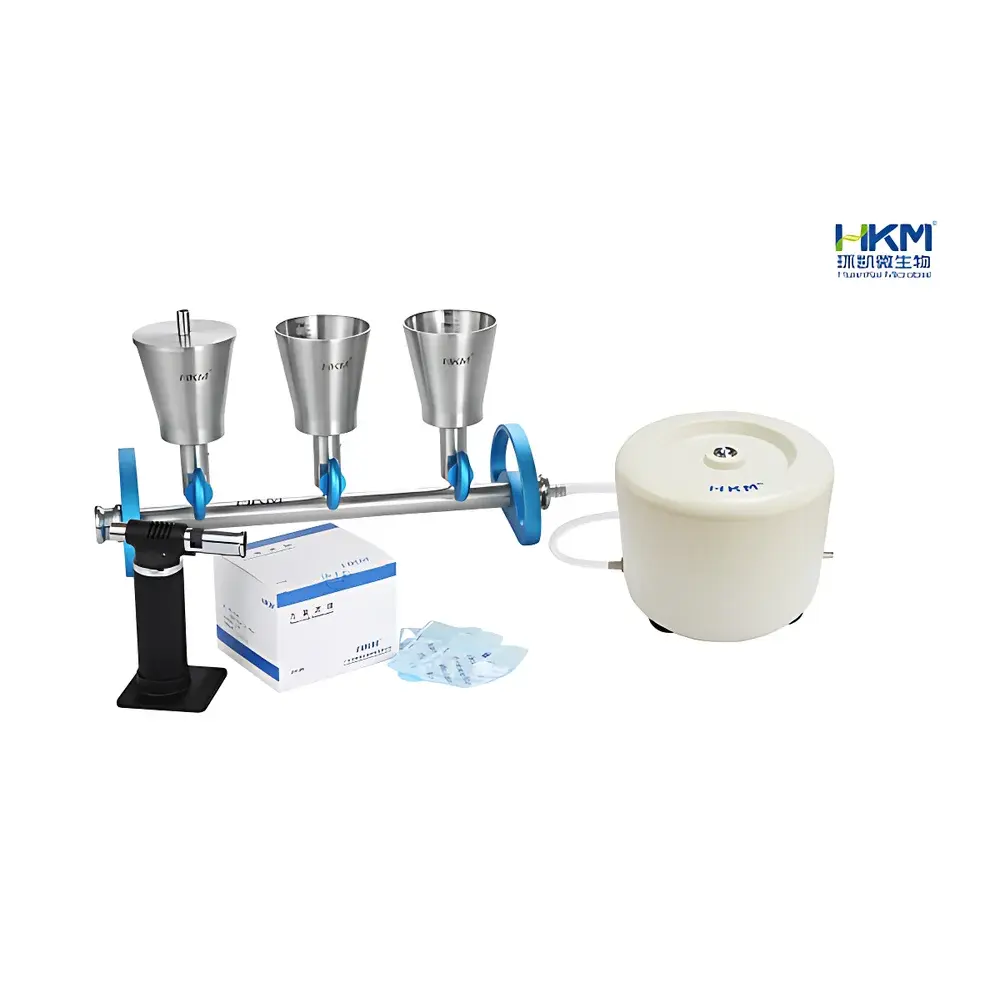
| Sterilization Options | Autoclaving (121°C, 15 min), Dry Heat (180°C, 120 min), or Flame Sterilization (PT-220 Butane Burner, Optional) |
| Dimensions (MFS-6B) | 810 × 160 × 205 mm |
| Net Weight (MFS-6B) | 11.5 kg |
| Vacuum Pump Options | SZKB-6A/B/C (Dual-Phase, Max Flow: 12 L/min gas / 6 L/min liquid, Ultimate Vacuum: 780 mbar) |
| Compliance | Designed in accordance with GB/T 8538–2008 (Methods for Examination of Drinking Natural Mineral Water), ISO 7218, USP <61> & <62>, and EU Pharmacopoeia 2.6.12 |
Overview
The HKM MFS Series Stainless Steel Vacuum Filtration System is a laboratory-grade membrane filtration platform engineered for standardized microbial limit testing in regulated life science and quality control environments. It operates on the principle of vacuum-assisted membrane filtration—where liquid samples are drawn under controlled negative pressure through sterile, low-protein-binding microporous membranes (typically 0.22 µm or 0.45 µm pore size), retaining viable microorganisms on the filter surface for subsequent enumeration via colony-forming unit (CFU) analysis on solid media. This method is fully aligned with pharmacopeial standards including USP (Microbiological Examination of Nonsterile Products), USP (Microbiological Examination of Sterile Products), EP 2.6.12 (Membrane Filtration Method), and ISO 7218:2018 (Microbiology of Food and Animal Feeding Stuffs). The system is widely deployed in pharmaceutical QC labs, drinking water and natural mineral water testing facilities, beverage manufacturers, and contract research organizations conducting GLP-compliant environmental monitoring and product release testing.
Key Features
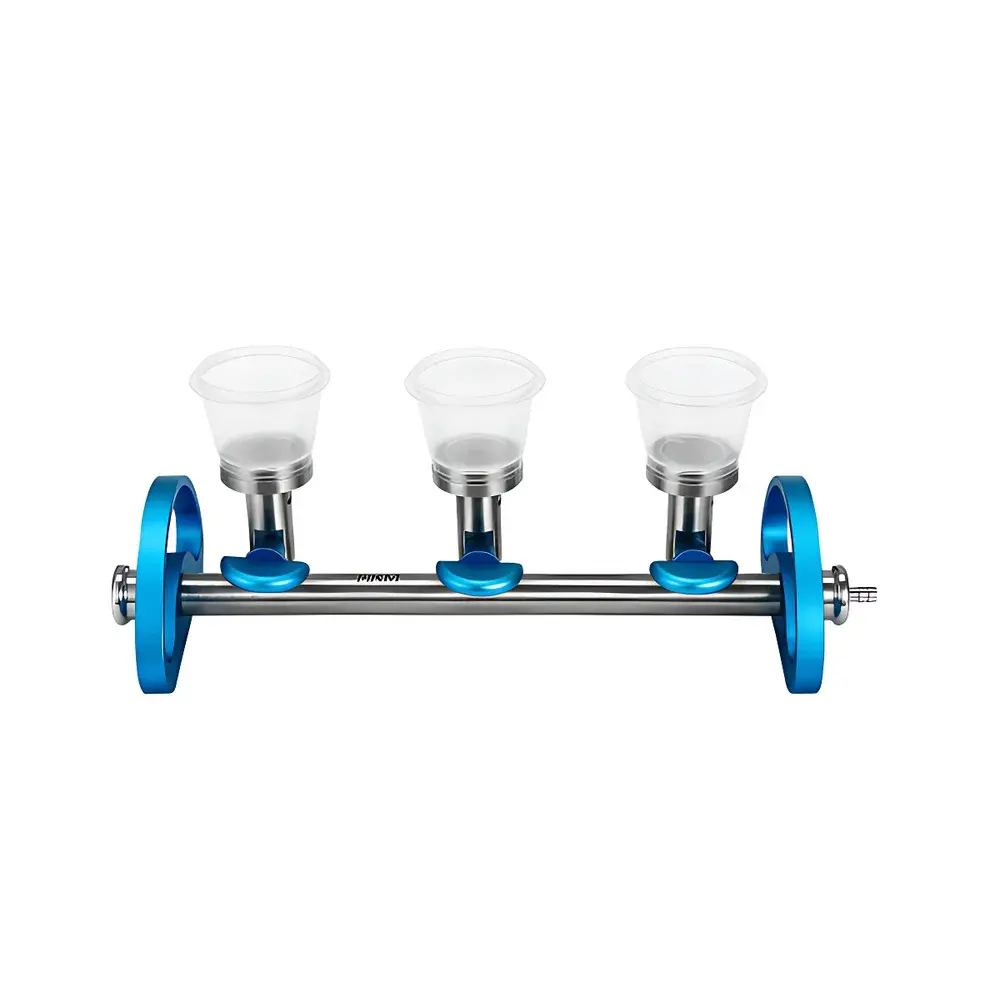
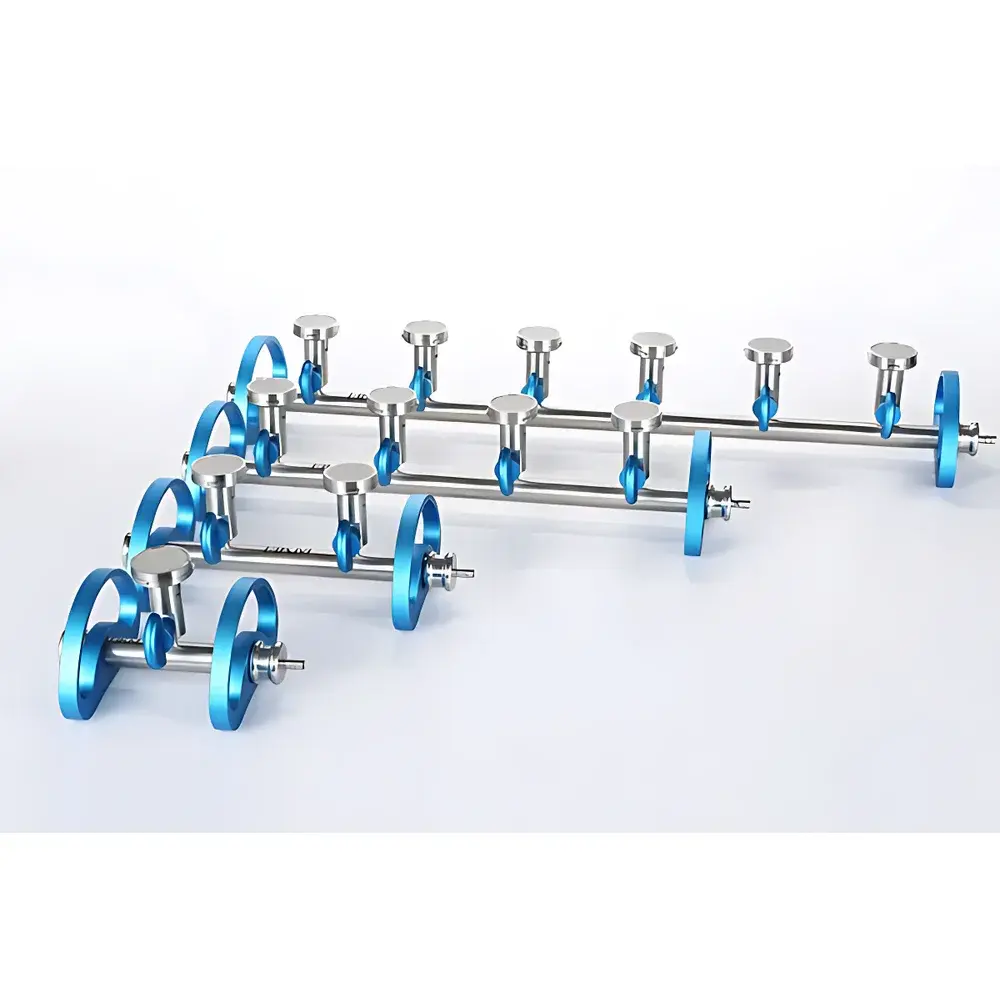
- Modular multi-unit configuration: Available in 1-, 2-, 3-, 6-, and 10-position formats (e.g., MFS-6B supports simultaneous filtration of six 500 mL stainless steel cups), enabling scalable throughput without cross-contamination.
- One-handed “three-claw” stainless steel membrane clamp: Eliminates need for auxiliary clamps; ensures rapid, reproducible membrane placement and retrieval while maintaining consistent sealing pressure across all units.
- Quick-disconnect architecture: All major components—including filter heads, cups, valves, and tubing connectors—are designed for tool-free disassembly, facilitating thorough cleaning, sterilization validation, and maintenance traceability.
- 316L sintered stainless steel support pad: Provides uniform mechanical support for fragile membranes during high-flow filtration, preventing rupture, channeling, or uneven microbial deposition—critical for accurate CFU quantification and regulatory audit readiness.
- Dual-material cup options: Stainless steel cups (250/500 mL) for autoclave and flame sterilization; polycarbonate cups (100/250 mL) for single-use or non-heat-stable applications.
- Integrated air inlet with optional 0.2 µm hydrophobic vent filter: Prevents ambient airborne contamination during vacuum draw, supporting ISO Class 5–8 cleanroom integration and aseptic workflow integrity.
- Calibrated volume markings on cup interior walls: Enable precise sample dosing per pharmacopeial requirements (e.g., USP specifies defined volumes for rinse and test portions).
Sample Compatibility & Compliance
The MFS system accommodates aqueous matrices including purified water, WFI, saline solutions, buffered diluents, soft drinks, fruit juices, dairy-based suspensions, and low-viscosity pharmaceutical formulations. Its robust construction resists corrosion from ethanol, isopropanol, and mild sanitizers used in routine decontamination. The system conforms to key international standards governing microbial enumeration methodology: GB/T 8538–2008 (Chinese National Standard for Natural Mineral Water), ISO 7218:2018 (General requirements and guidance for microbiological examinations), and harmonized pharmacopeial chapters (USP /, EP 2.6.12, JP 4.07). When paired with validated vacuum pumps (e.g., SZKB-6C) and certified filters, it supports full documentation for FDA 21 CFR Part 11–compliant electronic records when integrated into LIMS or ELN platforms.
Software & Data Management
While the MFS hardware operates as a standalone mechanical platform, its design supports full traceability within regulated digital workflows. Each unit is marked with laser-engraved serial numbers for asset tracking. Vacuum pump models (SZKB-6A/B/C) feature analog vacuum gauges (optional quick-connect digital variants available); when interfaced with external data loggers or SCADA systems, real-time pressure profiles and runtime duration can be captured for batch records. Laboratories implementing GMP/GLP protocols routinely document filtration parameters—including applied vacuum level, filtration time, membrane lot number, operator ID, and environmental conditions—in structured Excel templates or validated LIMS modules. The system’s modular repeatability enables straightforward IQ/OQ/PQ protocol development per ASTM E2500 and Annex 15 guidelines.
Applications
- Pharmaceutical: Microbial limit testing of excipients, active pharmaceutical ingredients (APIs), and finished dosage forms per USP .
- Water Quality: Enumeration of total aerobic microbes, coliforms, and Pseudomonas spp. in natural mineral water per GB/T 8538–2008 and ISO 9308-1.
- Food & Beverage: Quantitative recovery of spoilage organisms (e.g., yeasts, molds, lactic acid bacteria) from low-turbidity liquids.
- Cosmetics: Preservative efficacy testing (PET) sample preparation and challenge organism recovery.
- Environmental Monitoring: Air and surface rinse sampling in cleanrooms and isolators using membrane filtration capture.
FAQ
What regulatory standards does the MFS system comply with?
It is designed to meet the physical and procedural requirements of GB/T 8538–2008, ISO 7218:2018, USP & , EP 2.6.12, and JP 4.07 for membrane filtration-based microbial enumeration.
Can the system be sterilized in an autoclave?
Yes—stainless steel components (cups, heads, support pads, valves) withstand standard steam sterilization at 121°C for 15 minutes. Plastic cups are not autoclavable and intended for single-use or chemical disinfection.
Is flame sterilization supported?
Yes—the optional PT-220 butane-powered flame sterilizer enables rapid on-site cup and head decontamination between runs, reducing turnaround time in high-throughput labs.
How is vacuum consistency maintained across multiple units?
Each cup features an independent on/off valve; vacuum distribution is balanced via calibrated manifold design, ensuring uniform flow rates and minimizing inter-unit variability during parallel operation.
Are replacement parts and certified filters available?
HKM supplies traceable, gamma-irradiated 47 mm and 35 mm membranes (0.22 µm and 0.45 µm) in ISO-certified packaging, along with validated spare seals, O-rings, and 316L replacement support pads—all with documented CoA and shelf-life data.




