
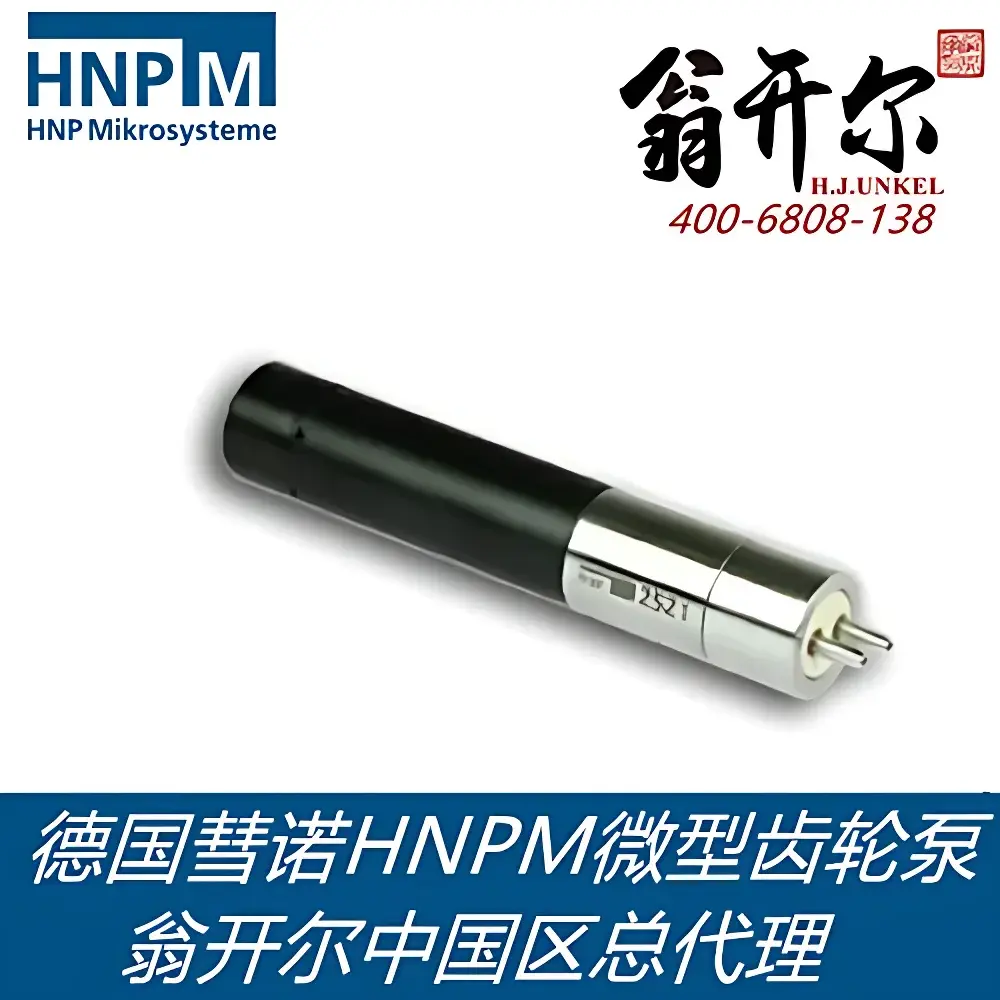
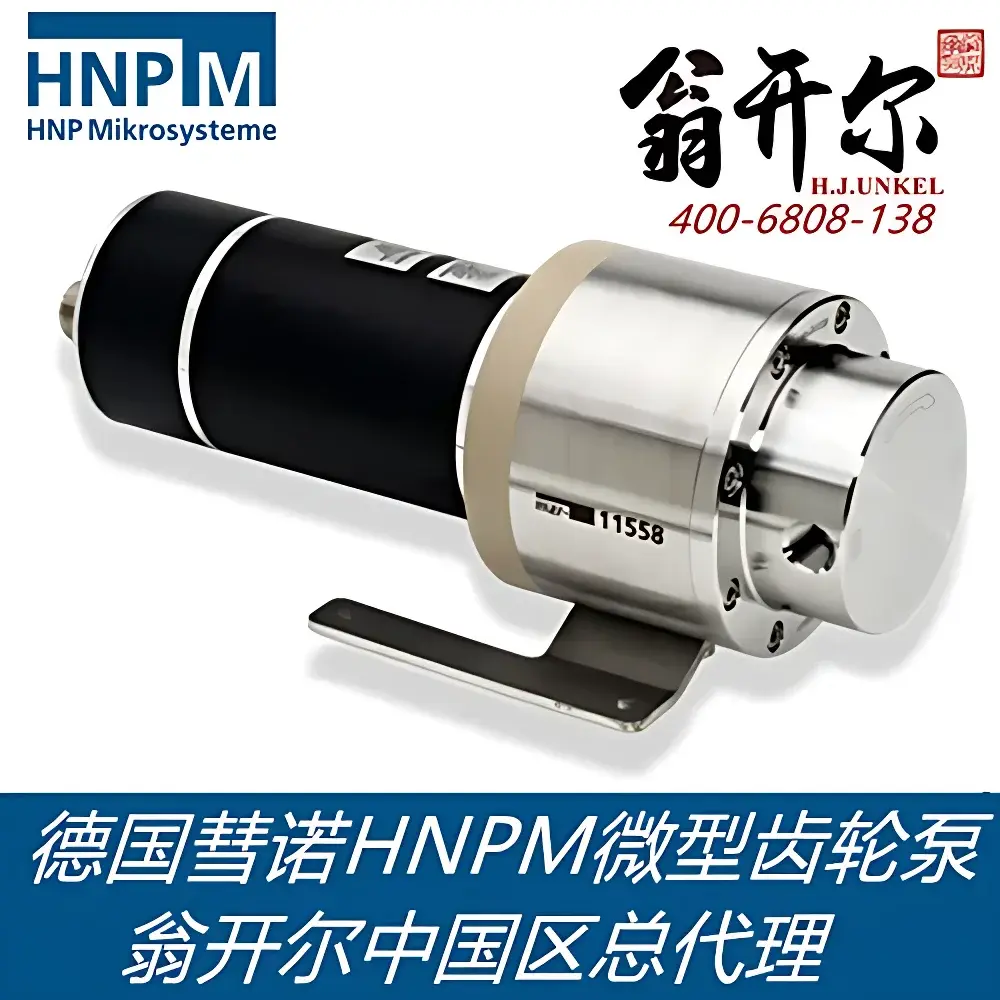
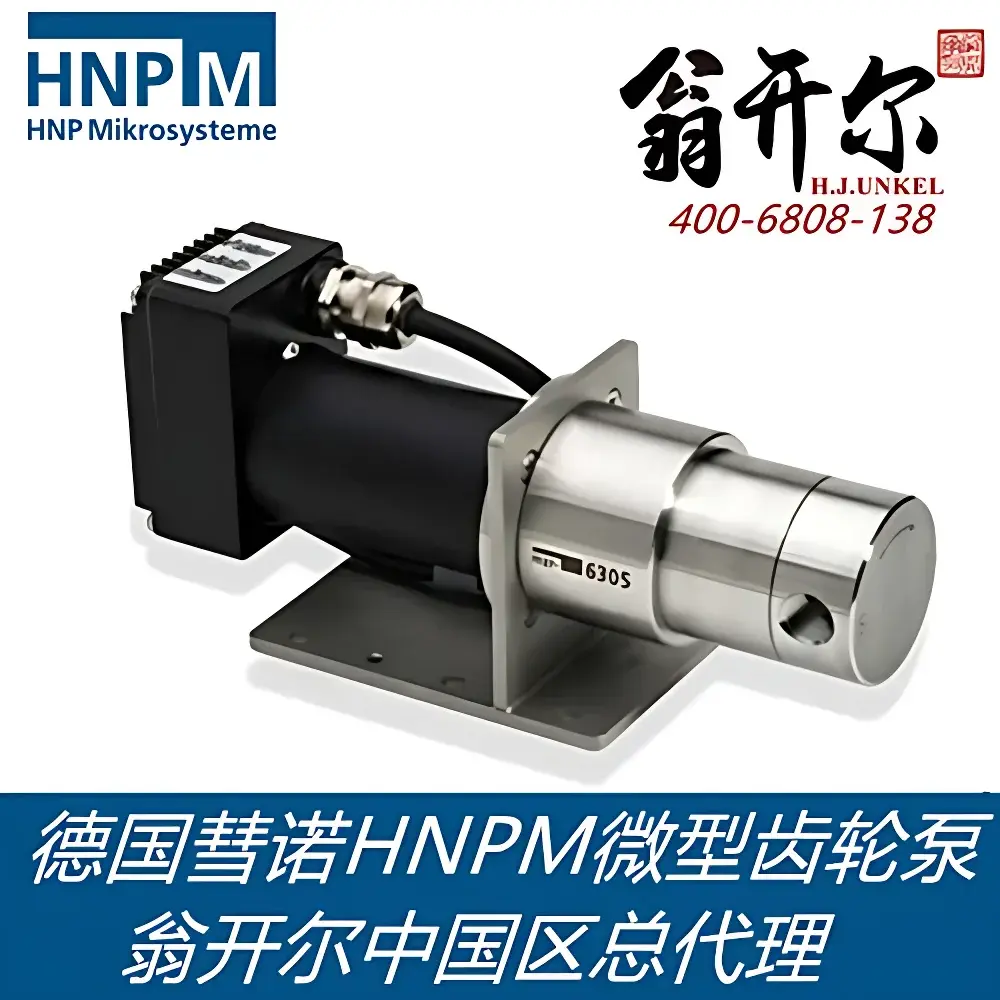
HNPM mzr-pump Micro Annular Gear Metering Pump
| Brand | HNPM |
|---|---|
| Origin | Germany |
| Model | mzr-pump |
| Drive | Electric |
| Speed Range | 0–300 rpm |
| Flow Rate | 1 µL/h – 1.1 L/h |
| Pressure Capability | Up to 150 bar |
| Viscosity Range | 0.3 – 1,000,000 mPa·s |
| Pulse Level | <1% (RMS) |
| Dead Volume | <1 µL |
| Materials | Chemically resistant stainless steel, ceramic, PTFE, sapphire |
| Explosion-Proof Options | Available (ATEX/IECEx compliant) |
Overview
The HNPM mzr-pump is a precision-engineered micro annular gear metering pump developed by HNP Mikrosysteme GmbH, a German manufacturer specializing in microfluidic dosing systems since 1998. Based on the orbital micro annular gear principle—a positive displacement mechanism featuring an internal rotor with one fewer tooth than the external rotor (e.g., 6/7 or 10/11 tooth ratio)—the pump achieves continuous, low-pulsation fluid transfer without valves or pulsation dampeners. Its dual eccentrically mounted rotors generate six discrete pumping chambers per rotation (in the 6/7 configuration), enabling highly reproducible volumetric displacement across an exceptionally wide operational envelope. Designed for integration into analytical instrumentation, process R&D, and automated laboratory workflows, the mzr-pump delivers stable flow under variable backpressure and maintains accuracy independent of fluid viscosity—critical for applications involving shear-sensitive biologics, high-viscosity resins, or aggressive solvents.
Key Features
- True positive displacement architecture ensures flow rate linearity and minimal slip—even at ultra-low flows (down to 1 µL/h) and high differential pressures (up to 150 bar)
- Sub-microliter dead volume (<1 µL) and negligible shear stress preserve sample integrity for proteins, cells, and polymer solutions
- Motor-integrated design with closed-loop speed control enables precise RPM regulation (0–300 rpm), directly correlating to volumetric output
- Material options include 316L stainless steel housings, sapphire bearings, ceramic rotors, and PTFE seals—validated for compatibility with acids, bases, organic solvents, and sterilants
- ATEX-certified variants available for Zone 1/21 hazardous environments; intrinsically safe operation without external purging or pressurization
- Compact footprint (as small as 45 × 45 × 70 mm) and low mass (<300 g) support OEM integration into space-constrained platforms such as HPLC autosamplers, microreactors, and portable diagnostics devices
Sample Compatibility & Compliance
The mzr-pump handles fluids spanning three orders of magnitude in viscosity—from low-surface-tension solvents (0.3 mPa·s) to molten polymers and pastes (1,000,000 mPa·s)—without performance degradation. Its non-contact gear meshing eliminates metal-to-metal wear, ensuring long-term metrological stability. All wetted materials comply with USP Class VI, FDA 21 CFR Part 11 (when paired with validated control software), and ISO 10993-5 for cytotoxicity. System-level validation packages support GMP/GLP environments, including IQ/OQ documentation, traceable calibration certificates (DIN EN ISO/IEC 17025), and audit-ready electronic log files. The pump meets CE marking requirements under the Machinery Directive 2006/42/EC and Electromagnetic Compatibility Directive 2014/30/EU.
Software & Data Management
HNPM provides the mzr-Control Suite—a Windows-based application supporting real-time flow monitoring, programmable multi-step dosing profiles, and bidirectional RS-485/Modbus RTU or USB-C communication. When deployed with optional integrated pressure and temperature sensors, the system logs time-stamped metadata aligned to ICH E6(R3) ALCOA+ principles. Audit trails record all parameter changes, user actions, and error events with immutable timestamps. For regulated environments, the software supports 21 CFR Part 11-compliant electronic signatures, role-based access control, and encrypted data export (CSV, HDF5). OEM integrators may license the SDK for embedded firmware development on ARM Cortex-M7 platforms.
Applications
- Analytical Instrumentation: Solvent delivery in UHPLC, mobile phase blending in gradient LC systems, and reagent injection in flow cytometers and ICP-MS sample introduction modules
- Pharmaceutical Process Development: Continuous flow synthesis of APIs, nanoparticle formulation via microfluidic mixing, and sterile fill-finish simulation using viscous excipients
- Materials Science: Precision dispensing of photoresists, conductive inks, and encapsulants in printed electronics; controlled infusion of epoxy resins in composite manufacturing
- Life Sciences: Automated cell culture media exchange, micro-dosing of growth factors in organ-on-chip platforms, and cryoprotectant perfusion in vitrification protocols
- Industrial R&D: Lubricant metering in tribology test rigs, catalyst slurry feeding in fixed-bed reactors, and adhesive dispensing for aerospace bonding qualification
FAQ
What is the minimum detectable flow rate with metrological traceability?
Calibrated flow rates down to 1 µL/h are verified using gravimetric methods per DIN 12677, with uncertainty budgets referenced to NIST-traceable mass standards.
Can the pump handle abrasive suspensions or particles?
Suspensions with particles ≤5 µm in diameter and ≤5 vol% solids loading are compatible when using ceramic-coated rotors and sapphire bearings; filtration upstream of the inlet is recommended.
Is remote firmware update supported?
Yes—field upgrades are performed via signed binary packages over USB-C, with cryptographic signature verification and rollback protection.
How is thermal drift compensated during extended operation?
Integrated PT1000 temperature sensors feed real-time compensation coefficients into the motor controller’s PID loop, maintaining flow stability within ±0.25% over 8 h at 40 °C ambient.
What documentation is provided for regulatory submissions?
HNPM supplies a complete Dossier Package including Risk Management File (ISO 14971), Design History File extracts, and test reports aligned with IEC 62304 for embedded software classification.



