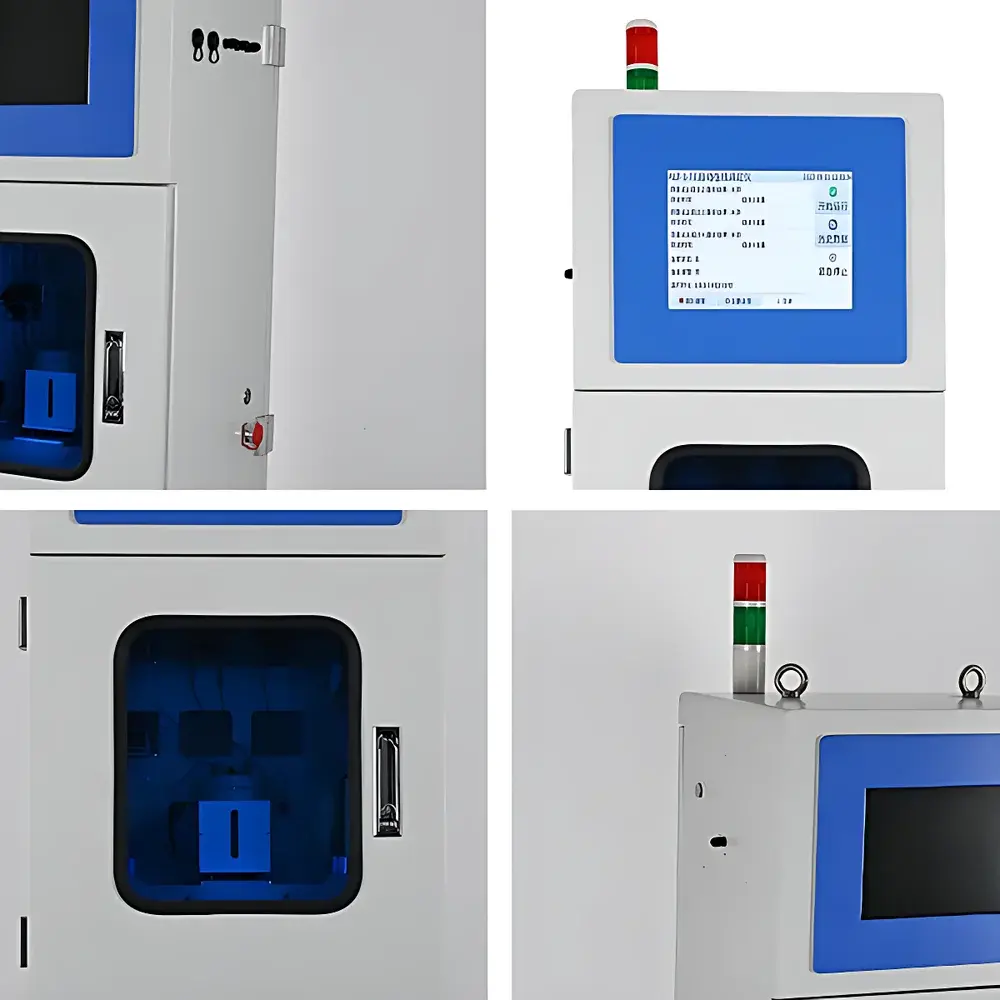
HOGON ALT-1 Industrial Online Process Titration Analyzer
| Brand | HOGON |
|---|---|
| Origin | Shanghai, China |
| Manufacturer Type | Direct Manufacturer |
| Regional Category | Domestic (China) |
| Model | ALT-1 |
| Pricing | Upon Request |
| Output Signals | Modbus TCP, RS-232/485, CAN, 4–20 mA |
| Environmental Operating Conditions | ≤90% RH (non-condensing), 10 °C minimum |
| Resolution | Potentiometric: 0.1 mV (−2000 to +2000 mV) |
| pH | 0.001 pH (0–20 pH) |
| Photometric | 0.003 Abs (0–1 Abs) |
| Ingress Protection Rating | IP55/IP65 (achieved with door closed and latched) |
| Titration Accuracy | Volumetric delivery precision of ±1 µL using 20 mL burette |
Overview
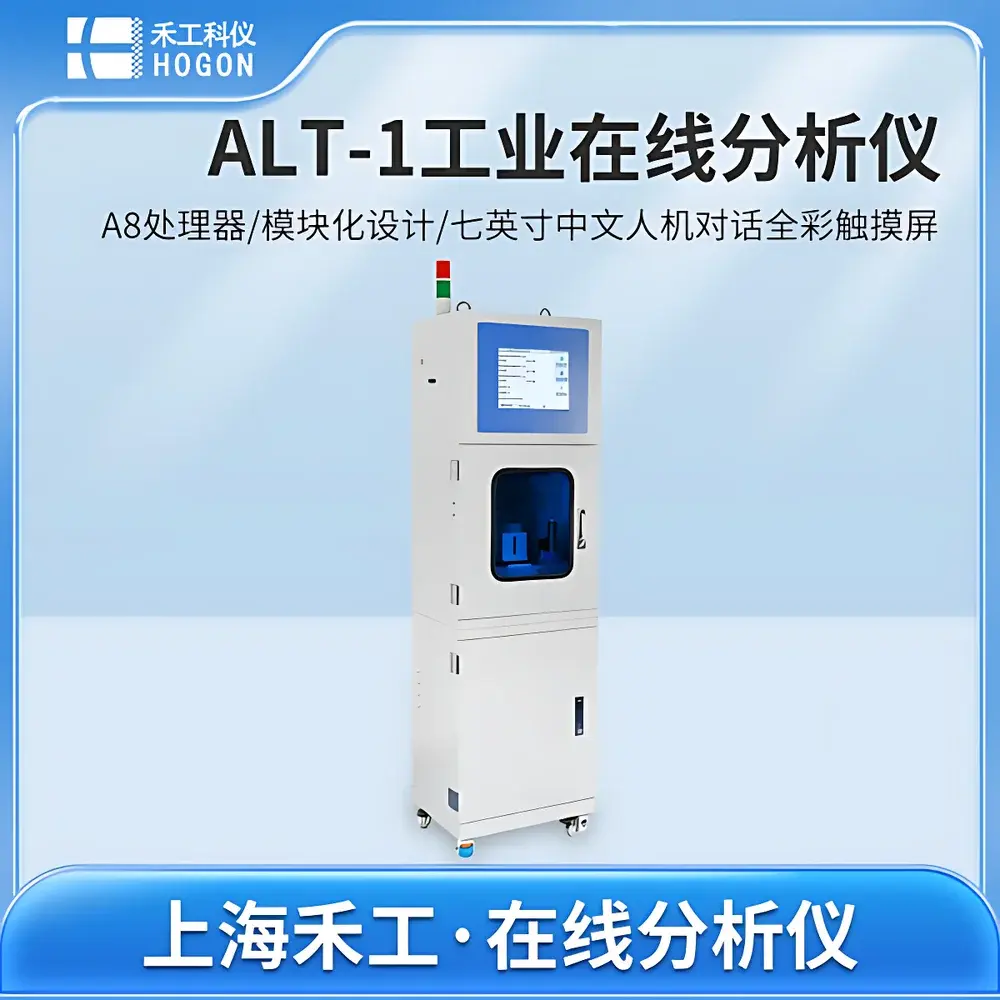
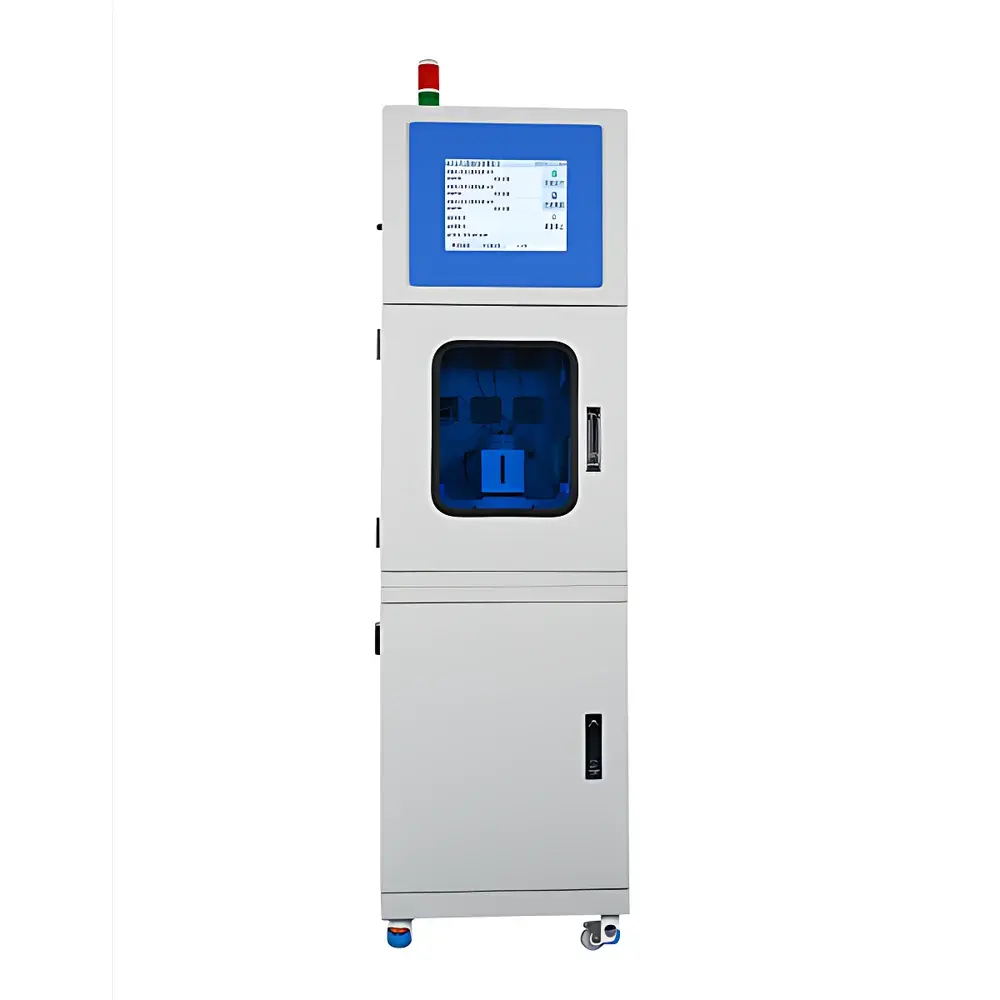
The HOGON ALT-1 Industrial Online Process Titration Analyzer is a robust, field-deployable analytical platform engineered for continuous, real-time titrimetric monitoring and closed-loop chemical dosing control in industrial process environments. Unlike laboratory-based titrators, the ALT-1 operates on the principle of automated potentiometric, photometric, and ion-selective endpoint detection, enabling precise quantification of acid-base, redox, complexometric, and precipitation reactions directly within production streams. Its architecture integrates high-precision fluidic handling—featuring sub-microliter volumetric dispensing accuracy—with multi-sensor fusion capabilities (pH/mV, absorbance, colorimetric, and ion-selective electrodes) to support diverse endpoint recognition strategies. Designed for 24/7 unattended operation under harsh plant conditions, the ALT-1 bridges the gap between offline QC lab analysis and dynamic process control—ensuring consistent bath chemistry in electroplating, surface treatment, wastewater neutralization, and chemical synthesis lines without manual intervention.
Key Features
- Sub-microliter titrant delivery: Achieves ±1 µL precision using a calibrated 20 mL glass or PTFE-coated burette, ensuring reproducible stoichiometric dosing across extended operational cycles.
- Multi-modal endpoint detection: Supports potentiometric (±0.1 mV resolution), photometric (0.003 Abs over 0–1 Abs), colorimetric (via integrated machine vision module), and ion-selective electrode (ISE) modes—enabling method flexibility for diverse analytes including free/total acid, peroxide value, Ca²⁺, Mg²⁺, Fe²⁺/Fe³⁺, Cu²⁺, Ni²⁺, Zr⁴⁺, Cl⁻, and Ag⁺.
- Dual control architecture: Operates in standalone “distributed control” mode (single-unit autonomous sampling, analysis, and pump actuation) or as a networked node in centralized SCADA/MES-integrated systems via standardized protocols.
- Industrial-grade I/O & connectivity: Native support for Modbus TCP (Ethernet), RS-232/485 (serial), CAN bus, and analog 4–20 mA outputs—facilitating seamless integration with DCS, PLCs, and enterprise-level ERP systems.
- Adaptive dosing algorithms: Implements PID-based and lookup-table-driven reagent addition logic, dynamically adjusting dose volume and rate based on real-time assay results and user-defined setpoints (e.g., upper/lower concentration thresholds).
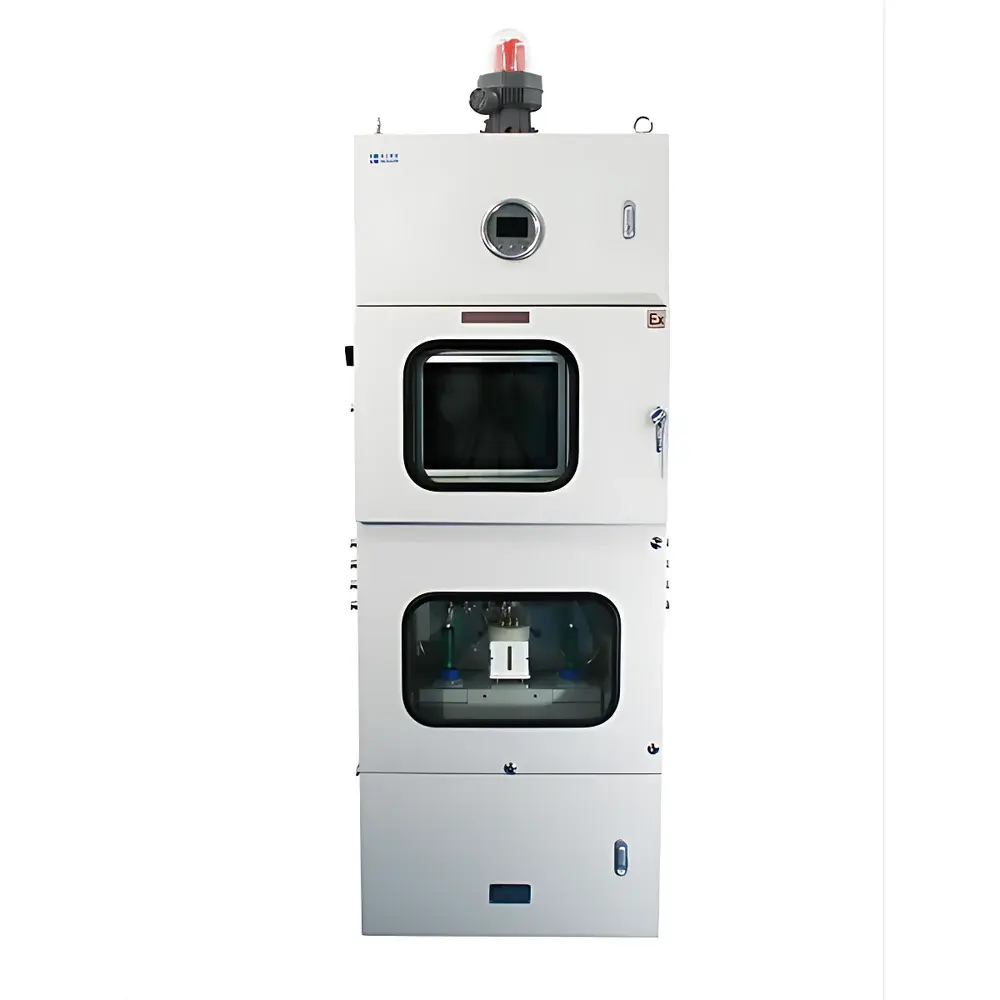
- IP55/IP65-rated enclosure: Sealed front panel with latched access door ensures protection against dust ingress and water jets—certified for deployment in Class 1 Div 2 or ATEX Zone 2 environments when specified.
Sample Compatibility & Compliance
The ALT-1 accommodates aqueous, mildly corrosive, and surfactant-containing process streams typical in metal finishing, printed circuit board manufacturing, pulp & paper bleaching, and pharmaceutical intermediate synthesis. Sample introduction is compatible with standard ¼″–⅜″ tubing, pressurized loop sampling, or gravity-fed dip-tube configurations. All wetted materials—including fluid paths, electrodes, and optical cuvettes—are selected for chemical resistance (e.g., PTFE, FFKM, borosilicate glass, sapphire windows). The system supports audit-ready operation under GLP and GMP frameworks: full electronic records—including timestamps, operator IDs, calibration logs, maintenance events, and raw sensor traces—are stored locally and synchronized to central databases. Data integrity complies with FDA 21 CFR Part 11 requirements when deployed with validated server software and role-based access controls.
Software & Data Management
Embedded firmware provides local touchscreen HMI for configuration, diagnostics, and real-time trend visualization. For enterprise-scale deployment, the ALT-1 connects to HOGON’s centralized ALT Server—a Linux-based database application supporting PostgreSQL and time-series indexing. Historical data (including titration curves, endpoint voltages, absorbance kinetics, and dosing events) is accessible via secure web interface (HTTPS) or mobile-responsive dashboard. Role-based permissions govern data export, report generation (PDF/CSV), alarm acknowledgment, and method versioning. Integration with third-party historian systems (e.g., OSIsoft PI, Wonderware Historian) is enabled through OPC UA or RESTful API endpoints. All communications are encrypted using TLS 1.2+, and firmware updates undergo cryptographic signature verification prior to installation.
Applications
- Electroplating & anodizing lines: Continuous monitoring of free cyanide, total nickel, chromic acid concentration, and brightener depletion in plating baths.
- Wastewater treatment: Real-time alkalinity/acidity titration for pH stabilization, coagulant dosing optimization, and heavy metal precipitation control.
- Chemical manufacturing: In-line verification of sulfonation degree, amine value, acid number, and peroxide stability in polymer precursors and surfactants.
- Food & beverage processing: Monitoring titratable acidity in dairy fermentations, vinegar production, and juice blending operations.
- Pharmaceutical water systems: Conductivity-pH coupled titration for TOC surrogate estimation and bioburden risk assessment in purified water loops.
- Pulp & paper mills: Tracking residual chlorine dioxide, peracetic acid, and alkali consumption during bleaching sequences.
FAQ
What titration methods does the ALT-1 support?
The ALT-1 natively executes potentiometric, photometric, colorimetric (machine-vision-assisted), and ion-selective electrode (ISE) titrations—including acid-base, redox, complexometric, and precipitation protocols—as defined by ASTM D1126, ISO 8288, USP , and EP 2.2.21.
Can the ALT-1 operate without a central server?
Yes. In distributed mode, it performs autonomous sampling, analysis, and proportional-integral-derivative (PID) dosing control using onboard logic—requiring no external computing infrastructure.
Is remote calibration and validation supported?
Field calibration (electrode slope, zero offset, photometer baseline) can be initiated remotely via secure web interface; all calibration parameters and raw sensor data are logged with digital signatures for regulatory traceability.
How is maintenance access managed in hazardous areas?
Maintenance intervals are scheduled via predictive alerts (e.g., burette wear, electrode drift, tubing fatigue); hot-swappable modules allow component replacement without system shutdown, minimizing downtime in continuous-process environments.
Does the ALT-1 meet cybersecurity standards for OT networks?
Yes. It implements network segmentation readiness, disabled default credentials, configurable firewall rules, and regular CVE-mitigated firmware updates—aligned with ISA/IEC 62443-3-3 Level 2 requirements.
Related Products