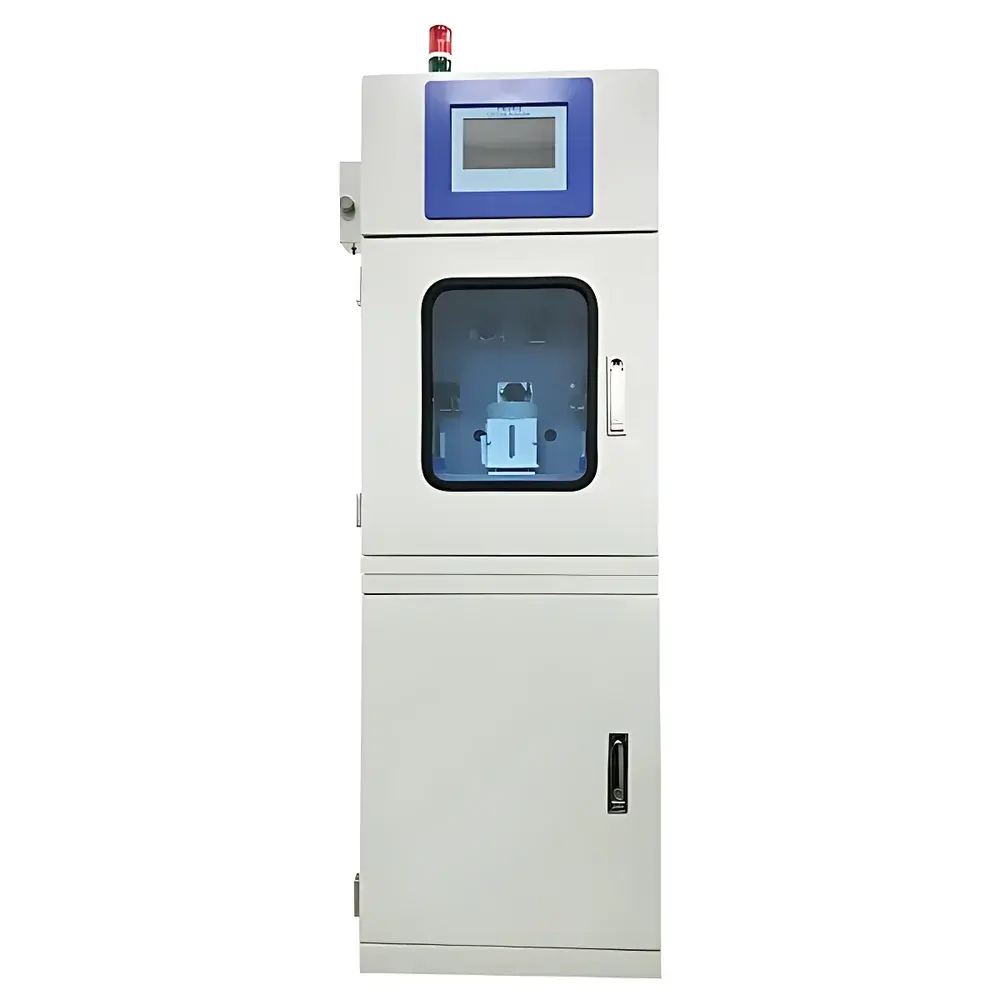
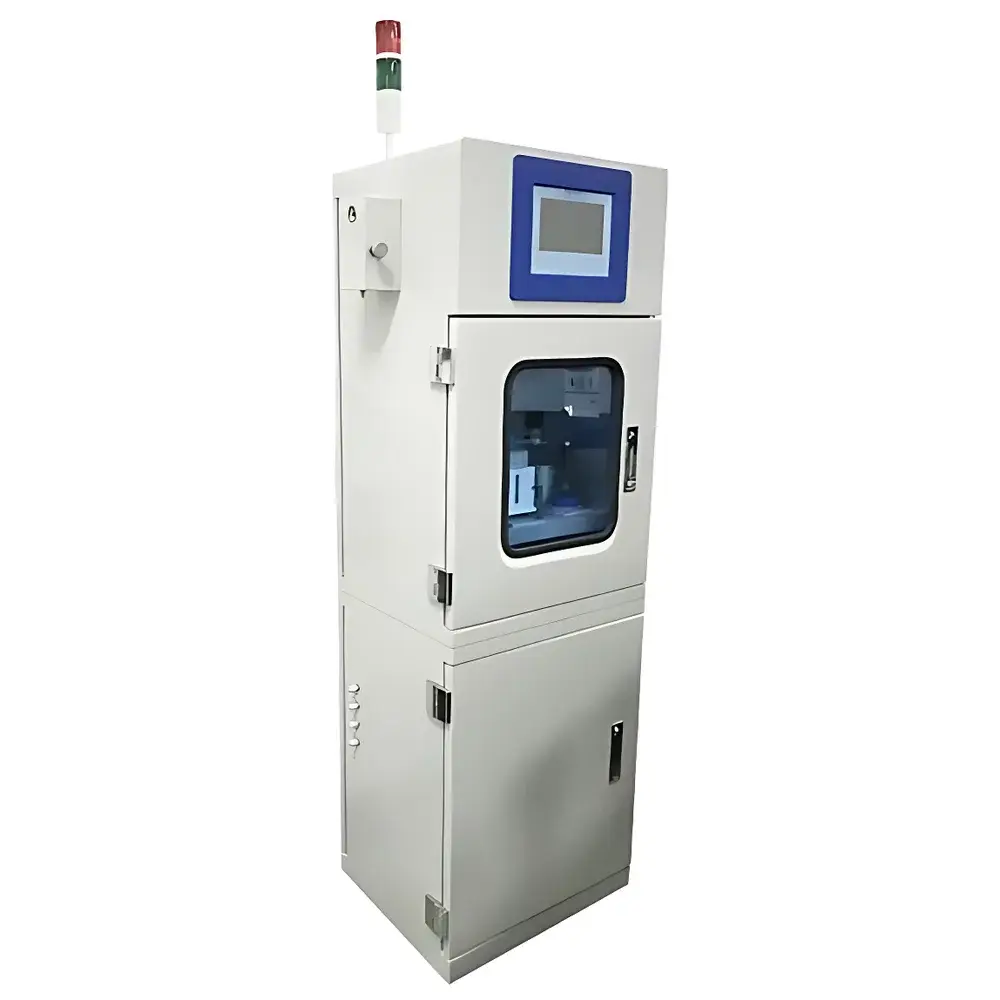
HOGON ALT Online Ferrous Ion (Fe²⁺) Monitoring Analyzer
| Brand | HOGON |
|---|---|
| Origin | Shanghai, China |
| Manufacturer Type | OEM Manufacturer |
| Country of Origin | China |
| Model | ALT Online Ferrous Ion Monitoring Analyzer |
| Pricing | Upon Request |
Overview
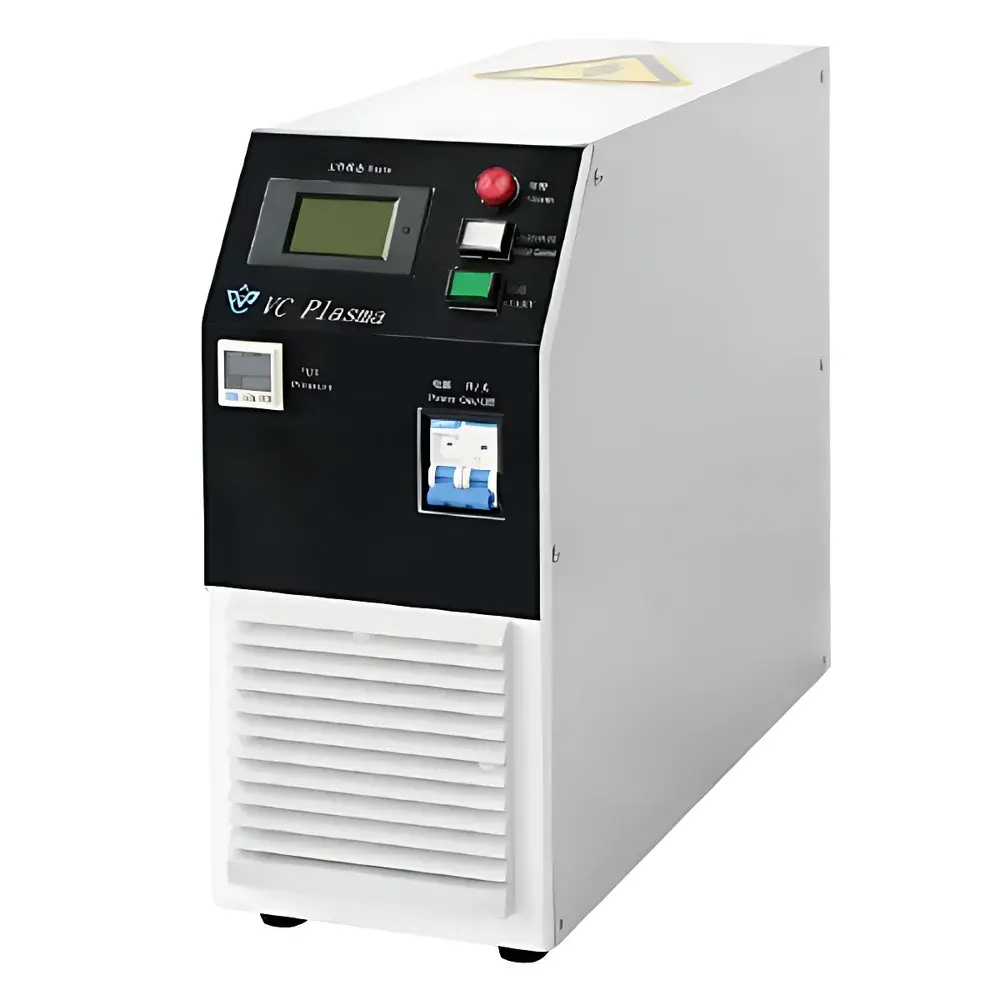
The HOGON ALT Online Ferrous Ion (Fe²⁺) Monitoring Analyzer is a fully automated,无人值守 (unattended) process analytical instrument engineered for continuous, real-time quantification of ferrous ion concentration in industrial aqueous process streams. It operates on the principle of potentiometric and colorimetric endpoint detection during titration—leveraging dual-mode sensing to ensure robust endpoint recognition across variable matrix conditions. Unlike manual or semi-automated benchtop titrators, the ALT system integrates sample acquisition, reagent delivery, reaction control, endpoint determination, data computation, and actuator feedback into a single compact architecture. Its primary function is closed-loop process control: upon detecting Fe²⁺ deviation from setpoint, the analyzer triggers proportional dosing via integrated peristaltic or solenoid metering pumps to restore optimal bath chemistry—critical in surface treatment, electroplating, wastewater oxidation-reduction control, and hydrometallurgical leaching processes.
Key Features
- Modular hardware architecture with A8 ARM-based embedded controller for deterministic real-time operation and firmware upgradability
- 7-inch full-color capacitive touchscreen HMI supporting multilingual UI (English default), intuitive workflow configuration, and audit-trail-enabled parameter logging
- Dual high-precision burettes (±0.1% volumetric accuracy) with PTFE-coated pistons and integrated back-pressure compensation
- Electromagnetic multi-port valve manifold enabling precise reagent selection, waste routing, and cross-contamination mitigation
- High-resolution RGB color-sensing module (CIE L*a*b* calibrated) coupled with Ag/AgCl reference and platinum indicator electrodes for simultaneous potentiometric–photometric endpoint confirmation
- Configurable titration modes: redox (e.g., cerimetric or permanganometric), complexometric (EDTA-based), acid-base, non-aqueous, and precipitation titrations—each selectable via software-defined method templates
- Integrated auxiliary peristaltic pumps with flow-rate programmability (0.1–20 mL/min) for sample aspiration, dilution, and rinse cycles
- Industrial-grade enclosure (IP65-rated) with corrosion-resistant wetted materials (PFA, ETFE, borosilicate glass, 316L SS)
Sample Compatibility & Compliance
The ALT analyzer is validated for direct online analysis of process liquors within pH 1.5–10.5, temperature range 5–45 °C, and suspended solids content ≤50 mg/L. It accommodates complex matrices typical of pickling baths, passivation solutions, Fenton reagent systems, and metal recovery electrolytes. Method development follows ISO 8655-6 (burettes), ASTM D129 (sulfur in petroleum—adapted for redox titration validation), and USP (titrimetric assay principles). The system supports 21 CFR Part 11-compliant electronic records and signatures when deployed with optional audit trail and user role management modules. All firmware and method files are digitally signed; calibration logs, raw sensor traces, and dosing events are timestamped and cryptographically hashed for GLP/GMP traceability.
Software & Data Management
The embedded ALT Control Suite provides web-accessible configuration via TCP/IP (HTTP/HTTPS), RS-232 serial, and Modbus TCP/RTU protocols. Users define custom titration sequences—including dynamic dilution factors, conditional branching based on preliminary pH or conductivity readings, and adaptive endpoint sensitivity thresholds. Each analysis generates a structured XML report containing raw electrode potential vs. volume curves, color delta-E values, calculated Fe²⁺ concentration (mg/L or mmol/L), dosing volume applied, and QC flags (e.g., drift >2 mV/30 s, color saturation failure). Reports auto-sync to external SQL databases or OPC UA servers; historical datasets support SPC charting (X-bar R charts), trend forecasting (ARIMA), and alarm correlation with MES/SCADA systems.
Applications
- Real-time monitoring and dosing control of Fe²⁺ in Fenton oxidation reactors for advanced wastewater treatment
- In-line verification of reducing agent concentration in zinc phosphating and iron phosphate conversion coating baths
- Automated replenishment of ferrous sulfate in electroless nickel plating baths to maintain catalytic activity
- Quality assurance of iron content in pharmaceutical excipient solutions (e.g., ferrous fumarate syrups) per USP monographs
- Process optimization in hydrometallurgical copper leaching circuits where Fe²⁺/Fe³⁺ ratio governs redox potential and extraction efficiency
- Continuous verification of antioxidant capacity in food-grade acid washes used in beverage can manufacturing
FAQ
What titration methods are supported for Fe²⁺ quantification?
The ALT analyzer natively supports cerimetric, permanganometric, and dichromatometric redox titrations, all validated against NIST SRM 3129a (ferrous ammonium sulfate). Custom methods may be imported via CSV-based protocol templates.
Can the system interface with existing PLC-based control infrastructure?
Yes—Modbus TCP and RTU drivers are pre-installed; register mapping tables and ladder logic examples for Allen-Bradley, Siemens S7, and Mitsubishi Q-series PLCs are provided in the integration manual.
How frequently does the system require maintenance or recalibration?
Burette calibration is recommended every 90 days under continuous operation; electrode cleaning and reference junction refilling are scheduled every 30 days. Full system performance verification (per ASTM E2028) is advised quarterly.
Is remote diagnostics and firmware updates supported?
Yes—SSH-enabled secure shell access allows encrypted remote troubleshooting; OTA firmware updates are delivered as signed .bin packages with rollback capability and version-controlled changelogs.
What safety certifications does the unit carry?
CE (EMC Directive 2014/30/EU, LVD Directive 2014/35/EU), RoHS 2011/65/EU, and UL 61010-1:2012 (Ed. 3) for electrical safety in laboratory and industrial environments.