
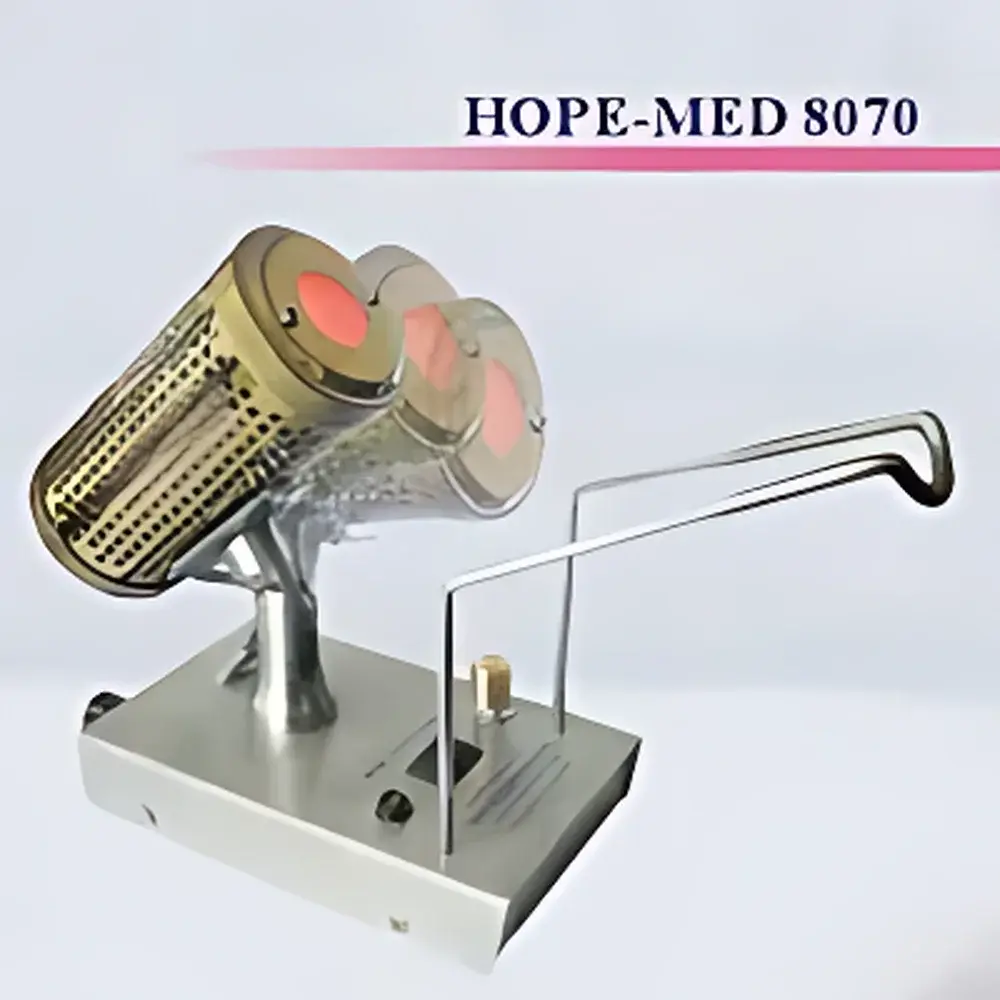
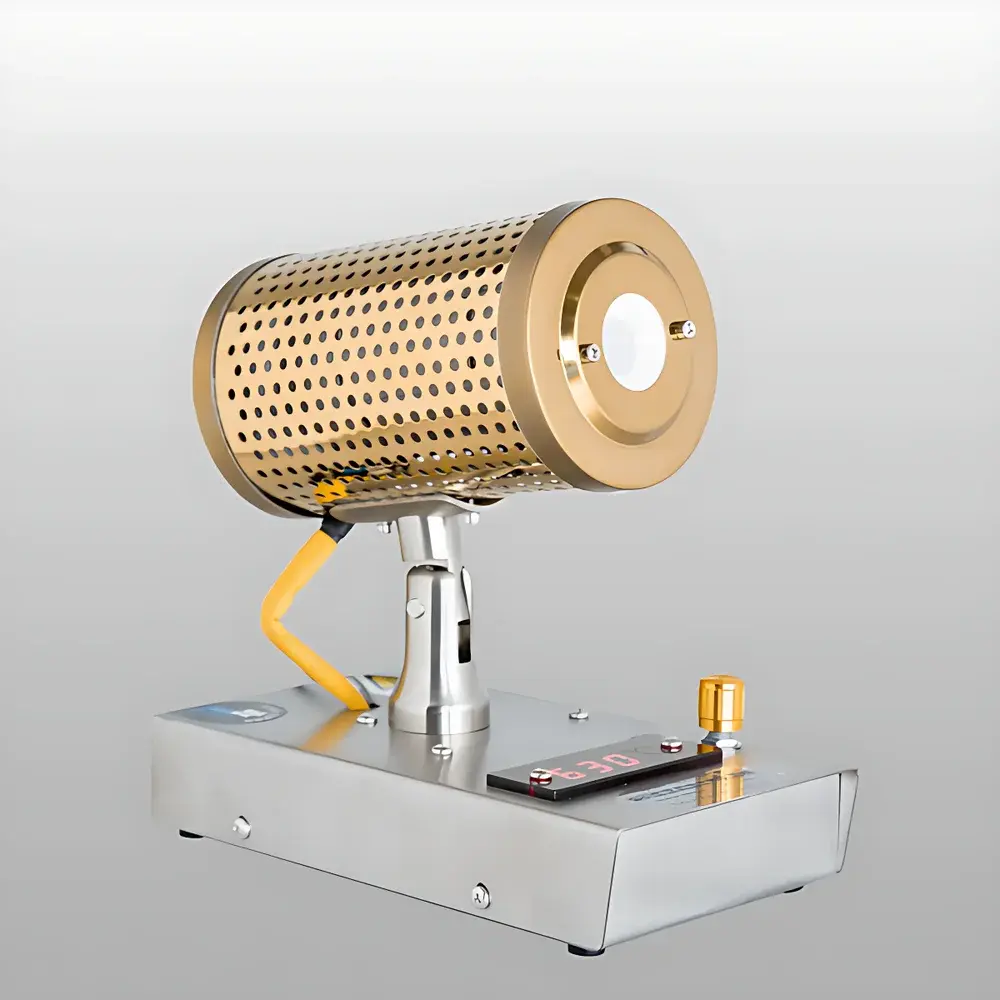
HOPE-MED 8070 Series Electrically Heated Infrared High-Temperature Sterilizer for Inoculation Tools
| Brand | HOPE-MED |
|---|---|
| Model | 8070 Series |
| Origin | Tianjin, China |
| Operating Temperature | 800 °C |
| Gas Consumption | 100 L/h (air only) |
| Power Supply | Electric heating with infrared radiation source |
| Compliance | Designed for laboratory biosafety workflows in accordance with ISO 13485-aligned sterilization practices |
| Certification Status | CE-marked for laboratory equipment (Class IIa) |
| Dimensions | 180 × 120 × 220 mm (W × D × H) |
| Weight | 1.6 kg |
Overview
The HOPE-MED 8070 Series Electrically Heated Infrared High-Temperature Sterilizer is a compact, flameless benchtop instrument engineered for rapid, repeatable thermal sterilization of microbiological inoculation tools—including loops, needles, forceps, and scalpel blades—within biosafety cabinets, laminar flow hoods, or general laboratory workspaces. Unlike traditional Bunsen burners or gas-driven microburners, this device employs resistively heated ceramic emitters that generate intense far-infrared radiation (peak wavelength ~3.2 µm), achieving surface temperatures up to 800 °C within 30 seconds of activation. The absence of open flame eliminates combustion byproducts, reduces ambient heat dispersion, and mitigates fire risk—making it especially suitable for use inside Class II biosafety cabinets where airflow integrity must be preserved. Its operational principle relies on conductive and radiative heat transfer directly to metal surfaces, ensuring microbial inactivation through protein denaturation and nucleic acid degradation in accordance with ISO 17664-1:2017 requirements for thermal disinfection of reusable medical devices.
Key Features
- Flameless operation using electrically powered infrared heating elements—no external gas supply required beyond ambient air convection cooling
- Digital temperature monitoring with real-time LED display (model variants include optional digital setpoint control)
- Stainless steel chamber housing with high-emissivity ceramic heating core for uniform thermal distribution
- Automatic safety cutoff at 850 °C (overtemperature protection) and thermal fuse redundancy
- Low power consumption: nominal 300 W input; compatible with standard 100–240 V AC, 50/60 Hz outlets
- Ergonomic vertical tool insertion design enabling hands-free positioning and consistent exposure geometry
- UL/IEC 61010-1 certified for laboratory electrical safety; RoHS-compliant materials throughout
Sample Compatibility & Compliance
The HOPE-MED 8070 accommodates standard stainless steel inoculation loops (φ1–3 mm wire diameter), straight or calibrated needles (up to 150 mm length), fine-tipped tweezers, and micro-spatulas. It is validated for sterilization of non-porous metallic instruments only—not intended for plastic, coated, or heat-sensitive components. Device performance meets the minimum thermal exposure criteria defined in USP for “dry heat sterilization” when applied for ≥5 seconds at ≥750 °C. While not classified as a medical device sterilizer under FDA 21 CFR Part 820, its design supports GLP-compliant documentation workflows via external logging of usage cycles and operator ID inputs where integrated into LIMS environments.
Software & Data Management
The base model operates without embedded firmware or connectivity; however, optional RS-232 or USB-C interface modules enable integration with laboratory information management systems (LIMS) for audit-trail recording of sterilization events. Firmware-enabled variants support timestamped cycle logs, user authentication protocols, and configurable dwell time presets aligned with institutional SOPs. All data outputs comply with ALCOA+ principles (Attributable, Legible, Contemporaneous, Original, Accurate, Complete, Consistent, Enduring, Available) and may be exported in CSV or XML format for regulatory review. No cloud storage or remote access functionality is included—data remains local unless explicitly routed through validated enterprise IT infrastructure.
Applications
- Routine sterilization of inoculation tools in clinical microbiology labs performing bacterial culture isolation per CLSI M02-A12 guidelines
- Aseptic technique support during plant tissue culture (PTC) procedures requiring repeated loop flaming between explant transfers
- Quality control laboratories conducting environmental monitoring per ISO 14698-1, where flame-free alternatives reduce particulate generation near settle plates
- Teaching laboratories seeking safer, standardized alternatives to Bunsen burners for undergraduate microbiology instruction
- Research facilities operating under ISO/IEC 17025 accreditation, where traceable thermal exposure records support method validation documentation
FAQ
Can this unit sterilize plastic or coated instruments?
No. The HOPE-MED 8070 is designed exclusively for metallic, non-porous tools. Plastic, silicone-coated, or polymer-handled items will degrade or melt upon contact.
Is calibration required before first use?
Factory calibration is performed prior to shipment. Users should verify surface temperature annually using a NIST-traceable infrared thermometer focused on the emitter center at 25 mm distance.
Does it meet FDA or EU MDR requirements for medical device reprocessing?
It is not classified as a medical device reprocessor under FDA 21 CFR Part 820 or EU MDR Annex I §11.1. It serves as an auxiliary lab tool compliant with ISO 13485 supporting quality system infrastructure.
What maintenance is recommended?
Clean the ceramic emitter surface weekly with isopropyl alcohol and lint-free swabs; inspect for carbon buildup or microfractures quarterly. Replace the heating element every 12 months under continuous daily use.
Can it be used inside a Class II Type A2 biosafety cabinet?
Yes—its flameless, low-convection design maintains cabinet face velocity and inflow integrity without triggering alarms or disrupting laminar airflow patterns.



