
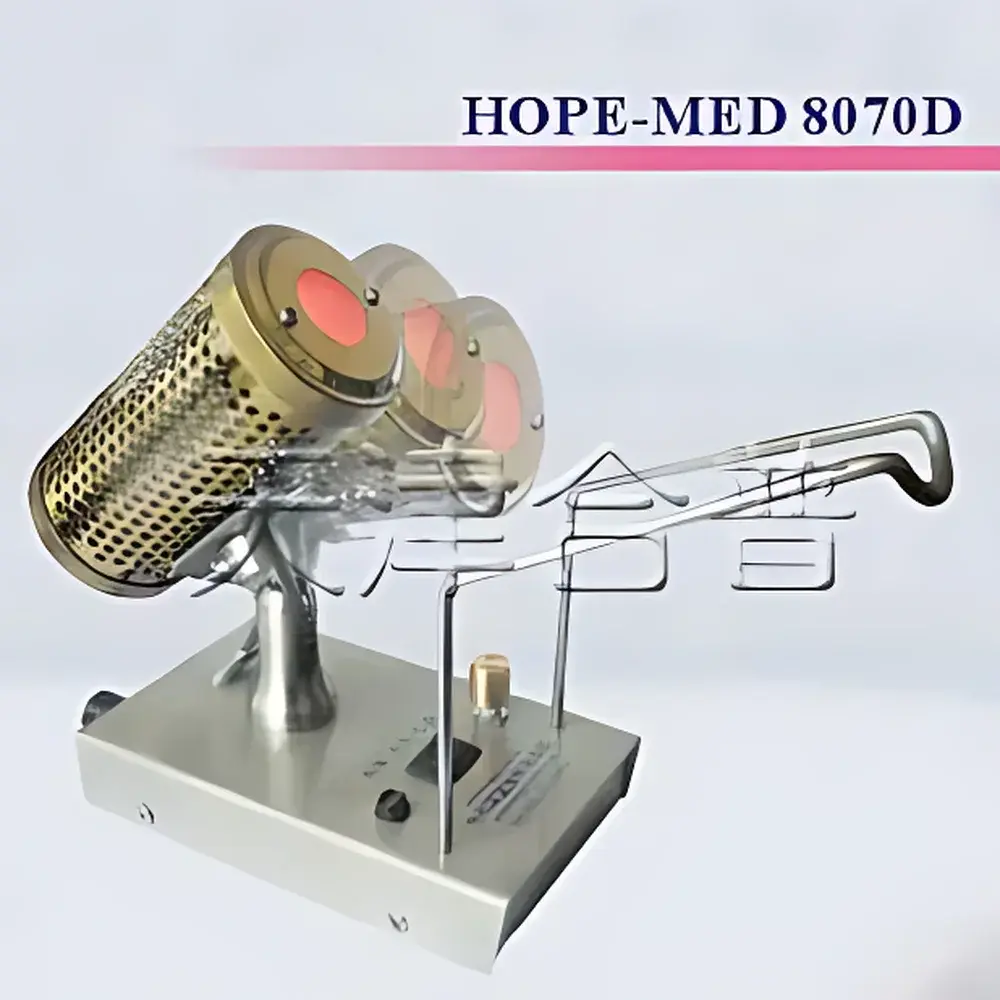
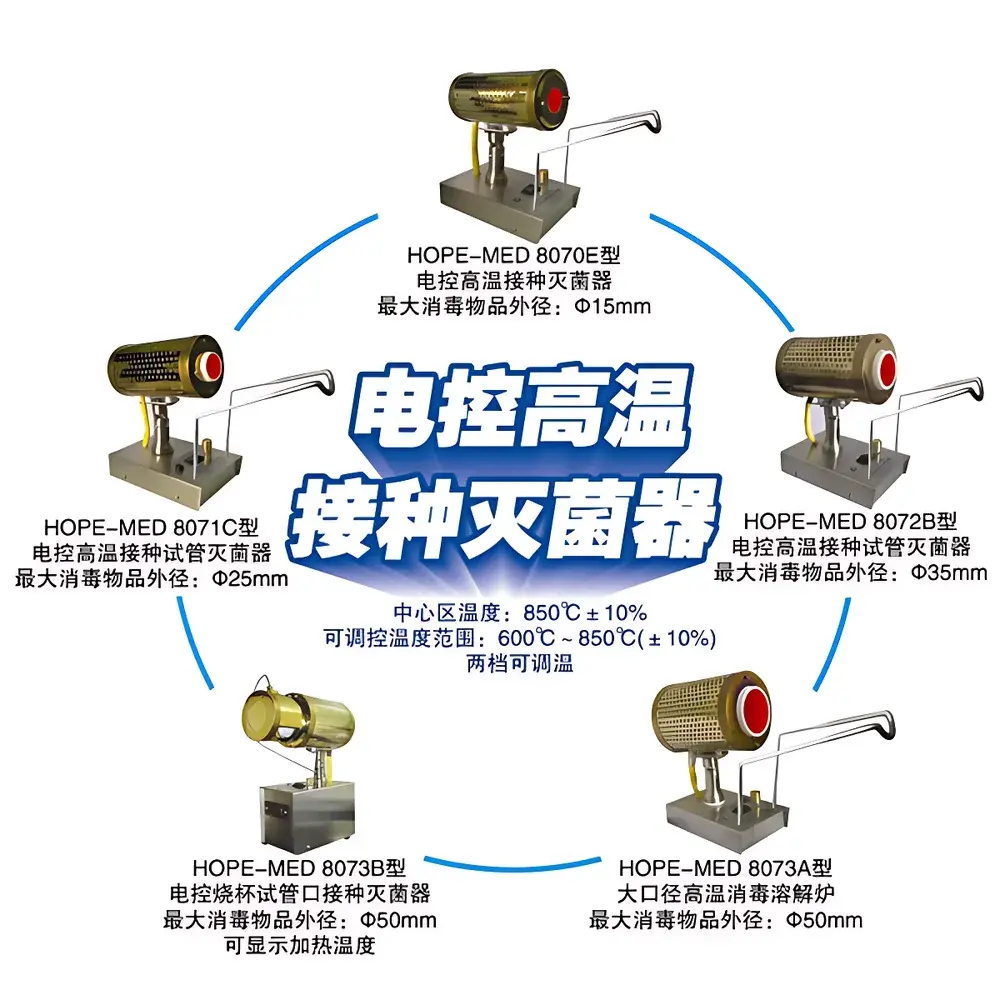
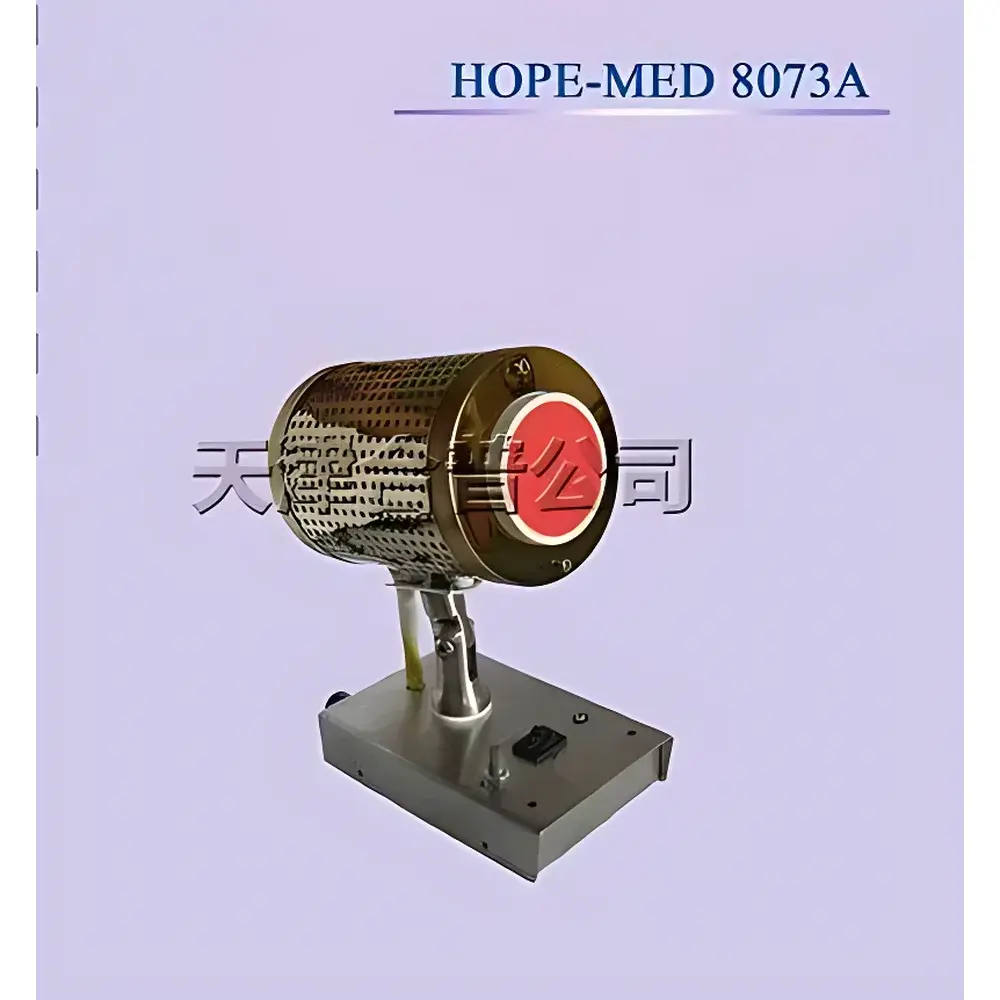
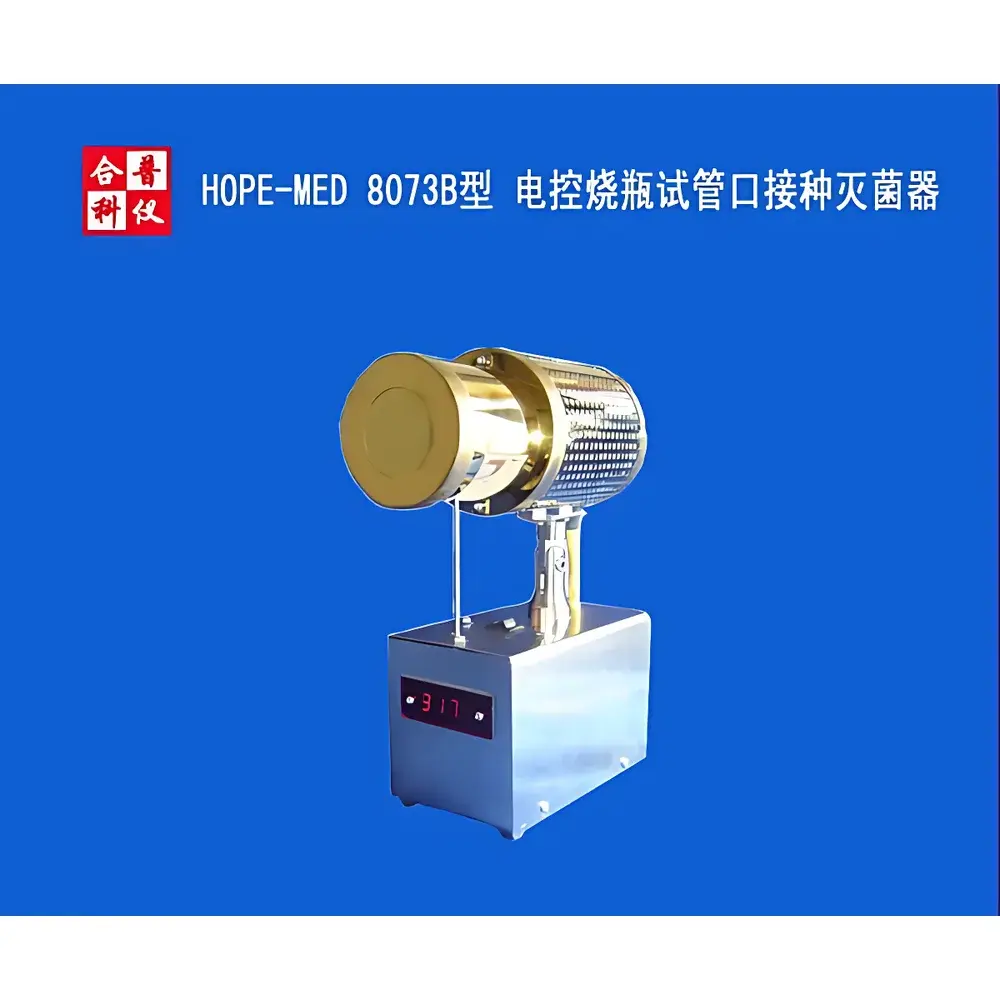
HOPE-MED8070 Infrared High-Temperature Loop Sterilizer
| Brand | HOPE-MED |
|---|---|
| Origin | Tianjin, China |
| Manufacturer Type | Authorized Distributor |
| Country of Origin | China |
| Model | HOPE-MED8070 |
| Price Range | USD 125–170 (FOB) |
| Operating Temperature | 920 °C ±5% (center zone), 600 °C ±10% (standby) |
| Gas Consumption | None |
| Power Supply | 220 V AC, 50/60 Hz |
| Max. Sample Diameter | Ø14 mm |
| Sterilization Time | 2–7 s (depending on material and diameter) |
| Heating Principle | Resistive infrared ceramic heating element |
| Compliance | CE-marked, conforms to IEC 61010-1 for laboratory electrical safety |
Overview
The HOPE-MED8070 Infrared High-Temperature Loop Sterilizer is an electrically powered, flameless microbiological sterilization device engineered for rapid, reliable, and contamination-free decontamination of inoculation loops, needles, forceps, micro-tubes, and other small metallic or heat-resistant laboratory tools. Unlike traditional Bunsen burners or alcohol lamps—which rely on open flames, volatile fuels, and fragile glass components—the HOPE-MED8070 employs a high-emissivity infrared ceramic heating element to generate localized temperatures up to 920 °C within its precision-machined sterilization chamber. This resistive thermal principle ensures consistent energy delivery without combustion byproducts, eliminating risks associated with fuel handling, CO₂ generation, or flame instability. Its compact footprint and zero-gas operation make it uniquely suitable for use inside biosafety cabinets (Class II A2/B2), laminar flow hoods, cleanrooms, mobile labs, and field-deployable settings where ventilation, fire codes, or ambient airflow would preclude conventional flame-based methods.
Key Features
- Flameless, fuel-free sterilization—eliminates reliance on butane, propane, or ethanol, reducing fire hazard and VOC exposure
- Instant-on heating: reaches operational temperature in <30 seconds; no warm-up delay
- Patented ceramic infrared heating core (CN Patent No. ZL200420029296.1) with thermal stability ±5% at 920 °C center zone
- Two-mode thermal control: high-temperature sterilization (920 °C) and low-power standby (600 °C ±10%) to preserve element life and reduce energy draw during idle periods
- Robust stainless-steel housing with integrated heat-shielded aperture; resistant to mechanical impact and airflow disturbance
- Compatible with standard inoculation loops (up to Ø14 mm), platinum wires, stainless-steel tweezers, and 3-mm-diameter agar plugs (full incineration in ≤7 s)
- No external gas supply required—operates solely on standard AC mains power (220 V, 50/60 Hz)
Sample Compatibility & Compliance
The HOPE-MED8070 is validated for sterilizing metallic and ceramic laboratory implements commonly used in microbiology, molecular biology, and cell culture workflows. It achieves microbial lethality (≥6-log reduction of vegetative bacteria, yeasts, and spores) through dry-heat incineration, conforming to the thermal inactivation principles outlined in ISO 15189:2022 (clause 5.3.2) and USP “Sterility Assurance.” The unit complies with IEC 61010-1:2010 for electrical safety in laboratory equipment and carries CE marking for EMC and Low Voltage Directive conformity. While not classified as a medical device under FDA 21 CFR Part 820, its design supports GLP- and GMP-aligned workflows where audit-trail documentation of sterilization cycles is maintained via lab notebook entries or integrated digital logging systems (optional accessory interface available).
Software & Data Management
The base HOPE-MED8070 operates as a standalone analog device with dual-position toggle switch (ON / STANDBY). For laboratories requiring traceability, optional RS-485 or USB-C serial interface modules enable integration with LIMS or electronic lab notebooks (ELNs). When paired with compatible software, users may log timestamped sterilization events—including cycle count, operator ID, and duration—supporting compliance with 21 CFR Part 11 requirements for electronic records when configured with appropriate access controls and audit trails. Firmware updates (v2.1+) include thermal drift compensation algorithms calibrated against NIST-traceable reference thermocouples.
Applications
- Routine sterilization of inoculation loops and needles in clinical microbiology labs and teaching facilities
- Aseptic transfer procedures inside Class II biosafety cabinets without compromising laminar flow integrity
- Field-based diagnostics in mobile health units or resource-limited settings where fuel logistics are impractical
- High-frequency tool turnover in QC/QA environments performing environmental monitoring per ISO 14644 or EU GMP Annex 1
- Decontamination of micro-tools during stem cell or primary tissue isolation protocols where ethanol residue must be avoided
- Supporting ISO/IEC 17025-accredited testing laboratories seeking documented, repeatable dry-heat validation alternatives to autoclaving for small metal instruments
FAQ
Does the HOPE-MED8070 require calibration?
Yes—annual verification using a NIST-traceable infrared thermometer or contact thermocouple probe is recommended to confirm center-zone temperature accuracy per ISO/IEC 17025 Clause 6.4.3.
Can it sterilize plastic or coated instruments?
No—only heat-stable metallic, ceramic, or glass items rated for >900 °C exposure should be inserted. Melting or off-gassing may occur with polymers, Teflon-coated tips, or rubber-insulated handles.
Is it compatible with nitrogen-purged gloveboxes?
Yes—its flameless, electric-only operation allows safe deployment in inert-atmosphere enclosures where open flames or catalytic heaters pose explosion hazards.
What maintenance is required?
Monthly visual inspection of the ceramic heating element for cracks or carbon buildup; cleaning of the sterilization aperture with non-abrasive stainless-steel brush; replacement of the heating module every 10,000 cycles or per manufacturer’s service bulletin.
How does it compare to UV or plasma sterilizers?
Unlike UV (limited surface penetration) or low-temperature plasma (longer cycle times, gas dependency), the HOPE-MED8070 delivers immediate, surface-agnostic thermal kill via direct conductive-radiative transfer—ideal for rapid turnaround of critical tools between samples.



