
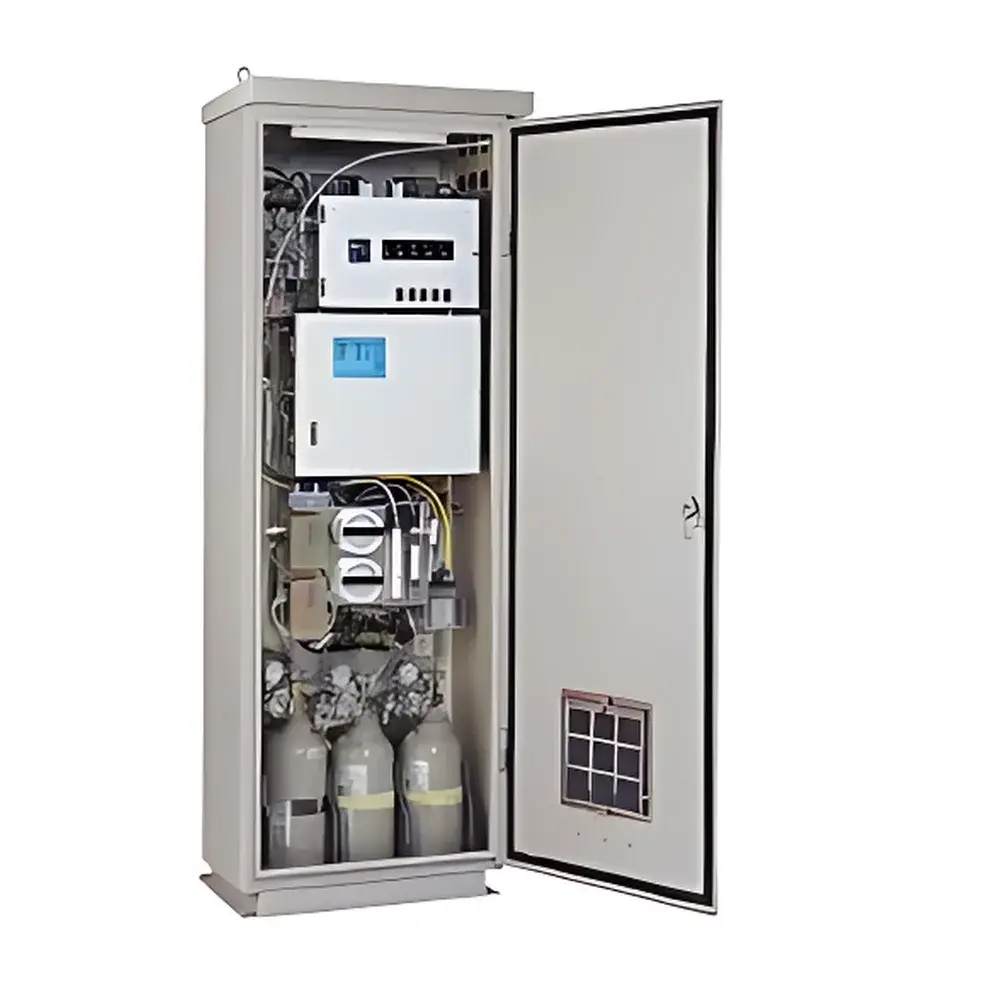
HORIBA ENDA-600ZG Series Continuous Emission Monitoring System (CEMS) for Flue Gas Analysis
| Brand | HORIBA |
|---|---|
| Origin | Japan |
| Model | ENDA-600ZG |
| Instrument Type | Continuous Emission Monitoring System (CEMS) |
| Accuracy | ±1.0% F.S. |
| Repeatability | ±0.5% F.S. |
| Response Time (SO₂) | 60–240 s |
| Stability | ±2.0% F.S./week |
Overview
The HORIBA ENDA-600ZG Series is a compact, high-reliability Continuous Emission Monitoring System (CEMS) engineered for regulatory-compliant, long-term online measurement of key flue gas constituents—including NOx, SO2, CO, CO2, and O2—in industrial combustion processes. Designed to meet stringent environmental reporting requirements under frameworks such as EU IED Directive, US EPA Methods 6C, 7E, 10, and ISO 12039, the system employs dual detection principles: alternating-flow non-dispersive infrared (NDIR) spectroscopy for NOx, SO2, CO, and CO2, and paramagnetic oxygen sensing (magnetopneumatic pressure detection) for O2. This hybrid architecture eliminates zero drift, avoids optical realignment, and ensures stable baseline performance over extended operational cycles—critical for unattended, 24/7 compliance monitoring in power generation, waste incineration, and heavy industry.
Key Features
- Single-analyzer platform capable of simultaneous, continuous quantification of up to five gas components without cross-channel interference.
- Alternating-flow NDIR detection: sample and reference gas streams alternately pass through dedicated optical cells at 1 Hz frequency, enabling intrinsic zero-point stability and eliminating mechanical or thermal drift.
- Paramagnetic O2 measurement: contactless, corrosion-resistant detection using ambient air as carrier gas—no external N2 supply required, reducing operational cost and footprint.
- Integrated interference compensation: proprietary interference filter optics correct for spectral overlap from H2O, CO2, and other matrix gases—particularly critical for accurate NOx measurement in high-moisture flue streams.
- Touchscreen HMI with intuitive navigation: 7-inch capacitive display enables direct access to real-time concentration plots, calibration logs, alarm history, and stoichiometric conversion settings (e.g., O2-corrected values per EN 14181).
- 50% reduced physical footprint vs. predecessor models: compact chassis (350 × 550 × 180 mm for optional auto-blowback controller) allows wall-mounting and installation in space-constrained stack houses or analyzer shelters.
- Low-power design: 200 VA reduction versus prior-generation units, supporting energy-efficient operation in remote or grid-limited sites.
Sample Compatibility & Compliance
The ENDA-600ZG accommodates highly variable flue gas matrices across diverse thermal processes. Its modular sampling interface supports application-specific conditioning: triple-stage thermoelectric cooling (primary + dual secondary chillers) achieves dew points ≤2 °C, minimizing aqueous-phase loss of soluble analytes (SO2, NO2). Optional add-ons include Cl2 scrubbers for municipal waste incinerators, NH3 removal filters for SCR-equipped boilers, and high-efficiency particulate pre-filters with programmable auto-blowback (T90 ≤ 90 s for SO2 when Cl2 scrubber is installed). All configurations comply with EN 15267-3 (QAL1 certification), EN 14181 (ASTM D6522 equivalent), and support audit-ready data integrity per FDA 21 CFR Part 11 when paired with HORIBA’s optional secure logging module.
Software & Data Management
Firmware includes embedded data handling compliant with EN 14181 Level 2 requirements: automatic 7-day calibration verification, dynamic averaging (1-hour rolling mean), and O2-normalized output (e.g., NOx @ 6% O2). Up to 12 analog/digital outputs are configurable for integration into DCS/SCADA systems—supporting instantaneous, normalized, and averaged signals. Internal memory stores ≥30 days of second-by-second raw data with timestamped event logs (calibration, alarm, maintenance). Optional HORIBA CEMS Manager software provides remote diagnostics, trend analysis, report generation (PDF/CSV), and electronic signature workflows aligned with GLP/GMP documentation standards.
Applications
The ENDA-600ZG is validated for continuous monitoring in regulated emission sources including:
- Coal- and gas-fired power plants (subcritical, supercritical, CCGT)
- Municipal solid waste (MSW) and hazardous waste incinerators
- Industrial steam boilers (refineries, chemical plants)
- Iron & steel production (sinter plants, blast furnaces, coke ovens)
- Glass melting furnaces and sulfuric acid manufacturing units
Its robust sample conditioning architecture handles high-dust (>10 g/Nm³), high-moisture (>20% v/v), and corrosive (HCl, HF, SO3) streams—validated via third-party field trials per ISO/IEC 17025-accredited protocols.
FAQ
What regulatory standards does the ENDA-600ZG meet for CEMS certification?
It fulfills QAL1 requirements per EN 15267-3 and supports ongoing QA per EN 14181, including automated calibration checks, drift verification, and data validation reporting.
How does the system handle water-soluble gas loss during sample conditioning?
The triple-stage thermoelectric cooler maintains consistent sub-2 °C dew point; integrated SO3 mist eliminators and optimized residence time minimize aqueous-phase dissolution of SO2 and NO2.
Is external nitrogen required for O2 measurement?
No—the paramagnetic sensor uses ambient air as the reference medium, eliminating N2 cylinders and associated infrastructure.
Can the system perform automatic span calibration for SO2?
Yes—dry-gas span calibration completes in ≤3 minutes, reducing downtime versus legacy wet-calibration methods requiring 15+ minutes.
What maintenance intervals are recommended for field service?
Filter replacement every 3–6 months (depending on dust loading); full optical cell inspection annually; certified QAL2 verification every 6 months per EN 14181.
Related Products







