
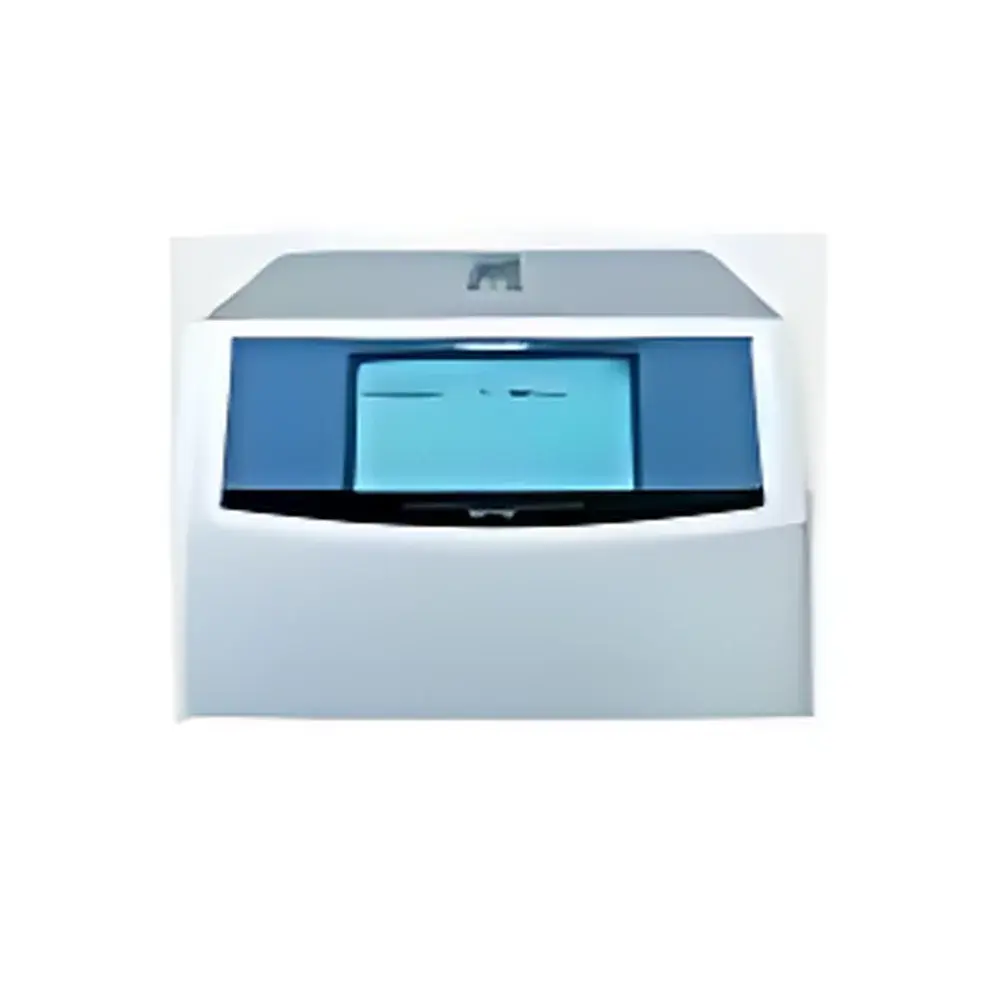
HORIBA FV-250 Portable Total Volatile Organic Compounds (TVOC) Analyzer
| Brand | HORIBA |
|---|---|
| Origin | Japan |
| Model | FV-250 |
| Instrument Type | Portable |
| Detection Principle | Flame Ionization Detection (FID) |
| Measurement Range | 0–10 / 20 / 50 / 100 / 200 / 500 / 1,000 / 2,000 / 5,000 / 10,000 ppmC |
| Resolution | ±1.0% of Full Scale (FS) |
| Accuracy | ±1.0% FS |
| Response Time (T90) | < 2.0 seconds |
| Drift | ±1.0% FS / 8 hours |
| Linearity | ±1.0% FS |
| Sampling Flow Rate | ~600 mL/min |
| Warm-up Time | ~1 hour |
| Operating Temperature | 5–35 °C |
| Operating Humidity | < 85% RH |
| Power Supply | AC 100 V, 50/60 Hz |
| Power Consumption | 50 VA |
| Dimensions | 260(W) × 260(H) × 510(D) mm |
| Output Signals | DC 0–1 V analog, RS-232C serial interface |
| Data Storage | CompactFlash (CF) card |
| Safety Features | Automatic H₂ shutoff and alarm upon flameout |
Overview
The HORIBA FV-250 is a field-deployable, portable total volatile organic compounds (TVOC) analyzer engineered for high-fidelity, real-time quantification of hydrocarbon-based VOCs in ambient air, industrial workspaces, indoor environments, and emission source testing. It employs flame ionization detection (FID), a well-established and universally accepted analytical principle defined in ASTM D6348, ISO 11843, and EPA Method 25A. FID provides exceptional sensitivity (sub-ppmC detection capability across calibrated ranges), wide dynamic linearity, and minimal interferences from common inorganic gases (e.g., CO₂, H₂O, NOₓ), making it ideal for regulatory-compliant monitoring where carbon-mass-based quantification is required. Unlike photoionization detectors (PID), the FV-250 delivers true total hydrocarbon equivalence (expressed as ppmC), ensuring traceability to reference standards and compatibility with occupational exposure limits (OELs) and environmental quality guidelines (e.g., WHO, EU Indoor Air Quality Guidelines). Its compact footprint and battery-ready architecture support walk-around surveys, fence-line monitoring, and rapid-response leak detection without compromising laboratory-grade metrological integrity.
Key Features
- Real-time FID detection with T90 response time < 2.0 seconds — enabling dynamic concentration profiling during transient emissions or mobile sampling.
- Auto-ranging capability across ten programmable full-scale spans (0–10 to 0–10,000 ppmC), eliminating manual range selection and reducing operator error.
- Integrated automatic zero and span calibration routine, supporting scheduled or on-demand verification per ISO/IEC 17025 quality management requirements.
- Resistive touchscreen interface with intuitive menu navigation, real-time trend graphing (concentration vs. time), and on-device data review — optimized for glove-compatible operation in industrial settings.
- Embedded CompactFlash (CF) slot for secure, timestamped logging of raw measurements, calibration events, and system diagnostics; supports up to 1 million data points per card.
- Comprehensive safety architecture: continuous flame supervision circuitry triggers audible/visual alarms and automatically shuts off hydrogen supply within 500 ms of flame extinction — compliant with IEC 60079-0 and UL 1203 hazardous location guidance.
- Low-power design (50 VA nominal consumption) enables extended operation via external 12 V DC power banks or vehicle inverters, extending field deployment beyond AC grid access.
Sample Compatibility & Compliance
The FV-250 is validated for direct analysis of undiluted ambient air and stack gas samples containing saturated and unsaturated aliphatic/aromatic hydrocarbons (e.g., benzene, toluene, xylene, hexane, propane, butane) with minimal matrix interference. It excludes non-ionizing compounds (e.g., formaldehyde, methanol, chlorinated solvents) unless pre-concentrated or catalytically converted — consistent with FID’s inherent selectivity. The instrument meets electromagnetic compatibility (EMC) per EN 61326-1 and safety requirements under EN 61010-1. Its measurement performance aligns with ISO 16000-22 (indoor air — VOC determination) and supports GLP/GMP-aligned workflows through audit-trail-capable data export (via RS-232C) and calibration certificate documentation.
Software & Data Management
Data acquisition and configuration are managed via HORIBA’s proprietary PC software (FV-Link), which supports bidirectional communication over RS-232C. The software enables remote instrument control, custom report generation (PDF/CSV), overlay of multiple measurement sessions, and compliance with FDA 21 CFR Part 11 when deployed with user authentication, electronic signatures, and immutable audit logs. CF card exports include metadata headers (instrument ID, operator ID, GPS coordinates if externally tagged), calibration history, and raw analog output timestamps — facilitating traceable data submission to environmental agencies (e.g., US EPA, JIS K 0320).
Applications
- Indoor air quality (IAQ) assessment in offices, schools, and healthcare facilities per ASHRAE Standard 62.1.
- Occupational hygiene monitoring in paint booths, printing facilities, and chemical handling zones.
- Leak detection and repair (LDAR) programs under EPA 40 CFR Part 60, Subpart VV.
- Verification of VOC abatement system efficiency (e.g., thermal oxidizers, carbon adsorbers).
- Field validation of fixed-site continuous emission monitoring systems (CEMS).
- Research-grade emission characterization from consumer products, building materials, and coatings.
FAQ
What VOC compounds does the FV-250 detect?
It detects virtually all organic compounds that produce ions in a hydrogen flame — primarily C₁–C₁₂ hydrocarbons and their oxygenated derivatives (e.g., ketones, esters), reported collectively as ppmC. Non-volatile or thermally labile compounds (e.g., glycols, organic acids) require specialized sampling protocols.
Is hydrogen gas supplied internally or externally?
Hydrogen is supplied externally via a certified compressed gas cylinder (typically 99.999% purity) connected through a pressure-regulated stainless-steel line; the FV-250 includes integrated pressure monitoring and auto-shutoff.
Can the FV-250 be used in explosive atmospheres?
No — while equipped with flame failure protection, it is not ATEX- or IECEx-certified for Zone 0/1 use. Operation is restricted to non-classified areas per NFPA 56 and local fire codes.
Does the instrument require daily calibration?
Not daily — its stability (±1.0% FS/8 h drift) supports calibration verification every 24–48 h in routine use, though initial warm-up (~1 h) and post-transport recalibration are recommended.
Is GPS tagging supported?
The FV-250 does not have built-in GPS; however, external GNSS receivers can log positional metadata synchronized via TTL trigger or time-stamped CSV merge in post-processing.







