
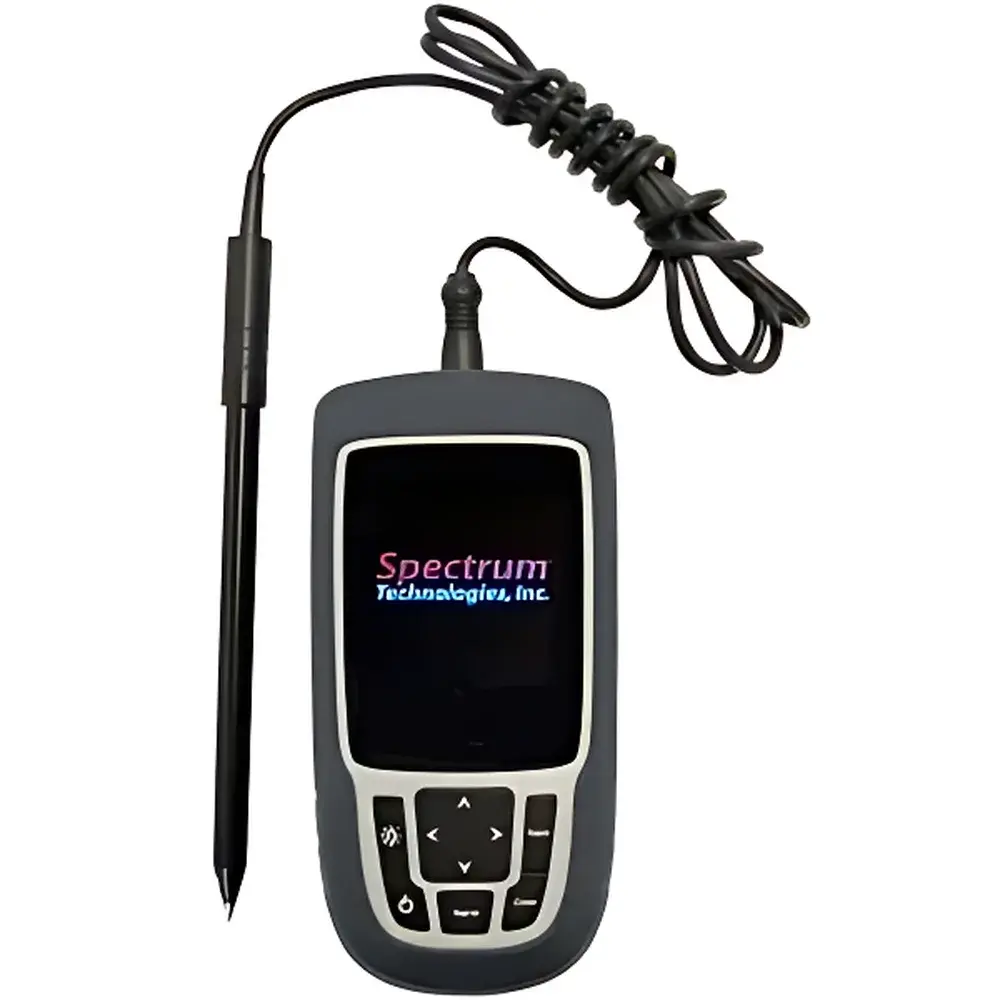
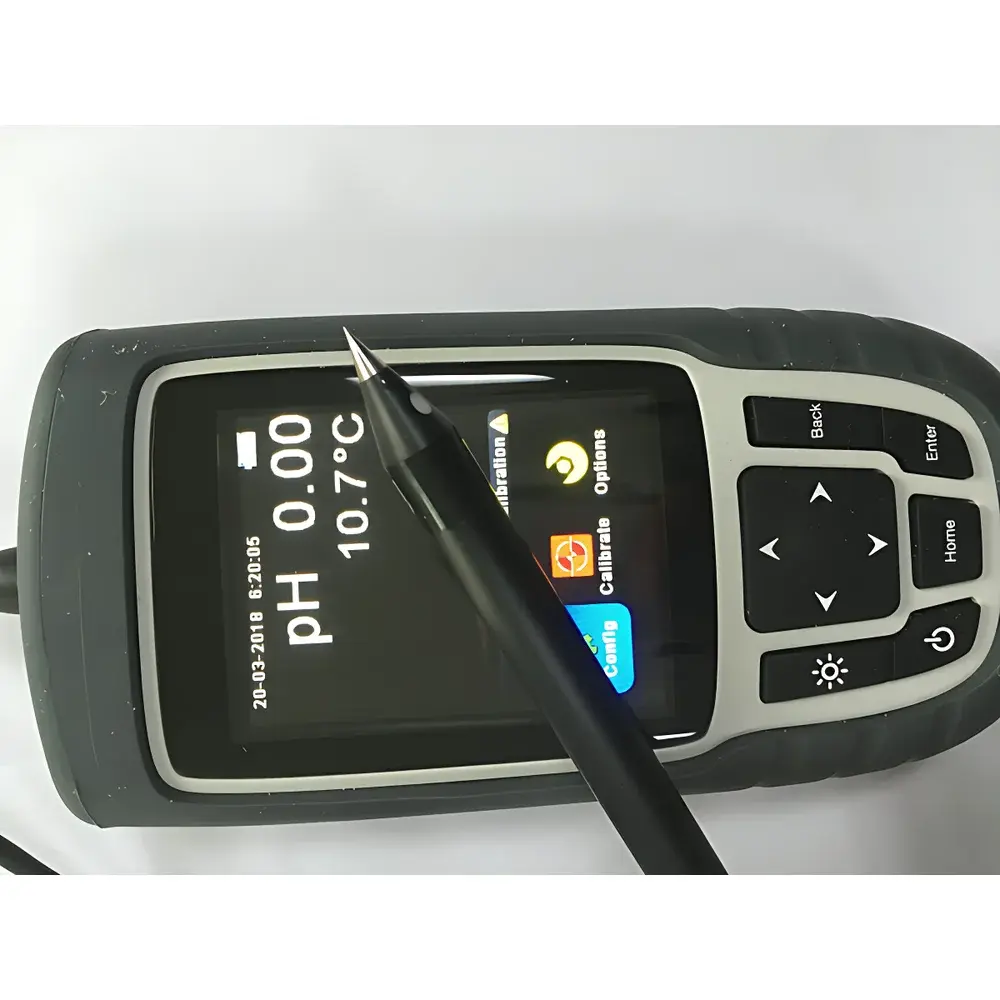
Horiba LAQUA 2107 Portable Meat pH Meter
| Origin | USA |
|---|---|
| Manufacturer Type | Authorized Distributor |
| Origin Category | Imported |
| Model | 2107 |
| Instrument Type | Portable |
| Parameter Type | Single-Parameter (pH) |
| Measurement Accuracy | ±0.01 pH |
| Measurement Range | 0–14 pH |
| Resolution | 0.01 pH |
| Temperature Compensation Range | 0–100 °C |
| Temperature Measurement Range | –5 to 120 °C |
| Temperature Accuracy | ±0.5 °C |
| Display | Backlit Color LCD (>3.2 in), Dust- and Splash-Resistant Rubber Housing |
| Protection Rating | IP65 |
| Electrode Type | Stainless Steel Needle-Style ISFET pH Sensor |
| Calibration | Auto 1- or 2-Point (USA Standard Buffers) |
| Data Storage | Not Supported (Model 2107) |
| Connectivity | None (USB available only on 2108) |
Overview
The Horiba LAQUA 2107 Portable Meat pH Meter is a purpose-engineered electrochemical instrument designed for rapid, reliable, and field-deployable pH assessment of post-mortem meat tissue. Unlike conventional glass-bodied pH meters, the 2107 utilizes an ion-selective field-effect transistor (ISFET) sensor integrated into a stainless steel needle probe—optimized for direct insertion into muscle tissue such as the longissimus dorsi (loin eye). Its measurement principle relies on semiconductor-based surface potential detection at the Si3N4 sensing membrane, delivering stable output without liquid junctions or fragile glass components. This architecture ensures consistent performance under low-temperature conditions (down to –5 °C), making it suitable for use in chilling rooms, slaughterhouse processing lines, and mobile quality control units. The device operates within the full aqueous pH range (0–14) with a resolution of 0.01 pH and certified accuracy of ±0.01 pH at 25 °C, meeting requirements for objective classification of PSE (pale, soft, exudative), DFD (dark, firm, dry), and normal meat according to internationally referenced pH thresholds.
Key Features
- Stainless steel needle-type ISFET pH electrode—mechanically robust, non-glass, and resistant to thermal shock and physical impact during carcass probing
- Integrated automatic temperature compensation (ATC) across 0–100 °C, enabling real-time correction of pH readings based on sample temperature (–5 to 120 °C)
- Backlit color LCD display (>3.2 inches) with high-contrast graphical interface for legibility in low-light environments (e.g., cold rooms, outdoor abattoirs)
- Dust- and splash-resistant rubber overmold housing rated IP65—designed for repeated exposure to moisture, blood residue, and cleaning agents
- Auto-ranging 1- or 2-point calibration using NIST-traceable USA-standard buffer solutions (pH 4.01, 7.00, 10.01)
- No hydration requirement for the ISFET sensor—eliminates pre-soaking, storage in KCl solution, or recalibration drift due to drying
- Built-in rechargeable battery system supporting continuous operation for >12 hours per charge—ideal for multi-site inspections or extended shift coverage
Sample Compatibility & Compliance
The LAQUA 2107 is validated for direct intramuscular pH measurement in fresh, chilled, and frozen meat samples—including pork, beef, lamb, and poultry. Its needle probe geometry (typically 1–2 mm diameter, 40–60 mm length) enables minimal tissue disruption while ensuring reproducible penetration depth into the longissimus dorsi at standardized anatomical locations. The instrument supports compliance with multiple international meat quality standards: ISO 2917 (meat pH determination), USDA-FSIS Directive 7120.1 (carcass pH monitoring), and EU Regulation (EC) No 853/2004 Annex III Section V (hygiene criteria for meat). For regulated laboratories, its calibration traceability to NIST SRM buffers and documented ATC algorithm facilitate alignment with GLP documentation practices. While not FDA 21 CFR Part 11 compliant out-of-the-box (lacking audit trail or electronic signature), it satisfies core metrological requirements for QC/QA in GMP-aligned meat processing facilities.
Software & Data Management
The LAQUA 2107 is a standalone, firmware-driven instrument with no onboard data logging capability. All measurements are displayed in real time and require manual transcription or external recording. For users requiring digital traceability, Horiba offers the companion LAQUA Twin software suite (compatible with model 2108) for USB-captured datasets—including timestamped pH, temperature, and operator ID metadata. Though the 2107 lacks internal memory, its analog output stability and repeatable probe insertion protocol ensure compatibility with third-party LIMS integration via external analog-to-digital converters or custom scripting interfaces. Calibration history must be manually logged per ISO/IEC 17025 Clause 6.4.10; recommended practice includes maintaining a controlled calibration logbook referencing buffer lot numbers, ambient temperature, and verification checks before each sampling session.
Applications
- Determination of ultimate pH (pHu) in pork and beef carcasses at 24 h post-slaughter to classify PSE (pH ≤ 5.6), normal (5.6 < pH < 6.0), and DFD (pH ≥ 6.0) conditions
- Monitoring pH decline kinetics during rigor development—particularly critical for predicting water-holding capacity and tenderness
- Field validation of chilling efficacy in abattoir cold chains by correlating core muscle pH with temperature profiles
- Research-grade assessment of pre-slaughter stress effects on post-mortem glycolysis rates in swine and cattle
- Quality assurance auditing in export-certified meat facilities where pH thresholds define eligibility for international markets (e.g., Japan’s JAS standards, South Korea’s MFDS guidelines)
FAQ
What distinguishes the ISFET probe from traditional glass pH electrodes?
The ISFET sensor uses a solid-state silicon nitride gate instead of a pH-sensitive glass membrane. It eliminates breakage risk, requires no storage solution, exhibits faster thermal equilibration, and maintains signal stability during repeated insertion into dense muscle tissue.
Can the 2107 measure pH in frozen meat?
Yes—the stainless steel needle probe is rated for operation down to –5 °C, and the ATC algorithm remains functional across the full specified temperature range. However, accurate measurement requires partial surface thawing to ensure probe contact with unfrozen interstitial fluid.
Is calibration required before every use?
Per ISO 2917 and industry best practice, calibration should be performed at the start of each shift and after any significant ambient temperature change (>5 °C). Verification with a second buffer is recommended if readings deviate beyond ±0.02 pH from expected values.
Does the device meet USDA or EU regulatory requirements for official meat inspection?
While not a certified “official device” under FSIS or EFSA mandates, the 2107 meets the technical performance criteria cited in USDA Directive 7120.1 and EU Annex III for pH instrumentation used in voluntary or internal QC programs.
How often should the ISFET probe be cleaned and maintained?
After each use, rinse thoroughly with deionized water and wipe with lint-free cloth. Avoid abrasive cleaners or ethanol. Probe lifespan exceeds 2,000 insertions when maintained per Horiba Technical Bulletin TB-2107-ISFET.
Related Products





