
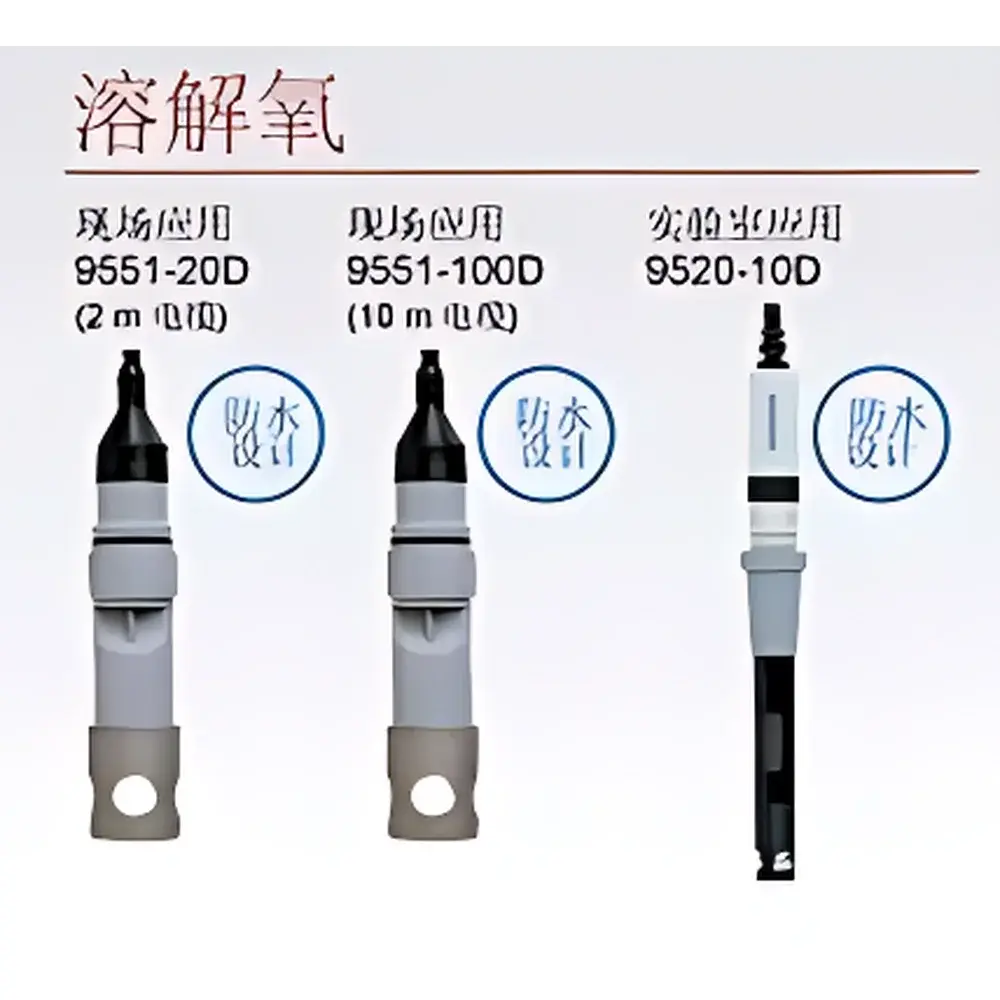
HORIBA Model 9520-10D Dissolved Oxygen Electrode
| Brand | HORIBA |
|---|---|
| Origin | Japan |
| Model | 9520-10D |
| Cable Length | 1 m |
| Operating Temperature Range | 0–45 °C |
| IP Rating | IP67 (per electrode housing specification) |
| Compatible With | HORIBA DO meters (e.g., D-55, LAQUA DO series) |
| Electrode Type | Clark-type polarographic membrane electrode |
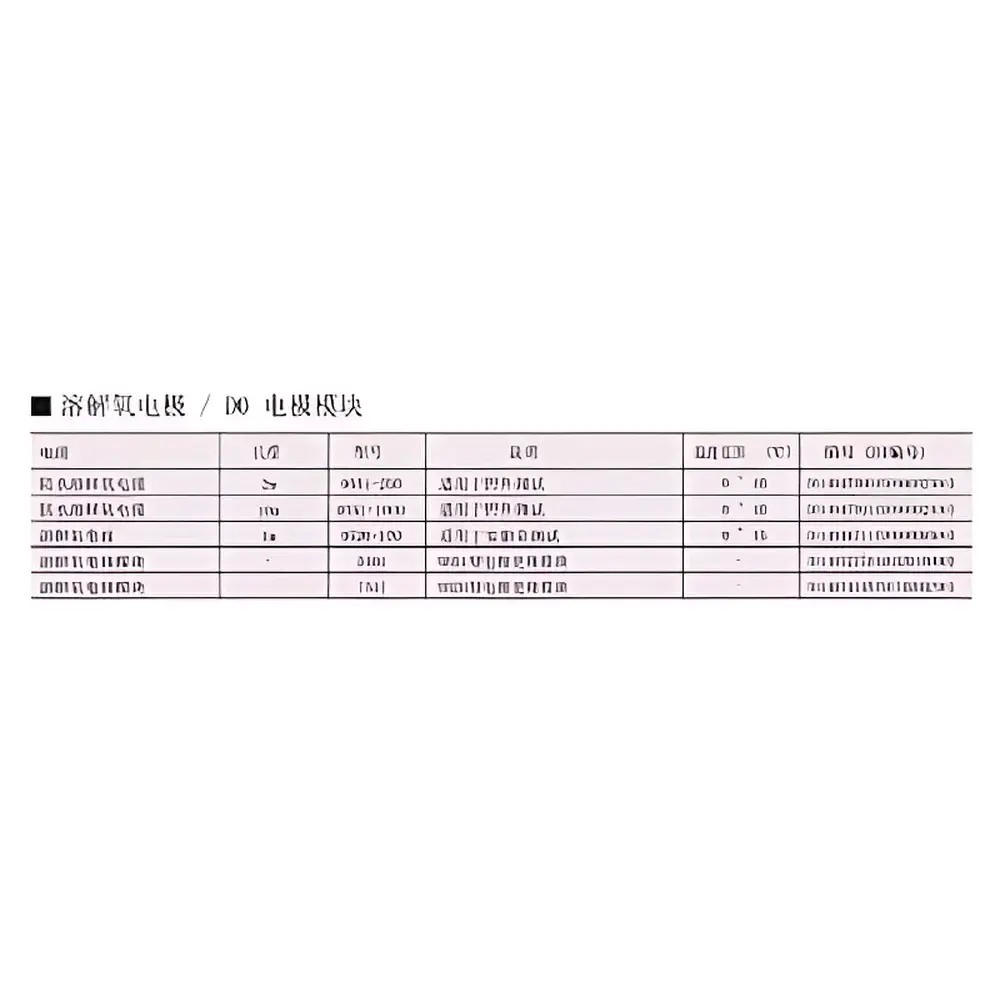
| Replacement Module | 7541 (for 9520-series) |
Overview
The HORIBA Model 9520-10D is a precision polarographic dissolved oxygen (DO) electrode engineered for stable, reproducible measurements in controlled laboratory environments. Based on the Clark cell principle, it employs a gold cathode and silver/silver chloride anode immersed in an electrolyte solution, separated from the sample by a gas-permeable Teflon membrane. Molecular oxygen diffuses through the membrane and is electrochemically reduced at the cathode surface, generating a current linearly proportional to the partial pressure of dissolved oxygen. This analog signal is converted to concentration (mg/L or % saturation) using temperature-compensated algorithms integrated into compatible HORIBA DO meters (e.g., D-55, LAQUA DO-310/DO-320). The 9520-10D features a 1-meter shielded coaxial cable terminated with a standardized BNC connector, optimized for benchtop use where cable management, minimal signal interference, and consistent immersion depth are critical. Its operating temperature range of 0–45 °C supports routine analysis across freshwater, wastewater, and biological culture media without thermal drift-induced calibration drift.
Key Features
- Clark-type polarographic sensing architecture with gold cathode and Ag/AgCl reference system for high signal-to-noise ratio and long-term baseline stability
- Gas-permeable Teflon membrane (standard 50 µm thickness) offering rapid response time (<90 s to 95% step change) and resistance to fouling in low-turbidity samples
- IP67-rated electrode body (per IEC 60529), ensuring protection against dust ingress and temporary immersion—critical during cleaning and handling in shared lab spaces
- Integrated thermistor for automatic temperature compensation (ATC) aligned with ASTM D888 and ISO 5814 standards
- Modular design compatible with HORIBA’s 7541 replacement electrode module, enabling field-swappable sensor elements without recalibration when used with calibrated meter units
- BNC interface ensures compatibility with legacy and current-generation HORIBA DO analyzers, supporting traceable measurement chains under GLP and ISO/IEC 17025 frameworks
Sample Compatibility & Compliance
The 9520-10D is validated for aqueous matrices including potable water, surface water, activated sludge supernatants, nutrient broths, and buffered saline solutions. It is not recommended for highly viscous, suspended-solid-laden, or strongly oxidizing/reducing media without prior filtration or conditioning. The electrode complies with key regulatory and methodological references: ASTM D888-22 (Standard Test Methods for Dissolved Oxygen in Water), ISO 5814:2012 (Water quality — Determination of dissolved oxygen — Electrochemical probe method), and USP for oxygen monitoring in pharmaceutical water systems. Its design supports audit-ready documentation when deployed within FDA 21 CFR Part 11-compliant data acquisition environments using HORIBA’s LAQUA software suite.
Software & Data Management
When paired with HORIBA LAQUA Twin or LAQUA DO series instruments, the 9520-10D supports full digital logging—including timestamped DO concentration, temperature, atmospheric pressure input, salinity correction factor, and electrode status flags (e.g., membrane integrity warning). Data export is available in CSV and Excel-compatible formats, with optional integration into LIMS via USB or RS-232. Firmware updates preserve calibration history and enable firmware-level compliance with evolving metrological requirements. Audit trails record all calibration events, user logins, and parameter modifications—essential for laboratories operating under ISO 17025 or GMP guidelines.
Applications
- Quality control of drinking water treatment effluents per EPA Method 360.1
- Oxygen demand profiling in BOD₅ and respirometry assays
- Dissolved oxygen mapping in bioreactor process development and fermentation optimization
- Calibration verification of optical DO sensors (e.g., luminescent lifetime-based probes)
- Educational laboratory instruction on electrochemical sensing principles and environmental parameter interdependence
- Method validation studies requiring primary-reference-grade amperometric DO measurement
FAQ
What is the expected service life of the 9520-10D membrane under standard lab conditions?
With weekly calibration and proper storage in KCl solution, the Teflon membrane typically remains functional for 6–12 months. Membrane replacement kits (part no. 9520-MK) are available separately.
Can the 9520-10D be used with non-HORIBA meters?
Yes—if the external meter provides 0.6–0.8 V polarizing voltage, accepts BNC input, and supports manual temperature compensation. However, full ATC integration and diagnostic feedback require HORIBA-compatible instrumentation.
Is the electrode suitable for continuous online monitoring?
No—the 9520-10D is designed for discrete, immersion-based spot measurements. For continuous applications, HORIBA recommends the 9551-series waterproof electrodes (e.g., 9551-100D) with flow-through housings.
How often should zero-point and span calibration be performed?
Daily calibration is recommended for quantitative QC work; single-point air-saturation check before each analytical session suffices for semi-quantitative screening per ISO 5814 guidance.
Does the 9520-10D require electrolyte refilling?
Yes—it contains a sealed, replaceable KCl electrolyte capsule (part no. 9520-EL); replacement is required every 6 months or after 500 measurement hours, whichever occurs first.







