
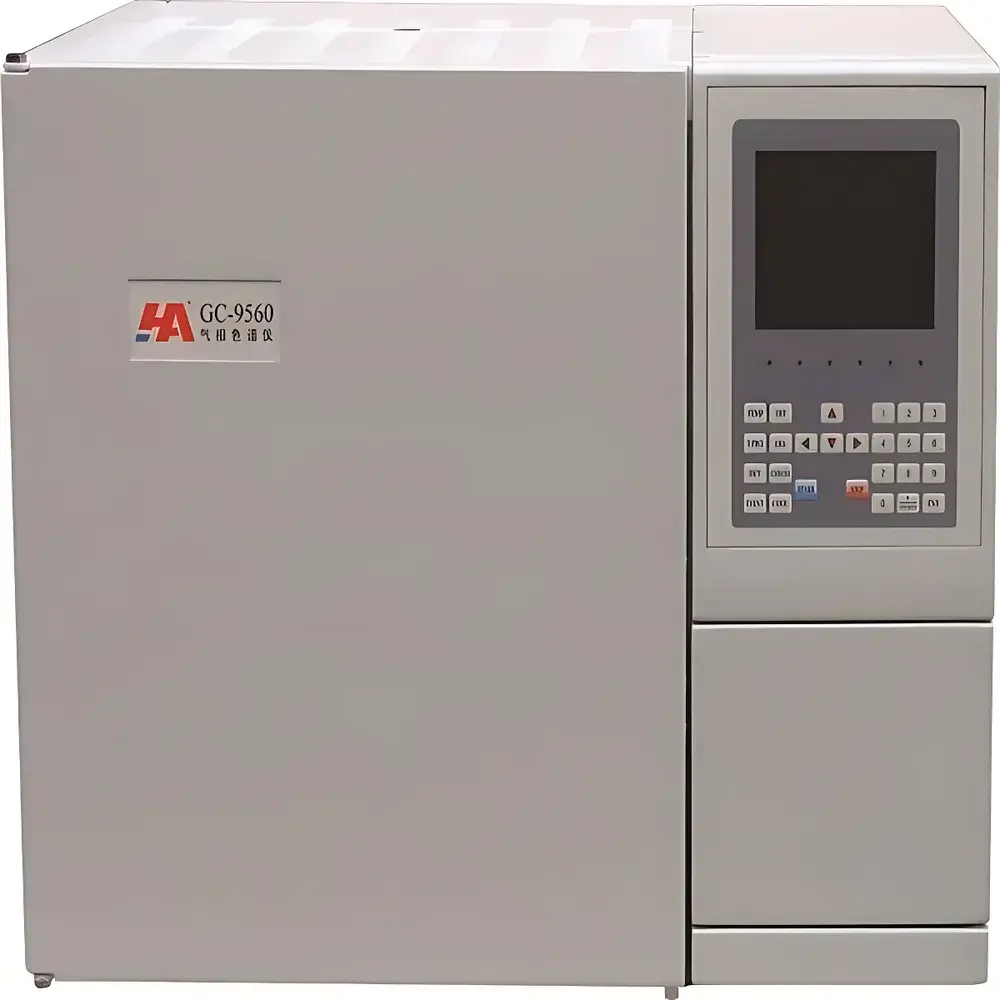
HuaiAi GC-9560-1 High-Performance Gas Chromatograph
| Brand | HuaiAi |
|---|---|
| Origin | Shanghai, China |
| Manufacturer Type | Direct Manufacturer |
| Regional Origin | Domestic (China) |
| Model | GC-9560-1 |
| Instrument Type | Laboratory Gas Chromatograph |
| Application Scope | General-Purpose |
| Oven Temperature Range | 8 °C above ambient to 399 °C |
| Ramp Rate | 1–40 °C/min |
| Cool-down Time | ~7 min (350 °C → 50 °C) |
| Carrier Gas Flow Range & Control | 0–500 mL/min |
| Carrier Gas Pressure Range & Control | 0–0.4 MPa |
| Injector Maximum Operating Temperature | 399 °C |
| Injector Pressure Setting Range | 0–0.4 MPa |
| Injector Total Flow Setting Range | 0–500 mL/min |
| Column Oven Precision | ±0.1 °C |
| Programmed Temperature Steps | 8-step |
| Hold Time per Step | 0–655 min (1-min increments) |
| FID Detection Limit | ≤1×10⁻¹¹ g/s (n-hexadecane / isooctane) |
| FID Baseline Noise | ≤2×10⁻¹³ A |
| FID Drift | ≤2×10⁻¹² A/30 min |
| FID Linearity | ≥10⁶ |
| TCD Sensitivity | ≥2500 mV·mL/mg (n-hexadecane / isooctane) |
| TCD Baseline Noise | ≤20 µV |
| TCD Drift | ≤100 µV/30 min |
| TCD Linearity | ≥10⁴ |
| Dimensions | 655 mm (W) × 500 mm (H) × 480 mm (D) |
| Weight | ~48 kg |
| Power Supply | 220 V ± 22 V, 50 Hz, ≥2 kW |
Overview
The HuaiAi GC-9560-1 is a laboratory-grade, fully computer-controlled gas chromatograph engineered for precision separation and quantitative analysis of volatile and semi-volatile organic compounds. Based on classical gas-solid and gas-liquid partition principles, the instrument separates analytes via differential partitioning between a mobile phase (inert carrier gas) and a stationary phase (capillary or packed column), with detection accomplished through dual, interchangeable detectors—Flame Ionization Detector (FID) and Thermal Conductivity Detector (TCD). Designed for robustness in routine QC, environmental monitoring, petrochemical screening, and academic research, the GC-9560-1 integrates high-fidelity temperature control, real-time bidirectional communication with host software, and modular hardware architecture compliant with international chromatographic practice. Its column oven supports up to eight programmable temperature ramps with sub-0.1 °C thermal stability—critical for reproducible retention time alignment across method transfers and multi-lab validation studies.
Key Features
- Integrated digital interface enabling full bidirectional control: real-time acquisition, parameter adjustment, event scheduling, and fault diagnostics from a single PC workstation.
- Advanced temperature management system featuring dual over-temperature protection, intelligent dual rear-door cooling, and uniform airflow distribution via low-noise axial fans—ensuring <±0.1 °C oven and injector temperature stability across all operating ranges.
- Configurable detector options: FID with auto-ignition, <10 min stabilization, and 10⁶ linear dynamic range; TCD with constant-current circuitry, four-arm rhenium-tungsten filaments, and semi-diffusion cell design for enhanced sensitivity and baseline stability.
- Optional Electronic Pressure Control (EPC) module supporting pressure ramping (−100 to +100 kPa/min), 8-step pressure programs, and flow regulation accuracy to 0.01 psi—enabling precise method transfer and retention time locking.
- Flexible injection capability: compatible with packed-column headspace, split/splitless capillary injection (with back-pressure valve), gas sampling via 6-port valve, and unattended online high-temperature/pressure injection.
- Self-diagnostic firmware with error logging, power-fail data retention, and ten-user-defined method storage—supporting GLP-compliant operation in regulated environments.
Sample Compatibility & Compliance
The GC-9560-1 accommodates a broad spectrum of sample matrices—including hydrocarbons, alcohols, esters, halogenated organics, residual solvents, and permanent gases—when paired with appropriate column chemistries (e.g., DB-5ms, PLOT Al₂O₃, or molecular sieve columns). Its temperature-programmable oven (8 °C above ambient to 399 °C), wide-range carrier gas control (0–500 mL/min, 0–0.4 MPa), and configurable inlet pressures support both fast-eluting light gases and high-boiling-point compounds. The system meets core requirements of ISO 17025 for method validation, aligns with ASTM D3606, D1319, and EPA Method 8021B workflows, and provides audit-trail-ready operation when used with validated software under 21 CFR Part 11–compliant configurations.
Software & Data Management
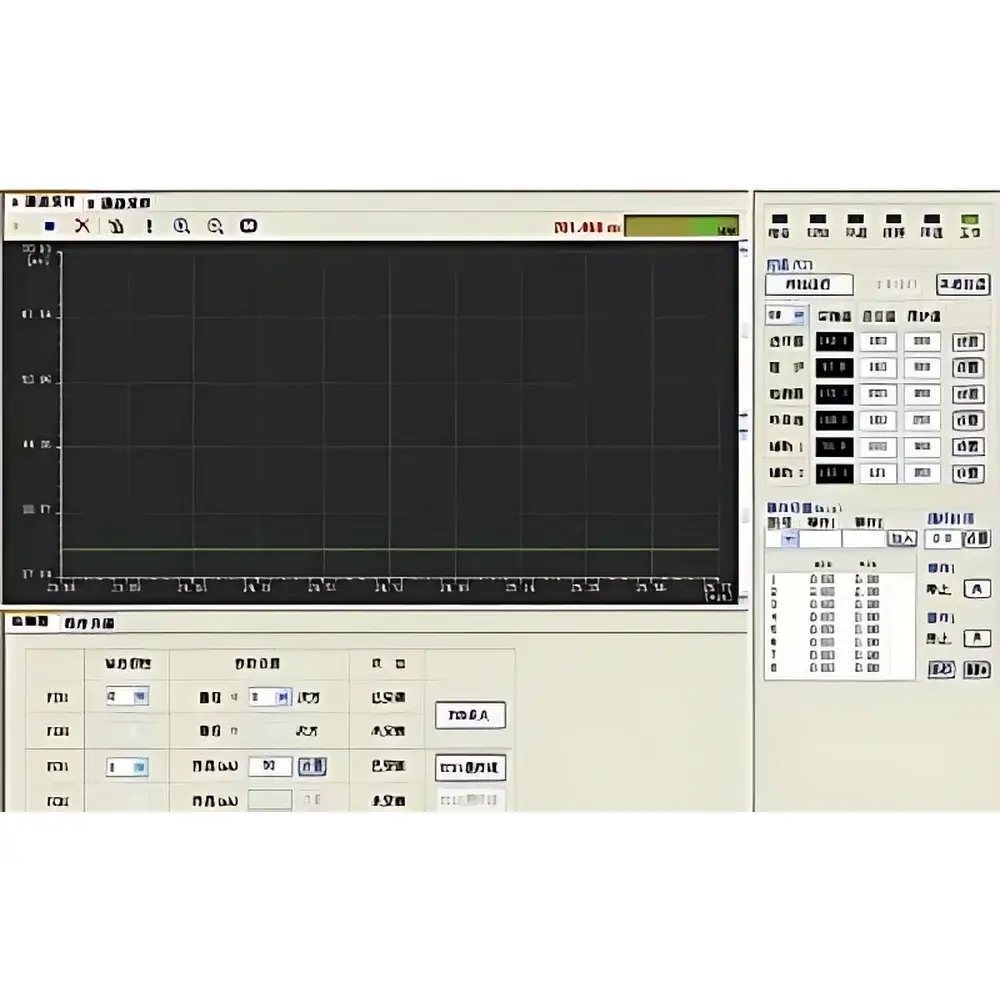
The GC9560 data acquisition and control platform runs natively on Windows OS and supports local or networked deployment via optional 10/100 M Ethernet. It delivers real-time chromatogram visualization, interactive parameter tuning (oven ramp profiles, detector settings, valve timing), and automated sequence execution. All user actions—including method edits, run starts/stops, and calibration updates—are timestamped and logged. Raw data are stored in vendor-neutral formats (e.g., .CDF), exportable to third-party quantitation packages (e.g., OpenLab CDS, Chromeleon) without proprietary codec dependency. Software versioning, electronic signatures, and role-based access control can be implemented to satisfy GxP documentation standards.
Applications
- Environmental testing: BTEX, PAHs, chlorinated solvents in soil/water extracts per EPA SW-846 methods.
- Petrochemical QA/QC: Hydrocarbon type analysis (HTA), gasoline oxygenates (MTBE, ETBE), and distillation profile verification.
- Pharmaceutical residual solvent screening: Class 1–3 solvents in APIs and excipients per ICH Q3C guidelines.
- Food & flavor analysis: Volatile aroma compounds, fatty acid methyl esters (FAMEs), and adulterant detection.
- Industrial gas purity assessment: O₂, N₂, CO, CH₄, and CO₂ in compressed air or synthesis gas streams using TCD with argon or helium carrier.
FAQ
Is the GC-9560-1 compatible with third-party chromatography data systems (CDS)?
Yes—the instrument outputs standard .CDF files and supports ASCII export, enabling seamless integration with major CDS platforms including Thermo Fisher Chromeleon, Agilent OpenLab, and Shimadzu LabSolutions.
Does the system support 21 CFR Part 11 compliance?
When deployed with validated software, electronic signature modules, and documented system configuration, the GC-9560-1 meets foundational technical requirements for Part 11 adherence—including audit trails, user authentication, and data integrity controls.
Can the column oven cool from 350 °C to 50 °C within 7 minutes under all ambient conditions?
Cool-down performance is specified at standard lab conditions (20–25 °C ambient); actual time may vary slightly with room temperature, humidity, and installed column dimensions—but the dual rear-door mechanism ensures consistent thermal recovery across operational cycles.
What maintenance intervals are recommended for FID and TCD?
FID jet cleaning and collector electrode inspection are advised every 200–300 hours of operation; TCD filament resistance checks and cell purging should occur quarterly or after exposure to corrosive samples.
Is remote monitoring supported out-of-the-box?
The optional Ethernet interface enables secure remote access via VPN or institutional intranet—allowing real-time status viewing, method upload, and run initiation without physical presence in the lab.





